A Celestial Encounter: The Ethereal Grace of Fra Angelico
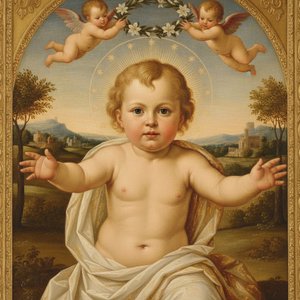
In the quiet sanctity of the Early Renaissance, few works capture the intersection of human tenderness and divine light as profoundly as Fra Angelico’s Madonna and Child. Painted around 1455, this masterpiece serves as a luminous window into a period when Florence was undergoing a spiritual and intellectual rebirth. The painting does not merely depict a mother and her infant; it orchestrates a moment of profound grace, where the earthly realm meets the heavens. As the viewer gazes upon the Virgin Mary, there is an immediate sense of peace—a stillness that invites contemplation. Her gaze, directed upward toward something unseen by the mortal eye, suggests a deep communion with the divine, while the infant Jesus, held securely in her arms, embodies the promise of hope and the weight of destiny.
The emotional resonance of the piece lies in its delicate balance between intimacy and awe. There is a palpable warmth in the way the figures interact, yet they are enveloped in an atmosphere that feels distinctly otherworldly. This duality makes the artwork particularly captivating for modern collectors and designers alike; it possesses the ability to anchor a room with its historical gravity while simultaneously infusing a space with a sense of serene, meditative light. To possess a reproduction of this work is to bring a fragment of Renaissance devotion into the contemporary home, offering a focal point that transcends mere decoration to become a source of quiet inspiration.
Mastery of Light and the Tempera Tradition
To understand the breathtaking luminosity of this work, one must look to Fra Angelico’s masterful command of tempera on panel. Unlike the later dominance of oil painting, which allowed for heavy, blended textures, the tempera technique required a disciplined, meticulous approach. The artist applied thin, translucent layers of pigment—a process known as glazing—to build depth and radiance. This method allows light to penetrate the surface of the paint and reflect back, creating an inner glow that seems to emanate from within the figures themselves, particularly in the soft, porcelain-like skin of the Christ child.
The color palette is a sophisticated dialogue between rich, grounded tones and celestial brilliance. The deep, regal reds of Mary’s drapery provide a striking contrast to the ethereal blue tones that surround her, symbolizing both her earthly humanity and her heavenly queenship. Every brushstroke serves the greater purpose of clarity and light, reflecting the artist's background as a manuscript illuminator. This precision ensures that even in a reproduction, the intricate details—the delicate folds of fabric, the subtle shadows on a youthful face, and the shimmering gold accents—retain their ability to captivate the eye and evoke the splendor of the 15th-century Florentine workshops.
A Legacy of Devotion and Renaissance Splendor
The historical backdrop of this painting is as rich as its pigments. Created during the era of Lorenzo il Magnifico, the work reflects the humanist ideals that flourished under Medici patronage. While the Renaissance was a time of burgeoning scientific inquiry and classical revival, Fra Angelico remained steadfast in his commitment to religious narrative, blending the new interest in naturalism with traditional Byzantine iconography. This synthesis of styles creates a unique visual language: the figures possess a newfound physical presence and weight, yet they remain draped in the symbolic splendor of an eternal, sacred truth.
For the discerning interior designer or art enthusiast, the Madonna and Child offers more than just aesthetic beauty; it offers a narrative of continuity. It is a piece that speaks to the enduring human desire for connection, protection, and peace. Whether placed in a sunlit gallery or a sophisticated study, the painting’s vibrant hues and profound subject matter act as a bridge between the golden age of Florence and the modern era, making it an incomparable choice for those looking to curate a collection defined by elegance, history, and soul.



 Voorvertoning
 Schakel over naar print
 Verstuur
 Delen
Delen
 Details bekijken

 Download
 Vergelijkbare items
 Röntgenonderzoek
 Diavoorstelling
 Statistieken


 Lees meer






































 De optie voor glas is alleen beschikbaar bij een formaat kleiner dan 110 cm.