Biografie van de kunstenaar
Fernand Léger: Een Leven Gebeeldhouwd in Vorm
Fernand Léger, geboren Joseph Fernand Henri Léger in 1881 in het rustige Argentan, Normandië, staat als een cruciale figuur in de evolutie van moderne kunst. Zijn reis van de landelijke gebieden van zijn jeugd naar de voorhoede van de Parijse avant-garde is een bewijs van een onwrikbare artistieke visie en een voortdurende zoektocht naar het vastleggen van de geest van de machine-tijdperk. Anders dan veel van zijn tijdgenoten die abstractie omarmden als een terugtrekking uit representatie, zocht Léger naar *integratie* van moderniteit – haar dynamiek, haar mechanische vormen, haar essentie – in een nieuwe visuele taal die zowel krachtig abstract als diep geworteld was in de waargenomen wereld. Zijn vroege leven, doordrenkt met de fysieke ervaringen van landbouwwerk, bood een contrasterende basis ten opzichte van de geindustrialiseerde toekomst waar hij zo gepassioneerd over zou schilderen. In eerste instantie was Léger bestemd voor architectuur, maar zijn pad veranderde naar schilderkunst na aankomst in Parijs rond 1900, waar hij zichzelf steunde door tekenwerk terwijl hij zijn artistieke vaardigheden verder ontwikkelde. Deze periode werd gekenmerkt door traditionele academische training, maar het was pas toen hij de baanbrekende werken van Paul Cézanne ontmoette dat een ware transformatie begon.
De Geboorte van ‘Tubism’ en de Section d’Or
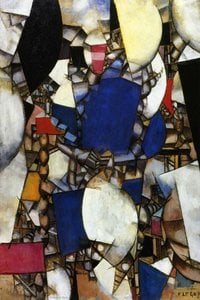
Cézanne's retrospectief in 1907 diende als katalysator, bevrijd Léger van conventionele representatie en stuwde hem naar een meer geometrische en structurele benadering. Hij begon vormen te ontmantelen, hun onderliggende structuren te analyseren en ze op het doek opnieuw op te bouwen met nadruk op soliditeit en volume. Deze verkenning leidde snel tot zijn omgang met Cubisme, maar Léger was niet tevreden om Picasso's of Braque's stijlen simpelweg te kopiëren. In plaats daarvan ontwikkelde hij zijn eigen onderscheidende idiom – een persoonlijke vorm van Cubisme die critici humoristisch ‘Tubism’ noemden. Karakteristiek voor Tubism waren cilindrische vormen, platte vlakken en felle kleurcontrasten, die de mechanische esthetiek vierden nog voordat deze wijdverspreid werd. Het was kunst geboren uit het observeren van de opkomende industriële wereld, met een erkenning van schoonheid in haar functionele vormen en mechanische ritmes. Deze periode zag Léger actief deelnemen aan de avant-garde scène, zich verenigen met kunstenaars zoals Jean Metzinger, Henri Le Fauconnier, Francis Picabia en Marcel Duchamp binnen de Puteaux Group, ook bekend als de Section d’Or (De Gouden Schnitt). De groep onderzocht wiskundige principes van harmonie en proportie, strevend naar het inbrengen van een gevoel van orde en rationaliteit in hun kunst. Hun gezamenlijke onderzoek bracht de grenzen van artistieke expressie op de proef, legde de basis voor toekomstige ontwikkelingen in abstracte kunst.
Oorlog, Mechanisatie en Een Nieuwe Esthetiek
Het uitbreken van de Eerste Wereldoorlog had een diepgaande impact op Léger's leven en werk. Zijn dienstplicht vanaf 1914 leidde hem naar het front, waar hij getuige was van de gruwelen van de moderne oorlogsvoering – artillerievuur, luchtgevechten en de dehumaniserende effecten van mechanische oorlogvoering. Deze ervaring leidde niet tot ontgoocheling of een afwijzing van moderniteit; eerder versterkte het zijn fascinatie voor machines en hun kracht. Schetsen die hij tijdens zijn dienst maakte documenteerden de schitterende schoonheid van militaire technologie, transformeerden instrumenten van vernietiging in onderwerpen voor artistieke contemplatie. Na terugkeer naar de burgerlijke wereld onderging Léger's esthetiek een verdere evolutie. Zijn schilderijen begonnen te reflecteren op een meer gestroomlijnde, mechanische sensatie, die de dynamiek en efficiëntie van de industriële wereld vierden. *Soldier met een pijp* (1916) illustreert deze verschuiving, waarbij vereenvoudigde vormen en felle kleuren een gevoel van mechanische precisie oproepen. Dit was niet alleen een esthetische keuze; het was een filosofisch statement – een bevestiging van de potentie van moderniteit voor vooruitgang en wederopbouw, ondanks de verwoestingen van de oorlog.
Erfgoed en Laatste Invloed
In zijn latere jaren bleef Léger de kruising tussen kunst en industrie verkennen, werken creërend die de moderne levenswijze vierden met een unieke combinatie van abstractie en figuratie. Zijn *Paysages animés* (Geanimeerde Landschappen) reeks uit 1921 toonde figuren en dieren die naadloos in gestroomlijnde composities waren geïntegreerd, waardoor de grenzen tussen organisch en onorganisch werden vervaagd. Hij experimenteerde ook met beeldhouwkunst en filmmaken, breidde zijn artistieke praktijk uit tot buiten de traditionele schilderkunst. Léger's invloed op latere generaties kunstenaars is onmiskenbaar. Zijn gedurfde vereenvoudiging van vorm, zijn omhelzing van industriële beelden en zijn viering van populaire cultuur anticipeerden op het ontstaan van Pop Art decennia later. Kunstenaars als Roy Lichtenstein en Andy Warhol schuldigen een duidelijke staatgenoot aan Léger's baanbrekende werk. Hij bracht de kloof tussen abstracte kunst en figuratieve representatie in kaart, waardoor het mogelijk werd om werken te creëren die zowel intellectueel uitdagend als visueel boeiend waren. Vandaag de dag blijven Fernand Léger's schilderijen worden bewaard in belangrijke musea wereldwijd, waaronder het Musée d’Art et d’Histoire in Frankrijk en het Musée National Fernand Léger, gewijd uitsluitend aan zijn werk. Hij blijft een toonaangevende figuur van de 20e eeuwse kunst – een visionair die durfde schoonheid te vinden in de machine-tijdperk en deze op het doek met ongeëvenaarde moed en originaliteit vast te leggen. Zijn nalatenschap is niet alleen als schilder, maar als profeet van de moderniteit. *Een ware pionier wiens werk nog steeds resoneren met het publiek.*



 Bekijk op ware grootte
 Schakel over naar print
 Verstuur
 Delen
Delen
 Details bekijken
 Gids voor studentenkunstwerken

 Download
 Vergelijkbare items
 Röntgenonderzoek
 Diavoorstelling
 Statistieken

 Lees meer






































 De optie voor glas is alleen beschikbaar bij een formaat kleiner dan 110 cm.