Bekijk op ware grootte Bekijk in AR Schakel over naar print Schakel over naar digitale afbeeldingen Verstuur
Details bekijken Gids voor studentenkunstwerken Toevoegen aan favorieten Download Vergelijkbare items Röntgenonderzoek Diavoorstelling Statistieken

Fuel Pump

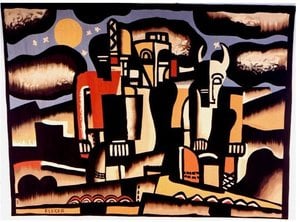
Fernand Léger’s "Fuel Pump" captures the energy of a vintage automobile navigating a bustling gas station scene, featuring a truck, traffic light, clock, and bench—a masterful blend of abstraction and observation reflecting the machine age.

Fernand Léger (1881-1955): Pionier van Cubisme & 'Tubism'! Ontdek baanbrekende schilderijen over moderniteit, machines & de menselijke vorm – een voorloper van Pop Art.

Handgemaakte olieverfreproductie

Met de hand geschilderd in olieverf op canvas in uw gewenste maat en lijst, op bestelling gemaakt door onze kunstenaars. ( Schakel over naar print Schakel over naar digitale afbeeldingen)

Corner sample of the P118B picture frame: gegoten polystyreen, 5 cm wide and 3 cm thick
P118B 10
Corner sample of the P118H picture frame: gegoten polystyreen, 5 cm wide and 3 cm thick
P118H 10
Corner sample of the P118W picture frame: gegoten polystyreen, 5 cm wide and 3 cm thick
P118W 10
Corner sample of the P438Z picture frame: gegoten polystyreen, 5.5 cm wide and 3.5 cm thick
P438Z 10
Corner sample of the P508JH picture frame: gegoten polystyreen, 7 cm wide and 3.5 cm thick
P508JH 12
Corner sample of the P508YH picture frame: gegoten polystyreen, 7 cm wide and 3.5 cm thick
P508YH 12
Corner sample of the P805H picture frame: gegoten polystyreen, 5 cm wide and 3.5 cm thick
P805H 10
Corner sample of the P805Z picture frame: gegoten polystyreen, 5 cm wide and 3.5 cm thick
P805Z 10
Corner sample of the P919BZ picture frame: gegoten polystyreen, 7 cm wide and 3.5 cm thick
P919BZ 10
Corner sample of the P919G picture frame: gegoten polystyreen, 7 cm wide and 3.5 cm thick
P919G 10
Corner sample of the P919XJ picture frame: gegoten polystyreen, 7 cm wide and 3.5 cm thick
P919XJ 10
Corner sample of the P959ZH picture frame: gegoten polystyreen, 5 cm wide and 3 cm thick
P959ZH 10
Corner sample of the P968JZ picture frame: gegoten polystyreen, 6 cm wide and 4 cm thick
P968JZ 12
Corner sample of the W106C picture frame: massief hout, 5 cm wide and 3 cm thick
W106C 8
Corner sample of the W218G picture frame: massief hout, 5 cm wide and 3 cm thick
W218G 10
Corner sample of the W218JH picture frame: massief hout, 5 cm wide and 3 cm thick
W218JH 8
Corner sample of the W218Y picture frame: massief hout, 5 cm wide and 3 cm thick
W218Y 10
Corner sample of the W307PJ picture frame: massief hout, 6 cm wide and 3 cm thick
W307PJ 10
Corner sample of the W316G picture frame: massief hout, 6 cm wide and 3 cm thick
W316G 10
Corner sample of the W316PJ picture frame: massief hout, 6 cm wide and 3 cm thick
W316PJ 8
Corner sample of the W316Y picture frame: massief hout, 6 cm wide and 3 cm thick
W316Y 10
Corner sample of the W398PJ picture frame: massief hout, 5 cm wide and 3 cm thick
W398PJ 8
Corner sample of the W4111J picture frame: massief hout, 6.5 cm wide and 3.5 cm thick
W4111J 10
Corner sample of the W500HY picture frame: massief hout, 7 cm wide and 5 cm thick
W500HY 15
Corner sample of the W500JH picture frame: massief hout, 7 cm wide and 5 cm thick
W500JH 15
Corner sample of the W692G picture frame: massief hout, 8 cm wide and 4 cm thick
W692G 12
Corner sample of the W849H picture frame: massief hout, 5 cm wide and 3 cm thick
W849H 8
Corner sample of the W940BG picture frame: massief hout, 7.5 cm wide and 4.5 cm thick
W940BG 15
Corner sample of the W953PJ picture frame: massief hout, 6 cm wide and 3.5 cm thick
W953PJ 8

Standaardformaat
op maat gemaakt
CM
INCH

Kies uit onze vooraf ingestelde maten die overeenkomen met de originele verhoudingen van het kunstwerk.

breedte
hoogte

Voer de breedte en de hoogte in die u nodig heeft, passend bij uw lijst of uw muur. Dit is handgeschilderd, dus bij een afmeting met een andere vormverhouding kan de kunstenaar iets meer rondom het schilderij schilderen of juist iets meer weglaten — u kiest zelf. Wij sturen u een digitaal mockup ter goedkeuring voordat het schilderwerk begint. De afbeelding die op deze pagina wordt getoond, is niet het uiteindelijke resultaat — alleen de mockup geeft dit weer.

Voorbeelden van wat aangepast kan worden: Vervang het gezicht met een eigen foto; Voeg een huisdier toe (bijv. vervang de kat door een hond); Verwerk een verborgen boodschap in de achtergrond; Wijzig het landschap of andere elementen in de achtergrond.
Na de bestelling zal het team van WahooArt.com per e-mail contact opnemen met de klant voor instructies en een mockup-voorbeeld sturen.

Wereldwijde levering () binnen 3 tot 4 weken in plaats van de standaard 5 weken. (20 oktober). Zonder concessies aan de kwaliteit.

Gratis wereldwijde expressverzending
Hoogwaardig linnen canvas
Volledige verzendverzekering
Garantie op terugbetaling van invoerrechten
Garantie op exacte kleurweergave
Retourbeleid van 100 dagen (alleen bij defecten)
100% Geld-terug-garantie
Korting bij meerdere afnames

Totaalprijs

€ 237

Fuel Pump

Reproductiemethode

Formaat reproductie

-

Totaalprijs

€ 237

Belangrijkste kenmerken

  • Location: Musée d'Art Moderne de Paris
  • Dimensions: 73 x 50 cm
  • Medium: Oil on Canvas
  • Influences:
    • Picasso
    • Braque
  • Artist: Fernand Léger
  • Artistic style: Constructivist

Kunstquiz

Er is slechts één goed antwoord op elke vraag.

Vraag 1:
What is the primary subject matter depicted in Fernand Léger's painting “Fuel Pump”?
Vraag 2:
Fernand Léger’s artistic style is characterized by:
Vraag 3:
The painting incorporates elements reflecting the influence of:
Vraag 4:
What is notable about the depiction of the vintage automobile in “Fuel Pump”?
Vraag 5:
“Fuel Pump” exemplifies Léger’s commitment to portraying the impact of:

A Symphony of Form and Industrial Soul

To stand before Fernand Léger’s 1925 masterpiece, “Fuel Pump,” is to step onto the stage of a futurist opera, where the static world suddenly begins to pulse with the rhythmic, metallic hum of a city in motion. The canvas explodes with a geometric precision that captures the very essence of the Machine Age—a riot of interlocking cubes, cylinders, and planes that dominate the visual field. More than just a depiction of an everyday roadside scene, this work represents Léger's audacious attempt to distill the anxieties and exhilarations of the burgeoning industrial revolution into a powerfully abstract visual language. The painting invites the viewer to find beauty within the most utilitarian structures, transforming a mundane gas station into a monumental celebration of modern life.

The composition is a masterclass in energetic dynamism. While the subject matter includes recognizable elements—a vintage vehicle navigating the station, figures moving through the space, and even a distant traffic light—these are rendered through a lens of structural integrity. Léger eschews traditional illusionistic depth, opting instead for a flattened surface that emphasizes the spatial relationships between overlapping shapes. This technique creates a palpable sense of movement; the rhythmic repetition of forms suggests the relentless progress of technology, making the artwork feel as though it is breathing with the mechanical heartbeat of the 1920s.

The Art of Tubism and Tactile Technique

Léger’s approach to painting departs significantly from traditional representational methods, firmly establishing itself within a unique evolution of Cubism. Often associated with his personal style known as "Tubism," Léger moved away from the melancholic fragmentation seen in the works of Picasso or Braque. Instead, he embraced the volume and robust presence of the cylinder and the sphere. His fascination with the strength of mechanical forms allowed him to rebuild the world through a lens of sculptural weight, where every line and edge feels engineered rather than merely drawn.

The physical presence of the painting is equally captivating. Léger meticulously applied thick impasto—heavy layers of pigment built up upon the canvas—to create tactile surfaces that invite viewers to engage physically with the artwork. This heavy application of paint lends a sense of permanence and strength to the industrial subjects, mirroring the very steel and iron of the machines he admired. For the collector or interior designer, this texture provides a profound depth that catches the light, making a high-quality reproduction a commanding focal point in any sophisticated space.

A Legacy for the Modern Collector

Historically, “Fuel Pump” serves as a vibrant window into a period of profound societal transformation. Created during the rapid urban sprawl and technological advancements of the interwar years, the painting captures the unsettling beauty of a world increasingly dominated by engineering. Léger’s ability to integrate modernity—its dynamism, its mechanical forms, and its very essence—into fine art makes this piece a cornerstone of twentieth-century modernism.

For those seeking to infuse their interiors with a sense of strength, movement, and historical significance, this artwork offers unparalleled inspiration. It is a piece that speaks to the bold, the progressive, and the lovers of structured beauty. Whether placed in a contemporary gallery setting or a curated residential collection, Léger’s vision remains a powerful declaration: that even in the most functional corners of our world, there exists a profound and rhythmic artistry waiting to be discovered.

Vragen & Antwoorden

In welke ruimte wordt het tonen van "Fuel Pump" aanbevolen, gezien het kleurenpalet?

Gezien de Neutrals kleuren, wordt "Fuel Pump" aanbevolen voor een Living Room.

Is "Fuel Pump" door Fernand Léger een licht of een donker kunstwerk?

De vastgestelde waarden voor "Fuel Pump" door Fernand Léger zijn: brilliant helderheid, Bright Balance luminantie.

Hoe past "Fuel Pump" binnen de thema's en stijl van Fernand Léger?

Binnen het oeuvre van Fernand Léger past "Fuel Pump" binnen de Cubism-stijl, samen met de thema's van machine age inspiration, industrial aesthetic, geometric abstraction, urban observation, léger’s visionary style.


Biografie van de kunstenaar

Fernand Léger: Een Leven Gebeeldhouwd in Vorm

Fernand Léger, geboren Joseph Fernand Henri Léger in 1881 in het rustige Argentan, Normandië, staat als een cruciale figuur in de evolutie van moderne kunst. Zijn reis van de landelijke gebieden van zijn jeugd naar de voorhoede van de Parijse avant-garde is een bewijs van een onwrikbare artistieke visie en een voortdurende zoektocht naar het vastleggen van de geest van de machine-tijdperk. Anders dan veel van zijn tijdgenoten die abstractie omarmden als een terugtrekking uit representatie, zocht Léger naar *integratie* van moderniteit – haar dynamiek, haar mechanische vormen, haar essentie – in een nieuwe visuele taal die zowel krachtig abstract als diep geworteld was in de waargenomen wereld. Zijn vroege leven, doordrenkt met de fysieke ervaringen van landbouwwerk, bood een contrasterende basis ten opzichte van de geindustrialiseerde toekomst waar hij zo gepassioneerd over zou schilderen. In eerste instantie was Léger bestemd voor architectuur, maar zijn pad veranderde naar schilderkunst na aankomst in Parijs rond 1900, waar hij zichzelf steunde door tekenwerk terwijl hij zijn artistieke vaardigheden verder ontwikkelde. Deze periode werd gekenmerkt door traditionele academische training, maar het was pas toen hij de baanbrekende werken van Paul Cézanne ontmoette dat een ware transformatie begon.

De Geboorte van ‘Tubism’ en de Section d’Or

Cézanne's retrospectief in 1907 diende als katalysator, bevrijd Léger van conventionele representatie en stuwde hem naar een meer geometrische en structurele benadering. Hij begon vormen te ontmantelen, hun onderliggende structuren te analyseren en ze op het doek opnieuw op te bouwen met nadruk op soliditeit en volume. Deze verkenning leidde snel tot zijn omgang met Cubisme, maar Léger was niet tevreden om Picasso's of Braque's stijlen simpelweg te kopiëren. In plaats daarvan ontwikkelde hij zijn eigen onderscheidende idiom – een persoonlijke vorm van Cubisme die critici humoristisch ‘Tubism’ noemden. Karakteristiek voor Tubism waren cilindrische vormen, platte vlakken en felle kleurcontrasten, die de mechanische esthetiek vierden nog voordat deze wijdverspreid werd. Het was kunst geboren uit het observeren van de opkomende industriële wereld, met een erkenning van schoonheid in haar functionele vormen en mechanische ritmes. Deze periode zag Léger actief deelnemen aan de avant-garde scène, zich verenigen met kunstenaars zoals Jean Metzinger, Henri Le Fauconnier, Francis Picabia en Marcel Duchamp binnen de Puteaux Group, ook bekend als de Section d’Or (De Gouden Schnitt). De groep onderzocht wiskundige principes van harmonie en proportie, strevend naar het inbrengen van een gevoel van orde en rationaliteit in hun kunst. Hun gezamenlijke onderzoek bracht de grenzen van artistieke expressie op de proef, legde de basis voor toekomstige ontwikkelingen in abstracte kunst.

Oorlog, Mechanisatie en Een Nieuwe Esthetiek

Het uitbreken van de Eerste Wereldoorlog had een diepgaande impact op Léger's leven en werk. Zijn dienstplicht vanaf 1914 leidde hem naar het front, waar hij getuige was van de gruwelen van de moderne oorlogsvoering – artillerievuur, luchtgevechten en de dehumaniserende effecten van mechanische oorlogvoering. Deze ervaring leidde niet tot ontgoocheling of een afwijzing van moderniteit; eerder versterkte het zijn fascinatie voor machines en hun kracht. Schetsen die hij tijdens zijn dienst maakte documenteerden de schitterende schoonheid van militaire technologie, transformeerden instrumenten van vernietiging in onderwerpen voor artistieke contemplatie. Na terugkeer naar de burgerlijke wereld onderging Léger's esthetiek een verdere evolutie. Zijn schilderijen begonnen te reflecteren op een meer gestroomlijnde, mechanische sensatie, die de dynamiek en efficiëntie van de industriële wereld vierden. *Soldier met een pijp* (1916) illustreert deze verschuiving, waarbij vereenvoudigde vormen en felle kleuren een gevoel van mechanische precisie oproepen. Dit was niet alleen een esthetische keuze; het was een filosofisch statement – een bevestiging van de potentie van moderniteit voor vooruitgang en wederopbouw, ondanks de verwoestingen van de oorlog.

Erfgoed en Laatste Invloed

In zijn latere jaren bleef Léger de kruising tussen kunst en industrie verkennen, werken creërend die de moderne levenswijze vierden met een unieke combinatie van abstractie en figuratie. Zijn *Paysages animés* (Geanimeerde Landschappen) reeks uit 1921 toonde figuren en dieren die naadloos in gestroomlijnde composities waren geïntegreerd, waardoor de grenzen tussen organisch en onorganisch werden vervaagd. Hij experimenteerde ook met beeldhouwkunst en filmmaken, breidde zijn artistieke praktijk uit tot buiten de traditionele schilderkunst. Léger's invloed op latere generaties kunstenaars is onmiskenbaar. Zijn gedurfde vereenvoudiging van vorm, zijn omhelzing van industriële beelden en zijn viering van populaire cultuur anticipeerden op het ontstaan van Pop Art decennia later. Kunstenaars als Roy Lichtenstein en Andy Warhol schuldigen een duidelijke staatgenoot aan Léger's baanbrekende werk. Hij bracht de kloof tussen abstracte kunst en figuratieve representatie in kaart, waardoor het mogelijk werd om werken te creëren die zowel intellectueel uitdagend als visueel boeiend waren. Vandaag de dag blijven Fernand Léger's schilderijen worden bewaard in belangrijke musea wereldwijd, waaronder het Musée d’Art et d’Histoire in Frankrijk en het Musée National Fernand Léger, gewijd uitsluitend aan zijn werk. Hij blijft een toonaangevende figuur van de 20e eeuwse kunst – een visionair die durfde schoonheid te vinden in de machine-tijdperk en deze op het doek met ongeëvenaarde moed en originaliteit vast te leggen. Zijn nalatenschap is niet alleen als schilder, maar als profeet van de moderniteit. *Een ware pionier wiens werk nog steeds resoneren met het publiek.*
Fernand Léger

Fernand Léger

1881 - 1955 , Frankrijk

Snelle feiten

  • Artistic Movement Or Style: Cubisme, Tubisme
  • Artists Or Movements Influenced By This Artist: ['Pop Art']
  • Artists Who Influenced This Artist: ['Paul Cézanne']
  • Date Of Birth: 4 feb 1881
  • Date Of Death: 17 aug 1955
  • Full Name: Fernand Léger
  • Nationality: Frans
  • Notable Artworks:
    • Nudes in de Bos
    • Machine Element
    • De Grote Parade
    • De Stad
  • Place Of Birth: Argentan, Frankrijk
Ontdek kunstwerken georganiseerd op thema, stijl en kenmerk.