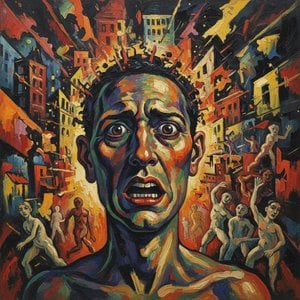
A Life Forged in Expression: The World of Ernst Ludwig Kirchner
Ernst Ludwig Kirchner, een naam die synoniem staat voor de rauwe emotionele kracht van het Duitse expressionisme, werd geboren in een wereld op het punt van dramatische verandering. Zijn komst naar Aschaffenburg, Beieren, in 1880, markeerde het begin van een leven diep verweven met artistieke innovatie en persoonlijke strijd. De verschuivende landschappen van zijn jeugd – bepaald door de beroepen van zijn vader – zaaiden een gevoel van vervreemding in hem, dat later terugkeerde in zijn kunst. Van Frankfurt naar Perlen, en uiteindelijk vestigde hij zich in Chemnitz, absorbeerde jonge Kirchner de groeiende angsten van een snel moderniserend Duitsland. Hoewel hij aanvankelijk werd geleid naar architectuur aan de Königliche Technische Hochschule in Dresden, was de aantrekkingskracht van schilderkunst, gevoed door bewondering voor meesters als Albrecht Dürer en een toenemende onvrede met academische conventies, die uiteindelijk zijn pad bepaalde. Hij vond gemeenschap met andere rebellen – Fritz Bleyl, Karl Schmidt-Rottluff en Erich Heckel – waardoor banden werden gesmeed die de loop van de 20e-eeuwse kunst voorgoed zouden veranderen.
The Bridge Between Worlds: Die Brücke and Artistic Revolution
In 1905 werd Kirchner een oprichter van *Die Brücke* (“De Brug”), een artistieke groep gewijd aan het overbruggen van de kloof tussen traditionele esthetiek en een meer visceraal, emotioneel geladen vorm van expressie. Dit was niet alleen een stijlicie; het was een filosofische positie. De groep zocht inspiratie in bronnen die vaak werden overgeslagen door de gevestigde kunstwereld – primitieve kunst uit Afrika en Oceanië, de opvallende kleuren van Vincent van Gogh, en de aangrijpende psychologische diepte van Edvard Munch. Ze verwerpen de geïdealiseerde representaties van schoonheid die door academische schilderkunst werden geprezen, in plaats daarvan omarmen ze vervorming, schokkend kleurenpaletten en expressieve penseelstreken om angsten en vervreemding van het moderne leven te overbrengen. Kirchner’s vroege werken, geboren uit deze collaboratieve geest, pulseren met een rusteloze energie, reflecterend de gedeelde wens van de groep om zich los te maken van artistische beperkingen. De studio werd een broedplaats voor experimenten, een ruimte waar sociale normen werden uitgedaagd naast artistieke conventies. De verkenning van de menselijke vorm, met name de vrouwelijke nagedachtenis, in zowel stedelijke als natuurlijke omgevingen, werd een terugkerend motief, waardoor Kirchner in staat was om beweging, emotie en de complexiteit van moderne bestaan te onderzoeken.
Urban Anxieties and Bold Visions: Defining a Style
Kirchner’s artistieke stijl is direct herkenbaar door zijn kenmerkende eigenschappen. Hij gebruikte kleur niet als een middel tot trouwe representatie, maar als een hulpmiddel om emotionele reacties op te wekken – levendige, vaak niet-natuurlijke tinten die het gevoel van onbehagen of intensiteit in zijn composities versterkten. Zijn penseelstreken waren energiek en zichtbaar, wat bijdroeg aan de algehele indruk van directheid en rauwe emotie. Figuren en objecten werden vaak vervormd of verlengd, weerspiegelend een subjectieve in plaats van een objectieve realiteit. Vooral Kirchner ving de psychologische impact van het moderne stadsleven in het Duitse begin van de 20e eeuw op. Schilderingen zoals *The Street* (1908) zijn niet alleen beelden van stedelijke scènes; ze zijn portretten van vervreemding, die de hectische energie en emotionele afwezigheid vastleggen van een snel veranderende wereld. Hij schuwde het niet om de donkere aspecten van moderniteit te portretteren – de eenzaamheid, de anonimiteit, het gevoel overweldigd te worden door de enorme schaal van stedelijk bestaan. Dit onwrikbare blik vestigde hem als een chroniqueur van zijn tijd, een kunstenaar die durfde om de angsten te confronteren die onder de oppervlakte van maatschappelijke vooruitgang broeiden.
Influences and Development
Kirchner’s artistic development was shaped by a diverse range of influences. Early admiration for Dürer's meticulous detail and compositional structure informed his own approach to drawing and design. Van Gogh’s expressive use of color provided a model for conveying intense emotion, while Munch’s exploration of psychological states offered a precedent for depicting inner turmoil. The influence of primitive art – particularly African masks and sculptures – instilled in him a fascination with non-Western aesthetics and a desire to break free from Western artistic conventions. The *Die Brücke* group itself was a crucial catalyst, providing Kirchner with a supportive environment where he could experiment freely and develop his distinctive style. He also studied architecture at Dresden, which provided him with an understanding of spatial relationships and formal composition, elements that would later inform his paintings.
Tragedy and Legacy: A Lasting Impact
Kirchner’s leven werd tragisch gemarkeerd door persoonlijke strijden. De horror van de Eerste Wereldoorlog veroorzaakte een ernstige psychische crisis, waardoor hij naar Zwitserland vluchtte op zoek naar troost. Echter, zelfs in de ballingschap bleef hij creëren, zijn kunst weerspiegelde de voortdurende trauma’s en isolatie die hij ervoer. De opkomst van het Nationaal-socialisme bracht verder leed; meer dan 600 van zijn werken werden ingenomen en als “vervreemde kunst” gemarkeerd – een verwoestende klap die de politieke klimaat’s vijandigheid tegen moderne artistieke expressie onderstreept. Geconfronteerd met vervolging en achteruitlopende gezondheid, pleegde Kirchner in Davos, Zwitserland, in 1938 zijn eigen leven. Ondanks dit tragische einde blijft Kirchner's nalatenschap diepgaand invloedrijk. Hij staat als een centrale figuur van het Duitse expressionisme, inspireert generaties kunstenaars met zijn gedurfde stijl, emotioneel resonerende beelden van het moderne leven en zijn onwrikbare toewijding aan artistieke waarheid. Zijn werk wordt nog steeds tentoongesteld in belangrijke musea wereldwijd, waardoor een krachtig bewijs blijft van de blijvende kracht van kunst om te confronteren, uitdagen en uiteindelijk de menselijke conditie te verlichten.
- Influenced By: Albrecht Dürer, Vincent van Gogh, Edvard Munch, Primitive Art (African & Oceanic)
- Influenced: Kirchner’s work profoundly impacted subsequent generations of Expressionist and Modern artists. His exploration of psychological themes and his innovative use of color and form continue to inspire contemporary art practices.



 Bekijk op ware grootte
 Koop handgeschilderd kunstwerk
 Verstuur
 Delen
Delen
 Details bekijken

 Download
 Vergelijkbare items
 Röntgenonderzoek
 Diavoorstelling
 Statistieken

 Lees meer






































 De optie voor glas is alleen beschikbaar bij een formaat kleiner dan 110 cm.