


 Oil On CanvasWallArtGerman Expressionism
 192919th Century
 44.0 x 35.0 cm
Giclée- of canvasafdruk van museumkwaliteit met een snelle productie en flexibele afwerkingsmogelijkheden. ( Bestel handgeschilderde reproductie Koop afbeelding)





























Kies uit onze vooraf ingestelde maten die overeenkomen met de originele verhoudingen van het kunstwerk.

U kunt uw eigen afmetingen opgeven om in een specifieke lijst of ruimte te passen. Als de door u gekozen maat niet overeenkomt met de proporties van het originele kunstwerk, zullen wij de afbeelding bijsnijden of uitbreiden met een gespiegelde of effen rand. Een digitaal mockup wordt ter goedkeuring naar u verzonden voordat de productie begint.
Houd er rekening mee dat de preview op het scherm de werkelijke bijsneding of uitbreiding niet weergeeft. Alleen de mockup toont de uiteindelijke compositie nauwkeurig.
Hoewel aangepaste maten beschikbaar zijn, raden wij aan een afmeting uit de vooraf bepaalde lijst te kiezen om de originele proporties te behouden.
Wereldwijde levering () binnen 2 weken in plaats van de standaard 4/5 weken. (7 september)


Mask Dance
Afmetingen reproductie
Ernst Ludwig Kirchner's “Mask Dance,” rendered in stark black and white during 1929, isn’t merely a depiction of two figures; it’s a visceral plunge into the heart of Expressionism – a movement defined by its unflinching exploration of human emotion and psychological turmoil. Measuring a compact 44 x 35 cm, this drawing possesses an arresting immediacy, immediately captivating the viewer with its unsettling energy and profound sense of isolation. Kirchner, a pivotal figure in German art’s early 20th-century avant-garde, masterfully translates his inner anxieties onto the page, creating a work that resonates with a timeless quality despite its specific historical context.
“Mask Dance” is inextricably linked to the broader context of German Expressionism, a movement born from the anxieties and uncertainties of a rapidly changing world. Emerging in the years leading up to the rise of Nazism, Expressionist artists sought to reject the perceived superficiality of academic art and instead confront the darker aspects of human experience – alienation, fear, and spiritual emptiness. Kirchner, along with artists like Edvard Munch and Egon Schiele, was at the forefront of this revolution, employing distorted forms, jarring color palettes (though here rendered in monochrome), and emotionally charged brushstrokes to convey their subjective realities.
Kirchner’s artistic journey began with a fascination for Dürer's meticulous detail but quickly evolved into a rejection of traditional techniques. He sought to capture not just the appearance of things, but the *feeling* they evoked – a core tenet of Expressionism. The drawing’s raw energy and unsettling atmosphere are testament to this commitment.
The artist's skillful manipulation of black and white is crucial to the impact of “Mask Dance.” Kirchner doesn’t simply employ a monochrome palette; he utilizes tonal variations with remarkable precision, creating depth, texture, and a dramatic sense of contrast. The starkness amplifies the emotional intensity of the scene, stripping away any distractions and forcing the viewer to confront the raw vulnerability of the figures. The drawing likely employs charcoal and possibly ink, applied with confident, deliberate strokes that contribute to its dynamic quality.
"Mask Dance" stands as a powerful example of Kirchner’s artistic genius and the enduring legacy of German Expressionism. It's a work that invites contemplation – prompting questions about human isolation, the nature of emotion, and the artist’s role in reflecting and challenging societal norms. A hand-painted reproduction offers an unparalleled opportunity to experience this iconic artwork firsthand, bringing its haunting beauty and profound emotional depth into your space.


1880 - 1938 , Duitsland
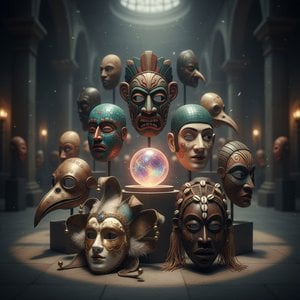
Embark on a profound journey through the world's most iconic mask artworks. Explore the spiritual depth, intricate craftsmanship, and rich cultural heritage of global traditions, from Chhau to Gomira, in this expert-led exploration of ancestral artistry and symbolic beauty.

Elevate your artistic practice with this expert guide to mastering the line. Discover advanced techniques in graphite, charcoal, and contour drawing designed for art students seeking technical precision and expressive depth in their fine art studies.

Explore the profound artistry of graphite drawing. Discover professional techniques for mastering depth, texture, and detail through a lens of art history, from classical sketches to modern masterpieces. Elevate your understanding of the pencil medium with our expert guide.

Explore the raw emotion of German Expressionism through a definitive guide to Ernst Ludwig Kirchner. Discover how his bold colors and distorted forms redefined modern art history, from Berlin street scenes to iconic masterpieces.

Explore the profound emotional depth of Expressionist painting. From the bold colors of Emil Nolde to the distorted forms of Kirchner, discover how this movement redefined art through raw feeling and visceral texture in our expert guide to art history.

 Voorvertoning
 Verstuur
 Delen
Delen
 Details bekijken

 Download
 Vergelijkbare items
 Röntgenonderzoek
 Diavoorstelling
 Lees meer







 De optie voor glas is alleen beschikbaar bij een formaat kleiner dan 110 cm.


