Bekijk op ware grootte Bekijk in AR Schakel over naar print Schakel over naar digitale afbeeldingen Verstuur
Details bekijken Gids voor studentenkunstwerken Toevoegen aan favorieten Download Vergelijkbare items Röntgenonderzoek Diavoorstelling Statistieken

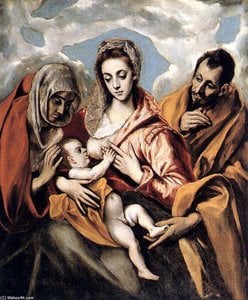
the risen christ

Experience El Greco's dramatic 'The Risen Christ,' a monochromatic masterpiece capturing the raw emotion and spiritual intensity of his Mannerist style. A powerful depiction of faith, vulnerability, and divine grace.

Verken El Greco's dramatische kunst! Ontdek Manneristische meesterwerken, religieuze scènes & verlengde figuren. Een pionier van Expressionisme & Cubisme – bekijk zijn iconische schilderijen!

Handgemaakte olieverfreproductie

Met de hand geschilderd in olieverf op canvas in uw gewenste maat en lijst, op bestelling gemaakt door onze kunstenaars. ( Schakel over naar print Schakel over naar digitale afbeeldingen)

Corner sample of the P118B picture frame: gegoten polystyreen, 5 cm wide and 3 cm thick
P118B 10
Corner sample of the P118H picture frame: gegoten polystyreen, 5 cm wide and 3 cm thick
P118H 10
Corner sample of the P118W picture frame: gegoten polystyreen, 5 cm wide and 3 cm thick
P118W 10
Corner sample of the P438Z picture frame: gegoten polystyreen, 5.5 cm wide and 3.5 cm thick
P438Z 10
Corner sample of the P508JH picture frame: gegoten polystyreen, 7 cm wide and 3.5 cm thick
P508JH 12
Corner sample of the P508YH picture frame: gegoten polystyreen, 7 cm wide and 3.5 cm thick
P508YH 12
Corner sample of the P805H picture frame: gegoten polystyreen, 5 cm wide and 3.5 cm thick
P805H 10
Corner sample of the P805Z picture frame: gegoten polystyreen, 5 cm wide and 3.5 cm thick
P805Z 10
Corner sample of the P919BZ picture frame: gegoten polystyreen, 7 cm wide and 3.5 cm thick
P919BZ 10
Corner sample of the P919G picture frame: gegoten polystyreen, 7 cm wide and 3.5 cm thick
P919G 10
Corner sample of the P919XJ picture frame: gegoten polystyreen, 7 cm wide and 3.5 cm thick
P919XJ 10
Corner sample of the P959ZH picture frame: gegoten polystyreen, 5 cm wide and 3 cm thick
P959ZH 10
Corner sample of the P968JZ picture frame: gegoten polystyreen, 6 cm wide and 4 cm thick
P968JZ 12
Corner sample of the W106C picture frame: massief hout, 5 cm wide and 3 cm thick
W106C 8
Corner sample of the W218G picture frame: massief hout, 5 cm wide and 3 cm thick
W218G 10
Corner sample of the W218JH picture frame: massief hout, 5 cm wide and 3 cm thick
W218JH 8
Corner sample of the W218Y picture frame: massief hout, 5 cm wide and 3 cm thick
W218Y 10
Corner sample of the W307PJ picture frame: massief hout, 6 cm wide and 3 cm thick
W307PJ 10
Corner sample of the W316G picture frame: massief hout, 6 cm wide and 3 cm thick
W316G 10
Corner sample of the W316PJ picture frame: massief hout, 6 cm wide and 3 cm thick
W316PJ 8
Corner sample of the W316Y picture frame: massief hout, 6 cm wide and 3 cm thick
W316Y 10
Corner sample of the W398PJ picture frame: massief hout, 5 cm wide and 3 cm thick
W398PJ 8
Corner sample of the W4111J picture frame: massief hout, 6.5 cm wide and 3.5 cm thick
W4111J 10
Corner sample of the W500HY picture frame: massief hout, 7 cm wide and 5 cm thick
W500HY 15
Corner sample of the W500JH picture frame: massief hout, 7 cm wide and 5 cm thick
W500JH 15
Corner sample of the W692G picture frame: massief hout, 8 cm wide and 4 cm thick
W692G 12
Corner sample of the W849H picture frame: massief hout, 5 cm wide and 3 cm thick
W849H 8
Corner sample of the W940BG picture frame: massief hout, 7.5 cm wide and 4.5 cm thick
W940BG 15
Corner sample of the W953PJ picture frame: massief hout, 6 cm wide and 3.5 cm thick
W953PJ 8

Standaardformaat
op maat gemaakt
CM
INCH

Kies uit onze vooraf ingestelde maten die overeenkomen met de originele verhoudingen van het kunstwerk.

breedte
hoogte

Voer de breedte en de hoogte in die u nodig heeft, passend bij uw lijst of uw muur. Dit is handgeschilderd, dus bij een afmeting met een andere vormverhouding kan de kunstenaar iets meer rondom het schilderij schilderen of juist iets meer weglaten — u kiest zelf. Wij sturen u een digitaal mockup ter goedkeuring voordat het schilderwerk begint. De afbeelding die op deze pagina wordt getoond, is niet het uiteindelijke resultaat — alleen de mockup geeft dit weer.

Voorbeelden van wat aangepast kan worden: Vervang het gezicht met een eigen foto; Voeg een huisdier toe (bijv. vervang de kat door een hond); Verwerk een verborgen boodschap in de achtergrond; Wijzig het landschap of andere elementen in de achtergrond.
Na de bestelling zal het team van WahooArt.com per e-mail contact opnemen met de klant voor instructies en een mockup-voorbeeld sturen.

Wereldwijde levering () binnen 3 tot 4 weken in plaats van de standaard 5 weken. (22 oktober). Zonder concessies aan de kwaliteit.

Gratis wereldwijde expressverzending
Hoogwaardig linnen canvas
Volledige verzendverzekering
Garantie op terugbetaling van invoerrechten
Garantie op exacte kleurweergave
Retourbeleid van 100 dagen (alleen bij defecten)
100% Geld-terug-garantie
Korting bij meerdere afnames

Totaalprijs

€ 239

the risen christ

Reproductiemethode

Formaat reproductie

-

Totaalprijs

€ 239

Belangrijkste kenmerken

  • Location: Museo del Prado, Madrid
  • Artist: El Greco
  • Title: The Risen Christ
  • Movement: Mannerism
  • Notable elements: Dramatic lighting,
  • Artistic style: Expressive, elongated

Kunstquiz

Er is slechts één goed antwoord op elke vraag.

Vraag 1:
What is the primary artistic style associated with El Greco’s ‘The Risen Christ’?
Vraag 2:
The monochromatic nature of the image primarily serves to:
Vraag 3:
Considering El Greco’s background in Byzantine art, what element is most evident in ‘The Risen Christ’?
Vraag 4:
The outstretched arm of Christ in the painting is most likely interpreted as:
Vraag 5:
Based on the image description, what is the dominant shape present in ‘The Risen Christ’?

A Monochromatic Revelation: The Essence of El Greco’s ‘The Risen Christ’

El Greco's “The Risen Christ,” a work rendered in stark monochrome, isn’t merely a depiction of a biblical event; it’s an intensely felt meditation on faith, vulnerability, and the profound drama of resurrection. Born Doménikos Theotokópoulos in Crete around 1541, El Greco forged a uniquely powerful style that defied easy categorization, blending Byzantine tradition with Italian Mannerism and a deeply personal spiritual vision. This particular image, likely created between 1608 and 1614 during his time in Toledo, Spain, captures the essence of this distinctive approach – a deliberate stripping away of color to amplify form, emotion, and the sheer physicality of the subject.

The painting immediately commands attention with its dramatic composition. A full-length figure dominates the frame, positioned in profile facing right, his body elongated and sculpted with an almost sculptural quality characteristic of El Greco’s style. The diagonal thrust of his outstretched arm, a gesture simultaneously offering blessing and bearing witness to the miracle, guides the viewer's eye upwards and towards the upper right corner, creating a dynamic sense of movement within the otherwise static scene. The stark black background isn’t merely an absence of color; it actively isolates the figure, intensifying its presence and emphasizing the vulnerability inherent in his resurrected state.

Line, Volume, and the Language of Flesh

What immediately strikes the viewer is El Greco's masterful manipulation of line. Rather than relying on subtle gradations of color to create volume, he employs bold, decisive lines to define the musculature of Christ’s body – a deliberate departure from the smoother, more idealized forms prevalent in earlier Renaissance art. These lines aren’t simply outlines; they possess a palpable energy, suggesting movement and the raw physicality of resurrection. Subtle variations in tone within these lines create an illusion of depth and volume, lending a remarkable sense of realism to the otherwise stark monochrome palette.

The texture of the painting, though achieved through photographic reproduction, hints at the artist’s original technique – oil paints applied with thick impasto. The slight variations in tone on Christ's skin suggest brushstrokes, adding a tactile quality to the image and reinforcing the sense that we are observing a tangible, vulnerable human being. The smooth surfaces of his garments contrast sharply with the textured musculature, further emphasizing the duality between earthly form and divine grace.

Symbolism and Spiritual Resonance

The nudity of Christ is profoundly significant. It’s not presented as shame or exposure, but rather as a symbol of purity, vulnerability, and sacrifice – qualities inextricably linked to his resurrection. The outstretched arm, a gesture of benediction and offering, speaks to the transformative power of faith and the boundless grace bestowed upon humanity. The dramatic lighting, seemingly emanating from above and slightly to the left, casts strong contrasts between light and shadow, highlighting Christ’s anatomy and imbuing the scene with an almost theatrical intensity.

Beyond its religious subject matter, “The Risen Christ” resonates with broader themes of human experience. The figure's pose – head turned back in contemplation, a gesture of both humility and triumph – invites viewers to reflect on their own faith, hope, and the enduring power of belief. It’s a work that transcends its specific religious context, offering a timeless meditation on mortality, redemption, and the mysteries of existence.

A Legacy Forged in Faith and Fire

El Greco's influence extends far beyond his own lifetime. His innovative style anticipated elements of Expressionism and Cubism centuries later, demonstrating an extraordinary ability to capture emotional intensity and fragmented forms. The Museo de El Greco in Toledo offers a comprehensive exploration of the artist’s life and work, allowing visitors to immerse themselves in the world of this enigmatic genius. Reproductions of “The Risen Christ,” available through WahooArt.com and similar platforms, provide an accessible way to experience the power and beauty of this iconic masterpiece.

Vragen & Antwoorden

Welke stemming straalt "the risen christ" door El Greco uit binnen Mannerist Expressionism?

Binnen de Mannerist Expressionism-stroming is "the risen christ" vastgelegd met een Melancholic toon.

Welke stemming en emotie straalt "the risen christ" door El Greco uit?

"the risen christ" door El Greco roept een Melancholic gevoel op binnen een algeheel Dramatic stemmigheid.

Is El Greco, maker van "the risen christ", bekend onder andere namen?

El Greco staat ook bekend onder de alternatieve namen Domenikos Theotokopoulos, Dominick de Grijs, Il Greco.


Biografie van de kunstenaar

Doménikos Theotokópoulos, called El Greco

Doménikos Theotokópoulos, known to the world as El Greco – “the Greek” – was a painter whose life and work defied easy categorization. Born in Crete, Greece (1541), his artistic journey took him through Venice and Rome before finding its ultimate expression in the spiritual heartland of Spain: Toledo. El Greco wasn’t merely a product of these places; he synthesized their influences into something wholly unique, a style that anticipated the emotional intensity of Expressionism and the fragmented forms of Cubism centuries later. His early training within the Byzantine tradition instilled in him a meticulous attention to detail and a profound understanding of religious iconography. This foundation, however, wouldn’t confine him. He signed his works in Greek, often appending “Krḗs” – Cretan – as a proud declaration of his origins, even as he ventured into new artistic territories. The seeds of his distinctive style were sown not just in technique but also in the fervent religious climate of his homeland and the rich tapestry of Venetian art.

Early Life and Artistic Training

Doménikos Theotokópoulos was born in Fodele (modern Candia), Crete, which at that time belonged to the Republic of Venice. His father, Nikolaos Zacharias Kantakopoulos, was a wealthy merchant and administrator, providing him with a privileged upbringing. From a young age, Doménikos demonstrated an exceptional talent for drawing and painting, mastering the techniques of Byzantine icon painting – a tradition deeply rooted in Orthodox Christianity – under the tutelage of Eustathios Symonds, a renowned Cretan iconographer. This formative experience instilled in him a reverence for detail, a mastery of color palettes derived from Byzantine iconography, and a profound understanding of religious symbolism. The influence of Byzantium is palpable throughout his early oeuvre, particularly in works depicting saints and biblical figures rendered with serene dignity and luminous colors.

Venetian Influence: Embracing Innovation

Around 1567, Doménikos moved to Venice, the epicenter of Renaissance artistic innovation. He immersed himself in the vibrant Venetian art scene, studying the masterpieces of Titian, Tintoretto, and Veronese – artists who had revolutionized painting with their mastery of color, composition, and dramatic lighting. Recognizing the limitations of Byzantine tradition alone, El Greco eagerly embraced the Venetian approach, loosening his brushwork and experimenting with oil paint—a medium previously unfamiliar to Cretan painters. This Venetian influence is vividly evident in *St. Sebastian* (1600), where anatomical detail blends seamlessly with an almost theatrical use of light and shadow. He absorbed the dynamism and expressive fervor characteristic of Venetian painting, preparing himself for a transformative encounter with Mannerism in Rome.

Roman Years: Seeking Recognition Amidst Competition

In 1570, Doménikos traveled to Rome, hoping to gain recognition within the competitive artistic milieu of the papal court. However, he struggled to secure commissions and faced considerable challenges navigating the complex social dynamics of Roman art life. Despite his talent, El Greco’s style—characterized by elongated figures, distorted perspectives, and stylized draperies—didn't align with the prevailing aesthetic sensibilities of Mannerism, which favored elegance and refinement. Nevertheless, he continued to hone his craft, absorbing influences from artists like Giulio Romano and Andrea Palladio, broadening his artistic horizons and experimenting with new techniques. His Roman years were marked by a period of artistic introspection and stylistic evolution—a quest for personal expression amidst the pressures of patronage and artistic convention.

Toledo: A Synthesis of Tradition and Vision

By 1577, Doménikos settled in Toledo, Spain – a city steeped in religious fervor during the Counter-Reformation and home to numerous churches eager for monumental artworks. This relocation proved decisive for El Greco’s artistic development. He received prestigious commissions from influential patrons—including Cardinal Juan Ruiz Zafra—and produced his most celebrated paintings: *The Burial of the Count of Orgaz*, *View of Toledo*, *The Opening of the Fifth Seal*, and *Christ Cleansing the Temple*. In Toledo, El Greco achieved a remarkable synthesis of Byzantine tradition and Venetian innovation, forging a style that was both deeply rooted in religious faith and strikingly original. His paintings are imbued with an emotional intensity unparalleled in Western art history—a testament to his profound spiritual vision and his unwavering commitment to artistic excellence. He became a symbol of Spanish Renaissance art, and his legacy continues to inspire artists today.
El Greco

El Greco

1541 - 1614 , Griekenland

Snelle feiten

  • Artistic Movement Or Style: Renaissance en Barok
  • Artists Who Influenced This Artist:
    • Titian
    • Tintoretto
  • Date Of Birth: 1541
  • Full Name: Doménikos Theotokópoulos
  • Nationality: Grieks
  • Notable Artworks:
    • De Begrafenis van Graaf Orgaz
    • Een uitzicht op Toledo
    • Het Openen van de Vijfde Sleutel
  • Place Of Birth: Crete, Greece
Ontdek kunstwerken georganiseerd op thema, stijl en kenmerk.