


Giclée- of canvasafdruk van museumkwaliteit met een snelle productie en flexibele afwerkingsmogelijkheden. ( Bestel handgeschilderde reproductie Schakel over naar digitale afbeeldingen)





























Kies uit onze vooraf ingestelde maten die overeenkomen met de originele verhoudingen van het kunstwerk.

Voer de gewenste breedte en hoogte in, passend bij uw lijst of muur. Een afdruk kan alleen worden ingekort en nooit groter worden gemaakt dan het origineel; een formaat met andere verhoudingen zal daarom een deel van de afbeelding verliezen. Wij sturen u een digitaal mockup ter goedkeuring voordat we tot drukwerk overgaan. De afbeelding op deze pagina toont niet de werkelijke uitsnede — dit is alleen te zien op het mockup.
Wereldwijde levering () binnen 2 weken in plaats van de standaard 4/5 weken. (10 november)
Saint Bernardino
Afmetingen reproductie
El Greco's "Saint Bernardino," painted in 1603, is not merely a depiction of a religious figure; it’s an immersion into the profound spirituality and turbulent emotional landscape that defined the artist’s life. This intimate portrait captures a moment of quiet contemplation, revealing a man wrestling with faith, perhaps even suffering, beneath a cloak of monastic humility. The subject, Saint Bernardino of Siena – famed for his zealous preaching and miraculous healing – is rendered not as an idealized saint but as a deeply human individual, marked by the weight of experience etched onto his face and reflected in his gaze.
The painting’s power resides largely in El Greco's masterful manipulation of color and form. The rich browns of Bernardino’s robe contrast dramatically with the luminous white of the flower he holds – a potent symbol of purity, innocence, and divine grace. Notice how El Greco employs a technique known as *tenebrism*, utilizing strong contrasts between light and shadow to draw the viewer's eye directly to the figure, amplifying his solemnity. The background, deliberately muted and indistinct, serves not as a distraction but as a subtle reinforcement of the saint’s inner world, suggesting a landscape both earthly and spiritual.
Born Doménikos Theotokópoulos in Crete in 1541, El Greco's artistic development was shaped by a complex interplay of influences. His early training within the Byzantine tradition instilled a rigorous attention to detail and an understanding of religious iconography – hallmarks that would remain throughout his career. However, he quickly transcended these foundations, forging a style uniquely his own. His relocation to Venice and then Rome exposed him to the burgeoning Renaissance ideals, yet he resisted assimilation, retaining a distinctly personal vision. It was in Toledo, Spain, a city steeped in religious fervor and marked by a vibrant multiculturalism, that El Greco truly blossomed, creating works of unparalleled intensity and emotional resonance.
The year 1603, the date of “Saint Bernardino,” represents a pivotal moment in El Greco’s artistic trajectory. He was increasingly recognized as a master, yet he continued to push boundaries, experimenting with scale, color, and composition. This painting exemplifies his willingness to depart from conventional portraiture, prioritizing psychological depth and spiritual significance over realistic representation.
Beyond the obvious symbolism of the flower – representing divine grace and humility – several other elements contribute to the painting’s layered meaning. The hillside upon which Bernardino stands is often interpreted as a metaphor for the human condition, suggesting a precarious balance between earthly desires and spiritual aspirations. The building in the background, partially obscured, could represent the monastery where he spent his life, or perhaps even a symbolic representation of heaven.
Crucially, consider the expression on Bernardino’s face. It is not one of serene piety but rather a subtle blend of sorrow and contemplation. Many scholars believe that Saint Bernardino suffered from a debilitating illness throughout his life, which may have informed El Greco's portrayal – suggesting that faith and suffering are inextricably linked. The slight furrow in his brow, the downward tilt of his mouth, all speak to an inner struggle, making this portrait profoundly moving.
"Saint Bernardino" is a work that continues to resonate with viewers centuries after its creation. WahooArt offers meticulously crafted hand-painted reproductions that capture the essence of El Greco’s genius – the dramatic lighting, the expressive brushstrokes, and the profound emotional depth. Our reproductions are created using archival-quality materials and techniques, ensuring their longevity and authenticity. Whether you're a seasoned art collector, an interior designer seeking to infuse your space with spiritual resonance, or simply an admirer of El Greco’s extraordinary vision, a WahooArt reproduction of “Saint Bernardino” is a remarkable addition to any collection. Experience the power of this iconic painting in exquisite detail – a testament to the enduring legacy of one of art history's most singular figures.
De röntgenweergave van "Saint Bernardino" door El Greco is te vinden op de Röntgenanalyse-pagina van het kunstwerk: een interactieve verkenning van het beeld door middel van elf optische lagen.
De vastgestelde luminantie voor "Saint Bernardino" door El Greco is Gentle Luminance.
Op de pagina Vergelijkbare werken van "Saint Bernardino" door El Greco vindt u gerelateerde kunstwerken.

Doménikos Theotokópoulos, die de geschiedenis zou binnengaan als El Greco, begon zijn leven in 1541 op het eiland Kreta. In die tijd was het eiland een bezit van Venetië, een feit dat hem er later toe zou brengen de kloof tussen oosterse en westerse tradities te overbruggen. Hij werd opgeleid als icoenschilder binnen de Byzantijnse traditie, een discipline die een minutieuze aandacht voor detail vereiste en een focus op de spirituele essentie van een onderwerp, in plaats van louter de fysieke gelijkenis. Deze vroege onderdompeling in de Kretenzische school gaf hem een gevoel van symbolische precisie dat een constante zou blijven, zelfs toen zijn stijl radicale transformaties onderging.
Op een leeftijd van zesentwintig verhuisde hij naar Venetië, in een poging zijn begrip van de natuurlijke wereld te vergroten. In de Venetiaanse Republiek kwam hij in aanraking met de werken van Titiaan en Tintoretto, waarbij hij hun meesterschap in kleur en het gebruik van licht om vorm te definiëren, in zich opnam. Hij leerde zich los te maken van de rigide lijnen van zijn jeugd en omarmde een vloeiendere penseelvoering en een gevoel van dynamiek. Deze periode was geen verwerping van zijn wortels, maar juist een verbreding ervan, aangezien hij begon de gedisciplineerde iconografie van zijn Griekse erfgoed te versmelten met de atmosferische sensualiteit van de Italiaanse Renaissance.
Na een periode in Rome, waar hij kennismaakte met de verlengde vormen en de verfijnde composities van het Maniërisme, vestigde El Greco zich in 1577 in Toledo, Spanje. Deze verhuizing bleek beslissend. Toledo was tijdens de Contrareformatie een centrum van intense religieuze vurigheid, wat een landschap bood dat perfect aansloot bij zijn steeds mystieker wordende visie. Het was hier dat zijn stijl haar meest kenmerkende fase bereikte, gekenmerkt door figuren die uitgerekt en verwrongen leken, alsof ze werden voortgetrokken door een onzichtbare spirituele kracht. Hij gebruikte kleur niet om de realiteit na te bootsen, maar om de emotionele impact te vergroten, waarbij hij vaak onnatuurlijke tinten inzette om het goddelijke af te beelden.
Zijn werk in Spanje werd gekenmerkt door een spanning tussen het aardse en het etherische. In The Burial of the Count of Orgaz (1586-1588) plaatste hij de realistische voorstelling van hedendaagse figuren tegenover verlengde, hemelse vormen, waardoor een visuele brug ontstond tussen het sterfelijke en het goddelijke. Zijn vermogen om licht en schaduw te manipuleren stelde hem in staat een gevoel van drama te creëren dat zowel theatraal als diep persoonlijk aanvoelde. Hij schilderde niet louter scènes; hij probeerde de emotionele en spirituele realiteiten te vatten die bestaan voorbij de oppervlakte van de fysieke wereld.
De latere jaren van zijn leven werden gekenmerkt door een beweging naar nog grotere abstractie en mystiek. Zijn composities werden complexer en zijn figuren vervormder, wat een groeiende distantie van conventionele artistieke normen weerspiegelde. Hoewel hij succes boekte en belangrijke opdrachten ontving van kerken en kloosters in Toledo, werd zijn invloed na zijn dood in 1614 niet onmiddellijk gevoeld door de bredere kunstwereld. Gedurende een lange periode werd hij beschouwd als een excentriekeling, wiens werk grotendeels werd over het hoofd gezien door de mainstream van de kunstgeschiedenis.
Pas in de 20e eeuw werd zijn belang volledig erkend. Modernisten vonden in zijn werk een voorloper van de expressieve en gefragmenteerde stijlen van de toekomst. Zijn vermogen om proporties te vervormen en gedurfde, emotieve kleuren te gebruiken, sloot aan bij hen die de innerlijke psychologische staten wilden overbrengen. Vandaag de dag worden zijn schilderijen beschouwd als vensters naar de menselijke geest, gevierd om hun unieke vermogen om de intensiteit van het geloof en de strijd voor transcendentie vast te leggen.
Opmerkelijke werken zijn onder andere:

1541 - 1614 , Griekenland

Embark on a profound journey through art history with our exploration of Saint Francis's most iconic works. Discover Giotto’s revolutionary frescoes and the spiritual depth of Proto-Renaissance masterpieces through an expert lens for the true classic art enthusiast.

Embark on a scholarly journey through the golden era of Byzantine art. Discover the profound symbolism, masterful mosaics, and imperial grandeur that defined an epoch of spiritual and aesthetic splendor in this expert-led guide for art enthusiasts.

Discover the profound beauty of Saint Artworks. Explore the history, symbolism, and luminous mastery of Renaissance religious masterpieces through an expert art-historical lens.

Explore the profound iconography of Saint Jerome through art history's most iconic masterpieces. From Renaissance serenity to Baroque drama, discover how legendary painters captured divine devotion in breathtaking oil paintings and fine art reproductions.
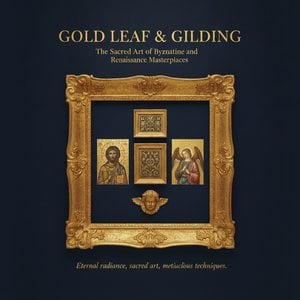
Explore the divine mastery of Byzantine gold leaf and gilding. Discover how ancient artisans used gold ground and mosaics to create celestial light, a timeless legacy of spiritual splendor and technical excellence in sacred art history.
 Voorvertoning
 Verstuur
 Delen
Delen
 Details bekijken
 Gids
Gids

 Download
 Vergelijkbare items
 Röntgenonderzoek
 Diavoorstelling
 Vraag & antwoord
 Statistieken


 Lees meer









 De optie voor glas is alleen beschikbaar bij een formaat kleiner dan 110 cm.


