Bekijk op ware grootte Bekijk in AR Schakel over naar print Schakel over naar digitale afbeeldingen Verstuur
Details bekijken Gids voor studentenkunstwerken Toevoegen aan favorieten Download Vergelijkbare items Röntgenonderzoek Diavoorstelling Statistieken

untitled (1815)

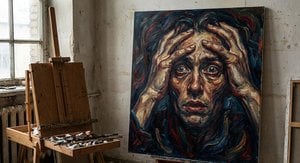
Egon Schiele's 'Untitled (1815)' is a haunting Expressionist portrait of two figures, capturing intense emotion and unsettling forms. Explore the artist’s unique style & symbolism in this captivating masterpiece.

Verken de intense emoties van Egon Schiele: rauwe portretten, psychologische thema's & unieke lijnen. Ontdek iconische reproducties van deze expressionistische meester.

Handgemaakte olieverfreproductie

Met de hand geschilderd in olieverf op canvas in uw gewenste maat en lijst, op bestelling gemaakt door onze kunstenaars. ( Schakel over naar print Schakel over naar digitale afbeeldingen)

Corner sample of the P118B picture frame: gegoten polystyreen, 5 cm wide and 3 cm thick
P118B €10
Corner sample of the P118H picture frame: gegoten polystyreen, 5 cm wide and 3 cm thick
P118H €10
Corner sample of the P118W picture frame: gegoten polystyreen, 5 cm wide and 3 cm thick
P118W €10
Corner sample of the P438Z picture frame: gegoten polystyreen, 5.5 cm wide and 3.5 cm thick
P438Z €10
Corner sample of the P508JH picture frame: gegoten polystyreen, 7 cm wide and 3.5 cm thick
P508JH €12
Corner sample of the P508YH picture frame: gegoten polystyreen, 7 cm wide and 3.5 cm thick
P508YH €12
Corner sample of the P805H picture frame: gegoten polystyreen, 5 cm wide and 3.5 cm thick
P805H €10
Corner sample of the P805Z picture frame: gegoten polystyreen, 5 cm wide and 3.5 cm thick
P805Z €10
Corner sample of the P919BZ picture frame: gegoten polystyreen, 7 cm wide and 3.5 cm thick
P919BZ €10
Corner sample of the P919G picture frame: gegoten polystyreen, 7 cm wide and 3.5 cm thick
P919G €10
Corner sample of the P919XJ picture frame: gegoten polystyreen, 7 cm wide and 3.5 cm thick
P919XJ €10
Corner sample of the P959ZH picture frame: gegoten polystyreen, 5 cm wide and 3 cm thick
P959ZH €10
Corner sample of the P968JZ picture frame: gegoten polystyreen, 6 cm wide and 4 cm thick
P968JZ €12
Corner sample of the W106C picture frame: massief hout, 5 cm wide and 3 cm thick
W106C €8
Corner sample of the W218G picture frame: massief hout, 5 cm wide and 3 cm thick
W218G €10
Corner sample of the W218JH picture frame: massief hout, 5 cm wide and 3 cm thick
W218JH €8
Corner sample of the W218Y picture frame: massief hout, 5 cm wide and 3 cm thick
W218Y €10
Corner sample of the W307PJ picture frame: massief hout, 6 cm wide and 3 cm thick
W307PJ €10
Corner sample of the W316G picture frame: massief hout, 6 cm wide and 3 cm thick
W316G €10
Corner sample of the W316PJ picture frame: massief hout, 6 cm wide and 3 cm thick
W316PJ €8
Corner sample of the W316Y picture frame: massief hout, 6 cm wide and 3 cm thick
W316Y €10
Corner sample of the W398PJ picture frame: massief hout, 5 cm wide and 3 cm thick
W398PJ €8
Corner sample of the W4111J picture frame: massief hout, 6.5 cm wide and 3.5 cm thick
W4111J €10
Corner sample of the W500HY picture frame: massief hout, 7 cm wide and 5 cm thick
W500HY €15
Corner sample of the W500JH picture frame: massief hout, 7 cm wide and 5 cm thick
W500JH €15
Corner sample of the W692G picture frame: massief hout, 8 cm wide and 4 cm thick
W692G €12
Corner sample of the W849H picture frame: massief hout, 5 cm wide and 3 cm thick
W849H €8
Corner sample of the W940BG picture frame: massief hout, 7.5 cm wide and 4.5 cm thick
W940BG €15
Corner sample of the W953PJ picture frame: massief hout, 6 cm wide and 3.5 cm thick
W953PJ €8

Standaardformaat
op maat gemaakt
CM
INCH

Kies uit onze vooraf ingestelde maten die overeenkomen met de originele verhoudingen van het kunstwerk.

breedte
hoogte

Voer de breedte en de hoogte in die u nodig heeft, passend bij uw lijst of uw muur. Dit is handgeschilderd, dus bij een afmeting met een andere vormverhouding kan de kunstenaar iets meer rondom het schilderij schilderen of juist iets meer weglaten — u kiest zelf. Wij sturen u een digitaal mockup ter goedkeuring voordat het schilderwerk begint. De afbeelding die op deze pagina wordt getoond, is niet het uiteindelijke resultaat — alleen de mockup geeft dit weer.

Voorbeelden van wat aangepast kan worden: Vervang het gezicht met een eigen foto; Voeg een huisdier toe (bijv. vervang de kat door een hond); Verwerk een verborgen boodschap in de achtergrond; Wijzig het landschap of andere elementen in de achtergrond.
Na de bestelling zal het team van WahooArt.com per e-mail contact opnemen met de klant voor instructies en een mockup-voorbeeld sturen.

Wereldwijde levering () binnen 3 tot 4 weken in plaats van de standaard 5 weken. (23 oktober). Zonder concessies aan de kwaliteit.

Gratis wereldwijde expressverzending
Hoogwaardig linnen canvas
Volledige verzendverzekering
Garantie op terugbetaling van invoerrechten
Garantie op exacte kleurweergave
Retourbeleid van 100 dagen (alleen bij defecten)
100% Geld-terug-garantie
Korting bij meerdere afnames

Totaalprijs

€ 239

untitled (1815)

Reproductiemethode

Formaat reproductie

-

Totaalprijs

€ 239

Belangrijkste kenmerken

  • Notable elements: Distorted forms
  • Medium: Painting
  • Year: 1815
  • Artistic style: Bold lines, vibrant colors
  • Title: untitled (1815)

Kunstquiz

Er is slechts één goed antwoord op elke vraag.

Vraag 1:
What artistic movement is most closely associated with Egon Schiele’s ‘untitled (1815)’?
Vraag 2:
The distorted facial features in ‘untitled (1815)’ primarily serve to:
Vraag 3:
What material is described as the background wall in the painting?
Vraag 4:
Considering Egon Schiele’s biography, which of the following best reflects a recurring theme in his work?
Vraag 5:
The orbs in the background of ‘untitled (1815)’ are most likely intended to symbolize:

A Descent into the Psyche: Unveiling Egon Schiele’s ‘Untitled (1815)’

Egon Schiele's 'Untitled (1815)' isn't merely a portrait; it’s a visceral plunge into the shadowed depths of human emotion. Painted in the tumultuous year of 1918, during the twilight of his tragically short life, this work embodies the core tenets of Expressionism – a rejection of detached observation and an embrace of subjective experience. The painting immediately confronts the viewer with two figures, rendered in a disturbingly elongated form, seated on what appears to be a crumbling earthen wall. Their faces are masks of unsettling openness, their mouths agape as if caught mid-utterance, radiating an intense, almost unbearable tension. It’s a scene that simultaneously invites and repels, demanding a prolonged gaze into its unsettling heart.

Schiele's masterful technique is evident in the bold, gestural lines that define every contour of the figures and the background. He employs a restricted palette – primarily earthy browns and ochres punctuated by stark whites – to amplify the painting’s sense of unease. The brushstrokes are frenetic, conveying a feeling of urgency and instability. This deliberate roughness contrasts sharply with the smooth, polished surfaces favored by many of his contemporaries, solidifying Schiele's unique and intensely personal style. The use of impasto—thickly applied paint—adds a tactile quality to the work, further emphasizing its raw emotional power.

Echoes of Mortality and the Unconscious

Dating back to 1918, a year marked by immense global upheaval and Schiele’s own impending death from influenza, ‘Untitled (1815)’ is deeply intertwined with themes of mortality and the fragility of existence. The artist's personal struggles—the loss of his father at fourteen, followed by the early deaths of his sister and wife—clearly informed his artistic vision. The figures themselves can be interpreted as representations of vulnerability and the confrontation with death itself. The open mouths suggest a desperate plea or perhaps an unspoken acknowledgment of impending doom. Beyond this biographical context, however, the painting resonates with broader psychological themes.

Schiele was fascinated by the subconscious mind and its ability to shape human experience. The orbs that hover in the background—a recurring motif in his work—are often interpreted as symbols of the unknown, representing the mysteries of the unconscious and the anxieties associated with confronting one’s deepest fears. They create a sense of disorientation and heighten the painting's overall atmosphere of unease, suggesting a world beyond rational understanding.

A Bridge to Expressionism and Beyond

‘Untitled (1815)’ stands as a pivotal work within the Expressionist movement, sharing affinities with artists like Edvard Munch and Wassily Kandinsky. Like Munch’s ‘The Scream,’ it prioritizes emotional intensity over realistic representation, aiming to capture the subjective experience of anxiety and dread. Similarly, Kandinsky's use of color and form to evoke inner states finds a parallel in Schiele’s distorted figures and unsettling composition. The painting’s influence can also be seen in later Expressionist artists such as Francis Bacon, who similarly explored themes of psychological torment through distorted human forms.

The Lehmbruck Museum in Germany, with its collection dedicated to modern sculpture and expressionistic art, offers a fitting venue for this powerful work. Its juxtaposition with Schiele’s paintings highlights the interconnectedness of artistic movements and the enduring relevance of his exploration of the human psyche. For those seeking a high-quality reproduction of this emotionally charged masterpiece, WahooArt.com provides meticulously crafted reproductions that faithfully capture the essence of Schiele's vision.

Vragen & Antwoorden

Wat is de aanbevolen afmeting voor de print van "untitled (1815)" door Egon Schiele?

De aanbevolen afmeting voor de print van "untitled (1815)" door Egon Schiele is Large.

Zijn de kleuren van "untitled (1815)" door Egon Schiele verzadigd of gedempt?

Het kleurenpalet van "untitled (1815)" heeft een verzadiging van Clear Color Presence.

Waar kan ik een gids vinden voor "untitled (1815)"?

Er is een Gids pagina beschikbaar voor "untitled (1815)" door Egon Schiele: een printbaar informatieblad over het kunstwerk, ontworpen voor studenten en gebruik in de klas.


Biografie van de kunstenaar

A Life Forged in Expression

Egon Schiele’s life, a turbulent and intensely personal journey, unfolded from 1890 to 1918 within the vibrant yet often unsettling landscape of Vienna. Born in Tulln an der Donau, Austria, his early years were shadowed by profound loss – the death of his father due to syphilis at just fourteen, followed tragically by the demise of his sister Elvira. Raised initially by his mother and later under the watchful eye of his uncle Leopold Czihaczek, Schiele’s childhood lacked the stability common to many, fostering within him a remarkable independence and an acute sensitivity. From a young age, he displayed a deep fascination with trains – a motif that would subtly reappear throughout his work, symbolizing both movement and perhaps, the relentless passage of time. Though initially discouraged by his father for pursuing drawing as a distraction from more “practical” endeavors, Schiele’s innate talent blossomed, laying the foundation for his future artistic expression. These formative experiences—illness, loss, and an unconventional upbringing—instilled within him a profound awareness of mortality and the fragility of human existence, themes that would become central to his art.

The Crucible of Vienna: Artistic Development

Schiele’s formal artistic training began at the Kunstgewerbeschule in Vienna, but he quickly found himself stifled by its conservative approach. Seeking a more expressive outlet, he transferred to the Akademie der bildenden Künste, only to discover that even this institution's academic traditions felt restrictive. Dissatisfied with the rigid constraints of traditional art education, Schiele deliberately chose to forge his own path, rejecting formal training altogether – a bold decision reflecting his unwavering artistic conviction. Crucially, he found inspiration in the work of Gustav Klimt, deeply admiring Klimt’s decorative style and exploration of symbolism. Klimt's influence was significant, yet Schiele ultimately diverged from his mentor’s aesthetic, developing a distinctly individual voice characterized by stark honesty and psychological intensity. He became a founding member of the Neues Wiener Kunstgruppe (New Viennese Art Group) in 1909, alongside other progressive artists who challenged the prevailing artistic norms of the time. His early works—often unsettling portraits and self-portraits—began to emerge as powerful statements of emotional turmoil, featuring distorted figures and a palpable sense of vulnerability. These paintings weren’t merely representations of physical form; they were explorations of the inner landscape – the anxieties, desires, and fears that haunted the human psyche. He sought to depict not what he *saw*, but what he *felt*.

Raw Emotion and Unflinching Truth

Egon Schiele's art is immediately recognizable for its raw honesty and psychological depth. He fearlessly confronted themes often considered taboo – sexuality, death, anxiety, isolation – with an unflinching gaze. His distinctive style features elongated figures, contorted poses, and expressive lines that convey a sense of unease and emotional intensity. The human form, particularly the nude, became his primary subject, not as an object of idealized beauty but as a vessel for exploring the complexities of human experience. Self-portraits constitute a significant portion of his oeuvre, offering intimate glimpses into his inner world—a world often marked by loneliness and self-doubt. He didn’t shy away from depicting himself in unflattering or vulnerable poses, revealing a profound level of self-awareness and introspection. Beyond self-portraiture, Schiele created numerous portraits of others, capturing their likenesses with an unsettling realism that seemed to penetrate beneath the surface. Recurring motifs like the *Physalis* plant – symbolizing death and transience with its delicate, papery husk – further underscore this preoccupation with mortality. His use of line is particularly striking; it’s not merely a tool for defining shape but an expressive force that conveys emotion and psychological tension.

A Legacy Cut Short: Achievements & Significance

Despite facing censorship and legal challenges—including a brief imprisonment for allegedly corrupting minors with his art—Schiele gained recognition within Vienna’s avant-garde circles. His work challenged the conventions of the time, provoking both admiration and outrage. By the time of his untimely death during the Spanish flu pandemic in 1918 at the age of twenty-eight, he had established himself as a leading figure in Austrian Expressionism. Significant works such as *Self-Portrait with Physalis*, *Couple Embracing*, and *Field Landscape (Kreuzberg near Krumau)* stand as testaments to his artistic genius. His influence on subsequent generations of artists is undeniable, particularly those interested in exploring psychological themes and challenging conventional artistic norms. Schiele’s bold approach to form and subject matter continues to resonate with audiences today, making him one of the most important and influential figures in early 20th-century art. His paintings are now held in major museum collections worldwide, including the Leopold Museum in Vienna and the Egon Schiele Art Centrum in Český Krumlov, ensuring his artistic legacy endures. He left behind a body of work that is not merely aesthetically compelling but profoundly human—a testament to the power of art to confront the complexities of existence with honesty, courage, and unwavering vision.
  • Key Themes: Mortality, sexuality, isolation, psychological turmoil.
  • Influences: Gustav Klimt, Viennese Secession, personal trauma.
  • Style Characteristics: Elongated figures, contorted poses, expressive lines, raw emotion.

Egon Schiele

Egon Schiele

1890 - 1918 , Oostenrijk

Snelle feiten

  • Artistic Movement Or Style: Expressionisme
  • Artists Or Movements Influenced By This Artist: ['Expressionisme']
  • Artists Who Influenced This Artist: ['Gustav Klimt']
  • Date Of Birth: 12 juni 1890
  • Date Of Death: 31 oktober 1918
  • Full Name: Egon Schiele
  • Nationality: Oostenrijks
  • Notable Artworks:
    • Self-Portrait
    • Kouppel omhelzing
    • Veldschilderij
  • Place Of Birth: Tulln an der Donau, Oostenrijk
Ontdek kunstwerken georganiseerd op thema, stijl en kenmerk.