

De kunstwerken die op deze pagina worden weergegeven, zijn beschermd door de auteursrechtwetgeving, wat betekent dat het ons wettelijk niet is toegestaan om identieke reproducties te maken of te verkopen. Deze bescherming wordt gehandhaafd onder internationale overeenkomsten zoals de Conventie van Bern en door nationale wetgeving, waaronder de bepalingen van de Amerikaanse auteurswet - Titel 17. Alle rechten voorbehouden. Reproduceren of distribueren van afbeeldingen is niet toegestaan zonder uitdrukkelijke schriftelijke toestemming van WahooArt.com en de rechthebbenden.
Deze methode voldoet volledig aan de auteursrechtwetgeving, omdat het niet gaat om het kopiëren of dupliceren van het beschermde kunstwerk. In plaats daarvan is er sprake van een creatieve herinterpretatie — een nieuw schilderij dat door het origineel wordt geïnspireerd, maar er niet identiek aan is.
Giclée- of canvasafdruk van museumkwaliteit met een snelle productie en flexibele afwerkingsmogelijkheden. ( Bestel handgeschilderde reproductie Schakel over naar digitale afbeeldingen)





























Kies uit onze vooraf ingestelde maten die overeenkomen met de originele verhoudingen van het kunstwerk.

Voer de gewenste breedte en hoogte in, passend bij uw lijst of muur. Een afdruk kan alleen worden ingekort en nooit groter worden gemaakt dan het origineel; een formaat met andere verhoudingen zal daarom een deel van de afbeelding verliezen. Wij sturen u een digitaal mockup ter goedkeuring voordat we tot drukwerk overgaan. De afbeelding op deze pagina toont niet de werkelijke uitsnede — dit is alleen te zien op het mockup.
Wereldwijde levering () binnen 2 weken in plaats van de standaard 4/5 weken. (15 november)
Capron House
Afmetingen reproductie
In the vast landscape of American modernism, few works capture the heavy, cinematic silence of rural life as poignantly as Edward Hopper’s 1931 watercolor, Capron House. This piece is far more than a mere depiction of a farmhouse; it is a profound meditation on solitude and the unspoken narratives that dwell within the stillness of a domestic scene. As the eye wanders across the composition, one is immediately struck by the sense of contemplative calm that defines Hopper’s signature style. A modest white clapboard house, crowned with a vibrant red roof, stands in quiet dialogue with a weathered barn, anchoring the viewer to a moment frozen in time. The presence of two figures on the porch, their postures suggesting a detached observation of their surroundings, adds a layer of psychological depth, inviting us to wonder if they are contemplating the day's labor or simply absorbing the profound tranquility of the countryside.
The scene is further enriched by the subtle inclusion of everyday artifacts—a parked truck and various vehicles scattered across the lawn. These elements serve as gentle reminders of the realities of rural existence during the early 20th century, grounding the ethereal mood in a tangible, lived reality. For the collector or interior designer, this painting offers a unique window into a bygone era, providing a focal point that is both intellectually stimulating and visually soothing. It is a work that does not demand attention through loud colors or chaotic movement, but rather earns it through a steady, rhythmic grace that settles deeply into the spirit of a room.
Hopper’s technical prowess in Capron House lies in his ability to use the delicate medium of watercolor to sculpt form and atmosphere. Eschewing dramatic or jarring palettes, he favors muted, earthy hues that heighten the emotional resonance of the landscape. His technique is characterized by precise washes and subtle gradations of tone, which allow light to become a character in its own right. The diffused light bathing the farmhouse does not merely illuminate the architecture; it softens the edges of reality, casting shadows that delineate the textures of wood and stone while emphasizing the isolation of the figures. This careful rendering of light and shadow creates a palpable sense of realism, making the atmosphere feel thick with memory and stillness.
For those seeking to incorporate such mastery into their personal spaces, the beauty of this piece lies in its textural richness. The way the light falls upon the white clapboard and the weathered surfaces of the barn provides a visual depth that is incredibly captivating. It is a masterclass in how subtle tonal shifts can convey immense psychological weight, making the painting an ideal choice for those who appreciate art that speaks through nuance rather than noise.
To understand Capron House, one must consider the era from which it emerged. Painted during the Great Depression, the work carries an inherent weight of the period's economic and social uncertainties. Yet, Hopper does not lean into tragedy; instead, he explores the architecture of solitude. He presents loneliness not as a catastrophe, but as a fundamental, almost sacred, state of being. This perspective allows the viewer to find beauty in the quietude, transforming a simple rural scene into a universal symbol of introspection and peace.
The emotional impact of the piece is enduring. It evokes a sense of nostalgia for a slower pace of life, making it an evocative addition to any curated collection or sophisticated interior design project. Whether placed in a sunlit study or a quiet corner of a living space, Capron House serves as a constant reminder of the beauty found in the moments between actions—the heavy, electric tension of the stillness that exists when the world stops to breathe.
Er is een download beschikbaar voor "Capron House": de Downloaden pagina van het kunstwerk biedt de mogelijkheid om een digitale afbeelding in hoge resolutie om te downloaden.
"Capron House" verbeeldt rural landscape, domestic scene, american vernacular, tranquility, isolation, suburban life, vehicle presence, evening light, terwijl de bekende thema's van Edward Hopper realism, light & shadow, urban silence, domestic routine, hopper legacy zijn. Een vergelijking tussen beide laat zien hoe het werk zich verhoudt tot de gebruikelijke onderwerpen van de kunstenaar.
De gids voor "Capron House" is de Informatieblad-pagina van het kunstwerk – een printbaar informatieblad waarop het kunstwerk wordt getoond met het bijschrift, de bronvermelding en de identificatietabel (kunstenaar, data, medium, originele afmetingen, collectie).

Edward Hopper werd geboren in Upper Nyack, Verenigde Staten van Amerika. Zijn vroege jaren werden doorgebracht met het observeren van de wereld met een onvermoeibare blik, een gewoonte die begon met kindertekeningen die met uiterste precisie gedateerd en gesigneerd waren. Hoewel zijn ouders een pragmatisch pad in de commerciële illustratie voorstelden, bleef zijn focus gericht op de schone kunsten. Hij studeerde aan de New York School of Art onder William Merritt Chase en Robert Henri. Deze jaren gaven hem de technische vaardigheid die nodig was om de wereld onverbloemd en eerlijk af te beelden. Hij zocht niet naar de vluchtige penseelstreken van de impressionisten die hij in Parijs ontmoette. In plaats daarvan ontwikkelde hij een manier van kijken die de stilte van een moment verkiest boven de beweging van een menigte.
Zijn werk concentreert zich vaak op het alledaagse. Hij keek naar huizen, diners, kantoren en hotelkamers. Hij stripte onnodige details weg om de onderliggende emotionele waarheid van een scène te vinden. In House by the Railroad (1925) onthult een eenvoudige compositie een gevoel van mysterie en isolement. Hij gebruikte licht en schaduw niet louter om een kamer te beschrijven, maar om een stemming te creëren. De precieze weergave van een schaduw op een muur of de manier waarop het licht een raam raakt, werd zijn methode om de psychologische staat van zijn onderwerpen te communiceren.
De manier waarop licht een ruimte binnendringt, is een centrale personage in zijn schilderijen. In Nighthawks (1942) snijdt het harde tl-licht van een nachtelijke diner door de duisternis van een verlaten stedelijke straat. De figuren binnen zijn fysiek dicht bij elkaar, maar lijken verloren in hun eigen gedachten, losgekoppeld van elkaar. Dit gevoel van anonimiteit in een drukke stad werd een terugkerend thema. Hij legde de spanning vast van het alleen zijn op een openbare plek, een gevoel dat resoneert in werken als Automat en Office in a Small City. Hij was gefascineerd door de manier waarop kunstlicht interageert met de natuurlijke duisternis van de nacht.
Zijn vrouw, Josephine Nivison Hopper, was een constante aanwezigheid. Zij was een medekunstenaar en diende vaak als zijn model. Haar aanwezigheid is voelbaar in de karakterisering van vele van zijn vrouwelijke figuren. Samen leefden zij een bescheiden leven en brachten vaak de zomers door in New England, wat een grote invloed had op de landschappen die hij schilderde. Zijn afbeeldingen van het Amerikaanse landschap, zowel landelijk als stedelijk, benadrukken vaak een zekere soberheid of leegte. Of het nu gaat om een tankstation langs de weg in Gas (1940) of een stille kamer in een hotel, het onderwerp is altijd de kruising tussen een fysieke plek en een private, innerlijke ervaring.
De invloed van Hopper strekt zich uit tot in de visuele taal van film en literatuur. Zijn vermogen om een gevoel van psychologische spanning te creëren door middel van compositie is opgemerkt door velen die de manier bestuderen waarop verhalen door beelden worden verteld. Zijn schilderijen zijn te vinden in grote musea wereldwijd, in collecties zoals het Whitney Museum of American Art en het Museum of Fine Arts in Boston. Hij streefde niet naar grote historische epossen. Hij vond zijn onderwerp in de stille hoeken van het dagelijks leven, waarbij hij een eenvoudig raam of een voorbijganger transformeerde tot een studie van de menselijke conditie. Zijn werk blijft een studie van de stilte die tussen mensen bestaat.

1931 - 1967 , Verenigde Staten van Amerika

Step into the evocative world of American Realism with our curated guide to the 25 most iconic Edward Hopper paintings. Explore the profound beauty of light, shadow, and urban solitude through museum-quality art stories and decor inspiration. Discover all masterpieces on WahooArt.com.

Explore iconic works by Hopper and Bacon that capture profound solitude. Discover museum-quality masterpieces on WahooArt.com.

Explore the profound emotional landscapes of Mark Rothko. An expert editorial on Color Field painting, decoding the spiritual depth, technique, and enduring legacy of these abstract masterpieces for the discerning global collector.
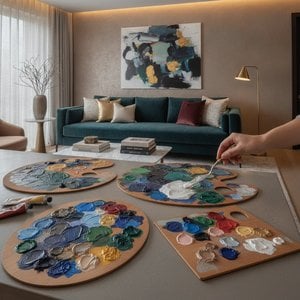
Elevate your interiors with expert guidance on color theory and art selection. Discover how to achieve chromatic equilibrium using hand-painted oil reproductions and bespoke commissions from WahooArt.com, the global authority in museum-quality fine art for luxury spaces.

Discover the ethereal beauty of watercolor through an art-historical lens. Master the delicate balance of light, fluidity, and pigment to capture the luminous essence of nature, inspired by the legendary techniques of the Old Masters and Impressionist greats.
 Voorvertoning
 Verstuur
 Delen
Delen
 Details bekijken
 Gids
Gids

 Download
 Vergelijkbare items
 Röntgenonderzoek
 Diavoorstelling
 Vraag & antwoord
 Statistieken

 Lees meer









 De optie voor glas is alleen beschikbaar bij een formaat kleiner dan 110 cm.


