GRATIS KUNSTADVIES

x
Bestel schilderij Bestel schilderijKoop afbeelding in hoge resolutie Koop afbeelding in hoge resolutie VerstuurVerstuur
DetailsDetails Toevoegen aan favorieten Toevoegen aan favorieten DownloadDownload Vergelijkbare werkenVergelijkbare werken RöntgenfotoRöntgenfoto DiavoorstellingDiavoorstelling

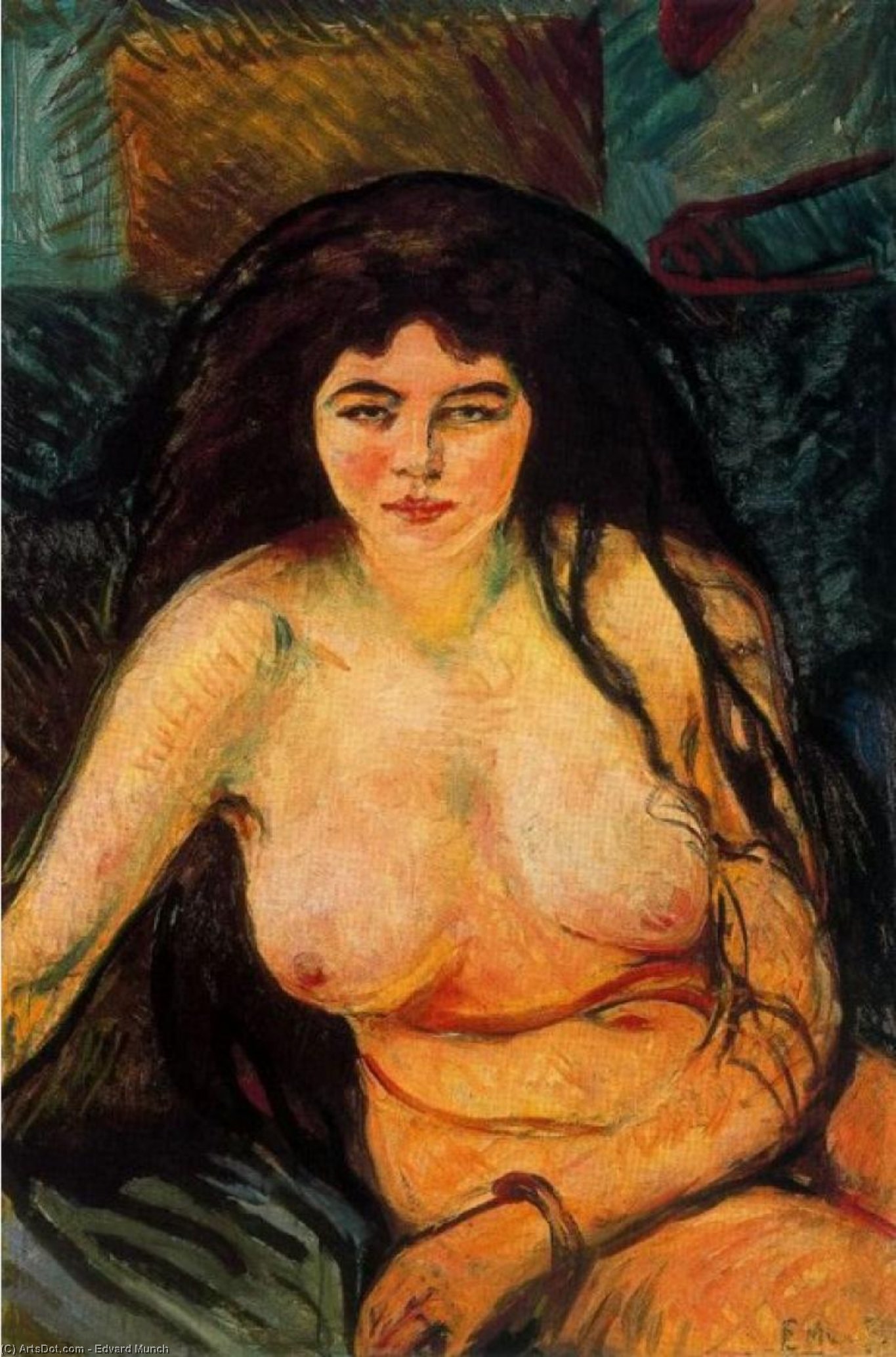
untitled (7987)

Explore Edvard Munch’s ‘untitled (7987)’ – a powerful Fauvist portrait of a nude woman. Bold colors, expressive brushstrokes & haunting emotion define this unique piece. A captivating work for art collectors.

Ontdek Edvard Munch (1863-1944), de meester van angst en emotie! Bekijk 'The Scream' & zijn iconische kunstwerken vol melancholie, liefde & psychologische diepgang.

Giclée / Kunstafdruk

Giclée- of canvasafdruk van museumkwaliteit met snelle productie en flexibele afwerkingsopties.

P118B $10
P118H $10
P118W $10
P438Z $10
P508JH $12
P508YH $12
P805H $10
P805Z $10
P919BZ $10
P919G $10
P919XJ $10
P959ZH $10
P968JZ $12
W106C $8
W218G $10
W218JH $8
W218Y $10
W307PJ $10
W316G $10
W316PJ $8
W316Y $10
W398PJ $8
W4111J $10
W500HY $15
W500JH $15
W692G $12
W849H $8
W940BG $15
W953PJ $8

Standard
custom
CM
INCH

Kies uit onze vooraf ingestelde maten die overeenkomen met de originele verhoudingen van het kunstwerk.

breedte
hoogte

U kunt uw eigen afmetingen opgeven om in een specifieke lijst of ruimte te passen. Als de door u gekozen maat niet overeenkomt met de proporties van het originele kunstwerk, zullen wij de afbeelding bijsnijden of uitbreiden met een gespiegelde of effen rand. Een digitaal mockup wordt ter goedkeuring naar u verzonden voordat de productie begint.
Houd er rekening mee dat de preview op het scherm de werkelijke bijsneding of uitbreiding niet weergeeft. Alleen de mockup toont de uiteindelijke compositie nauwkeurig.
Hoewel aangepaste maten beschikbaar zijn, raden wij aan een afmeting uit de vooraf bepaalde lijst te kiezen om de originele proporties te behouden.

Wereldwijde levering () binnen 2 weken in plaats van de standaard 4/5 weken. (2 juli)

why_choose_icon
Gratis wereldwijde expressverzending
why_choose_icon
Hoogwaardig linnen canvas
why_choose_icon
Volledige verzendverzekering
why_choose_icon
Garantie op terugbetaling van invoerrechten
why_choose_icon
Garantie op exacte kleurweergave
why_choose_icon
60 dagen retourbeleid (alleen bij defecten)
why_choose_icon
100% Geld-terug-garantie
why_choose_icon
Korting bij meerdere afnames

Totaalprijs

-

reproduction

untitled (7987)

Giclée / Kunstafdruk

Afmetingen reproductie

-

Eindtotaal

-

Snelle feiten

  • medium: Oil on canvas (presumed)
  • movement: Fauvism, Expressionism, Symbolism
  • influences: Hans Jæger, Fauvism
  • style: Fauvist, Expressive
  • title: untitled (7987)
  • subject: Nude female figure

Kunstquiz

Er is slechts één correct antwoord op elke vraag.

Vraag 1:
Which artistic movement significantly influenced the style of 'untitled (7987)' as evidenced by its bold, non-naturalistic colors?
Vraag 2:
The direct gaze of the figure in 'untitled (7987)' is best described as conveying a sense of…
Vraag 3:
Edvard Munch's personal life heavily influenced his art. What recurring themes stemmed from his childhood experiences?
Vraag 4:
How does the brushwork in 'untitled (7987)' contribute to the overall effect of the painting?
Vraag 5:
The composition of 'untitled (7987)' focuses attention on the figure by contrasting her with what?

Beschrijving verzamelobject

A Window into the Soul: Exploring Munch’s Fauvist-Inflected Interior

This striking work by Edvard Munch offers a compelling glimpse into the artist's ongoing exploration of the human condition, presented through a lens surprisingly divergent from his most famous Symbolist creations. While instantly recognizable as a product of Munch’s unique vision, this piece demonstrates a fascinating engagement with the burgeoning Fauvist movement – a stylistic detour that amplifies the emotional intensity at its core. It is a testament to Munch's willingness to experiment and adapt while remaining true to his deeply personal themes.

Decoding the Language of Color & Form

The painting’s most immediate characteristic is its bold, unapologetic use of color. This isn’t the naturalistic palette of academic tradition; instead, Munch employs intensely saturated hues – a hallmark of Fauvism – to express emotion rather than simply depict reality. Notice how colors are *felt* rather than seen: skin tones aren't rendered realistically but become emotional signifiers, contributing to the overall visceral impact.
  • Brushwork & Texture: Loose, gestural brushstrokes build up a rich texture and contribute to the dynamism of the composition. The lines writhe and flow, mirroring the internal turmoil often associated with Munch’s work.
  • Flattened Perspective: The deliberately flattened perspective prioritizes expressive quality over illusionistic depth, further intensifying the emotional resonance.
  • Fauvist Influence & Personal Style: While clearly influenced by Fauvism's liberation of color, Munch doesn’t fully abandon his own stylistic tendencies. A distinct psychological weight remains, anchoring the work within his established artistic identity.

Introspection and the Vulnerable Figure

The central figure – a nude woman seated in an interior space – commands immediate attention through her direct gaze. This isn’t a confrontational stare but one imbued with vulnerability, quiet introspection, and perhaps even a plea for understanding. The nude form, a recurring motif throughout art history, is here stripped of idealized beauty; it feels raw, exposed, and profoundly human. The composition focuses intently on the figure, contrasting her with a somewhat chaotic background. This juxtaposition draws our eye to her internal state, suggesting she exists within – or perhaps *against* – a turbulent world. The draped fabric adds an element of intimacy and concealment, hinting at layers of emotional complexity beneath the surface.

A Life Marked by Loss: Historical Context

To truly understand Munch’s work, one must acknowledge the profound tragedies that shaped his life. The early deaths of his mother and sister to tuberculosis, coupled with a family history of mental illness, instilled within him a lifelong preoccupation with mortality, sickness, and psychological distress. While this painting doesn't explicitly depict these traumas, they undoubtedly inform its emotional undercurrent. Munch was also deeply influenced by the philosophical currents of his time, particularly the nihilism espoused by Hans Jæger, who encouraged artistic exploration of inner turmoil. This piece can be seen as a continuation of that exploration – a visual manifestation of anxieties and vulnerabilities inherent in the human condition. It’s a testament to art's power to transform personal suffering into universal expression.

Emotional Resonance & Contemporary Appeal

This work transcends mere representation; it is an evocation of feeling. The bold colors, expressive brushstrokes, and direct gaze combine to create a powerful emotional impact that resonates deeply with viewers. It speaks to timeless themes of loneliness, vulnerability, the search for meaning, and the complexities of human existence – themes that remain profoundly relevant today. For collectors and interior designers, this piece offers a striking blend of historical significance and contemporary aesthetic appeal. Its vibrant colors and dynamic composition would make a bold statement in any space, while its underlying emotional depth invites contemplation and conversation. A high-quality reproduction promises to bring not just visual interest but also a sense of artistic weight and psychological resonance to any collection or interior design scheme.

Vergelijkbare kunstwerken


Biografie van de kunstenaar

Een Leven in Schaduw: De Wereld van Edvard Munch

Edvard Munch, geboren in 1863 te Ådalsbruk in Noorwegen, was een kunstenaar wiens werk synoniem werd met de angsten en emotionele onrust van het moderne tijdperk. Zijn leven, diep getekend door verlies en een allesdoordringende melancholie, vormde de bron van zijn expressieve kunst. Al vroeg in zijn jeugd, overschaduwd door de vroege dood van zijn moeder en zus – beiden ten prooi gevallen aan tuberculose – ontwikkelde Munch een spookachtige preoccupatie met sterfelijkheid, ziekte en de fragiliteit van het menselijk bestaan. Deze ervaringen waren niet slechts biografische details; ze werden de kern van zijn artistieke visie, die een onophoudelijke verkenning van het innerlijke landschap van angst, verdriet en hunkering aanwakkerde. De strenge religieuze overtuigingen van zijn vader en zijn eigen worstelingen met psychische aandoeningen droegen verder bij aan een gevoel van dreiging dat Munch’s wereld doordrong, waardoor niet alleen zijn persoonlijke leven maar ook de symbolische taal van zijn schilderijen werd gevormd. Hij portretteerde geen scènes; hij externaliseerde een interne staat en vertaalde psychologische nood in visuele vorm.

De Ontstaansgeschiedenis van Expressie: Invloeden en Artistieke Ontwikkeling

Munch’s artistieke reis begon met formele training aan de Koninklijke School voor Kunst en Design in Kristiania (Oslo), maar het was zijn ontmoeting met boheemse kringen en de nihilistische filosofie van Hans Jæger die zijn creatieve vuur echt aanwakkerde. Jæger moedigde Munch aan om conventionele academische stijlen te verlaten en zich in plaats daarvan onder te dompelen in de diepten van zijn eigen subjectieve ervaring, een concept dat hij “zielsschilderen” noemde. Deze cruciale verschuiving markeerde het begin van Munch’s kenmerkende stijl – gekenmerkt door rauwe emotie, vervormde vormen en een afwijzing van naturalistische weergave. Zijn reizen naar Parijs in de jaren 1890 brachten hem in contact met de opkomende post-impressionistische beweging, waar hij invloeden absorbeerde van kunstenaars als Paul Gauguin, Vincent van Gogh en Henri de Toulouse-Lautrec. Het gedurfde kleurgebruik, expressieve penseelstreken en psychologische intensiteit van deze meesters resoneerden diep met Munch’s eigen artistieke neigingen. Hij imiteerde hun technieken niet; hij synthetiseerde ze tot iets unieks – een visuele taal die in staat was om de meest diepe en verontrustende menselijke emoties over te brengen. Zijn tijd in Berlijn bleek ook cruciaal, waardoor hij in contact kwam met toneelschrijver August Strindberg, wiens verkenning van psychologische thema’s Munch’s artistieke onderzoek verder aanwakkerde.

Iconische Visioenen: Belangrijke Werken en Hun Symbolische Betekenis

Munch’s oeuvre wordt bevolkt door beelden die diep in het collectieve bewustzijn zijn gegrift. De Schreeuw, misschien wel zijn meest iconische werk, overstijgt zijn status als schilderij om een universeel symbool van existentieel angst te worden. Het wervelende, vurige landschap en het contornerende gezicht van de figuur belichamen een oergevoel tegen de onverschilligheid van het universum. Madonna, een controversieel en diep persoonlijk stuk, onderzoekt thema’s als seksualiteit, moederschap en sterfelijkheid met verontrustende openhartigheid. Terugkerende motieven zoals Het Zieke Kind – geïnspireerd door het verlies van zijn zus Sophie – dienen als ontroerende herinneringen aan Munch’s jeugdtrauma en de alomtegenwoordige schaduw van de dood. Melancholie I & II, krachtige afbeeldingen van diepe droefheid en isolatie, onthullen een kwetsbaarheid die zowel persoonlijk als universeel herkenbaar is. Deze werken zijn niet simpelweg representaties van de externe realiteit; ze zijn vensters naar de ziel van de kunstenaar, die kijkers een compromisloze blik bieden op de donkerste hoeken van het menselijk psyche. Munch streefde er niet naar om mooie beelden te creëren; hij zocht naar waarheid – zelfs als die waarheid pijnlijk en verontrustend was.

Een Blijvende Erfenis: Historische Betekenis en Voortdurende Invloed

Edvard Munch’s bijdrage aan de moderne kunst is onmeetbaar. Hij staat als een sleutelfiguur in de ontwikkeling van het expressionisme, die baanbaande weg voor kunstenaars die subjectieve emotie boven objectieve weergave stelden. Zijn compromisloze verkenning van universele menselijke ervaringen – liefde, verlies, angst en dood – blijft tot op de dag van vandaag resoneren met publiek, waardoor zijn plaats als een van de meest invloedrijke en duurzame figuren in de kunstgeschiedenis wordt verstevigd. Zijn werk heeft generaties kunstenaars diepgaand beïnvloed, bewegingen zoals het Duitse expressionisme en daarbuiten beïnvloedend. Hij durfde de donkerdere aspecten van de menselijke conditie te confronteren, waarbij hij conventionele opvattingen over schoonheid en artistieke representatie uitdaagde. Zelfs na het bereiken van roem en erkenning – culminerend in de oprichting van het Munch Museum in Oslo – bleef zijn persoonlijke leven turbulent, gekenmerkt door periodes van psychische instabiliteit en isolatie. Toch bleef hij creëren, waardoor een oeuvre achterbleef dat blijft provoceren, uitdagen en inspireren. Munch’s erfenis gaat niet alleen over de schilderijen zelf; het gaat om de moed om de complexiteit van het menselijk bestaan te confronteren en die ervaringen in kunst te vertalen die spreken tot de diepste delen van ons wezen.

Edvard Munch

Edvard Munch

1863 - 1944 , Noorwegen

Belangrijkste feiten

  • Artistic Movement Or Style: Expressionisme
  • Artists Or Movements Influenced By This Artist: ['Duits Expressionisme']
  • Artists Who Influenced This Artist:
    • Paul Gauguin
    • Van Gogh
  • Date Of Birth: 12 december 1863
  • Date Of Death: 23 januari 1944
  • Full Name: Edvard Munch
  • Nationality: Noors
  • Notable Artworks:
    • The Scream
    • Madonna
    • The Sick Child
  • Place Of Birth: Ådalsbruk, Zweden
Ontdek kunstwerken georganiseerd op thema's, stijlen en kenmerken.