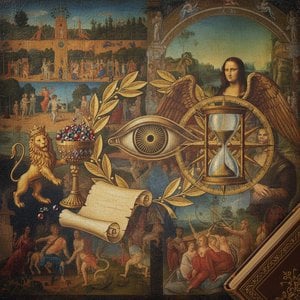
Een Cartograaf van Hedendaagse Cultuur: Het Leven en de Kunst van Douglas Coupland
Douglas Coupland verscheen in het begin van de jaren 90 op het culturele toneel, niet enkel als romanschrijver, maar als een diagnosticus van een tijdperk. Geboren op 30 december 1961 op een Canadese militaire basis in Baden-Söllingen, Duitsland, werd zijn jeugd gekenmerkt door voortdurende verhuizingen, om uiteindelijk te settelen in Vancouver, Canada – een stad die zijn artistieke gevoeligheid diepgaand zou vormen. Deze vroege ervaring gaf hem het oog van een scherpe observator, afgestemd op de subtiele verschuivingen en angsten van het moderne leven. Hoewel hij aanvankelijk beeldhouwkunst studeerde aan het Emily Carr College of Art and Design, vond Coupland zijn ware roeping niet in het boetseren van fysieke vormen, maar in het verwoorden van de ongrijpbende texturen van het hedendaagse bestaan, en later, door een fascinerende versmelting van beeldende kunst en digitale technologie. Hij weerspiegelde de cultuur niet slechts; hij gaf er naam aan, en gaf een stem aan de onuitgesproken gevoelens van een generatie die dreef in een razendsnel versnellende wereld.
Van Generatie X naar Visuele Commentaar
Couplands doorbraak kwam met de publicatie van
Generation X: Tales for an Accelerated Culture in 1991. De roman was niet alleen een literair succes; het was een cultureel fenomeen dat een term muntte die onmiddellijk resoneerde bij miljoenen mensen die worstelden met identiteit en zingeving in de schaduw van de post-industriële samenleving. Termen als “McJob” maakten hun intrede in het lexicon en werden een synoniem voor de onzekerheid en vervreemding van arbeid in de late 20e eeuw. Maar Couplands ambitie reikte veel verder dan het simpelweg labelen van een generatie. Hij was geïnteresseerd in het verkennen van het psychologische landschap van een wereld die verzadigd is met media, consumentisme en technologische verandering. Deze verkenning eindigde niet bij de literatuur; hij maakte een naadloze overgang naar de beeldende kunst, gedreven door de wens om zijn ideeën via verschillende media uit te drukken. Zijn artistieke praktijk is opmerkelijk divers en omvat schilderkunst, sculptuur, fotografie en design – allemaal verenigd door een consistente thematische draad: een ondervraging van het moderne leven. Met dertien romans, twee bundels korte verhalen, zeven non-fictie boeken en talrijke scenario's voor film en televisie, getuigt hij van een ongekende creatieve vruchtbaarheid.
De Taal van QR-codes en het Gewicht van Verlies
De beeldende kunst van Coupland kenmerkt zich door een unieke mix van abstractie, popcultuurreferenties en technologische innovatie. Misschien wel het meest opvallend is zijn bekendheid door de series waarin hij QR-codes in schilderijen verwerkt. Dit zijn geen louter decoratief elementen; het zijn poorten naar verborgen lagen van betekenis, die de kijker uitnodigen om via hun smartphone actief met het kunstwerk in interactie te gaan. Het scannen van deze codes onthult beknopte commentaren, wat een extra dimensie toevoegt aan de visuele ervaring – een bewijs van Couplands fascinatie voor de kruising tussen kunst en technologie. Naast deze innovatieve techniek worstelt zijn werk vaak met diepgaande thema's als verlies en sterfelijkheid. De
Dead Grads Series is bijvoorbeeld een ontroerend eerbetoon aan jonge levens die tragisch voortijdig werden beëindigd, waarbij elk schilderij titels draagt als “Gun”, “Car Crash” en “Overdose” – rauwe herinneringen aan de kwetsbaarheid van het leven en de blijvende impact van rouw.
Silver Boogeyman, een indrukwekkend werk dat het gezicht van Osama bin Laden onthult wanneer het door een smartphonescherm wordt bekeken, illustreert zijn vermogen om gedachten te prikkelen en percepties uit te dagen, waardoor de kijker wordt gedwongen de ongemakkelijke waarheden van de post-9/11 wereld onder ogen te zien.
Sculpturale Verklaringen en Nationale Identiteit
Couplands artistische visie reikt verder dan het tweedimensionale canvas tot in het domein van de sculptuur.
The Ice Storm, een monumentale stalen structuur, staat als een krachtige reflectie op de Canadese identiteit en kwetsbaarheid. De vorm van het beeldhouwwerk roept zowel kracht als fragilheid op, wat de complexiteit van de nationale geschiedenis en de relatie met de natuur weerspiegelt. Zijn mixed-media collages, zoals
God, tonen zijn meesterschap in gelaagde technieken en grafisch ontwerp, waarbij symbolische elementen zoals “Lord Jim” en een geometrische ‘D’ worden gebruikt om visueel aangrijpende composities te creëren die uitnodigen tot meerdere interpretaties. Deze werken zijn niet simpelweg esthetische objecten; het zijn intellectuele puzzels die actieve betrokkenheid van de toeschouwer vereisen. Zijn werk is tentoongesteld in prestigieuze instellingen zoals de Vancouver Art Gallery en de McMichael Canadian Art Collection, wat zijn positie als een belangrijk figuur in de hedendaagse kunst bevestigt.
Erfenis van Observatie en Innovatie
De bijdragen van Douglas Coupland aan zowel de literatuur als de beeldende kunst hebben hem wereldwijde erkenning opgeleverd, waaronder benoeming tot Officer of the Order of Canada en lidmaatschap van de Order of British Columbia. Hij blijft een vitale stem in de Canadese letteren en kunsten, bekend om zijn scherpe observaties, innovatieve artistieke expressie en de bereidheid om complexe sociale en culturele kwesties aan te pakken. Zijn werk blijft resoneren bij publiek wereldwijd en stimuleert het debat over hedendaagse cultuur, technologie en de menselijke conditie. Coupland is niet zomaar een kunstenaar; hij is een cultureel cartograaf die het voortdurend veranderende terrein van het moderne leven in kaart brengt met zowel precisie als empathie. Hij heeft een onuitwisbare indruk achtergelaten op ons begrip van onszelf en de wereld om ons heen, waarmee hij zijn plaats als een van de belangrijkste hedendaagse kunstenaars van Canada veiligstelt.
- Kernthema's: Generatie X, digitale cultuur, technologie, verlies, identiteit, consumentisme, Canadese identiteit.
- Invloeden: Popart, minimalisme, constructivisme, Japanse bedrijfswetenschap, hedendaagse literatuur.



 Voorvertoning
 Bestel handgeschilderde reproductie
 Verstuur
 Delen
Delen
 Details bekijken
 Gids
Gids

 Download
 Vergelijkbare items
 Röntgenonderzoek
 Diavoorstelling
 Statistieken


 Lees meer






































 De optie voor glas is alleen beschikbaar bij een formaat kleiner dan 110 cm.