
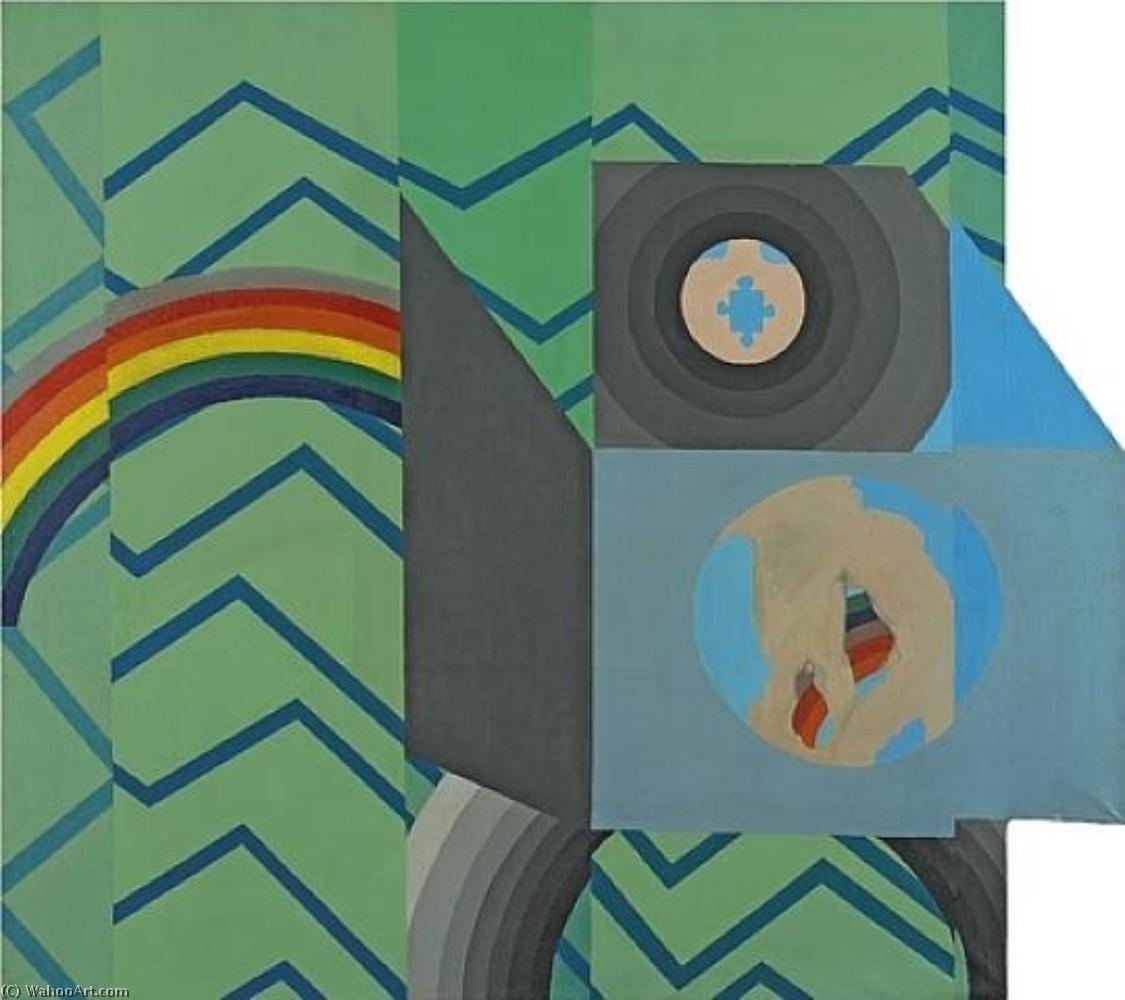
Ontvang een bestand dat klaar is voor drukwerk en de kwaliteit van het online voorbeeld ver overstijgt. Elke digitale afbeelding die wij verkopen, is afkomstig van een high-resolution master uit onze database — meestal tussen de 5.000 en 15.000 pixels breed — zodat u met vertrouwen groot kunt afdrukken, nauwkeurig kunt bijsnijden of fijne details kunt reproduceren.
Geen enkel bestand verlaat ons atelier onbewerkt. Een digitaal expert controleert de kleuren aan de hand van het originele schilderij en corrigeert deze indien nodig, om vervolgens de helderheid en details te verbeteren met professionele retoucheertechnieken — waarbij de penseelstreek en stijl van de kunstenaar altijd strikt worden gerespecteerd. Het resultaat is een afbeelding die oogt als het schilderij zelf, en niet als een gescande foto met een filter.
U keurt de afbeelding goed voordat de bestelling wordt afgerond: onze expert stuurt u binnen 72 uur een e-mail ter beoordeling. Niet tevreden? Vraag om aanpassingen of correcties, of vraag een terugbetaling aan als de kwaliteit niet aan de verwachtingen voldoet.
Dit is de kwaliteit waarop uitgevers, designstudio's, galeries en drukkerijen vertrouwen.
Download een bestand met hoge resolutie voor persoonlijke weergave, afdrukken en creatieve projecten. ( Schakel over naar print Bestel handgeschilderde reproductie)
Wanneer u kiest voor WahooArt.com, ontvangt u niet alleen een afbeelding – u krijgt een professioneel verbeterd digitaal kunstwerk, met precisie vervaardigd en voorzien van een tevredenheidsgarantie. Dit is alles wat automatisch bij uw bestelling is inbegrepen:
Uw hoogwaardige digitale afbeeldingsbestand wordt binnen 72 uur na bestelling naar u gemaild – klaar voor direct gebruik.
Uw kunstwerk wordt professioneel geoptimaliseerd met behulp van geavanceerde AI-tools en handmatige bewerkingen, waardoor maximale details, helderheid en kleurnauwkeurigheid worden gegarandeerd.
Je bestand per ongeluk verwijderd of kwijtgeraakt? Geen zorgen – we sturen het u op elk gewenst moment gratis opnieuw toe.
Geniet direct van uw kunstwerk zonder invoerrechten, belastingen of verzendkosten – digitale downloads zijn altijd belastingvrij.
Met behulp van professionele hulpmiddelen en kleurbeheer zorgen wij ervoor dat uw digitale afbeelding de originele kleuren zo nauwkeurig mogelijk weergeeft.
Mocht u niet tevreden zijn met uw digitale afbeelding, dan passen wij deze aan of storten wij 100% terug binnen 100 dagen – zonder vragen te stellen.
Niet tevreden? Ontvang een volledige terugbetaling binnen 100 dagen na ontvangst van uw digitale bestand – zonder vragen te stellen.
Koop 3 afbeeldingen, bespaar 10% - Koop 5, bespaar 15% - Koop 10+, bespaar 20%. Ideaal voor creatieve projecten, galerieën en bureaus.

Born in Portsmouth, England, in 1937, Derek Boshier’s artistic journey was one of constant evolution and a relentless interrogation of contemporary culture. Initially drawn to painting after studying at Yeovil School of Art and later the Royal College of Art alongside luminaries like David Hockney and Allen Jones, Boshier quickly distinguished himself not merely as a painter but as a critical observer – a role that would define his entire career. His early work, honed during his time at the RCA, was marked by a didactic approach, grappling with themes of the space race, the burgeoning influence of multinational corporations, and the unsettling Americanization of British society. This period reflects a deep engagement with the anxieties of the Cold War era and the rapid shifts in global power dynamics.
Boshier’s artistic trajectory took a dramatic turn in 1962 with his participation in *Pop Goes the Easel*, a groundbreaking BBC television documentary directed by Ken Russell. This film, featuring Boshier alongside Peter Blake, Pauline Boty, and Peter Phillips, captured the burgeoning energy of British Pop Art and established Boshier as a key figure within the movement. The program’s deliberately chaotic and fragmented style mirrored Boshier's own approach to art – a rejection of traditional narrative in favor of a collage-like assemblage of images and ideas. Russell’s ambitious vision, pushing boundaries of television production at the time, perfectly aligned with Boshier’s desire to challenge conventional artistic practices and engage directly with the visual language of popular culture.
Following his involvement in *Pop Goes the Easel*, Boshier embarked on a period of experimentation that saw him move beyond painting, embracing a diverse range of media. He skillfully incorporated metal, coloured plastics, neon light – materials typically associated with commercial signage – into three-dimensional sculptures and installations. This shift reflected a broader interest in exploring the relationship between art and commerce, questioning the boundaries between high and low culture. His work during this period became increasingly conceptual, often employing irony and satire to critique societal norms and political structures.
Boshier’s fascination with film also played a crucial role in his artistic development. He collaborated with Peter Blake on experimental films that explored themes of identity, consumerism, and the manipulation of images. His work during the early 1970s extended to book art, further demonstrating his willingness to disrupt traditional notions of artistic form and content. Notably, he designed songbooks for influential bands like The Clash and David Bowie, showcasing his ability to seamlessly integrate visual concepts into popular music culture.
In the 1970s, Boshier’s work became increasingly focused on social commentary and political engagement. He addressed pressing issues such as gun control, police brutality, and the continued dominance of multinational corporations – often with a darkly humorous and subversive edge. This shift was partly influenced by his time teaching at Central School of Art and Design, where he mentored John Mellor (later Joe Strummer of The Clash), leading to his involvement in designing The Clash’s second songbook. His later work continued to grapple with these themes, reflecting a deep concern for social justice and a willingness to challenge established power structures.
Moving to Los Angeles in 1980, Boshier maintained an active artistic practice while also teaching at the University of California, Los Angeles. His work during this period retained its critical edge, tackling contemporary issues with a distinctive visual style. He continued to experiment with various media, including photography and installation art, always seeking new ways to engage with the complexities of the modern world. Derek Boshier passed away in 2024, leaving behind a significant body of work that continues to resonate with audiences today. His legacy as a pioneering British Pop artist—one who fearlessly challenged conventions and used his art to provoke thought and inspire social change—remains firmly established.
His works are held in major collections worldwide, including the Tate Gallery, The British Museum, and the Walker Art Center, testament to the enduring impact of his unique artistic vision.

1937 -
 Voorvertoning
 Verstuur
 Delen
Delen
 Details bekijken
 Gids
Gids

 Download
 Vergelijkbare items
 Röntgenonderzoek
 Diavoorstelling
 Vraag & antwoord
 Statistieken
 Lees meer


