GRATIS KUNSTADVIES

x
Print kopen Print kopenKoop afbeelding in hoge resolutie Koop afbeelding in hoge resolutie VerstuurVerstuur
DetailsDetails Toevoegen aan favorieten Toevoegen aan favorieten DownloadDownload Vergelijkbare werkenVergelijkbare werken RöntgenfotoRöntgenfoto DiavoorstellingDiavoorstelling

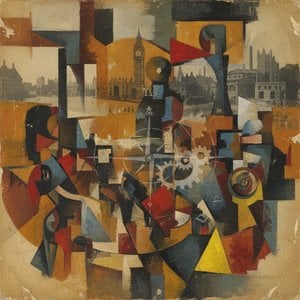
Circus (Abstract Composition)

Discover 'Circus' by David Bomberg (1921), an abstract masterpiece blending cubism & futurism with vibrant colors and dynamic figures. Explore the work of this pioneering British artist.

David Bomberg (1890-1957): Van kubistische beginjaren tot expressieve landschappen, ontdek de reis van deze invloedrijke Britse schilder & 'Whitechapel Boy'.

Handgemaakte olieverfreproductie

Met de hand geschilderd in olieverf op canvas in uw gewenste maat en lijst, op bestelling gemaakt door onze kunstenaars.

P118B $10
P118H $10
P118W $10
P438Z $10
P508JH $12
P508YH $12
P805H $10
P805Z $10
P919BZ $10
P919G $10
P919XJ $10
P959ZH $10
P968JZ $12
W106C $8
W218G $10
W218JH $8
W218Y $10
W307PJ $10
W316G $10
W316PJ $8
W316Y $10
W398PJ $8
W4111J $10
W500HY $15
W500JH $15
W692G $12
W849H $8
W940BG $15
W953PJ $8

Standard
custom
CM
INCH

Kies uit onze vooraf ingestelde maten die overeenkomen met de originele verhoudingen van het kunstwerk.

breedte
hoogte

U kunt uw eigen afmetingen invoeren om in een specifieke lijst of ruimte te passen. Als de door u gekozen maat niet overeenkomt met de verhoudingen van het originele beeld, zullen we het kunstwerk bijsnijden of het schilderij uitbreiden met extra handgeschilderde elementen. Een digitale mockup wordt ter goedkeuring naar u verzonden voordat de productie begint.
Houd er rekening mee dat de preview op het scherm niet de werkelijke uitsnede of uitbreiding weergeeft. Alleen de mockup toont de uiteindelijke compositie nauwkeurig.
Hoewel aangepaste afmetingen mogelijk zijn, raden we aan een maat uit de vooraf gedefinieerde lijst te selecteren om de originele verhoudingen te behouden.

Voorbeelden van aanpassingen: Vervang het gezicht met een eigen foto; Voeg een huisdier toe (bijv. vervang de kat door een hond); Verwerk een verborgen boodschap in de achtergrond; Wijzig het landschap of andere elementen in de achtergrond.
Na de bestelling zal het team van WahooArt.com per e-mail contact opnemen voor instructies en een mockup-voorbeeld sturen.

Wereldwijde levering () binnen 3/4 weken in plaats van de standaard 5 weken. (2 juli). Geen concessies aan de kwaliteit.

why_choose_icon
Gratis wereldwijde expressverzending
why_choose_icon
Hoogwaardig linnen canvas
why_choose_icon
Volledige verzendverzekering
why_choose_icon
Garantie op terugbetaling van invoerrechten
why_choose_icon
Garantie op exacte kleurweergave
why_choose_icon
60 dagen retourbeleid (alleen bij defecten)
why_choose_icon
100% Geld-terug-garantie
why_choose_icon
Korting bij meerdere afnames

Totaalprijs

-

reproduction

Circus (Abstract Composition)

Techniek reproductie

Afmetingen reproductie

-

Eindtotaal

-

Snelle feiten

  • Artist: David Bomberg
  • Movement: Cubism, Futurism
  • Location: Ashmolean Museum
  • Influences:
    • Cézanne
    • Sickert
  • Title: Circus (Abstract Composition)
  • Artistic style: Expressionist
  • Notable elements: Angular figures, color

Kunstquiz

Er is slechts één correct antwoord op elke vraag.

Vraag 1:
What is the primary subject matter depicted in David Bomberg’s ‘Circus (Abstract Composition)’?
Vraag 2:
In what year was ‘Circus (Abstract Composition)’ painted?
Vraag 3:
Which artistic movement heavily influenced David Bomberg’s style during the creation of ‘Circus (Abstract Composition)’?
Vraag 4:
What is the approximate size of the painting ‘Circus (Abstract Composition)’?
Vraag 5:
David Bomberg was part of a group known as the ‘Whitechapel Boys’. What is significant about this group?

Beschrijving kunstwerk

A Whirlwind of Color and Form: David Bomberg’s “Circus”

David Bomberg's "Circus (Abstract Composition)," painted in 1921, isn’t merely a depiction of a traveling show; it’s an explosion of energy, emotion, and the restless spirit of early modernism. This vibrant canvas, now housed at the Ashmolean Museum in Oxford, captures a fleeting moment within a chaotic yet strangely ordered spectacle – a testament to Bomberg's unique ability to distill complex experience into powerful visual form. The painting immediately assaults the senses with its bold palette: assertive blues and reds clash dynamically against yellows and whites, creating an atmosphere of both excitement and underlying tension.

Bomberg’s style during this period was deeply influenced by the avant-garde movements sweeping through Europe. He absorbed the geometric abstraction of Cubism – evident in the fragmented forms suggesting figures and structures – while simultaneously embracing the dynamism and expressive power of Futurism, particularly its fascination with movement and speed. The painting's composition isn’t static; it feels like a captured rush, a snapshot of a scene perpetually in motion. Notice how the figures are reduced to angular shapes, almost dissolving into the swirling colors, mirroring the fragmented reality presented by Cubist principles.

The Artist and His Time

Born in Birmingham in 1890, David Bomberg’s early life was shaped by his Polish-Jewish heritage and a challenging upbringing. He initially trained as a lithographer but quickly gravitated towards painting, finding himself drawn to the radical artistic currents of the time. He became part of the “Whitechapel Boys,” a group of East End artists who pushed against established conventions and experimented with new forms of expression. This group, including Mark Gertler and Stanley Spencer, formed a vital network of support and influence during a period of significant social and political upheaval in Britain.

Bomberg’s artistic journey was marked by experimentation and controversy. His early work, particularly his engagement with Cubism and Futurism, drew criticism from some quarters who viewed these movements as overly abstract or even decadent. However, Bomberg remained steadfast in his pursuit of a new visual language, reflecting the anxieties and aspirations of a rapidly changing world. His expulsion from the Slade School of Art in 1913, due to his perceived disregard for traditional artistic methods, further solidified his position as an outsider artist challenging established norms.

Decoding the Composition: Symbolism and Emotion

While seemingly abstract, “Circus” is rich with symbolic potential. The figures themselves – a jumble of shapes suggesting people and animals – represent not individual portraits but rather archetypal elements of the circus experience: performers, spectators, and the spectacle itself. The swirling colors aren’t simply decorative; they convey a sense of disorientation, excitement, and perhaps even underlying unease. The dominant blues could symbolize both the vastness of the sky and the melancholy associated with transient experiences.

Consider the elephant in the center of the composition. It's not rendered realistically but rather as a powerful, simplified form – a symbol of strength, memory, and perhaps even the weight of tradition. The overall effect is one of controlled chaos, inviting the viewer to contemplate the complexities of human experience within a world of illusion and spectacle. Bomberg masterfully uses color and form to evoke a visceral response, capturing not just what he saw but also how he *felt* about it.

A Legacy of Innovation

“Circus (Abstract Composition)” stands as a pivotal work in David Bomberg’s oeuvre and a significant example of early British abstraction. It demonstrates his willingness to embrace radical experimentation, blending influences from Cubism, Futurism, and his own unique artistic vision. His exploration of form, color, and emotion paved the way for subsequent generations of artists, solidifying his place as a key figure in the development of modern art in Britain. Reproductions of this dynamic painting continue to resonate with viewers today, offering a glimpse into the turbulent yet exhilarating world of early 20th-century artistic innovation.

Vergelijkbare kunstwerken


Biografie van de kunstenaar

Vroege Leven en Artistieke Opleiding

  • Geboren: Birmingham, Verenigd Koninkrijk (5 december 1890)
  • Overleden: Londen, Verenigd Koninkgend (19 augustus 1957)
  • Een van de 'Whitechapel Boys' – een groep kunstenaars uit de East End die aan het begin van de 20e eeuw opkwamen.

Geboren als zoon van Pools-Joodse immigranten, Abraham en Rebecca Bomberg, studeerde hij aanvankelijk aan de City and Guilds Technical Art School voordat hij zich in Birmingham opleidde tot lithograaf.

Hij studeerde onder Walter Sickert aan de Westminster School of Art (1908-1910), waarbij hij werd beïnvloed door de focus van Sickert op vorm en het stedelijke leven. Een cruciale ontmoeting met het werk van Paul Cézanne vond plaats via de tentoonstelling "Manet and the Post-Impressionists" van Roger Fry in 1910. Later volgde hij een opleiding aan de Slade School of Art (1911), waar hij de Tonks Prize won voor zijn tekening van medestudent Isaac Rosenberg.

De Avant-Garde Jaren: Cubisme, Futurisme en Controvers

  • Aan de Slade maakte Bomberg deel uit van een opmerkelijke generatie, waaronder Mark Gertler, Stanley Spencer, C.R.W. Nevinson en Dora Carrington.
  • Hij liet zich inspireren door de Londense tentoonstellingen van de Italiaanse Futuristen in 1912 en Fry's tweede postimpressionistische expositie (met werken van Picasso, Matisse, de Fauvisten en Wyndham Lewis).
  • Hij ontwikkelde een eigenzinnige stijl waarin het Cubisme en Futurisme samensmolten – gekenmerkt door geometrische composities, een beperkt kleurenpalet, hoekige figuren en rasterachtige structuren.
  • Zijn radicale benadering leidde in 1913 zelfs tot zijn schorsing van de Slade School of Art, omdat zijn werk als te gewaagd werd beschouwd voor de conventionele methoden van de instelling.
  • Kortstondig verbonden aan de Omega Workshops van de Bloomsbury Group en tentoonstellend met de Camden Town Group, toonde hij een affiniteit met de Vorticistische beweging van Wyndham Lewis, maar hij bleef onafhankelijk en weigerde volledige betrokkenheid.

Van Oorlog naar Landschap: Een Stijlwisseling

De ervaringen als gewone soldaat tijdens de Eerste Wereldoorlog hadden een diepgaande impact op zijn artistieke visie, wat leidde tot een beweging weg van de abstractie.

In de jaren 20 nam Bomberg een meer figuratieve stijl aan, waarbij hij zich concentreerde op portretten en landschappen die rechtstreeks uit de natuur werden ontleend. Hij ontwikkelde een steeds expressionistischere techniek, gekenmerkt door een textuurrijke impasto en emotionele intensiteit.

Uitgebreide reizen door het Midden-Oosten (met name Palestina) en Europa hebben zijn latere werk aanzienlijk beïnvloed. Zijn afbeeldingen van Jeruzalem zijn hierbij bijzonder opmerkelijk.

Latere Jaren en Nalatenschap

  • Van 1945 tot 1953 doceerde hij aan het Borough Polytechnic (nu London South Bank University), waar hij een hele generatie kunstenaars beïnvloedde, waaronder Frank Auerbach, Leon Kossoff, Philip Holmes, Cliff Holden, Edna Mann, Dorothy Mead, Gustav Metzger, Dennis Creffield, Cecil Bailey en Miles Richmond.
  • Hij was getrouwd met de landschapsschilderes Lilian Holt.
  • Ondanks perioden van relatieve onbekendheid tijdens zijn leven, heeft het werk van Bomberg in de afgelopen decennia steeds meer erkenning gekregen als een belangrijke bijdrage aan de Britse moderne kunst.

  • Het David Bomberg House aan de London South Bank University is naar hem vernoemd.
  • Zijn nalatenschap ligt in zijn unieke synthese van Europese avant-garde bewegingen en zijn latere ontwikkeling van een krachtige, expressieve landschapsstijl die de essentie van plaats en menselijke ervaring wist te vangen.
David Bomberg

David Bomberg

1890 - 1957 , Verenigd Koninkrijk

Belangrijkste feiten

  • Artistic Movement Or Style:
    • Cubisme
    • Futurisme
    • Expressionisme
  • Artists Or Movements Influenced By This Artist:
    • Frank Auerbach
    • Leon Kossoff
  • Artists Who Influenced This Artist:
    • Paul Cézanne
    • Walter Sickert
    • Wyndham Lewis
  • Date Of Birth: 5 december 1890
  • Date Of Death: 19 augustus 1957
  • Full Name: David Garshen Bomberg
  • Nationality: Brits
  • Notable Artworks:
    • Zelfportret (193ont)
    • Kitty, de zus van de kunstenaar (1929)
    • Studie voor een schilderij
    • Jeruzalem
  • Place Of Birth: Birmingham, Verenigd Koninkrijk
Ontdek kunstwerken georganiseerd op thema's, stijlen en kenmerken.