

Giclée- of canvasafdruk van museumkwaliteit met een snelle productie en flexibele afwerkingsmogelijkheden. ( Bestel handgeschilderde reproductie Schakel over naar digitale afbeeldingen)





























Kies uit onze vooraf ingestelde maten die overeenkomen met de originele verhoudingen van het kunstwerk.

Voer de gewenste breedte en hoogte in, passend bij uw lijst of muur. Een afdruk kan alleen worden ingekort en nooit groter worden gemaakt dan het origineel; een formaat met andere verhoudingen zal daarom een deel van de afbeelding verliezen. Wij sturen u een digitaal mockup ter goedkeuring voordat we tot drukwerk overgaan. De afbeelding op deze pagina toont niet de werkelijke uitsnede — dit is alleen te zien op het mockup.
Wereldwijde levering () binnen 2 weken in plaats van de standaard 4/5 weken. (10 november)
Arabesque
Afmetingen reproductie

Claude Audran III (1658-1734) was a prominent French decorative painter whose career flourished during the reigns of Louis XIV and Louis XV. He is celebrated for his ornate style, encompassing arabesques, grotesques, and particularly, playful ‘singeries’ – depictions of monkeys mimicking human behavior.
Born in Lyon, France, on August 25th, 1658, Claude Audran III came from a family deeply rooted in the artistic world. He was closely mentored by his uncle, Claude Audran the Younger, who served as painter to Louis XIV. This familial connection provided him with early exposure and training within the royal circles of French art.
Audran III’s artistic development was heavily influenced by the prevailing Baroque aesthetic and the demand for lavish decoration within the French court. He mastered techniques in painted panelling, harpsichord cases, and other decorative elements. His style evolved to incorporate a unique blend of classical motifs with whimsical and imaginative scenes.
Audran III’s style is characterized by:
Claude Audran III played a significant role in shaping the decorative arts landscape of late 17th and early 18th-century France. His work embodies the opulence and grandeur associated with the French court, and his influence can be seen in the works of later artists, including Antoine Watteau, who was among his pupils.
In 1704, Audran III obtained the position of Keeper of the Luxembourg Palace. He continued to work as a decorative artist until his death in Paris on May 27th, 1734. His legacy endures through surviving examples of his work and the enduring appeal of his distinctive style.

1658 - 1734 , France

Explore the profound mastery of engraving and intaglio printmaking. Delve into the rich history, technical precision of the burin, and the enduring legacy of fine art techniques that shaped the world's most iconic masterpieces.
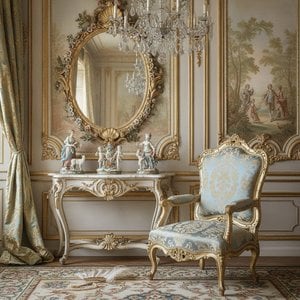
Discover the exquisite allure of Rococo art. Explore a curated guide to 18th-century French masterpieces, from Watteau to Fragonard, and learn how hand-painted oil reproductions can bring timeless elegance and luxury to your sophisticated interior design collection.

Immerse yourself in the splendor of Rococo art. Discover the era of elegance through masterworks by Watteau and Fragonard. Explore themes of romance, aristocratic leisure, and gilded ornamentation in this definitive guide to 18th-century French opulence.
 Voorvertoning
 Verstuur
 Delen
Delen
 Details bekijken
 Gids
Gids

 Download
 Vergelijkbare items
 Röntgenonderzoek
 Diavoorstelling
 Vraag & antwoord
 Statistieken


 Lees meer









 De optie voor glas is alleen beschikbaar bij een formaat kleiner dan 110 cm.


