VoorvertoningVoorvertoning Bekijk in ARBekijk in AR Bestel handgeschilderde reproductie Bestel handgeschilderde reproductieSchakel over naar digitale afbeelding Schakel over naar digitale afbeelding VerstuurVerstuur
Details bekijkenDetails bekijken Toevoegen aan favorieten Toevoegen aan favorieten DownloadDownload Vergelijkbare itemsVergelijkbare items RöntgenonderzoekRöntgenonderzoek DiavoorstellingDiavoorstelling StatistiekenStatistieken

Scène de "La tombe du maître André"

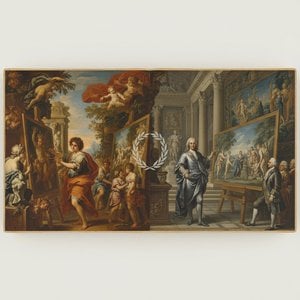
Admire Claude Gillot's "Scène de La tombe du maître André" (c. 1707), een prachtige zwart-wit reproductie van een dramatische scène uit het werk van Gillot, bekroond met een certificaat van echtheid en gratis verzending.

Explore Claude Gillot (1673-1722), master of Watteau & Lancret! French painter, printmaker, & theater designer known for fêtes champêtres & commedia dell’arte scenes.

Giclée / Kunstafdrukken

Giclée- of canvasafdruk van museumkwaliteit met een snelle productie en flexibele afwerkingsmogelijkheden. (Bestel handgeschilderde reproductie Bestel handgeschilderde reproductieSchakel over naar digitale afbeelding Schakel over naar digitale afbeelding)

P118B $10
P118H $10
P118W $10
P438Z $10
P508JH $12
P508YH $12
P805H $10
P805Z $10
P919BZ $10
P919G $10
P919XJ $10
P959ZH $10
P968JZ $12
W106C $8
W218G $10
W218JH $8
W218Y $10
W307PJ $10
W316G $10
W316PJ $8
W316Y $10
W398PJ $8
W4111J $10
W500HY $15
W500JH $15
W692G $12
W849H $8
W940BG $15
W953PJ $8

Standaardformaat
op maat gemaakt
CM
INCH

Kies uit onze vooraf ingestelde maten die overeenkomen met de originele verhoudingen van het kunstwerk.

breedte
hoogte

U kunt uw eigen afmetingen opgeven om in een specifieke lijst of ruimte te passen. Als de door u gekozen maat niet overeenkomt met de proporties van het originele kunstwerk, zullen wij de afbeelding bijsnijden of uitbreiden met een gespiegelde of effen rand. Een digitaal mockup wordt ter goedkeuring naar u verzonden voordat de productie begint.
Houd er rekening mee dat de preview op het scherm de werkelijke bijsneding of uitbreiding niet weergeeft. Alleen de mockup toont de uiteindelijke compositie nauwkeurig.
Hoewel aangepaste maten beschikbaar zijn, raden wij aan een afmeting uit de vooraf bepaalde lijst te kiezen om de originele proporties te behouden.

Wereldwijde levering () binnen 2 weken in plaats van de standaard 4/5 weken. (10 september)

why_choose_icon
Gratis wereldwijde expressverzending
why_choose_icon
Hoogwaardig linnen canvas
why_choose_icon
Volledige verzendverzekering
why_choose_icon
Garantie op terugbetaling van invoerrechten
why_choose_icon
Garantie op exacte kleurweergave
why_choose_icon
Retourbeleid van 100 dagen (alleen bij defecten)
why_choose_icon
100% Geld-terug-garantie
why_choose_icon
Korting bij meerdere afnames

Totaalprijs

$ 69

reproduction

Scène de "La tombe du maître André"

Giclée / Kunstafdrukken

Afmetingen reproductie

-

Eindtotaal

$ 69

Snelle feiten

  • Dimensions: 16 x 22.1 cm
  • Subject or theme: Religious scene; Tomb depiction
  • Movement: Baroque
  • Medium: Red chalk, watercolor & pen ink
  • Artist: Claude Gillot
  • Artistic style: Fête champêtre
  • Title: Scene from "The Tomb of Master André"

Kunstquiz

Er is slechts één goed antwoord op elke vraag.

Vraag 1:
What artistic style is Claude Gillot primarily associated with?
Vraag 2:
The painting depicts a scene from which significant historical event?
Vraag 3:
What medium was used to create this artwork?
Vraag 4:
Which artist heavily influenced Claude Gillot's style?
Vraag 5:
What is the primary focus of the image depicted in 'Scene from the Tomb of Master André'?

Claude Gillot: Een Schitterende Uitdrukking van het Barok Époque

Claude Gillot (1673 – 1722) wordt beschouwd als een belangrijke figuur binnen de kunstgeschiedenis van laatbarok Frankrijk, voornamelijk vanwege zijn meesterschap in Watteau en Lancret—kunstenaars die het esthetische gevoel van hun tijd enorm hebben gevormd. Geboren in Langres, Bourgondië, stond Gillot bekend om zijn veelzijdigheid als schilder, houtsnijder, theaterontwerper en smidmaker – een combinatie van interesses die bijzonder uitzonderlijk was voor kunstenaars uit zijn tijd. Zijn artistieke reis begon als leerling onder Jean Watteau rond 1703, waarbij hij de invloed van Watteau’s delicate pastellandschappen en aristocratische scènes opnam – een stijl die zou worden synoniem met “fête champêtre,” of pastorale fête. Deze beweging richtte zich op het prachtige landschap en de natuurlijke schoonheid, vaak afgebeeld in een romantisch licht, waarbij Gillot’s kunstenaarschap een belangrijke bijdrage leverde aan deze populaire stijl. Gillot's artistieke ontwikkeling werd onlosmakelijk verbonden met het groeiende theaterleven van Parijs. Hij werkte nauw samen met schrijvers en componisten, waarbij hij gedetailleerde decorsets en kostuums ontwierp voor opera’s en komedies, waardoor hij een element van dramatische expressie aan zijn werk voegde. Zijn betrokkenheid bij het theater illustreert niet alleen zijn artistieke ambitie maar ook zijn begrip voor de sociale en culturele context waarin hij actief was. Een belangrijke rol speelde hierbij het gebruik van kleur en licht om emoties over te brengen en een bepaalde sfeer te creëren – een techniek die Gillot voortreffelijk beheerstte en die terugkomt in vele van zijn werken. Het schilderij "Scene from the 'Master Andrew's Tomb'" is een prachtige voorstelling van een scène uit het werkstuk “De Grafsteen van Heer André” door Claude Gillot. Een zwart-wit afbeelding vangt de essentie van deze historische gebeurtenis en biedt een fascinerende kijk op het kunstenaarschap van zijn tijd. De compositie is zorgvuldig gepland om aandacht te trekken naar het centrale onderwerp: een man die nederig voor een andere man knielt, terwijl deze hem wijst naar zichzelf. Omringd door een groep mensen – één persoon staat aan de linkerkant van de knielende man, twee personen staan achter hem en drie meer zijn verspreid over de achtergrond – creëert Gillot een beeld dat zowel emotioneel als intellectueel stimulerend is. Een stoel staat rechts op het beeld en een dolk ligt bovenaan links in het kader. Deze kleine maar belangrijke details dragen bij aan de totale kunsthistorische waarde van het werkstuk. De stijl van Gillot wordt gekenmerkt door een combinatie van Watteau’s delicate pasteltechniek en Lancret’s dynamische compositie, waardoor hij een unieke visuele taal ontwikkelde die zowel elegant als expressief is. Hij gebruikte houtsnijwerk om zijn kunstwerken te verspreiden en te promoten, wat bijdroeg aan de populariteit van zijn stijl en het belang ervan binnen de kunstwereld bevestigde. Zijn werk staat symbool voor een periode waarin kunstenaars streven naar schoonheid en emotionele kracht terwijl ze zich houden aan traditionele vormen en technieken. Een bijzonder belangrijk aspect is het gebruik van licht en schaduw om diepte en dimensie te creëren, waardoor het beeld een gevoel van beweging en dramatische intensiteit krijgt. Het kunstwerk "Scene from the 'Master Andrew's Tomb'" biedt een prachtige kans om de schoonheid van laatbarok kunst te ervaren en een waardevol stuk kunstgeschiedenis te bezitten. Een hoogwaardige reproductie kan een prachtige aanvulling zijn op elke ruimte en een bron van inspiratie voor kunstliefhebbers en interieurontwerpers alike. Laat je onderdompelen in de stijlvolle wereld van Claude Gillot en laat je verwonderen over het meesterlijke gebruik van kleur, licht en compositie – een testament aan een tijd waarin kunstenaars streven naar zowel technische perfectie als emotionele expressie. Een prachtige manier om de schoonheid van het Barok Époque te laten zien!

Biografie van de kunstenaar

The Architect of Baroque Splendor

Claude Gillot (1673–1722) remains a luminous figure in the tapestry of late Baroque France, an artist whose versatile hand touched nearly every facet of the visual culture of his era. Born in the historic town of Langres, north of Dijon, Gillot’s early creative impulses were nurtured by his father before he ventured to Paris to refine his craft. His artistic journey was far from linear; he was a true polymath of the arts, moving with ease between the delicate precision of printmaking, the structural demands of metalworking, and the grand-scale imagination required for theatrical design. This multidisciplinary foundation allowed him to approach the canvas not merely as a surface for pigment, and but as a stage where light, movement, and drama could converge.

The trajectory of Gillot’s career was profoundly shaped by his apprenticeship under the legendary Jean Watteau around 1703. From Watteau, he absorbed the ethereal qualities of the emerging fête champêtre style—a genre characterized by pastoral elegance and aristocratic leisure. Yet, while he inherited this delicate sensibility, Gillot infused it with a unique vigor derived from his work in the Parisian theater. His extensive collaborations with playwrights and composers to design elaborate sets and costumes for operas and comedies instilled in him a mastery of visual storytelling. He understood how to direct the viewer's eye through composition, using the theatricality of costume and scenery to breathe life into mythological and contemporary narratives alike.

A Mastery of Myth and Motion

Gillot’s ascent within the prestigious Académie Royale de peinture et de sculpture in 1715 marked a definitive moment in his professional life, signaling his recognition as a master of monumental composition. His breakthrough was anchored by works that celebrated the grandeur of classical antiquity through a contemporary lens. In masterpieces such as “Feast of Pan” and “Feast of Bacchus,” Gillot demonstrated an extraordinary ability to blend the divine with the terrestrial. These canvases were not merely depictions of myth; they were sensory experiences, where the lushness of the landscape met the exuberant energy of mythological revelry.

His technique was characterized by a sophisticated use of color and form that could shift from the soft, dreamlike textures reminiscent of his mentor to a more robust, dramatic Baroque intensity. This versatility allowed him to capture the very essence of the commedia dell’arte, bringing the wit and character of masked performers to life with a sense of spontaneous motion. Through his engravings and paintings, he documented the social graces and theatrical whimsies of the French court, creating a visual record that was as much about the spirit of the age as it was about the subjects themselves.

Legacy of the Rococo Prelude

As the art world began to transition from the heavy grandeur of the Baroque toward the lighter, more intimate aesthetics of the Rococo, Gillot’s influence remained foundational. He served as a vital bridge between generations, influencing later masters such as Lancret by refining the vocabulary of pastoral scenes and theatrical character studies. His ability to marry the structural discipline of classical painting with the whimsical charm of the stage helped define the aesthetic sensibilities of the early 18th century.

Today, the significance of Claude Gillot lies in his role as a creator of atmosphere. Whether through the intricate lines of a print or the sweeping vistas of a mythological feast, his work continues to evoke the vibrant, theatrical pulse of pre-revolutionary France. He remains an artist whose legacy is found not just in individual masterpieces, but in the very way we perceive the intersection of art, theater, and the beautiful artifice of life.

Claude Gillot

Claude Gillot

1673 - 1722 , France

Belangrijkste feiten

  • Artistic Movement Or Style: Baroque
  • Artists Who Influenced This Artist:
    • Jean Watteau
    • Nicolas Lancret
  • Date Of Birth: 1673
  • Date Of Death: 1722
  • Full Name: Claude Gillot
  • Nationality: French
  • Notable Artworks:
    • The Two Coaches
    • Garment time of night
    • Italian Comedians
  • Place Of Birth: Langres, France
Ontdek kunstwerken georganiseerd op thema, stijl en kenmerk.