


Giclée- of canvasafdruk van museumkwaliteit met een snelle productie en flexibele afwerkingsmogelijkheden. ( Bestel handgeschilderde reproductie Koop afbeelding)
Kies uit onze vooraf ingestelde maten die overeenkomen met de originele verhoudingen van het kunstwerk.

U kunt uw eigen afmetingen opgeven om in een specifieke lijst of ruimte te passen. Als de door u gekozen maat niet overeenkomt met de proporties van het originele kunstwerk, zullen wij de afbeelding bijsnijden of uitbreiden met een gespiegelde of effen rand. Een digitaal mockup wordt ter goedkeuring naar u verzonden voordat de productie begint.
Houd er rekening mee dat de preview op het scherm de werkelijke bijsneding of uitbreiding niet weergeeft. Alleen de mockup toont de uiteindelijke compositie nauwkeurig.
Hoewel aangepaste maten beschikbaar zijn, raden wij aan een afmeting uit de vooraf bepaalde lijst te kiezen om de originele proporties te behouden.
Wereldwijde levering () binnen 2 weken in plaats van de standaard 4/5 weken. (6 september)


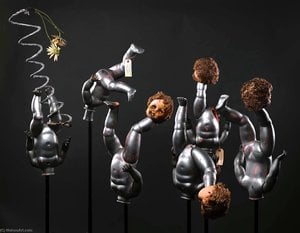
Untitled, Triangular Post with Face
Afmetingen reproductie

Clarence Schmidt (1897 – 1978) stands apart from the mainstream art world as a singular figure—an outsider artist whose relentless dedication to monumental environmental sculpture cemented his place in American folk art history. His enduring project, "The Miracle on the Mountain," began in 1940 and continued until his death in 1978, transforming a modest hillside near Woodstock, New York into an astonishing assemblage of reclaimed materials—a testament to ingenuity born from necessity and fueled by an unwavering vision.
Schmidt’s artistic journey commenced modestly. Born in Astoria, Queens, he attended high school before abandoning formal education to join his father as a mason and plasterer—a formative experience that instilled within him a profound understanding of construction and material manipulation. Accounts describe him crafting sets for silent films; this early endeavor foreshadow and foreshadowed the scale and physicality of his later endeavors, mirroring the transformative power of bringing imaginative concepts into tangible form. In 1920, Schmidt inherited five acres of land overlooking Ohayo Mountain, establishing a base for what would become his lifelong obsession.
The genesis of “The Miracle on the Mountain” occurred as Schmidt began to expand upon the landscape he called his own. What started as a simple cabin built of railroad ties evolved into an architectural labyrinth that defied conventional logic. Using found objects, recycled materials, and debris, Schmidt constructed a sprawling complex that climbed the face of the mountain. His work was not merely construction; it was an organic growth of stone, wood, and tar that integrated deeply with the earth itself.
As the decades progressed, his creation expanded to include:
This process was one of continuous, obsessive expansion. The structure became a living entity, demanding more material and more labor, driven by a spirit of exploration that Schmidt himself encapsulated in the name of his first home, "Journey’s End."
Despite the physical grandeur of his work, Schmidt's life was marked by both profound creation and sudden tragedy. In January 1968, a devastating fire swept through the structure, consuming much of what he had built with roofing tar and reclaimed wood. The loss was immense, yet the spirit of the "Miracle" remained etched in the landscape and the memory of the Woodstock community. His work gained national recognition, even being featured in a photo essay in the Saturday Evening Post in 1964, bringing his mountain masterpiece to the eyes of the wider American public.
Today, Clarence Schmidt is remembered not just as a builder, but as a pioneer of environmental sculpture. His ability to see potential in the discarded and to transform a singular hillside into a legendary monument ensures his place in the pantheon of American folk art. He remains a symbol of the power of the individual vision—a man who, through sheer persistence, turned a patch of New York earth into a dream made manifest.
1897 - 1978

 Voorvertoning
 Verstuur
 Delen
Delen
 Details bekijken

 Download
 Vergelijkbare items
 Röntgenonderzoek
 Diavoorstelling
 Lees meer




































 De optie voor glas is alleen beschikbaar bij een formaat kleiner dan 110 cm.


