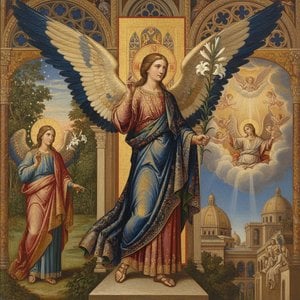
Clara Birnberg (née Winsten): A British Artist Bridging Worlds
Born in Romania in 1892, Clara Birnberg’s artistic journey took her from the heart of Eastern Europe to the vibrant and evolving art scene of early 20th-century England. Initially known as Clara Weinstein, she later adopted the surname Winsten upon marrying fellow artist Stephen Winsten – a union that profoundly shaped both their creative lives and their shared commitment to pacifism. Her story is one of resilience, artistic exploration, and a deep engagement with social and political currents of her time.
Clara’s early life was marked by displacement and the echoes of persecution. Her family’s emigration from Romania in 1902, fleeing anti-Semitic violence, instilled within her a sensitivity to themes of identity, belonging, and the human condition. This formative experience would later inform much of her work, particularly her poignant portraits and symbolic illustrations. The Slade School of Fine Art between 1910 and 1912 proved pivotal, providing her with technical skills alongside exposure to influential figures like Isaac Rosenberg and David Bomberg – artists who formed the nucleus of the ‘Whitechapel Boys,’ a collective known for its radical approach to art and its engagement with social issues.
This association with the Whitechapel Boys was particularly significant. As the only female member, Clara navigated a predominantly male artistic environment, forging her own distinctive voice within a group grappling with questions of modernity, identity, and the complexities of post-Impressionism. Her work during this period reflected both the influence of her peers and her burgeoning individual style – characterized by bold colors, dynamic compositions, and a willingness to explore challenging subject matter.
Artistic Style and Notable Works
Clara Winsten’s artistic output spanned painting, sculpture, and illustration. Her paintings often featured portraits—not merely likenesses but explorations of character and emotion—as well as evocative landscapes and symbolic compositions. She was particularly known for her watercolor works, employing a loose, expressive style that captured both the beauty and the turmoil of the world around her. Her sculptures, frequently commissioned by prominent figures like George Bernard Shaw, demonstrated a growing technical skill and an ability to imbue inanimate materials with life and meaning.
Among her most celebrated achievements is the bronze sculpture of George Bernard Shaw, created in 1946. This piece, reflecting Shaw’s intellectual stature and humanist values, stands as a testament to Winsten's skill and her deep understanding of her subject. Other notable works include her illustrations for Shaw’s *Buoyant Billions*, a satirical comedy that showcased her ability to capture the wit and charm of the playwright’s prose, and several portraits of prominent figures from British society.
Her work during World War I reflected her pacifist beliefs. She created powerful symbolic images exploring themes of conflict and its devastating consequences. The ‘Attack,’ a dynamic watercolor depicting battle and divine intervention, exemplifies this period's artistic concerns – a potent blend of realism and spiritual contemplation.
Connections to the Whitechapel Boys and Jewish Identity
Clara Winsten’s association with the 'Whitechapel Boys' was more than just an artistic affiliation; it represented a shared cultural heritage and a commitment to social justice. The group, comprised largely of Jewish artists and poets living in East London, provided a space for creative exchange and intellectual debate—a vital counterpoint to the prevailing conservative attitudes of the time. Her background as a member of the Jewish community profoundly influenced her artistic perspective, informing her engagement with themes of identity, displacement, and the complexities of belonging.
Her marriage to Stephen Winsten further solidified this connection, creating a collaborative partnership built on shared values and mutual respect. Together, they became active participants in Quaker humanistic circles, advocating for peace and social justice through their art and their lives. The couple’s commitment to pacifism was deeply intertwined with their artistic practice, shaping the themes and messages conveyed in their work.
Legacy and Recognition
Clara Birnberg (Winsten) left behind a significant body of work that continues to be studied and appreciated today. Her paintings and sculptures are held in various museums and collections across the United Kingdom, including the Stanley and Audrey Burton Art Gallery in Leeds and the Aurora Art Fund in Bucharest, Romania – reflecting her dual heritage and international artistic reach.
Her story serves as a reminder of the contributions made by women artists throughout history—often overlooked or marginalized—and highlights the enduring power of art to challenge conventions, express profound emotions, and promote social change. Clara Winsten’s legacy endures not only through her artistic creations but also through her unwavering commitment to humanism and her pioneering spirit as a female artist in a male-dominated field.



 Bekijk op ware grootte
 Koop handgeschilderd kunstwerk
 Verstuur
 Delen
Delen
 Details bekijken
 Gids voor studentenkunstwerken

 Download
 Vergelijkbare items
 Röntgenonderzoek
 Diavoorstelling
 Statistieken


 Lees meer






































 De optie voor glas is alleen beschikbaar bij een formaat kleiner dan 110 cm.