Biografie van de kunstenaar
Giovanni Cimabue: De Pionier van de Italiaanse Schilderkunst
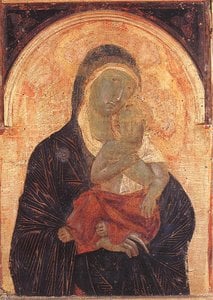
Giovanni Cimabue, geboren als Cenni di Pepo rond 1240 in Florence, staat als een monumentale figuur centraal – een brug tussen de gevestigde artistieke tradities van het Byzantijnse rijk en de opkomende innovaties die de Italiaanse Renaissance zouden definiëren. Zijn leven, hoewel gedeeltelijk verduisterd door de tijd en romantische beschrijvingen – vooral die van Giorgio Vasari eeuwen later – markeert een onmiskenbaar keerpunt in de westerse kunstgeschiedenis. Cimabue was niet alleen een schilder; hij was een moedige innovator die op subtiele wijze uitdagingen bracht aan artistieke conventies, de weg vrijmaakend voor de revolutionaire veranderingen die snel over Italië zouden woelen. Zelfs zijn bijnaam, vermoedelijk betekenis "olifantenkop," hint naar een sterke wil en wellicht een rebelse geest – kwaliteiten die duidelijk aanwezig waren in zijn bereidheid om met vorm en expressie te experimenteren. Hij vertegenwoordigt een cruciale moment waar kunst begon te verschuiven van puur devotionele beelden naar iets meer menselijk en emotioneel resonerend.
Vroege Invloeden en Artistieke Ontwikkeling
In eerste instantie werd Cimabue ondergedompeld in de Italo-Byzantijnse stijl die doorlopend in Florence floreren, waarbij zijn vroege werk nauwkeurig aan gevestigde esthetische principes hield. Geplateerde figuren bekleed met glinsterend goud, symbolische representaties van ruimte en een diepe focus op religieuze iconografie kenmerkten deze stijl. Toch begon al vroeg een opkomende drang naar naturalisme te ontstaan. Hij was niet tevreden om bestaande vormen simpelweg te reproduceren; hij streefde ernaar zijn schilderijen met een groter gevoel van leven en emotionele diepgang in te prenten. De precieze aard van zijn vroege training blijft echter betwistbaar, maar het is waarschijnlijk dat hij zijn vaardigheden verfijnde binnen Florentijnse ateliers, de technieken en invloeden van die tijd op zich nam terwijl hij tegelijkertijd zijn eigen unieke artistieke stem ontwikkelde. De Byzantijnse stijl, gekenmerkt door haar formaliteit en spirituele focus, bood hem een solide basis, maar Cimabue begon subtiel te experimenteren met elementen die de komende Renaissance zouden voorspellen – meer aandacht voor volume, expressievere gezichtskenmerken en een beginnend begrip van ruimtelijke relaties. Dit was geen plotselinge afscheid van traditie, maar eerder een geleidelijke evolutie, een delicate balans tussen het eren van het verleden en het omarmen van nieuwe mogelijkheden.
Belangrijke Werken en Artistieke Innovaties
Cimabue’s nalatenschap is verankerd in een reeks adembenemende werken die zijn evoluerende stijl laten zien. De *Maestà* (Louvre), oorspronkelijk gemaakt voor de kerk van San Francesco in Pisa, staat als een van zijn meest beroemde meesterwerken. Deze monumentale altarpal staan centraal en toont zijn beheersing van compositie en het gebruik van kleur, terwijl hij tegelijkertijd subtiel afwijkt van rigide Byzantijnse conventies. De figuren, hoewel nog steeds een zekere mate van formaliteit vertonen, tonen een nieuwe sensatie van volume en aanwezigheid. Het *Crucifixie* (San Domenico, Arezzo), daterend uit ongeveer 1270, is bijzonder significant als een vroege demonstratie van zijn afwijking van strikte Byzantijnse normen. Hier zijn de proporties realistischer en het emotionele gewicht van de scène is voelbaar – een schril contrast met de vaak-ver afstandelijke representaties die in eerdere religieuze kunst te vinden zijn. Verder bewijst Cimabue’s innovatieve geest zich in werken zoals de *Flagellation of Christ* (Frick Collection), die over het algemeen toegeschreven wordt aan zijn werkplaats. Deze complexe compositie toont een evoluerend begrip van perspectief en ruimtelijke relaties, wat wijst op een groeiende interesse in het creëren van meer meeslepende en geloofwaardige scènes. Zijn bijdragen waren niet beperkt tot panel schilderijen; Cimabue excelleerde ook als mozaïk kunstenaar, waarbij hij aanzienlijke bijdragen leverde aan de decoratie van de Baptistery in Florence – hoewel deze mozaïeken helaas zijn aangetast door veroudering.
Een Cruciale Leraar: Giotto en verder
Misschien is Cimabue’s meest blijvende nalatenschap te vinden in zijn rol als leraar van Giotto di Bondone. Hoewel historische verslaggeving varieert over de exacte aard van hun relatie, wordt algemeen aanvaard dat Giotto cruciale training onder Cimabue’s begeleiding ontving. Ondanks dat historici vaak Giotto hebben overschaduwd in de opkomst van zijn beroemde pupil, hebben moderne kunsthistorici Cimabue’s eigen waarde erkend door de kwaliteit van zijn schilderijen en mozaïeken. Het was Cimabue die, na alles, de visie legde voor decoratieve christelijke kunst om verder te gaan dan iconen en een aardse, meer mensgerichte element aan devotionele altaren en fresco’s toe te voegen. Zijn bereidheid om met vorm, proportie en expressie te experimenteren heeft de weg geopend voor de innovaties van de Renaissance, waardoor hij als een cruciale overgangsfiguur in de geschiedenis van de westerse kunst wordt beschouwd.
Historische Betekenis
Cimabue stierf in 1302 in Pisa, waarbij hij een oeuvre achterliet dat nog steeds fascineert en inspireert. Ondanks zijn significante bijdragen blijven details over zijn latere leven schaars. Echter, zijn artistieke nalatenschap resoneren krachtig door de werken van zijn studenten en de evolutie van Italiaanse kunst. Hij vertegenwoordigt een cruciale stap in de ontwikkeling van westerse schilderkunst, waarbij hij zich afkeerde van de gestileerde conventies van het Byzantijnse tijdperk en een meer menselijke en emotionele benadering omarmde. Zijn schilderijen zijn niet alleen historische artefacten; ze zijn ook vensters op een cruciale moment in de kunstgeschiedenis – een tijd waarin kunstenaars bereid waren om gevestigde normen te betwisten en nieuwe mogelijkheden te verkennen. Hij was een pionier, een visionair die het moedig vond om grenzen te verleggen en nieuwe horizonnen te verkennen.



 Voorvertoning
 Bestel handgeschilderde reproductie
 Verstuur
 Delen
Delen
 Details bekijken

 Download
 Vergelijkbare items
 Röntgenonderzoek
 Diavoorstelling
 Stats
Stats

 Lees meer






































 De optie voor glas is alleen beschikbaar bij een formaat kleiner dan 110 cm.