Voorvertoning Bekijk in AR Bestel handgeschilderde reproductie Schakel over naar digitale afbeeldingen Verstuur
Details bekijken Gids Toevoegen aan favorieten Download Vergelijkbare items Röntgenonderzoek Diavoorstelling Statistieken

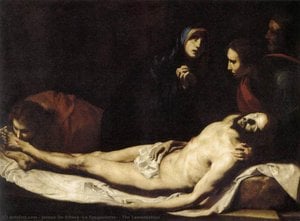
Pietà

Discover Charles Le Brun’s ‘Pietà,’ a breathtaking Baroque masterpiece at the Louvre. Explore its emotional intensity, oil-on-canvas detail & biblical significance – a must-see for art lovers.

Charles Le Brun (1619-1690): Een invloedrijke Franse barokschilder en kunsttheoreticus! Bekend om zijn decoratieve werken in Versailles, historische meesterwerken en cruciale rol bij het vormgeven van de Franse kunst.

Giclée / Kunstafdrukken

Giclée- of canvasafdruk van museumkwaliteit met een snelle productie en flexibele afwerkingsmogelijkheden. ( Bestel handgeschilderde reproductie Schakel over naar digitale afbeeldingen)

Corner sample of the P118B picture frame: gegoten polystyreen, 5 cm wide and 3 cm thick
P118B €10
Corner sample of the P118H picture frame: gegoten polystyreen, 5 cm wide and 3 cm thick
P118H €10
Corner sample of the P118W picture frame: gegoten polystyreen, 5 cm wide and 3 cm thick
P118W €10
Corner sample of the P438Z picture frame: gegoten polystyreen, 5.5 cm wide and 3.5 cm thick
P438Z €10
Corner sample of the P508JH picture frame: gegoten polystyreen, 7 cm wide and 3.5 cm thick
P508JH €12
Corner sample of the P508YH picture frame: gegoten polystyreen, 7 cm wide and 3.5 cm thick
P508YH €12
Corner sample of the P805H picture frame: gegoten polystyreen, 5 cm wide and 3.5 cm thick
P805H €10
Corner sample of the P805Z picture frame: gegoten polystyreen, 5 cm wide and 3.5 cm thick
P805Z €10
Corner sample of the P919BZ picture frame: gegoten polystyreen, 7 cm wide and 3.5 cm thick
P919BZ €10
Corner sample of the P919G picture frame: gegoten polystyreen, 7 cm wide and 3.5 cm thick
P919G €10
Corner sample of the P919XJ picture frame: gegoten polystyreen, 7 cm wide and 3.5 cm thick
P919XJ €10
Corner sample of the P959ZH picture frame: gegoten polystyreen, 5 cm wide and 3 cm thick
P959ZH €10
Corner sample of the P968JZ picture frame: gegoten polystyreen, 6 cm wide and 4 cm thick
P968JZ €12
Corner sample of the W106C picture frame: massief hout, 5 cm wide and 3 cm thick
W106C €8
Corner sample of the W218G picture frame: massief hout, 5 cm wide and 3 cm thick
W218G €10
Corner sample of the W218JH picture frame: massief hout, 5 cm wide and 3 cm thick
W218JH €8
Corner sample of the W218Y picture frame: massief hout, 5 cm wide and 3 cm thick
W218Y €10
Corner sample of the W307PJ picture frame: massief hout, 6 cm wide and 3 cm thick
W307PJ €10
Corner sample of the W316G picture frame: massief hout, 6 cm wide and 3 cm thick
W316G €10
Corner sample of the W316PJ picture frame: massief hout, 6 cm wide and 3 cm thick
W316PJ €8
Corner sample of the W316Y picture frame: massief hout, 6 cm wide and 3 cm thick
W316Y €10
Corner sample of the W398PJ picture frame: massief hout, 5 cm wide and 3 cm thick
W398PJ €8
Corner sample of the W4111J picture frame: massief hout, 6.5 cm wide and 3.5 cm thick
W4111J €10
Corner sample of the W500HY picture frame: massief hout, 7 cm wide and 5 cm thick
W500HY €15
Corner sample of the W500JH picture frame: massief hout, 7 cm wide and 5 cm thick
W500JH €15
Corner sample of the W692G picture frame: massief hout, 8 cm wide and 4 cm thick
W692G €12
Corner sample of the W849H picture frame: massief hout, 5 cm wide and 3 cm thick
W849H €8
Corner sample of the W940BG picture frame: massief hout, 7.5 cm wide and 4.5 cm thick
W940BG €15
Corner sample of the W953PJ picture frame: massief hout, 6 cm wide and 3.5 cm thick
W953PJ €8

Standaardformaat
op maat gemaakt
CM
INCH

Kies uit onze vooraf ingestelde maten die overeenkomen met de originele verhoudingen van het kunstwerk.

breedte
hoogte

Voer de gewenste breedte en hoogte in, passend bij uw lijst of muur. Een afdruk kan alleen worden ingekort en nooit groter worden gemaakt dan het origineel; een formaat met andere verhoudingen zal daarom een deel van de afbeelding verliezen. Wij sturen u een digitaal mockup ter goedkeuring voordat we tot drukwerk overgaan. De afbeelding op deze pagina toont niet de werkelijke uitsnede — dit is alleen te zien op het mockup.

Wereldwijde levering () binnen 2 weken in plaats van de standaard 4/5 weken. (26 oktober)

Gratis wereldwijde expressverzending
Hoogwaardig linnen canvas
Volledige verzendverzekering
Garantie op terugbetaling van invoerrechten
Garantie op exacte kleurweergave
Retourbeleid van 100 dagen (alleen bij defecten)
100% Geld-terug-garantie
Korting bij meerdere afnames

Totaalprijs

€ 61

Pietà

Giclée / Kunstafdrukken

Afmetingen reproductie

-

Eindtotaal

€ 61

Snelle feiten

  • Year: 1643
  • Dimensions: 146 x 222 cm
  • Influences: Nicolas Poussin
  • Subject or theme: Biblical narrative; Suffering; Faith
  • Title: Pietà
  • Notable elements or techniques: Dramatic lighting; Detailed drapery

Kunstquiz

Er is slechts één goed antwoord op elke vraag.

Vraag 1:
What is the primary subject matter of Charles Le Brun’s ‘Pietà’?
Vraag 2:
Where is Charles Le Brun’s ‘Pietà’ currently housed?
Vraag 3:
What artistic movement is Charles Le Brun associated with?
Vraag 4:
Which technique did Le Brun utilize in creating ‘Pietà’?
Vraag 5:
What is a notable characteristic of the lighting employed in ‘Pietà’?

A Moment Frozen in Time: The Emotional Resonance of Le Brun’s Pietà

In the hallowed stillness of the Musée du Louvre, there exists a canvas that does more than merely depict a biblical event; it captures the very essence of human grief. Charles Le Brun’s Pietà, painted in 1643, is a monumental achievement of the Baroque era, serving as a profound meditation on sorrow, faith, and the weight of mortality. Originally commissioned for the Sainte-Chapelle in Paris—a sanctuary dedicated to the relics of Christ—this oil on canvas was designed to evoke spiritual contemplation through its sheer emotional gravity. As viewers encounter the work, they are not just observing a scene from the Passion; they are invited into a sacred space where the boundaries between the divine and the human dissolve.

The painting centers on the poignant aftermath of the crucifixion, presenting the Virgin Mary cradling the lifeless form of her son. Le Brun masterfully employs a pyramidal composition, a technique that provides a sense of structural stability to an otherwise turbulent emotional scene. This geometric arrangement directs the eye upward, guiding the observer from the heavy, slumped weight of Christ’s body toward the serene yet heartbroken countenance of Mary. The interplay of light and shadow, known as chiaroscuro, is utilized with breathtaking precision. A singular, dramatic light source illuminates the central figures against a dark, indistinct background, stripping away all worldly distractions to focus the soul entirely on the tragedy unfolding within the frame.

Mastery of Technique and the Baroque Spirit

To understand the Pietà is to understand the hand of Charles Le Brun, a titan of French art who shaped the aesthetic standards of the age. His technique reflects the rigorous training he received under masters like Simon Vouet and his transformative years in Rome alongside Nicolas Poussin. In this work, Le Brun achieves a perfect balance between dramatic realism and idealized beauty. The texture of the painting is remarkably rich; one can almost feel the heavy, flowing drapery of Mary’s robes as they cascade around the figures, adding a sense of dynamic movement to the stillness of death. His brushwork captures the subtle nuances of skin, the limpness of muscle, and the intricate folds of fabric, all rendered with an exacting detail that speaks to his mastery of the medium.

Beyond its technical brilliance, the artwork serves as a profound symbolic vessel. The scene is steeped in Christian iconography, representing the ultimate sacrifice and the enduring devotion of the faithful. The presence of figures like Joseph of Arimathea and Mary Magdalene adds layers of communal mourning, yet the focus remains on the intimate bond between mother and son. For the collector or the lover of fine art, this piece offers more than just visual splendor; it provides a window into the 17th-century French soul. It is an ideal centerpiece for those seeking to infuse a space with historical depth, intellectual rigor, and a sense of timeless, quiet majesty.

Veelgestelde vragen

Hoe harmonieren de kleuren van "Pietà" met elkaar?

De kleuren van "Pietà" door Charles Le Brun vertonen een Softly Mixed Palette harmonie. Harmonie beschrijft de onderlinge relatie tussen de kleuren.

Wat is de reden voor de auteursrechtelijke status van "Pietà" door Charles Le Brun?

"Pietà" door Charles Le Brun is bevindt zich in het publiek domein - de auteursrechten zijn verlopen. De auteursrechtelijke bescherming loopt vanaf het overlijden van de kunstenaar, dat plaatsvond in 1690.

Is "Pietà" een beroemd kunstwerk uit de Baroque-stroming?

"Pietà" door Charles Le Brun wordt geclassificeerd als Iconic en behoort tot de Baroque-stroming.


Biografie kunstenaar

Early Life and Artistic Beginnings

Charles Le Brun, geboren in Parijs op 24 februari 1619, was al vroeg een getalenteerd kunstenaar. Nog geen elf jaar oud trad hij toe tot de werkplaats van Simon Vouet, onder het patronage van de kanselier Séguier. Deze vroege mentor had een aanzienlijke invloed op Le Brun’s ontwikkeling, en zijn jeugd werd gekenmerkt door een intense studie van klassieke kunst en de werken van andere grootmeesters. Hij bleek echter weinig interesse te hebben in de strikte regels van Vouet's lessen, wat resulteerde in een korte samenwerking. Toch bleef hij zich verdiepen in de schilderijen van de Romeinse antiquiteiten die Vouet’s collectie bevatte, en ontwikkelde zo zijn eigen artistieke visie.

Zijn vader, Nicolas Le Brun, was een bekwaam beeldhouwer, wat mogelijk bijdroeg aan Charles' vroeggevoelige interesse in kunst. De kanselier Séguier, een invloedrijke figuur in de Franse politiek en cultuur, gaf hem een belangrijke start in zijn carrière door hem te laten studeren onder Vouet. Deze vroege ervaringen legden de basis voor Le Brun’s latere successen.

De Romeinse Periode: Poussin en Klassieke Invloeden

Een cruciale periode in Le Brun's artistieke ontwikkeling was zijn vierjarige verblijf in Rome (1642-1646). Tijdens deze tijd werkte hij onder de begeleiding van Nicolas Poussin, een van de meest gerespecteerde schilders van zijn tijd. Deze invloed was diepgaand en vormde de basis voor Le Brun’s latere stijl. Hij bestudeerde de klassieke Romeinse sculptuur, maakte kopieën van werken van Raphael en andere Italiaanse meesters, en verdiepte zich in de principes van harmonie en proportie.

De studie van Poussin was bijzonder belangrijk voor Le Brun. Poussin’s nadruk op compositie, licht en schaduw, en het gebruik van mythologische thema's beïnvloedden Le Brun’s benadering van het schilderen. Deze periode in Rome legde de basis voor zijn latere successen als decoratieve kunstenaar en historicus.

De Opkomst van een Decoratieve Meester

Na zijn terugkeer naar Parijs in 1646 werd Le Brun onmiddellijk erkend en kreeg hij diverse opdrachten. Zijn vroege stijl was beïnvloed door Vouet en Poussin, maar hij begon al snel een meer persoonlijke benadering te ontwikkelen. Hij maakte indruk met zijn vermogen om complexe historische scènes te schilderen, portretten te maken en decoratieve werken te leveren.

Een belangrijke ontwikkeling was zijn samenwerking met Cardinal Richelieu, die hem vroeg om religieuze taferelen te schilderen. Deze vroege opdrachten toonden al zijn talent en vermogen om drama en emotie in zijn werk over te brengen. Hij werd snel een van de meest gevraagde kunstenaars in Parijs.

De Gouden Eeuw: Dienstbaarheid aan Lodewijk XIV

Le Brun’s carrière bereikte haar hoogtepunt tijdens het bewind van Lodewijk XIV, die hem in 1664 benoemde tot ‘Premier Peintre du Roi’ (Eerste Schilder van de Koning). Deze prestigieuze positie gaf hem enorme invloed op de Franse kunst. Hij speelde een sleutelrol bij de decoratie van het Paleis van Versailles, waarbij hij iconische ruimtes creëerde zoals de Ambassadeursgang, de Spiegelzaal en de Kamers van Vrede en Oorlog. Deze projecten versterkten zijn reputatie als een meesterdecorateur en architect.

De decoratieve werken voor Versailles waren niet alleen visueel indrukwekkend, maar ook een uiting van de macht en welvaart van het koninkrijk. Le Brun’s vermogen om historische thema's te combineren met dramatische composities en rijke kleuren maakte hem tot een onmisbare kracht in de Franse kunstwereld.

Theorie en Academie: Het Vormgeven van de Franse Kunst

Naast zijn artistieke talent was Le Brun ook een invloedrijke theoreticus. In 1668 gaf hij een reeks lezingen aan de Académie Royale de Peinture et de Sculpture, waarin hij zijn ideeën over kunstenaarschap en compositie uiteenzette. Deze lezingen, getiteld ‘Méthode pour apprendre à dessiner les passions…’, werden later gepubliceerd en hadden een enorme invloed op de Franse kunstwereld.

In deze lezingen beschreef Le Brun een systematische aanpak voor het schilderen van emoties, gebaseerd op de theorieën van René Descartes. Hij stelde dat emoties kunnen worden gekarakteriseerd en weergegeven in kunstwerken, waardoor een meer realistische en overtuigende weergave van de menselijke ervaring mogelijk werd. Deze theoretische benadering had een diepgaande invloed op de manier waarop kunstenaars in Frankrijk werkten.

Erfgoed en Betekenis

Charles Le Brun’s nalatenschap is enorm. Zijn werk heeft de Franse kunst van de 17e eeuw gevormd en hem tot een van de meest invloedrijke kunstenaars van zijn tijd gemaakt. Zijn decoratieve schilderingen voor Versailles zetten een standaard voor paleizen in heel Europa. Bovendien speelde hij een cruciale rol bij het vestigen van Frankrijk als centrum van kunst en cultuur.

Hoewel zijn reputatie later in het leven onder druk kwam, werd Le Brun in de 20e eeuw opnieuw gerespecteerd vanwege zijn belangrijke bijdragen aan de Franse kunstwereld. Zijn werken worden nog steeds tentoongesteld in musea en paleizen over de hele wereld.

Charles Le Brun

Charles Le Brun

1619 - 1690 , Frankrijk

Belangrijkste feiten

  • Artistic Movement Or Style: Barok
  • Artists Or Movements Influenced By This Artist: ['Franse school']
  • Artists Who Influenced This Artist:
    • Simon Vouet
    • Nicolas Poussin
  • Date Of Birth: 24 feb 1619
  • Date Of Death: 12 feb 1690
  • Full Name: Charles Le Brun
  • Nationality: Frans
  • Notable Artworks:
    • Trappe van Alexander
    • Spiegelzaal
    • Hall van Spiegels
  • Place Of Birth: Parijs, Frankrijk