x
VoorvertoningVoorvertoning Bekijk in ARBekijk in AR Bestel handgeschilderde reproductie Bestel handgeschilderde reproductieKoop afbeelding Koop afbeelding VerstuurVerstuur
Details bekijkenDetails bekijken Toevoegen aan favorieten Toevoegen aan favorieten DownloadDownload Vergelijkbare itemsVergelijkbare items RöntgenonderzoekRöntgenonderzoek DiavoorstellingDiavoorstelling

MIrage

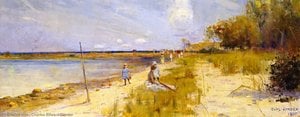
Discover "Mirage" by Charles Conder – a captivating Australian Impressionist painting of a woman and a ball. Explore this iconic work's details & history on WahooArt.

Charles Edward Conder (1868-1909): Een Brits kunstenaar, bekend van zijn impressionistische landschappen en havenbeelden uit de Heidelberg School. Ontdek zijn meesterwerken op WahooArt!

Giclée / Kunstafdrukken

Giclée- of canvasafdruk van museumkwaliteit met een snelle productie en flexibele afwerkingsmogelijkheden. (Bestel handgeschilderde reproductie Bestel handgeschilderde reproductieKoop afbeelding Koop afbeelding)

P118B $10
P118H $10
P118W $10
P438Z $10
P508JH $12
P508YH $12
P805H $10
P805Z $10
P919BZ $10
P919G $10
P919XJ $10
P959ZH $10
P968JZ $12
W106C $8
W218G $10
W218JH $8
W218Y $10
W307PJ $10
W316G $10
W316PJ $8
W316Y $10
W398PJ $8
W4111J $10
W500HY $15
W500JH $15
W692G $12
W849H $8
W940BG $15
W953PJ $8

Standaardformaat
op maat gemaakt
CM
INCH

Kies uit onze vooraf ingestelde maten die overeenkomen met de originele verhoudingen van het kunstwerk.

breedte
hoogte

U kunt uw eigen afmetingen opgeven om in een specifieke lijst of ruimte te passen. Als de door u gekozen maat niet overeenkomt met de proporties van het originele kunstwerk, zullen wij de afbeelding bijsnijden of uitbreiden met een gespiegelde of effen rand. Een digitaal mockup wordt ter goedkeuring naar u verzonden voordat de productie begint.
Houd er rekening mee dat de preview op het scherm de werkelijke bijsneding of uitbreiding niet weergeeft. Alleen de mockup toont de uiteindelijke compositie nauwkeurig.
Hoewel aangepaste maten beschikbaar zijn, raden wij aan een afmeting uit de vooraf bepaalde lijst te kiezen om de originele proporties te behouden.

Wereldwijde levering () binnen 2 weken in plaats van de standaard 4/5 weken. (4 september)

why_choose_icon
Gratis wereldwijde expressverzending
why_choose_icon
Hoogwaardig linnen canvas
why_choose_icon
Volledige verzendverzekering
why_choose_icon
Garantie op terugbetaling van invoerrechten
why_choose_icon
Garantie op exacte kleurweergave
why_choose_icon
Retourbeleid van 60 dagen (alleen bij defecten)
why_choose_icon
100% Geld-terug-garantie
why_choose_icon
Korting bij meerdere afnames

Totaalprijs

$ 69

reproduction

MIrage

Giclée / Kunstafdrukken

Afmetingen reproductie

-

Eindtotaal

$ 69

Snelle feiten

  • Artistic style: Impressionism
  • Movement: Heidelberg School
  • Medium: Watercolor on paper
  • Title: Mirage
  • Location: Private Collection
  • Year: 1889
  • Artist: Charles Conder

Kunstquiz

Er is slechts één goed antwoord op elke vraag.

Vraag 1:
What artistic movement is Charles Conder most associated with?
Vraag 2:
In 'Mirage,' what prominent element is depicted near the center of the painting, suggesting a change in weather conditions?
Vraag 3:
What year was 'Mirage' painted by Charles Edward Conder?
Vraag 4:
Charles Conder was born in which city?
Vraag 5:
The painting 'Mirage' primarily showcases a scene of:

A Mirage of Light and Leisure: Charles Edward Conder’s “Mirage”

Charles Edward Conder's "Mirage," painted in 1889, isn’t merely a depiction of a landscape; it’s an invitation into a realm where reality subtly bends, inviting contemplation on the ephemeral nature of perception and the allure of the Australian outback. Born in Tottenham, London, Conder’s journey led him to Australia, where he became a pivotal figure within the Heidelberg School – a movement that championed a distinctly Australian artistic voice, rejecting European academic traditions in favor of capturing the light, color, and spirit of the continent.

The painting immediately draws the eye with its vibrant palette. Warm ochres dominate the foreground, punctuated by the cool blues and greens of distant trees and sky. Conder masterfully employs an Impressionistic technique, utilizing loose brushstrokes and broken colors to capture the shimmering heat haze that defines the Australian landscape. This isn’t a photographic representation; rather, it's a subjective experience translated onto canvas – a distillation of light, color, and atmosphere. The composition itself is deceptively simple: a woman holding a ball in her hand, positioned beside a solitary tree against a backdrop of rolling hills. Yet, within this apparent stillness lies a subtle dynamism, a sense of movement created by the play of light and shadow.

The Symbolism of Leisure and Illusion

While superficially appearing as a charming pastoral scene, “Mirage” is rich in symbolic meaning. The woman holding the ball evokes a sense of carefree leisure – a quintessential image of Australian summer. It speaks to a time of relaxation, social gatherings, and the simple pleasures of life. However, the presence of the ball itself introduces an element of illusion. Balls are often associated with games, entertainment, and even fleeting moments of joy. In this context, it suggests that these experiences, like the mirage itself, can be deceptive – beautiful but ultimately transient.

The solitary tree further amplifies this theme. Trees represent resilience, strength, and connection to the earth. Yet, its isolation within the vast landscape hints at a sense of loneliness or detachment. The woman’s position beside it suggests a moment of quiet contemplation, perhaps questioning the nature of her own place in this world.

A Window into the Heidelberg School

"Mirage" exemplifies the core tenets of the Heidelberg School – a group of Australian artists who sought to capture the unique character of their homeland. Unlike their European counterparts, they were deeply interested in portraying the light and color of the Australian landscape, often focusing on scenes of rural life and leisure. Conder’s work is characterized by its vibrant colors, loose brushstrokes, and emphasis on capturing the fleeting effects of light and atmosphere. His use of local pigments and his rejection of academic conventions firmly established him as a key figure in shaping Australian art.

Capturing the Essence of an Illusion

Conder’s skill lies not just in depicting a scene, but in conveying its *feeling*. The painting isn't about literal accuracy; it’s about capturing the subjective experience of being immersed in the heat haze of the Australian outback. The shimmering quality of the landscape, the sense of distance and ambiguity, all contribute to a powerful emotional impact. “Mirage” invites us to question our perceptions, to appreciate the beauty of illusion, and to contemplate the transient nature of life itself. It remains a captivating testament to Conder’s artistic vision and his profound connection to the Australian landscape.


Biografie van de kunstenaar

early life and artistic journey

Charles Edward Conder (Tottenham, 24 oktober 1868 – Virginia Water, 9 februari 1909) was een Engels kunstschilder, lithograaf en ontwerper, die lange tijd werkzaam was in Australië. Zijn werk wordt geassocieerd met het impressionisme.

Conder was de zoon van een ingenieur en groeide deels op in India. Zijn vader was sterk gekant tegen zijn artistieke ambities en wilde dat hij eveneens ingenieur zou worden. In 1884, op zeventienjarige leeftijd, werd hij naar een oom in New South Wales, Australië, gestuurd waar hij werkzaam werd voor de nieuwe staat regering en begon zich te bewegen in artistieke kringen.

Hij leerde tekenen bij Alfred James Daplyn en ontwikkelde een bijzondere interesse voor het landschap. Zijn stijl werd sterk beïnvloed door James McNeill Whistler, met name in zijn gerichtheid op elegantie.

artistic career in australia

In 1886 verhuisde hij naar Melbourne waar hij samenwerkte met andere Australische kunstenaars zoals Arthur Streeton en Tom Roberts, die hij eerder in Sydney had leren kennen. Kort van kas werd Conder aangetrokken door G. P. Nerli, een Italiaanse kunstenaar die onderweg was en de nieuwe Europese invloeden bracht.

Hij richtte samen met Streeton en Roberts ook de Heidelberg School op, een kunstenaarskolonie die sterk geïnspireerd werd door het impressionisme, met veel nadruk op het zonlicht. Zijn werk werd geprezen door Pissarro en Degas.

departure of the orient – circular quay (1888)

Conder's meest bekende werk is *Departure of the Orient – Circular Quay* (1888), een prachtige afbeelding van de haven van Sydney Cove op het moment dat de *has cast off for her voyage to England*. Het schilderij werd gekocht door de Art Gallery of New South Wales en markeerde het hoogtepunt van zijn nieuwe beheersing van vorm en kleur.

influence and legacy

Hij bleef actief tot aan zijn dood in 1909, maar zijn productie nam af vanwege een tanende gezondheid, veroorzaakt door syfilis. Ondanks deze problemen liet hij een belangrijke nalatenschap achter als een van de belangrijkste vertegenwoordigers van het Heidelberg School en een pionier binnen de ontwikkeling van een Australische kunsttraditie.

Charles Edward Conder

Charles Edward Conder

1868 - 1909 , Verenigd Koninkrijk

Belangrijkste feiten

  • Artistic Movement Or Style: Heidelberg School
  • Artists Who Influenced This Artist:
    • Alfred Daplyn
    • Victor Mann
    • Julian Ashton
  • Date Of Birth: October 24, 1868
  • Date Of Death: February 9, 1909
  • Full Name: Charles Edward Conder
  • Nationality: British
  • Notable Artworks:
    • Departure of the Orient – Circular Quay
    • A holiday at Mentone
    • Under The Southern Sun
  • Place Of Birth: Tottenham, United Kingdom
Ontdek kunstwerken georganiseerd op thema, stijl en kenmerk.