


Giclée- of canvasafdruk van museumkwaliteit met een snelle productie en flexibele afwerkingsmogelijkheden. ( Bestel handgeschilderde reproductie Schakel over naar digitale afbeeldingen)





























Kies uit onze vooraf ingestelde maten die overeenkomen met de originele verhoudingen van het kunstwerk.

Voer de gewenste breedte en hoogte in, passend bij uw lijst of muur. Een afdruk kan alleen worden ingekort en nooit groter worden gemaakt dan het origineel; een formaat met andere verhoudingen zal daarom een deel van de afbeelding verliezen. Wij sturen u een digitaal mockup ter goedkeuring voordat we tot drukwerk overgaan. De afbeelding op deze pagina toont niet de werkelijke uitsnede — dit is alleen te zien op het mockup.
Wereldwijde levering () binnen 2 weken in plaats van de standaard 4/5 weken. (8 november)
Angels Pity
Afmetingen reproductie
In the quiet, hallowed atmosphere of the Early Renaissance, few works capture the intersection of human sorrow and divine grace as poignantly as Carlo Crivelli’s "Angels Pity." Painted in 1470, this masterpiece serves as a profound meditation on tenderness and spiritual devotion. The scene unfolds with an intimate warmth, presenting Jesus cradling two children within his arms—a gesture that transcends mere historical depiction to become a universal symbol of protection and innocence. Surrounded by a celestial assembly of angels and watchful figures, the composition draws the viewer into a sacred circle of empathy. Even the subtle presence of a solitary bird in the upper corner acts as a silent witness, lending an air of tranquility to a moment heavy with emotional significance.
The artistry of Crivelli is on full display through his masterful command of color and light. Utilizing soft, luminous hues and delicate brushstrokes, the artist creates a sense of palpable intimacy that makes the divine feel reachable. The painting is a triumph of the Early Renaissance style, where every detail is rendered with an almost obsessive realism. Crivelli’s technique involves the meticulous application of oil glazes on wood panel, building layers of color to achieve a radiant depth. This method allows light to appear as if it is emanating from within the figures themselves, highlighting the soft textures of skin and the intricate folds of drapery, thereby inviting the observer to linger on the subtle nuances of the composition.
Beyond its visual splendor, "Angels Pity" is a rich tapestry of Christian iconography designed to provoke deep reflection. The arrangement of the figures within an arched niche creates a sense of sacred enclosure, separating the holy event from the mundane world. Every element serves a symbolic purpose: the tender way Jesus holds the children reflects the theological concept of divine mercy, while the surrounding angels represent the bridge between heaven and earth. Crivelli’s use of trompe l'oeil—a technique intended to trick the eye into perceiving three-dimensional reality—adds a layer of tactile presence to the work, making the spiritual themes feel grounded in a tangible, physical reality.
For the discerning collector or interior designer, this painting offers more than mere decoration; it provides an emotional anchor for any space. The somber yet serene mood makes it an ideal centerpiece for rooms dedicated to contemplation, study, or quiet luxury. Whether one is drawn to its historical significance as a product of the Venetian-influenced March of Ancona or moved by its profound expression of compassion, "Angels Pity" remains a timeless testament to the power of art to evoke the sublime. Owning a high-quality reproduction of this work allows for the preservation of this Renaissance spirit, bringing a sense of historical weight and aesthetic harmony into the modern home.
"Angels Pity" door Carlo Crivelli kan via de AR-weergave-pagina van het kunstwerk op uw eigen muur worden geproefd met behulp van augmented reality op een compatibel apparaat.
Ontdek vergelijkbare werken voor "Angels Pity" op de Vergelijkbare werken-pagina van dit kunstwerk.
"Angels Pity" door Carlo Crivelli dateert uit de Renaissance-periode. Deze periode biedt de historische context van het werk.

Carlo Crivelli, een Italiaanse renaissanceschilder, werd rond 1430-35 geboren in het schilderachtige Venetië. Geboren in een familie van kunstenaars, legde hij de basis voor zijn artistieke vorming in de rijke culturele centra van Venetië en Padua. Men vermoedt dat zijn vroege opleiding plaatsvond onder de meester Jacobello del Fiore, die in 1436 nog zeer actief was, en hij verfijnde zijn techniek verder aan de beroemde school van Vivarini in Venetië.
De vroege jaren van Crivelli werden doorgebracht in het Veneto, waar hij de rijke invloeden van meesters als Vivarini, Squarcione en Mantegna in zich opnam. In 1458 verliet hij echter de regio Veneto om het grootste deel van zijn carrière door te brengen in de Marche di Ancona. Hier ontwikkelde hij een geheel eigen, kenmerkende stijl die scherp contrasteert met die van zijn Venetiaanse tijdgenoot Giovanni Bellini. Het werk van Crivelli wordt gekenmerkt door een conservatieve, laatgotische decoratieve gevoeligheid, die tot leven komt door een verfijnde lineariteit, een obsessieve aandacht voor detail en het meesterlijke gebruik van "trompe l'oeil" technieken die de kijker doen twijfelen aan wat echt is.
Een prachtig voorbeeld van zijn unieke stijl is het schilderij "Madonna en Kind op een Troon" (106 x 55 cm), dat te bewonderen is in het Museum of Fine Arts in Boedapest, Hongarije. Crivelli was niet alleen een solist; hij werkte aan diverse projecten samen met zijn jongere broer Vittorio Crivelli. Daarnaast vond hij een kundige leerling en medewerker in Pietro Alemanno, een schilder die vanuit Duitsland of Oostenrijk naar de Marche di Ancona emigreerde.
De rijkdom aan Crivelli's oeuvre is verspreid over enkele van de meest prestigieuze collecties. De Pinacoteca di Brera in Milaan, Italië, herbergt diverse werken van de meester, waaronder de indrukwekkende "Pietà" (128 x 241 cm). Tevens bezit het Museum San Giovanni in Bragora in Venetië een collectie kunstwerken uit verschillende perioden en stijlen, waaronder werken die aan Crivelli worden toegeschreven.
De nalatenschap van Crivelli blijft kunstliefhebbers en wetenschappers inspireren; zijn werk staat als een blijvend monument voor de ongekende kracht van de laatgotische decoratieve pracht.

1435 - 1495 , Italië

Discover the enduring legacy of oil on board painting. Explore how historical techniques, rich impasto textures, and structural durability create timeless masterpieces that bridge Renaissance grandeur with modern art collecting excellence.

Discover the profound allure of oil on canvas. Explore the mastery of impasto textures, the science of pigment longevity, and expert guides to selecting museum-quality reproductions that elevate your collection with timeless elegance and tactile depth.

Discover the enduring allure of oil on canvas. Explore how master techniques like impasto and glazing create the depth, texture, and emotional resonance found in the world's greatest masterpieces. An essential guide for fine art enthusiasts and discerning collectors.

Discover the enduring allure of hand-painted oil reproductions. WahooArt offers museum-quality, archival masterpieces designed for discerning collectors seeking timeless beauty and a lasting legacy. Invest in fine art that transcends generations with our expert craftsmanship.
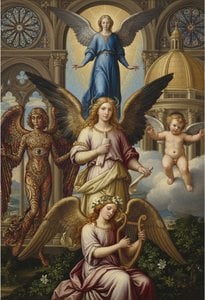
Explore the profound beauty of angelic figures in art history. From Renaissance masterpieces to celestial symbolism, our expert guide offers a sophisticated journey through the divine imagery of the Old Masters for discerning collectors and art enthusiasts.
 Voorvertoning
 Verstuur
 Delen
Delen
 Details bekijken
 Gids
Gids

 Download
 Vergelijkbare items
 Röntgenonderzoek
 Diavoorstelling
 Vraag & antwoord
 Statistieken

 Lees meer









 De optie voor glas is alleen beschikbaar bij een formaat kleiner dan 110 cm.


