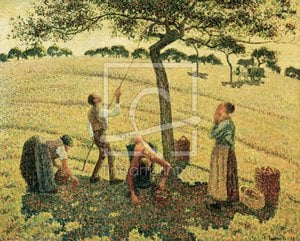
A Life Rooted in Observation: The World of Camille Pissarro
Camille Pissarro, een naam die synoniem staat voor zowel de geboorte als de evolutie van het Impressionisme, was een kunstenaar wiens leven een spiegel was van de zich steeds veranderende landschappen waar hij zo toegewijd aan vastlegde op het doek. Geboren Jacob Abraham Camille Pissarro op 10 juli 1830 in Charlotte Amalie, St. Thomas – toen onderdeel van de Deense West-Indiërs, nu de Amerikaanse Maagdeneilanden – waren zijn oorsprongen net zo divers en levendig als de scènes die later zijn artistieke visie zouden definiëren. Zijn vader, een Portugese Joodse koopman met Franse nationaliteit, en zijn moeder, afkomstig van een Franse-Joodse familie op het eiland, legden aan hem een uniek cultureel erfgoed bij. Deze opvoeding, enigszins onconventioneel vanwege familiale complexiteiten, stimuleerde al vroeg een gevoeligheid voor de wereld om hem heen, een kwaliteit die zou worden de hoeksteen van zijn artistieke praktijk. Zijn initiële formele opleiding aan de Savary Academy in Parijs bood een basis in traditionele technieken, maar het was zijn terugkeer naar St. Thomas en daaropvolgende werk als vrachtagent dat zijn passie voor observatie echt ontketende. De drukke haven, het levendige lokale leven en de ruwe schoonheid van het Caribische landschap werden zijn eerste onderwerpen, waardoor een oog gevormd werd dat scherp was in het vastleggen van de nuances van alledaagse bestaan.
Van Realisme tot Revolutie: Artistieke Ontwikkeling
Pissarro’s artistieke reis was een voortdurende zoektocht en verfijning. Na een periode van assistentie aan de Deense schilder Anton Melbye in Parijs, dompelde hij zich onder in het werk van meesters zoals Gustave Courbet, Jean-Baptiste-Camille Corot en Honoré Daumier – kunstenaars die realisme en sociale commentaar verdedigden. In eerste instantie zocht hij acceptatie binnen de gevestigde kunstwereld, waarbij hij exposeren op de Salon in Parijs, maar vond al snel de beperkingen ervan verstikkend. Een cruciale moment was zijn omarming van *plein air* schilderen – werken direct buiten in de natuur, een praktijk die werd aangemoedigd door Corot en die centraal zou staan in het Impressionisme. Deze verschuiving was niet alleen technisch; het vertegenwoordigde een filosofische verandering, een wens om de vluchtige effecten van licht en atmosfeer vast te leggen, de essentie van een scène in plaats van een precieze weergave ervan. Hij begon met losser penseelwerk en helderdere kleuren te experimenteren, weg te bewegen van academische conventies richting een meer subjectieve en expressieve stijl. Zijn vroege landschappen, hoewel nog steeds gebaseerd op realisme, gaven al aan de revolutionaire weg die hij voor zich zou openen. Deze periode zag hem worstelen met het vinden van zijn eigen stem in het midden van de artistieke fermentatie van Parijs, een stad die snel veranderde en eindeloze inspiratie bood.
De Vaderfiguur van het Impressionisme
Camille Pissarro was niet alleen *een* Impressionist; hij was waarschijnlijk de meest standvastige en verbindende kracht binnen de beweging. Uniek daarentegen, toonde hij aan op alle acht Parijse Impressionistische tentoonstellingen tussen 1874 en 1886, waarbij hij een stabiel element vormde binnen een groep die vaak gekenmerkt werd door interne meningsverschillen en individuele ambities. Hij was niet alleen aanwezig – hij moedigde zijn collega’s aan, bood steun, begeleiding en een welbelegen gevoel van kameraadschap. Dit verdiende hem de liefkozende bijnaam “de vaderfiguur” van de beweging. Zijn toewijding aan artistieke vrijheid en innovatie was onwrikbaar, zelfs in het aangezicht van kritische spot en publieke onverschilligheid. Hij geloofde in de kracht van collectieve actie en pleitte voor het idee dat kunstenaars onafhankelijk konden exposeren van de beperkingen van de Salon. Naast zijn eigen werk strekte Pissarro’s invloed zich uit tot een jongere generatie kunstenaars, waaronder Paul Cézanne, Vincent van Gogh en Paul Gauguin, die hij mentor was en die diepgaand beïnvloedde. Hij bood hen niet alleen technische adviezen, maar ook een filosofisch kader voor hun artistieke verkenningen. Zijn bereidheid om te experimenteren leidde hem tijdelijk naar Neo-Impressionisme, beïnvloed door de puntillistische technieken van Georges Seurat en Paul Signac, voordat hij uiteindelijk terugkeerde naar een meer persoonlijke stijl die zijn eerdere invloeden combineerde met nieuwe ontdekkingen.
Landschappen van het Leven: Thema’s en Erfgoed
Pissarro’s artistieke output was opmerkelijk divers, maar bleef consequent gericht op de wereld om hem heen. Hij wordt geëerd voor zijn weergaven van zowel landschappen als stadsgezichten, vaak scènes vastleggend van alledaagse leven – boeren die in velden werken, drukke Parijse straten, rustige dorpspleinen. Zijn schilderijen waren niet alleen pittoreske uitzichten; ze waren sociale commentaar, weerspiegelend zijn diepe empathie voor de arbeidersklasse en zijn toewijding om hun leven met waardigheid en respect te portretteren.
- Landschappen: Bekend om het vastleggen van de schoonheid van zowel het platteland als stadsleven.
- Stadsgezichten: Levendige weergaven van een snel veranderende metropool.
- Boerenleven: Weerspiegelend zijn sociale bewustzijn en empathie voor de arbeidersklasse.
Zijn latere werken, vooral die uit tijden van politieke onrust of persoonlijke moeilijkheden, dragen vaak een gevoel van melancholie en maatschappelijk commentaar. Pissarro’s nalatenschap strekt zich verder uit dan zijn prachtige schilderijen. Hij was een pleitbezorger voor artistieke vrijheid, een mentor voor generaties kunstenaars en een pionier in de ontwikkeling van moderne kunst. Zijn toewijding aan *plein air* schilderen revolutioneerde het landschapsschilderij, terwijl zijn bereidheid om verschillende stijlen te experimenteren zijn intellectuele nieuwsgierigheid en onwrikbare toewijding aan zijn vak demonstreerden. Hij blijft een vereeuwigde figuur wiens bijdragen nog steeds worden bestudeerd en gewaardeerd vanwege hun blijvende relevantie.
Camille Pissarro’s kunst is niet alleen een registratie van de wereld zoals die was; het is een getuigenis van de kracht van observatie, empathie en artistieke innovatie.



 Voorvertoning
 Bestel handgeschilderde reproductie
 Verstuur
 Delen
Delen
 Details bekijken

 Download
 Vergelijkbare items
 Röntgenonderzoek
 Diavoorstelling
 Statistieken

 Lees meer






































 De optie voor glas is alleen beschikbaar bij een formaat kleiner dan 110 cm.