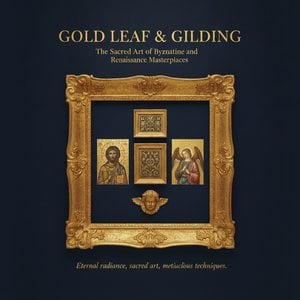
Benvenuto Cellini: Een Renaissance Genie
Benvenuto Cellini, geboren in Florence in 1500 en overleden in 1571, was meer dan slechts een kunstenaar; hij belichaamde de geest van de Italiaanse renaissance. Een goudsmid, beeldhouwer, soldaat, musicus én schrijver – zijn leven was een bruisende mix van passie, ambitie en avontuur, vastgelegd in een autobiografie die even kleurrijk is als zijn kunstwerken. Cellini staat symbool voor het maniërisme, een stijlperiode die volgde op de hoogrenaissance en zich kenmerkte door dramatische flair, complexe composities en een verfijnde elegantie.
Van Muziek naar Metaal: Een Artistieke Opleiding
Cellini’s jeugd was doordrenkt van muziek; zijn vader was een befaamd musicus en instrumentmaker. Aanvankelijk toonde hij zelf ook muzikale aanleg, maar op vijftienjarige leeftijd koesterde hij een onwrikbare passie voor het goudsmidwerk. Tegen de bedenkingen van zijn vader in, werd hij leerling bij Antonio di Sandro, beter bekend als Marcone. Deze beslissing zou zijn leven vormgeven. Zijn vroege jaren waren niet zonder tegenslag; een schermutseling op zestienjarige leeftijd leidde tot ballingschap uit Florence en een periode werken onder de goudsmid Fracastoro in Siena. Deze ervaringen, hoewel turbulent, scherpten zijn vaardigheden en versterkten zijn vastberadenheid.
Meesterwerken in Goud en Brons: De Kunst van Cellini
Cellini’s artistieke nalatenschap is rijk en divers. Zijn goudwerk, met name het beroemde zoutvat voor koning Franciscus I van Frankrijk, getuigt van een ongeëvenaarde beheersing van detail en compositie. Het zoutvat, nu te bewonderen in het Kunsthistorisches Museum in Wenen, is meer dan slechts een functioneel object; het is een sculpturale tour de force vol dynamische figuren en ingewikkelde decoraties. Maar Cellini’s bekendste werk blijft wellicht ‘Perseus met het hoofd van Medusa’, een bronzen beeldhouwwerk dat in de Loggia dei Lanzi in Florence staat. Dit monumentale kunstwerk, gegoten in één stuk – een technisch hoogstandje – toont Perseus triomfantelijk over de verslagen Medusa. De expressie van beweging en emotie die Cellini wist vast te leggen in het metaal is werkelijk adembenemend.
Een Leven Vol Avontuur: Soldaat, Schrijver en Self-Made Man
Cellini was niet alleen een kunstenaar; hij was ook een soldaat, die deelnam aan belegeringen en beweerde een cruciale rol te hebben gespeeld bij de verdediging van Rome. Hij was een begaafd musicus, die cornett en fluit bespeelde aan het pauselijk hof. Maar het is zijn autobiografie die hem echt onderscheidt. Dit openhartige en soms opschepperige verslag biedt een unieke kijk op de kunstwereld, de cultuur en de samenleving van de renaissance. Het boek is gevuld met anekdotes over beschermheren, rivalen en persoonlijke avonturen, waardoor we een levendig beeld krijgen van het leven van deze uitzonderlijke man.
Een Erfenis voor de Eeuwen: Cellini’s Plaats in de Geschiedenis
Benvenuto Cellini stierf in 1571 en liet een onuitwisbare indruk achter op de kunstwereld. Zijn technische vaardigheid, zijn artistieke innovatie en zijn boeiende autobiografie blijven kunstenaars en liefhebbers inspireren. Hij belichaamt het ideale van de renaissance: een veelzijdig genie, gedreven door ambitie en niet bang om zijn individualiteit te uiten. Zijn werken worden bewonderd om hun schoonheid, vakmanschap en dramatische kracht, waardoor hij terecht wordt beschouwd als een sleutelfiguur in de westerse kunstgeschiedenis.



 Schakel over naar print
 Verstuur
 Delen
Delen
 Details bekijken
 Gids
Gids

 Download
 Vergelijkbare items
 Diavoorstelling
 Statistieken


 Lees meer






































 De optie voor glas is alleen beschikbaar bij een formaat kleiner dan 110 cm.