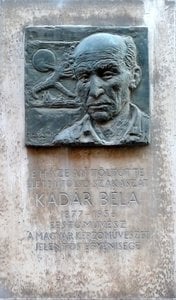
Een Hongaarse stem van de avant-garde: Het leven en de kunst van Béla Kádár
Geboren in 1877 in een Joodse arbeidersfamilie in Boedapest, was de reis van Béla Kádár naar het worden van een sleutelfiguur in de avant-gardekunst van de vroege twintigste eeuw er een die werd gesmeed door zowel ontbering als een onwankelbare toewijding aan artistieke verkenning. Zijn formele opleiding beperkte zich tot slechts zes jaar, maar dit gebrek aan traditionele scholing leek hem juist te bevrijden van conventionele beperkingen, waardoor er een uniek persoonlijke visuele taal kon ontstaan. Kádár begon zijn professionele leven niet met een penseel in de hand, maar als leerling draaibankwerker – een ambacht dat een diepe impact had op zijn artistieke gevoel, door hem een fundamenteel begrip van vorm, structuur en de inherente schoonheid van industriële materialen bij te brengen. Zelfs in deze vroege jaren straalde zijn creatieve geest al door; aanvankelijk richtte hij zich op het schilderen van muurschilderingen door heel Boedapest, waarmee hij een aangeboren neiging tot grootschalige visuele expressie en verhalende kracht toonde. Deze fundamenteende periode legde de basis voor de gedurfde en dynamische composities die later zijn oeuvre zouden definiëren.
Parijs, Berlijn en een synthese van stijlen
De ware katalysator voor Kádár’s artistieke ontwikkeling kwam met zijn reizen naar Parijs en Berlijn in 1910. Deze reizen brachten hem in contact met de opkomende avant-gardebewegingen die West-Europa spoelden, wat zijn artistieke traject onherroepelijk veranderde. Hij maakte kennis met de radicale ideeën van Der Blaue Reiter, de gefragmenteerde vormen van het kubisme, het dynamisme van het futurisme en de rauwe energie van het neo-primitivisme – invloeden die hij niet simpelweg integraal overnam, maar eerder synthetiseerde tot een eigen, onderscheidende visuele woordenschat. Kádár was niet tevreden om zich aan één enkele "school" te verbinden; in plaats daarvan begon hij aan een voortdurende verkenning van vorm, kleur en compositie, gedreven door een onverzadigbare hunkering om te ontsnappen aan de beperkingen van de traditionele representatieve kunst. Hij absorbeerde elementen uit het constructivisme en zelfs de droomachtige kwaliteiten van de metafysische schilderkunst, en weefde deze samen in een complex tapijt dat zijn unieke perspectief weerspiegelde. Deze periode markeerde een cruciaal keerpunt, waarbij hij transformeerde van een veelbelovende muurschilder naar een werkelijk innovatieve kunstenaar op de drempel van internationale erkenning.
Erkenning en internationale blootstelling
Kádár’s doorbraakmoment kwam in oktober 1923 met een tentoonstelling in de prestigieuze Galerie der Sturm van Herwarth Walden in Berlijn. Deze expositie presenteerde zijn werk in een uitgesproken expressionistische stijl, wat direct de aandacht trok en hem vestigde als een kracht om rekening mee te houden binnen de Europese kunstwereld. De galerie, bekend om het ondersteunen van radicale nieuwe artistieke stemmen, bood Kádander een ideaal platform om in contact te komen met verzamelaars en kunstgenoten die zijn passie voor experiment deelden. Zijn internationale profiel werd verder versterkt door twee tentoonstellingen georganiseerd door Katherine Dreier in het Brooklyn Museum of Art in New York, in 1926 en 1928. Opmerkelijk genoeg woonde Kádár de tweede tentoonstelling bij, wat zijn aanwezigheid in het Amerikaanse kunstlandschap verstevigde en waardevolle connecties bevorderde binnen de opkomende modernistische beweging aan de andere kant van de Atlantische Oceaan. Zijn schilderijen uit deze periode toonden vaak scènes uit de Hongaarse folklore, intieme portretten en blikken op het dorpsleven – onderwerpen weergegeven met een gedurfd kleurenpalet en dynamische composities die zowel de geest van zijn vaderland als de energie van de moderne tijd vingen.
Een nalatenschap van gedurfde innovatie
De artistieke stijl van Béla Kádár is direct herkenbaar aan het levendige en expressieve gebruik van kleur, waarbij hij vaak niet-naturalistische tinten gebruikt om emotie en atmosfeer over te brengen. Zijn composities worden gekenmerkt door een voelbaar gevoel van beweging en energie, bereikt door het samenspel van lijnen, vormen en structuren die op het canvas lijken te vibreren. Hij maakte veelvuldig gebruik van de impastotechniek – het aanbrengen van dikke lagen verf – waardoor getextureerde oppervlakken ontstonden die de visuele impact van zijn werk versterkten en uitnodigden tot tactiele verkenning. Maar misschien is wat Kádár werkelijk onderscheidt wel zijn opmerkelijke vermogen om deze uiteenlopende artistieke invloeden te synthetiseren tot een samenhangende en originele stijl. Hij vormt een cruciale schakel tussen de Hongaarse avant-garde en de bredere Europese bewegingen van zijn tijd, waarbij hij de sociale en politieke omwentelingen van de vroeente twintigste eeuw in zijn kunst weerspiegelde. Hoewel hij tijdens zijn leven niet altijd even breed werd gevierd als sommige van zijn tijdgenoten, heeft het werk van Kádár de afgelopen decennia een renaissance doorgemaakt, waarbij wetenschappers steeds meer zijn significante bijdragen aan de moderne kunst erkennen. Hij stierf in 1956 in Boedapest en liet een nalatenschap na van gedurfde en innovatieve schilderijen die kunstenaars nog steeds inspireren en publiek vandaag de dag nog steeds betoveren – een testament aan de blijvende kracht van een kunstenaar die durfde zijn eigen pad te banen.
Kernkenmerken van het werk van Kádár
- Gedurfd kleurenpalet: Kádár stond bekend om zijn levendige en expressieve gebruik van kleur, waarbij hij vaak niet-naturalistische tinten inzette om emotie en sfeer over te brengen.
- Dynamische compositie: Zijn composities worden gekenmerkt door een gevoel van beweging en energie, bereikt door het samenspel van lijnen, vormen en structuren.
- Impastotechniek: Hij gebruikte vaak dikke lagen verf (impasto) om textuur aan te brengen en de visuele impact van zijn werk te vergroten.
- Unieke synthese: Kádár’s vermogen om diverse artistieke invloeden te versmelten tot een samenhangende en originele stijl maakt hem tot een belangrijke figuur in de kunst van de vroege twintigste eeuw.
- Thema's & Onderwerpen: Zijn schilderijen verbeelden vaak scènes uit de folklore, het dorpsleven en intieme portretten, uitgevoerd met krachtige kleuren en dynamische composities. Hij verkende ook abstracte thema's en experimenteerde met gefragmenteerde vormen.



 Bekijk op ware grootte
 Schakel over naar print
 Verstuur
 Delen
Delen
 Details bekijken
 Gids voor studentenkunstwerken

 Download
 Vergelijkbare items
 Röntgenonderzoek
 Diavoorstelling
 Statistieken
 Lees meer