A Baroque Dialogue in Light and Shadow
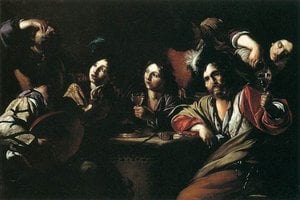
To stand before this depiction of Saints Peter and Paul is to step directly into the vibrant, dramatic heart of early 17th-century Rome. It is a painting that does not merely hang on a wall; it breathes with the palpable energy of its moment of creation. The composition immediately arrests the viewer with its masterful handling of light—a signature trait echoing the revolutionary genius of Caravaggio. Here, a strong, directional illumination streams in from the left, carving out the figures and lending every fold of drapery and every plane of skin an almost sculptural reality. This dramatic chiaroscuro is not just a technique; it is an emotional force, suggesting revelation or profound contemplation.
The Craftsmanship of Friendship and Devotion
What makes this piece so captivating is its apparent dual authorship, lending it the air of a deeply personal commission. The scholarly analysis suggests that while Bartolomeo Manfredi may have rendered Saint Peter, his French acolyte and pupil, Nicolas Tournier, was responsible for Saint Paul. This division of labor transforms the work from a mere devotional piece into something far more intimate—perhaps a treasured token of friendship between artists, or a sophisticated nod to an astute collector who understood the burgeoning network of Caravaggio’s influence across Rome. The subjects are not idealized types; rather, they possess distinct, lived-in idiosyncrasies in their faces, lending them an immediate and startling sense of humanity.
Symbolism Woven into Music and Form
The narrative is enriched by the objects held by these two saints. While both men share the venerable beard common to figures of deep piety, they are depicted here with musical instruments—one holding a violin, the other a lute. This unexpected inclusion suggests that their spiritual devotion was intertwined with earthly passions, perhaps suggesting that divine inspiration can manifest through art and music. The setting itself, an interior space hinted at by the nearby chair, feels like a momentary pause in a gathering of shared creativity. It invites us to imagine the resonance of unseen melodies filling the air around them.
Bringing Baroque Drama Home
For those who seek to infuse their own interiors with the drama and intellectual weight of the Baroque era, this reproduction offers an unparalleled opportunity. The rich tonality, the palpable texture captured in the paintwork, and the sheer narrative depth make it a centerpiece worthy of any distinguished salon or study. Owning this piece is not simply acquiring art; it is curating a moment—a dialogue between friendship, faith, and the enduring power of artistic genius that flourished in Rome during the early 1600s.



 Bekijk op ware grootte
 Koop handgeschilderd kunstwerk
 Verstuur
 Delen
Delen
 Details bekijken
 Gids
Gids

 Download
 Vergelijkbare items
 Röntgenonderzoek
 Diavoorstelling
 Statistieken


 Lees meer






































 De optie voor glas is alleen beschikbaar bij een formaat kleiner dan 110 cm.