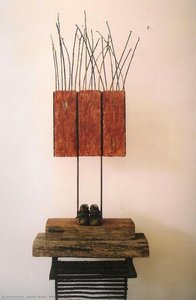
The Soul of the Portuguese Landscape: The Art of Avelino Rocha
Born in the historic city of Oporto in 1940, Avelino Rocha emerged as a profound voice within the landscape of Portuguese contemporary art. His creative journey is deeply intertwined with the textures and rhythms of his homeland, reflecting a lifelong devotion to capturing the elemental essence of the natural world. Educated at the prestigious École Supérieure des Beaux-Arts and FBAUP, Rocha’s formative years were defined by a rigorous academic foundation that eventually blossomed into a highly personal visual language. This period of study allowed him to absorb the currents of European avant-garde movements, most notably Abstract Expressionism, which would later become the heartbeat of his artistic practice.
Rocha’s aesthetic sensibility was significantly shaped by the whispers of masters such as Joan Miró and Wilhelm Hofmann. From these influences, he inherited a fascination with spontaneous gesture and the exploration of subconscious imagery, yet he applied these concepts to a uniquely Portuguese context. His work does not merely represent a landscape; it seeks to evoke its very spirit through a masterful manipulation of color and form. By prioritizing emotional intensity over mere representational accuracy, Rocha invites the viewer into a sensory experience where light, shadow, and geological memory converge.
Technique and the Language of Texture
To encounter a canvas by Avelino Rocha is to engage with a tactile reality. His signature technique is rooted in the heavy use of impasto, where paint is applied with such thickness that the surface of the work becomes a sculptural entity in its own right. These textured layers create a palpable sense of movement and energy, mirroring the ruggedness of the earth itself. His color palette often draws from the deep, resonant tones of the Portuguese soil—ochres, sienra, and umbers—creating an organic connection between his medium and his subject matter.
Beyond the realm of traditional painting, Rocha’s versatility as a creator is truly remarkable. His artistic output spans a vast multidisciplinary landscape, including:
- Stained Glass: Where light becomes a medium for storytelling.
- Sculpture and Ceramics: Allowing him to explore three-dimensional forms and the permanence of clay.
- Visual Poetry: A unique intersection of linguistic rhythm and graphic experimentation.
- Printmaking and Illustration: Demonstrating his command over line and graphic precision.
A Legacy of Education and Global Presence
The impact of Avelino Rocha extends far beyond the borders of his canvases. As a dedicated educator at FBAUP, he played a pivotal role in nurturing the next generation of Portuguese talent, instilling in them a commitment to conveying complex human emotions through simplified, powerful forms. This pedagogical legacy is matched by his significant presence on the international stage. His work has been showcased in solo and group exhibitions across a breathtaking array of nations, including Spain, Mexico, Russia, Italy, Brazil, France, and the United States.
His monumental works, such as “Peter passed this way” and “Tracks of a past,” stand as testaments to his ability to capture fleeting moments of temporal beauty. With pieces held in esteemed collections like the Museums of Soares dos Reis and the Amadeo de Souza Cardoso, Rocha’s contribution to art history is firmly etched into the cultural fabric of Portugal. He remains an artist whose work continues to resonate, acting as a bridge between the ancient geological rhythms of the earth and the modern emotional complexities of the human experience.



 Voorvertoning
 Bestel handgeschilderde reproductie
 Verstuur
 Delen
Delen
 Details bekijken

 Download
 Vergelijkbare items
 Röntgenonderzoek
 Diavoorstelling
 Statistieken

 Lees meer






































 De optie voor glas is alleen beschikbaar bij een formaat kleiner dan 110 cm.