


De kunstwerken die op deze pagina worden weergegeven, zijn beschermd door de auteursrechtwetgeving, wat betekent dat het ons wettelijk niet is toegestaan om identieke reproducties te maken of te verkopen. Deze bescherming wordt gehandhaafd onder internationale overeenkomsten zoals de Conventie van Bern en door nationale wetgeving, waaronder de bepalingen van de Amerikaanse auteurswet - Titel 17. Alle rechten voorbehouden. Reproduceren of distribueren van afbeeldingen is niet toegestaan zonder uitdrukkelijke schriftelijke toestemming van WahooArt.com en de rechthebbenden.
Deze methode voldoet volledig aan de auteursrechtwetgeving, omdat het niet gaat om het kopiëren of dupliceren van het beschermde kunstwerk. In plaats daarvan is er sprake van een creatieve herinterpretatie — een nieuw schilderij dat door het origineel wordt geïnspireerd, maar er niet identiek aan is.
Giclée- of canvasafdruk van museumkwaliteit met een snelle productie en flexibele afwerkingsmogelijkheden. ( Bestel handgeschilderde reproductie Schakel over naar digitale afbeeldingen)





























Kies uit onze vooraf ingestelde maten die overeenkomen met de originele verhoudingen van het kunstwerk.

Voer de gewenste breedte en hoogte in, passend bij uw lijst of muur. Een afdruk kan alleen worden ingekort en nooit groter worden gemaakt dan het origineel; een formaat met andere verhoudingen zal daarom een deel van de afbeelding verliezen. Wij sturen u een digitaal mockup ter goedkeuring voordat we tot drukwerk overgaan. De afbeelding op deze pagina toont niet de werkelijke uitsnede — dit is alleen te zien op het mockup.
Wereldwijde levering () binnen 2 weken in plaats van de standaard 4/5 weken. (8 november)
The Emir Feisal
Afmetingen reproductie
In the quiet intensity of Augustus Edwin John’s 1919 masterpiece, The Emir Feisal, one encounters more than a mere historical likeness; one meets a profound study of human fortitude. As the world grappled with the seismic shifts following the Great War, John turned his gaze toward Sheikh Feisal bin Abdulaziz Al Saud, capturing a moment of stillness amidst global turbulence. The portrait does not simply present the face of a future monarch; it distills the very essence of dignity. Through a masterful command of light and shadow, the artist invites the viewer into a private space of contemplation, where the weight of leadership and the gravity of history converge in a single, piercing gaze.
The composition is a triumph of realist technique, characterized by John’s ability to breathe life into texture and form. The Sheikh is depicted in formal, traditional attire, with a dark robe draped elegantly over his shoulder, creating a rhythmic interplay of deep tones and soft highlights. John employs chiaroscuro—the dramatic tension between light and dark—to sculpt the subject's features, lending a sculptural three-dimensionality to the face and the intricate folds of the turban. Every brushstroke feels deliberate, yet possesses a fluid vitality that prevents the realism from feeling static. The subtle rendering of the decorative elements on his headwear, suggesting pearls or fine beads, showcases a meticulous attention to detail that rewards close, lingering inspection.
Beyond the physical accuracy of the portrait lies a rich tapestry of symbolic meaning. Held firmly within the Sheikh’s hands is a book, an element that serves as a silent testament to intellectual engagement and the pursuit of knowledge. In this context, the book transcends its material form to represent the wisdom and cultural heritage central to the identity of the Arabian Peninsula during its formative years. This connection between the subject and his scholarly attribute imbues the painting with an aura of quiet authority, suggesting a leader whose power is rooted in deep-seated intellect and tradition.
The emotional impact of the work is anchored by the subject's direct gaze. By looking squarely at the viewer, Feisal establishes an immediate, respectful connection, demanding recognition while maintaining an air of impenetrable composure. This psychological depth makes the painting an extraordinary piece for any collection; it possesses a commanding presence that can anchor a room, offering a sense of stability and historical continuity. For the discerning collector or interior designer, The Emir Feisal offers a sophisticated focal point—a window into a transformative era of history, rendered with a poetic sensitivity that continues to resonate across generations.
Voor "The Emir Feisal" is de aanbevolen afdrukinstelling een formaat van Medium en een Portrait oriëntatie.
De kleur die het meest opvalt in "The Emir Feisal" is Driftwood (#88714a). De dominante kleur is handig bij het afstemmen van een kunstwerk op een interieur.
Het formaat van "The Emir Feisal" is Portrait. Dit is handig bij het plannen van de plek waar een reproductie zal worden geplaatst.

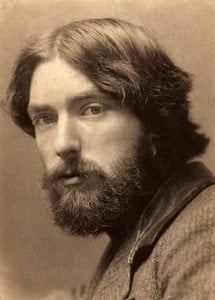
1878 - 1961 , Wales

Discover the exquisite era of Victorian Naturalism. Explore how master artists blended scientific precision with breathtaking realism to capture the soul of nature through botanical oil paintings and legendary landscapes.
 Voorvertoning
 Verstuur
 Delen
Delen
 Details bekijken
 Gids
Gids

 Download
 Vergelijkbare items
 Röntgenonderzoek
 Diavoorstelling
 Vraag & antwoord
 Statistieken


 Lees meer









 De optie voor glas is alleen beschikbaar bij een formaat kleiner dan 110 cm.


