Bekijk op ware grootte Bekijk in AR Schakel over naar print Schakel over naar digitale afbeeldingen Verstuur
Details bekijken Gids voor studentenkunstwerken Toevoegen aan favorieten Download Vergelijkbare items Röntgenonderzoek Diavoorstelling Statistieken

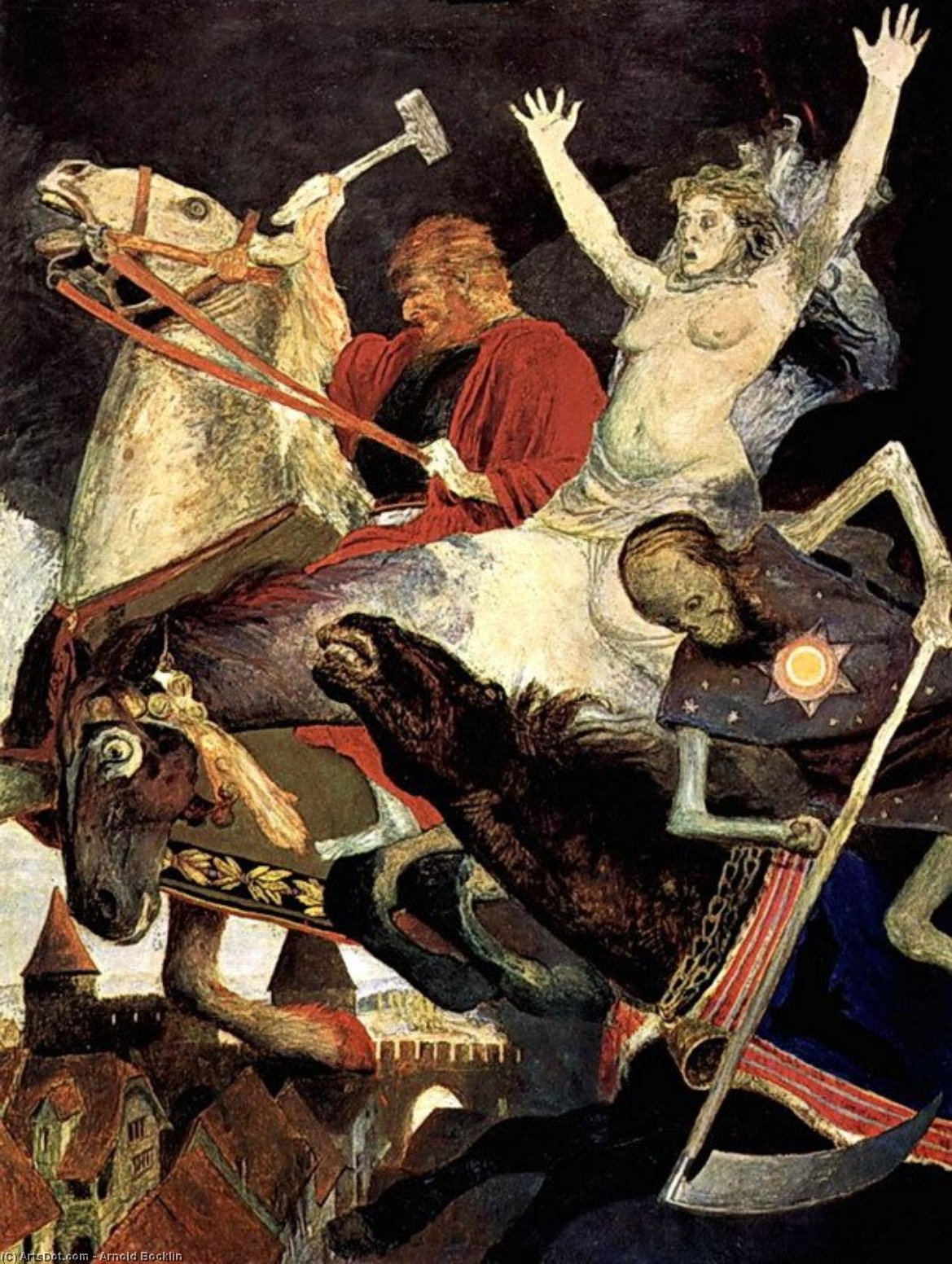
De Oorlog

Bekijk 'De Oorlog' van Arnold Böcklin – een dramatische Symbolist meesterwerk dat oorlog & dood weergeeft. Ontdek zijn donkere schoonheid, rijke symboliek en expressieve penseelstreken. Koop vandaag nog een reproductie!

Arnold Böcklin (1827-1901) was een invloedrijke Zwitserse symbolist schilder, bekend om zijn dromerige en vaak donkere werken zoals 'Het Dodeneiland'. Zijn kunst verkent thema's als dood, mythologie en de wereld van dromen.

Handgemaakte olieverfreproductie

Met de hand geschilderd in olieverf op canvas in uw gewenste maat en lijst, op bestelling gemaakt door onze kunstenaars. ( Schakel over naar print Schakel over naar digitale afbeeldingen)

Corner sample of the P118B picture frame: moulded polystyrene, 5 cm wide and 3 cm thick
P118B 10
Corner sample of the P118H picture frame: moulded polystyrene, 5 cm wide and 3 cm thick
P118H 10
Corner sample of the P118W picture frame: moulded polystyrene, 5 cm wide and 3 cm thick
P118W 10
Corner sample of the P438Z picture frame: moulded polystyrene, 5.5 cm wide and 3.5 cm thick
P438Z 10
Corner sample of the P508JH picture frame: moulded polystyrene, 7 cm wide and 3.5 cm thick
P508JH 12
Corner sample of the P508YH picture frame: moulded polystyrene, 7 cm wide and 3.5 cm thick
P508YH 12
Corner sample of the P805H picture frame: moulded polystyrene, 5 cm wide and 3.5 cm thick
P805H 10
Corner sample of the P805Z picture frame: moulded polystyrene, 5 cm wide and 3.5 cm thick
P805Z 10
Corner sample of the P919BZ picture frame: moulded polystyrene, 7 cm wide and 3.5 cm thick
P919BZ 10
Corner sample of the P919G picture frame: moulded polystyrene, 7 cm wide and 3.5 cm thick
P919G 10
Corner sample of the P919XJ picture frame: moulded polystyrene, 7 cm wide and 3.5 cm thick
P919XJ 10
Corner sample of the P959ZH picture frame: moulded polystyrene, 5 cm wide and 3 cm thick
P959ZH 10
Corner sample of the P968JZ picture frame: moulded polystyrene, 6 cm wide and 4 cm thick
P968JZ 12
Corner sample of the W106C picture frame: solid wood, 5 cm wide and 3 cm thick
W106C 8
Corner sample of the W218G picture frame: solid wood, 5 cm wide and 3 cm thick
W218G 10
Corner sample of the W218JH picture frame: solid wood, 5 cm wide and 3 cm thick
W218JH 8
Corner sample of the W218Y picture frame: solid wood, 5 cm wide and 3 cm thick
W218Y 10
Corner sample of the W307PJ picture frame: solid wood, 6 cm wide and 3 cm thick
W307PJ 10
Corner sample of the W316G picture frame: solid wood, 6 cm wide and 3 cm thick
W316G 10
Corner sample of the W316PJ picture frame: solid wood, 6 cm wide and 3 cm thick
W316PJ 8
Corner sample of the W316Y picture frame: solid wood, 6 cm wide and 3 cm thick
W316Y 10
Corner sample of the W398PJ picture frame: solid wood, 5 cm wide and 3 cm thick
W398PJ 8
Corner sample of the W4111J picture frame: solid wood, 6.5 cm wide and 3.5 cm thick
W4111J 10
Corner sample of the W500HY picture frame: solid wood, 7 cm wide and 5 cm thick
W500HY 15
Corner sample of the W500JH picture frame: solid wood, 7 cm wide and 5 cm thick
W500JH 15
Corner sample of the W692G picture frame: solid wood, 8 cm wide and 4 cm thick
W692G 12
Corner sample of the W849H picture frame: solid wood, 5 cm wide and 3 cm thick
W849H 8
Corner sample of the W940BG picture frame: solid wood, 7.5 cm wide and 4.5 cm thick
W940BG 15
Corner sample of the W953PJ picture frame: solid wood, 6 cm wide and 3.5 cm thick
W953PJ 8

Standaardformaat
op maat gemaakt
CM
INCH

Kies uit onze vooraf ingestelde maten die overeenkomen met de originele verhoudingen van het kunstwerk.

breedte
hoogte

U kunt uw eigen afmetingen invoeren om in een specifieke lijst of ruimte te passen. Als de door u gekozen maat niet overeenkomt met de verhoudingen van het originele beeld, zullen we het kunstwerk bijsnijden of het schilderij uitbreiden met extra handgeschilderde elementen. Een digitale mockup wordt ter goedkeuring naar u verzonden voordat de productie begint.
Houd er rekening mee dat de preview op het scherm niet de werkelijke uitsnede of uitbreiding weergeeft. Alleen de mockup toont de uiteindelijke compositie nauwkeurig.
Hoewel aangepaste afmetingen mogelijk zijn, raden we aan een maat uit de vooraf gedefinieerde lijst te selecteren om de originele verhoudingen te behouden.

Voorbeelden van wat aangepast kan worden: Vervang het gezicht met een eigen foto; Voeg een huisdier toe (bijv. vervang de kat door een hond); Verwerk een verborgen boodschap in de achtergrond; Wijzig het landschap of andere elementen in de achtergrond.
Na de bestelling zal het team van WahooArt.com per e-mail contact opnemen met de klant voor instructies en een mockup-voorbeeld sturen.

Wereldwijde levering () binnen 3 tot 4 weken in plaats van de standaard 5 weken. (10 oktober). Zonder concessies aan de kwaliteit.

Gratis wereldwijde expressverzending
Hoogwaardig linnen canvas
Volledige verzendverzekering
Garantie op terugbetaling van invoerrechten
Garantie op exacte kleurweergave
Retourbeleid van 100 dagen (alleen bij defecten)
100% Geld-terug-garantie
Korting bij meerdere afnames

Totaalprijs

€ 256

De Oorlog

Reproductiemethode

Formaat reproductie

-

Totaalprijs

€ 256

Belangrijkste kenmerken

  • movement: Symbolism
  • dimensions: {'height': 222, 'unit': 'cm', 'width': 170}
  • style: Expressive and dramatic
  • notable_elements:
    • Central cluster of figures engaged in violent struggle
    • Man in red raising an axe
    • Woman with flowing hair in distress
    • Dark figure with animalistic features
  • medium: Oil on canvas
  • title: La Guerre
  • subject: Violent or mythological scene involving human and possibly supernatural figures engaged in conflict

Kunstquiz

Er is slechts één goed antwoord op elke vraag.

Vraag 1:
Who is the artist of 'La Guerre'?
Vraag 2:
In which year was 'La Guerre' created?
Vraag 3:
What art movement is 'La Guerre' associated with?
Vraag 4:
Which of the following elements is NOT a notable feature in 'La Guerre'?
Vraag 5:
What medium was used to create 'La Guerre'?

La Guerre: De Kracht van Conflict – Een Meesterwerk van Arnold Böcklin

Arnold Böcklin’s *La Guerre* (1896) is een aangrijpende reis naar het hart van angst en chaos, een kunstwerk dat voortdurend vraagt om interpretatie. Deze machtige Symbolist schildering biedt een beeld van een gewelddadig tafereel gevuld met menselijke figuren – en mogelijk bovennatuurlijke entiteiten – die in een intense strijd verwikkeld zijn. De compositie is dicht en laag gedragen, gekenmerkt door een centrale groep Figuren in hevige beweging. Een man in rood heft een bijl boven zijn hoofd, klaar om aan te vallen, terwijl een vrouw met vloeiende lokken lijkt te vluchten voor de dreiging. Onder hen verschijnt een donkere figuur met dierenachtige trekken en grijpt naar de benen van een andere figuur die valt of wordt getrokken naar beneden. De achtergrond is gevuld met aanvullende elementen die het gevoel van tumult en conflict verder versterken.

Stijl en Techniek: Een Expressieve Gebruikmaking van Impasto

Böcklin’s stijl in *La Guerre* is expressief en dramatisch, gekenmerkt door krachtige penseelstreken, lagen van kleur en een focus op beweging en emotie. Het kunstwerk heeft een bepaalde primitieve kwaliteit, met overdreven vormen en vereenvoudigde details die zijn emotionele impact maximaliseren. De toepassing van impasto technieken – het dik aanbrengen van oliepastel – is bijzonder belangrijk; het zorgt voor een rijke textuur en geeft de afbeelding een fysieke aanwezigheid die essentieel is voor het overbrengen van de angst en dreiging die het tafereel oproept. Böcklin’s aandacht voor detail, ondanks zijn eenvoudige stijl, draagt bij aan de kracht van het kunstwerk.

Kleurenpalet en Licht: Een Somber Atmosfeer

Het kleurenpalet bestaat voornamelijk uit donkere tinten zoals diepe bruinen, zwart en schaduwen, waardoor een sombere en intense atmosfeer ontstaat. De kleuren zijn zorgvuldig gekozen om het gevoel van angst en verlatenheid te versterken. Een accent van rood, wit en goud trekt de aandacht naar belangrijke Figuren en objecten binnen het beeld en draagt bij aan het dramatische effect. Het licht is dramatisch en gericht, waardoor sterke schaduwen en hooglichten ontstaan die de vormen en bewegingen van de Figuren benadrukken. Deze contrast zorgt voor een gevoel van spanning en drama.

Historische Context: Een Stem uit de Symbolistische Beweging

Arnold Böcklin (1827-1901) was een Zwitsers Symbolist schilder die bekend staat om zijn aangrijpende en mythologische werken. Zijn artistieke reis leidde hem door verschillende steden, waaronder Parijs, waar hij studeerde aan het Louvre. *La Guerre* is onderdeel van een reeks allegorische schilderingen die thema’s verkennen zoals dood, mythologie en de menselijke conditie. Böcklin werd sterk beïnvloed door filosofen als Friedrich Nietzsche en zijn werk reflecteert een zoektocht naar spirituele betekenis in een wereld die steeds meer wordt gekenmerkt door wetenschap en rationaliteit.

Symbolisme en Emotionele Impact: Een Spiegel voor de Ziel

*La Guerre* is niet alleen een prachtige kunstwerk qua technische uitvoering, maar ook een diepe emotionele ervaring. De afbeelding roept vragen op over het aard van geweld, angst en het lijden dat inherent is aan het menselijk bestaan. Böcklin’s gebruik van symbolische elementen – zoals de doodskopf, de bijl en de vrouw die naar boven kijkt – nodigt uit tot contemplatie en biedt een prachtige manier om de complexe thema's van zijn tijd weer te geven. Het kunstwerk blijft relevant vandaag de dag omdat het ons confronteert met onze eigen angst voor het einde en ons aanspoort tot zelfreflectie.

Vragen & Antwoorden

Hoe verhouden de kleuren van "De Oorlog" door Arnold Böcklin zich tot de emotie van het kunstwerk?

Het Aardse tinten kleurenpalet van "De Oorlog" door Arnold Böcklin gaat samen met de Dramatisch emotionele toon. Kleur is een van de manieren waarop een werk gevoel overbrengt.

Wie is de kunstenaar achter "De Oorlog"?

"De Oorlog" is gemaakt door Arnold Böcklin. De informatie op deze pagina beschrijft het originele werk van Arnold Böcklin.

Wie heeft "De Oorlog" gemaakt en in welk jaar?

De maker van "De Oorlog" is Arnold Böcklin, en het werk dateert uit 1896.

Is "De Oorlog" door Arnold Böcklin een licht of een donker kunstwerk?

De helderheid van "De Oorlog" door Arnold Böcklin is vastgelegd op diepe schaduw, met een luminantie van Zachte schaduw.

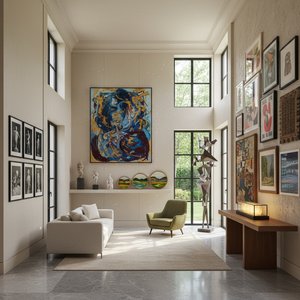
Kan ik "De Oorlog" door Arnold Böcklin op mijn eigen muur bekijken voordat ik het koop?

"De Oorlog" heeft een augmented reality-preview: de AR-voorvertoning-pagina van het kunstwerk toont het in uw eigen ruimte op een compatibel apparaat.

Hoe oud was Arnold Böcklin toen "De Oorlog" werd gemaakt?

Arnold Böcklin maakte "De Oorlog" op 69-jarige leeftijd. De kunstenaar werd geboren in 1827 en het werk dateert uit 1896.

Wat is de creatiedatum van "De Oorlog" door Arnold Böcklin?

"De Oorlog" dateert uit 1896. Deze datum plaatst het werk binnen de carrière van Arnold Böcklin en de betreffende tijdperk.


Biografie van de kunstenaar

Early Life and Training

Arnold Böcklin, a name synonymous with haunting beauty and profound melancholy, was born on October 16, 1827, in Basel, Switzerland—a city steeped in history and artistic tradition. His lineage traced back to an old family of Schaffhausen, engaged in the lucrative trade of silk, a connection that subtly shaped his early exposure to craftsmanship and visual detail. His mother, Ursula Lippe, was a native of the same city, grounding him firmly within the cultural fabric of Basel. Böcklin’s artistic journey began at the age of fourteen when he enrolled at the Düsseldorf Academy, an institution renowned for its rigorous training and emphasis on classical techniques. There, under the tutelage of Johann Wilhelm Schirmer, a prominent landscape painter, he honed his skills in drawing and composition. Schirmer recognized Böcklin's exceptional potential, sending him on excursions to Antwerp and Brussels—cities brimming with artistic heritage—where he diligently copied the works of masters like Peter Paul Rubens, absorbing their techniques and stylistic nuances. This early immersion in the traditions of Northern European painting laid the foundation for his distinctive approach. A brief sojourn in Paris allowed him to study the art of the Old Masters at the Louvre, further broadening his artistic horizons.

Artistic Career and Symbolism

Böcklin’s artistic trajectory led him through various cities—Paris, Rome—each leaving an indelible mark on his evolving style. In Rome, he was profoundly influenced by the city's classical ruins and Renaissance art, a period that ignited his fascination with allegory and mythology. His early works began to reflect this influence, featuring figures drawn from ancient myths and legends set against evocative landscapes. Notable examples from this period include *Nymph and Satyr* (1858) and *Sappho* (1859), paintings characterized by a dreamlike quality and a subtle sense of unease. Böcklin’s distinctive style, often described as “symbolist,” emerged through his exploration of themes like death, mortality, and the subconscious—subjects that would dominate much of his later work. A particularly poignant example is *Portrait of Myself with Death Playing the Violin* (1872), a deeply personal and unsettling depiction of the artist confronting his own mortality. This painting showcased his unique ability to infuse seemingly ordinary subjects with layers of symbolic meaning, creating an atmosphere of profound introspection. Böcklin’s work resonated with the burgeoning Symbolist movement, which sought to express inner emotions and ideas through evocative imagery rather than direct representation.

The Isle of the Dead: A Masterpiece

Perhaps the most iconic achievement in Arnold Böcklin's oeuvre is his five versions of *The Isle of the Dead* (1880-1886). This series, inspired by a legend concerning a man who sailed to an island and chose to die there, became instantly recognizable and profoundly influential. The painting depicts a desolate landscape shrouded in mist, dominated by towering cypress trees and a mysterious, foreboding island—a place of both beauty and sorrow. The central figure, often interpreted as a priest or mourner, stands before a decaying tomb, gazing out at the swirling waters of the river Styx. Böcklin’s masterful use of color, light, and composition creates an atmosphere of profound melancholy and timelessness. The *Isle of the Dead* is not merely a depiction of death; it's an exploration of mortality, memory, and the human condition—a meditation on the inevitability of loss and the enduring power of the past. The series’ success led to its reproduction in countless prints and postcards, cementing Böcklin’s place as one of the most popular artists of his time.

Legacy and Influence

Arnold Böcklin's impact extended far beyond his own lifetime. His work profoundly influenced a generation of younger artists, including Hans Thoma, who admired his ability to evoke mood and atmosphere through symbolic imagery. The artist’s distinctive style—characterized by its dreamlike quality, evocative landscapes, and exploration of dark themes—found resonance in the works of late-Romantic composers such as Richard Strauss, who drew inspiration from Böcklin's paintings for his opera *Tod und Verklärung* (Death and Transfiguration). Clement Greenberg famously described Böcklin’s work as “one of the most consummate expressions” of its time, recognizing its profound emotional depth and artistic sophistication. Böcklin’s legacy is inextricably linked to the Symbolist movement, which sought to transcend the limitations of realism and explore the realm of dreams, myths, and the subconscious. His paintings continue to captivate viewers with their haunting beauty and enduring power—a testament to his unique vision and artistic genius.

Museum Collections

Böcklin’s works are proudly displayed in several prestigious museums around the world, offering visitors a chance to experience the full breadth of his artistic output:
  • Öffentliche Kunstsammlung (Basel, Switzerland)
  • Kunstmuseum Basel (Switzerland)
  • Museum Kunsthaus Zürich (Zürich, Switzerland)
These institutions safeguard and showcase Böcklin’s legacy, ensuring that his art continues to inspire and move audiences for generations to come.
Arnold Böcklin

Arnold Böcklin

1827 - 1901 , Zwitserland

Snelle feiten

  • Artistic Movement Or Style: Symbolisme
  • Artists Or Movements Influenced By This Artist:
    • Hans Thoma
    • Pre-Raphaelieten
  • Artists Who Influenced This Artist:
    • Schirmer
    • Feuerbach
  • Date Of Birth: 16 okt 1827
  • Date Of Death: 16 jan 1901
  • Full Name: Arnold Böcklin
  • Nationality: Zwitserse
  • Notable Artworks:
    • Isle of the Dead
    • Nymph Satyr
    • Sappho
  • Place Of Birth: Basel, Zwitserland
Ontdek kunstwerken georganiseerd op thema, stijl en kenmerk.