VoorvertoningVoorvertoning Bekijk in ARBekijk in AR Bestel handgeschilderde reproductie Bestel handgeschilderde reproductieSchakel over naar digitale afbeelding Schakel over naar digitale afbeelding VerstuurVerstuur
Details bekijkenDetails bekijken Toevoegen aan favorieten Toevoegen aan favorieten DownloadDownload Vergelijkbare itemsVergelijkbare items RöntgenonderzoekRöntgenonderzoek DiavoorstellingDiavoorstelling StatistiekenStatistieken

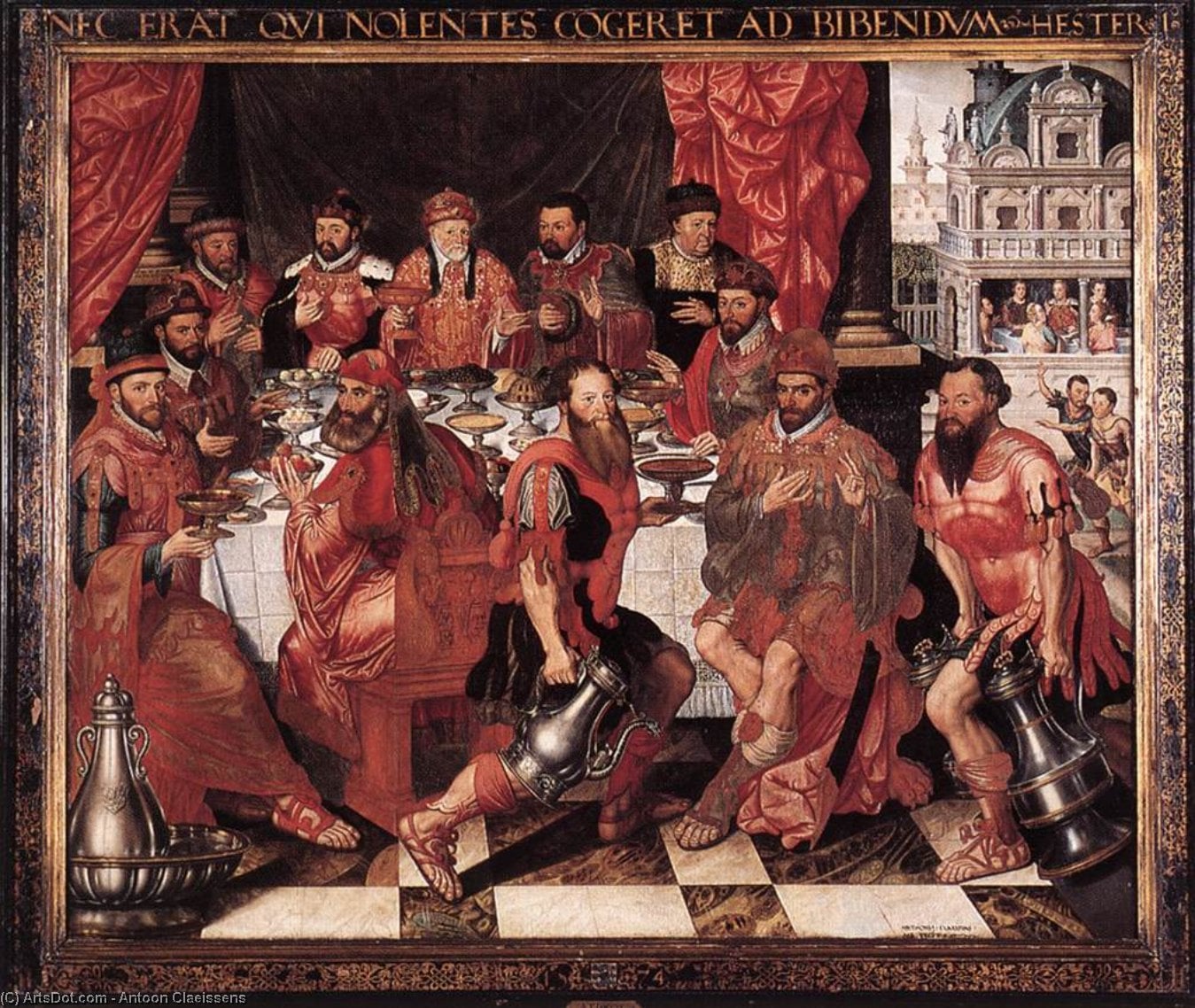
Banquet

A vibrant and festive 16th-century banquet scene unfolds in this detailed oil painting by Antoon Claeissens, offering a rare opportunity to bring a piece of Flemish history into your private collection.

Discover Antoon Claeissens (1536-1613), a Bruges painter known for dramatic religious scenes & allegories like 'Mars' & 'Banquet'. Explore his Flemish masterpieces.

Giclée / Kunstafdrukken

Giclée- of canvasafdruk van museumkwaliteit met een snelle productie en flexibele afwerkingsmogelijkheden. (Bestel handgeschilderde reproductie Bestel handgeschilderde reproductieSchakel over naar digitale afbeelding Schakel over naar digitale afbeelding)

P118B $10
P118H $10
P118W $10
P438Z $10
P508JH $12
P508YH $12
P805H $10
P805Z $10
P919BZ $10
P919G $10
P919XJ $10
P959ZH $10
P968JZ $12
W106C $8
W218G $10
W218JH $8
W218Y $10
W307PJ $10
W316G $10
W316PJ $8
W316Y $10
W398PJ $8
W4111J $10
W500HY $15
W500JH $15
W692G $12
W849H $8
W940BG $15
W953PJ $8

Standaardformaat
op maat gemaakt
CM
INCH

Kies uit onze vooraf ingestelde maten die overeenkomen met de originele verhoudingen van het kunstwerk.

breedte
hoogte

U kunt uw eigen afmetingen opgeven om in een specifieke lijst of ruimte te passen. Als de door u gekozen maat niet overeenkomt met de proporties van het originele kunstwerk, zullen wij de afbeelding bijsnijden of uitbreiden met een gespiegelde of effen rand. Een digitaal mockup wordt ter goedkeuring naar u verzonden voordat de productie begint.
Houd er rekening mee dat de preview op het scherm de werkelijke bijsneding of uitbreiding niet weergeeft. Alleen de mockup toont de uiteindelijke compositie nauwkeurig.
Hoewel aangepaste maten beschikbaar zijn, raden wij aan een afmeting uit de vooraf bepaalde lijst te kiezen om de originele proporties te behouden.

Wereldwijde levering () binnen 2 weken in plaats van de standaard 4/5 weken. (10 september)

why_choose_icon
Gratis wereldwijde expressverzending
why_choose_icon
Hoogwaardig linnen canvas
why_choose_icon
Volledige verzendverzekering
why_choose_icon
Garantie op terugbetaling van invoerrechten
why_choose_icon
Garantie op exacte kleurweergave
why_choose_icon
Retourbeleid van 100 dagen (alleen bij defecten)
why_choose_icon
100% Geld-terug-garantie
why_choose_icon
Korting bij meerdere afnames

Totaalprijs

$ 69

reproduction

Banquet

Giclée / Kunstafdrukken

Afmetingen reproductie

-

Eindtotaal

$ 69

Snelle feiten

  • Medium: Oil on panel
  • Influences: Adrian Becaert
  • Artist: Antoon Claeissens
  • Notable elements or techniques: Detailed banquet scene with many figures
  • Subject or theme: Festive gathering or celebration
  • Dimensions: 130 x 155 cm

The Splendor of a Flemish Feast


In the heart of 1574, amidst the flourishing cultural landscape of Bruges, Antoon Claeissens captured a moment of profound conviviality and social grace. His masterpiece, Banquet, is far more than a mere depiction of a meal; it is a window into the opulent soul of the sixteenth century. As a pivotal figure in the Flemish tradition, Claeissens utilizes his skill as the "Master of Bruges Allegory" to transform a gathering of guests into a rich tapestry of human connection and status. The painting invites the viewer to pull up a chair at a table laden with the symbols of prosperity, where the clinking of fine glassware and the murmur of sophisticated conversation seem almost audible through the layers of oil on panel.

A Masterclass in Detail and Composition


The technical brilliance of this work lies in its meticulous attention to the textures of daily luxury. Claeissens demonstrates an extraordinary command over the medium, using the richness of oil paint to breathe life into the varied surfaces surrounding the diners. One can observe the delicate glint of light reflecting off silver spoons and knives, the heavy weight of ceramic bowls, and the translucent elegance of a single wine glass. The composition is densely populated, featuring at least thirteen figures whose attire—ranging from fine linens to structured, fashionable garments—speaks to the social hierarchy of the era. Each element, from the carefully placed cups to the subtle arrangement of cutlery, contributes to a sense of rhythmic abundance. This density does not overwhelm but rather creates a sense of organized celebration, guiding the eye across the table to discover the quiet interactions between guests engaged in deep dialogue or shared enjoyment.

Symbolism and Historical Resonance


Beyond its surface beauty, Banquet serves as an evocative historical document. During a period when Bruges was navigating complex political and social shifts, such scenes of communal harmony held significant weight. The feast acts as an allegory for stability, wealth, and the enduring strength of community bonds. The abundance of food and drink symbolizes not just physical nourishment but the spiritual and economic prosperity of the Flemish people. For the art historian, Claeissens’ work represents the pinnacle of his training under Adrian Becaert, blending historical accuracy with a dramatic flair that anticipates the expressive movements of later centuries.

An Inspiring Centerpiece for the Modern Collector


For interior designers and collectors seeking to infuse a space with character and warmth, this painting offers unparalleled versatility. Its large-scale presence and warm, earthy palette make it an ideal focal point for grand dining rooms, sophisticated studies, or classical living areas.
  • Atmospheric Depth: The painting brings a sense of historical gravity and "old world" charm to any contemporary setting.
  • Visual Texture: The intricate details of the feast provide endless points of interest for close observation.
  • Emotional Resonance: The theme of celebration and togetherness evokes feelings of hospitality and joy, making it a welcoming addition to a home.
Choosing a high-quality reproduction of this work allows one to possess a piece of Bruges' golden age, transforming a modern interior into a gallery of timeless elegance and storied history.

Biografie van de kunstenaar

Antoon Claeissens: The Master of Bruges Allegory

Antoon Claeissens, a name perhaps less familiar than some of his Flemish contemporaries, stands as a pivotal figure in the artistic landscape of 16th-century Bruges. Born around 1536 and passing away in 1613, he was a painter deeply intertwined with the city’s cultural and political life, serving as its official artist for a significant period. Claeissens wasn't merely a recorder of events; he was an interpreter of ideas, crafting dramatic religious scenes and intricate allegories that reflected the intellectual currents and social dynamics of his time. His legacy lies not just in the finished artworks but also in the complex family network of artists – his brothers Gillis and Pieter – who collectively shaped the artistic identity of Bruges during a remarkably fertile era.

Claeissens’ early life was steeped in art, as he apprenticed under the renowned Adrian Becaert, a master known for his detailed historical paintings. This foundation provided him with a strong grounding in technique and perspective – skills that would later be employed to great effect. However, it was within the Claeissens workshop itself that Antoon truly flourished, benefiting from the collective experience and established reputation of his father, Pieter Claeissens the Elder, and his brothers. This familial collaboration is a fascinating aspect of his career; while each artist possessed individual styles, they frequently worked together on large-scale projects, making precise attribution of specific works challenging even today.

A City Painter’s Responsibilities

Antoon Claeissens' role as the city painter of Bruges was far more than a simple commission. He was responsible for a vast array of artistic endeavors that served both religious and civic purposes. Following the tumultuous events of the Beeldenstorm (the Iconoclastic Fury) in 1566, which saw the destruction of countless religious images, the city council commissioned artists to restore and replace these lost artworks. Claeissens played a crucial part in this monumental undertaking, contributing significantly to the decoration of several parish churches – including Saint Gillis Church and the Church of Our Lady – with altarpieces, frescoes, and panel paintings.

Beyond restoring existing works, he was also tasked with creating new pieces that conveyed religious messages and reinforced civic values. This involved a deep understanding of theological concepts, historical narratives, and allegorical symbolism—elements that are abundantly present in his most celebrated works. His involvement extended to the administration of the Bruges Guild of St. Luke, where he served as dean multiple times, demonstrating his considerable influence within the artistic community.

Key Works and Artistic Style

Claeissens’ oeuvre is characterized by a dramatic intensity and a masterful command of composition. His paintings are often large-scale, employing rich colors and meticulous detail to create visually arresting scenes. Several works stand out as particularly significant examples of his artistic skill and thematic concerns. “Mars Vanquishing the Seven Capital Sins” (circa 1605), now housed in the Groeningemuseum, is perhaps his most famous painting. This allegorical composition depicts Mars, the god of war, triumphing over the seven deadly sins – a potent symbol of virtue prevailing over vice. The intricate details and carefully rendered figures convey both the grandeur of the subject matter and Claeissens’ technical prowess.

Another notable work is “The Judgement of Solomon” (circa 1580), which showcases his ability to depict complex narratives with clarity and emotional impact. The painting illustrates the biblical story of King Solomon, known for his wisdom and justice, weighing the testimonies of two women claiming a baby. The scene is rendered with dramatic lighting and dynamic movement, capturing the tension and uncertainty of the moment. These works, along with pieces like “Banquet,” demonstrate Claeissens’ skill in blending religious themes with humanist concerns.

Legacy and Historical Significance

Antoon Claeissens' contribution to the artistic heritage of Bruges is undeniable. He was a key figure within the Claeissens family, a dynasty that dominated the city’s art scene for generations. His work reflects the intellectual and religious ferment of the 16th century, embodying the complex interplay between faith, reason, and civic identity. While his individual style may not be immediately recognizable in the same way as those of some of his contemporaries, his influence is evident in the collective output of the Claeissens workshop – a testament to their shared vision and artistic collaboration.

Furthermore, Claeissens’ role as the city painter highlights the crucial connection between art and governance in 16th-century Bruges. His paintings served not only as devotional objects but also as powerful symbols of civic pride and religious authority. Studying his work offers a valuable window into the social, political, and cultural dynamics of this vibrant and influential city.

antoon claeissens

antoon claeissens

1536 - 1613 , Belgium

Belangrijkste feiten

  • Artistic Movement Or Style: Flemish painting
  • Artists Or Movements Influenced By This Artist: ['Pourbus']
  • Artists Who Influenced This Artist: ['Adrian Becaert']
  • Date Of Birth: c. 1536, Bruges
  • Date Of Death: 1613, Bruges
  • Full Name: Antoon Claeissens
  • Nationality: Flemish
  • Notable Artworks:
    • Mars vanquishing Ignorance
    • Banquet
    • The Judgement of Solomon
  • Place Of Birth: Bruges, Belgium