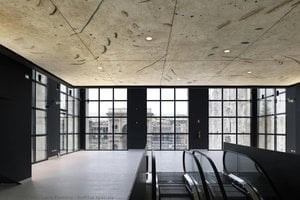
Koop een digitale afbeelding in hoge resolutie met verbeterde kwaliteit, die veel superieur is aan de online voorvertoning.
Elk bestand wordt met uiterste precisie voorbereid door onze interne specialisten, met behulp van geavanceerde tools en deskundige handmatige retouche. Wij garanderen dat elke afbeelding een uitzonderlijke helderheid, nauwkeurige kleurweergave en verfijnde details bezit.
Het uiteindelijke bestand wordt binnen 72 uur per e-mail geleverd, geoptimaliseerd voor direct gebruik in professionele, redactionele en printomgevingen. Dit is dezelfde kwaliteit waarop vooraanstaande designstudio's, uitgevers en galerieën vertrouwen.
Download een bestand met hoge resolutie voor persoonlijke weergave, afdrukken en creatieve projecten. ( Bestel print Bestel handgeschilderde reproductie)
Wanneer u kiest voor WahooArt.com, ontvangt u niet alleen een afbeelding – u krijgt een professioneel verbeterd digitaal kunstwerk, met precisie vervaardigd en voorzien van een tevredenheidsgarantie. Dit is alles wat automatisch bij uw bestelling is inbegrepen:

Uw hoogwaardige digitale afbeeldingsbestand wordt binnen 72 uur na bestelling naar u gemaild – klaar voor direct gebruik.

Uw kunstwerk wordt professioneel geoptimaliseerd met behulp van geavanceerde AI-tools en handmatige bewerkingen, waardoor maximale details, helderheid en kleurnauwkeurigheid worden gegarandeerd.

Je bestand per ongeluk verwijderd of kwijtgeraakt? Geen zorgen – we sturen het u op elk gewenst moment gratis opnieuw toe.

Geniet direct van uw kunstwerk zonder invoerrechten, belastingen of verzendkosten – digitale downloads zijn altijd belastingvrij.

Met behulp van professionele hulpmiddelen en kleurbeheer zorgen wij ervoor dat uw digitale afbeelding de originele kleuren zo nauwkeurig mogelijk weergeeft.

Als u niet tevreden bent met uw digitale afbeelding, passen wij deze aan of storten wij 100% terug binnen 100 dagen – zonder vragen gesteld.

Niet tevreden? Ontvang binnen 100 dagen na ontvangst van uw digitale bestand uw volledige aankoopbedrag terug – zonder vragen te stellen.

Koop 3 afbeeldingen, bespaar 10% - Koop 5, bespaar 15% - Koop 10+, bespaar 20%. Ideaal voor creatieve projecten, galerieën en bureaus.

In the storied annals of the Italian Mannerist period, few names evoke as much quiet reverence as Annibale Fontana. A master whose presence in the historical record is as delicate as the materials he manipulated, Fontana emerged from Milan around 1540 to leave an indelible mark on the realms of sculpture, medal-making, and crystal-work. His life, though relatively brief, was a testament to the profound impact that meticulous craftsmanship and an obsession with light can have on the visual language of the Renaissance. Unlike the grandiloquent masters who sought fame through sprawling theatrical displays, Fontana cultivated a specialized excellence, focusing on the intimate interplay between substance and illumination.
Fontana’s artistic journey began in the vibrant workshops of Milan, where he studied under the sculptor Giovanni Battista Brustellini. This early training was foundational, instilling in him a rigorous commitment to anatomical precision and the classical ideals that defined the era. Under Brustellini’s tutelage, Fontana learned to perceive the potential for narrative within solid forms, a skill that would later allow him to breathe life into bronze and stone alike. His formative years were characterized by this pursuit of technical perfection, preparing him for a career that would bridge the gap between the tactile reality of sculpture and the ethereal beauty of light-refracting gems.
The true breakthrough of Fontana’s career arrived with his extraordinary ability to manipulate crystalline structures. His most celebrated achievement, a breathtaking crystal case commissioned by Albert V, Duke of Bavaria, remains a pinnacle of sixteenth-century craftsmanship. Completed between approximately 1560 and 1570, this work serves as a masterclass in illusionism. By working with translucent materials, Fontana was able to capture and bend light, creating a sense of depth and movement that seemed to defy the physical limitations of the medium. This piece did more than merely showcase his skill; it transformed a precious object into an instrument of artistic expression, proving that even the most rigid materials could be made to dance with luminosity.
This fascination with light extended beyond crystal into his work with bronze and medals. His ability to render complex mythological scenes—such as The Abduction of Dejanira or the struggle of Hercules and Cerberus—within the small, controlled space of a medal or a bronze plaque demonstrates a remarkable command over composition. In these works, Fontana utilized the subtle textures of metal to convey psychological nuance and muscular tension, ensuring that even in miniature, his subjects possessed a monumental presence.
As his career progressed, Fontana’s influence traveled far beyond the borders of Lombardy. His time in Palermo, serving as a sculptor for Francesco Farnese II, the Viceroy of Naples, allowed him to expand his repertoire into portraiture. Here, he captured the likenesses of the era's most prominent figures with a sensitivity that balanced formal dignity with human emotion. Upon returning to Lombardy, his work continued to shape the sacred spaces of his homeland, notably through his contributions to the church of Santa Maria presso San Celso. His execution of statues for the church’s façade, including the prophetic figures of Isaiah and Jeremiah, showcased a sculptor capable of integrating fine detail into the grand architectural landscape.
Though he passed away in 1587, leaving behind a body of work that is remarkably sparse yet intensely potent, Annibale Fontana remains a vital figure for understanding the breadth of the late Renaissance. He was an artist who understood that true greatness often resides in the details—in the way a shadow falls across a bronze muscle or how a beam of light pierces through a faceted gem. His legacy is one of quiet brilliance, reminding us that the most enduring art is often that which masters the ephemeral elements of our world.

1540 - 1587 , Italy

 Voorvertoning
 Verstuur
 Delen
Delen
 Details bekijken

 Download
 Vergelijkbare items
 Röntgenonderzoek
 Diavoorstelling

 Lees meer