x
VoorvertoningVoorvertoning Bekijk in ARBekijk in AR Bestel handgeschilderde reproductie Bestel handgeschilderde reproductieKoop afbeelding Koop afbeelding VerstuurVerstuur
Details bekijkenDetails bekijken Toevoegen aan favorieten Toevoegen aan favorieten DownloadDownload Vergelijkbare itemsVergelijkbare items RöntgenonderzoekRöntgenonderzoek DiavoorstellingDiavoorstelling

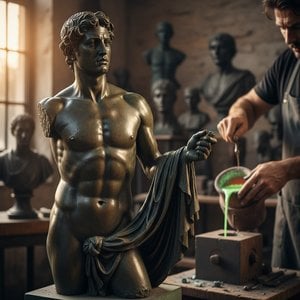
The Young David

Admire Andrea del Verrocchio’s ‘The Young David,’ a bronze Renaissance masterpiece! Explore classical form, dynamic composition & timeless beauty of this iconic sculpture.

"meta_description": "Andrea del Verrocchio (1435-1488): Florentijnse Renaissance beeldhouwer en schilder. Mentor van Leonardo da Vinci, bekend om 'De Dopenis des Christus' en het paardenbeeld van Bartolomeo Colleoni. Een meester van zijn tijd."

Giclée / Kunstafdrukken

Giclée- of canvasafdruk van museumkwaliteit met een snelle productie en flexibele afwerkingsmogelijkheden. (Bestel handgeschilderde reproductie Bestel handgeschilderde reproductieKoop afbeelding Koop afbeelding)

P118B $10
P118H $10
P118W $10
P438Z $10
P508JH $12
P508YH $12
P805H $10
P805Z $10
P919BZ $10
P919G $10
P919XJ $10
P959ZH $10
P968JZ $12
W106C $8
W218G $10
W218JH $8
W218Y $10
W307PJ $10
W316G $10
W316PJ $8
W316Y $10
W398PJ $8
W4111J $10
W500HY $15
W500JH $15
W692G $12
W849H $8
W940BG $15
W953PJ $8

Standaardformaat
op maat gemaakt
CM
INCH

Kies uit onze vooraf ingestelde maten die overeenkomen met de originele verhoudingen van het kunstwerk.

breedte
hoogte

U kunt uw eigen afmetingen opgeven om in een specifieke lijst of ruimte te passen. Als de door u gekozen maat niet overeenkomt met de proporties van het originele kunstwerk, zullen wij de afbeelding bijsnijden of uitbreiden met een gespiegelde of effen rand. Een digitaal mockup wordt ter goedkeuring naar u verzonden voordat de productie begint.
Houd er rekening mee dat de preview op het scherm de werkelijke bijsneding of uitbreiding niet weergeeft. Alleen de mockup toont de uiteindelijke compositie nauwkeurig.
Hoewel aangepaste maten beschikbaar zijn, raden wij aan een afmeting uit de vooraf bepaalde lijst te kiezen om de originele proporties te behouden.

Wereldwijde levering () binnen 2 weken in plaats van de standaard 4/5 weken. (5 september)

why_choose_icon
Gratis wereldwijde expressverzending
why_choose_icon
Hoogwaardig linnen canvas
why_choose_icon
Volledige verzendverzekering
why_choose_icon
Garantie op terugbetaling van invoerrechten
why_choose_icon
Garantie op exacte kleurweergave
why_choose_icon
Retourbeleid van 60 dagen (alleen bij defecten)
why_choose_icon
100% Geld-terug-garantie
why_choose_icon
Korting bij meerdere afnames

Totaalprijs

$ 69

reproduction

The Young David

Giclée / Kunstafdrukken

Afmetingen reproductie

-

Eindtotaal

$ 69

Snelle feiten

  • Medium: Bronze Sculpture
  • Artist: Andrea del Verrocchio
  • Notable elements: Dynamic pose, trophy head
  • Artistic style: Classical, Realistic
  • Location: Bargello, Florence
  • Movement: Renaissance
  • Influences: Donatello

Kunstquiz

Er is slechts één goed antwoord op elke vraag.

Vraag 1:
What is the primary subject depicted in Andrea del Verrocchio’s ‘The Young David’?
Vraag 2:
The sculpture ‘The Young David’ is primarily associated with which artistic movement?
Vraag 3:
What material is ‘The Young David’ predominantly made from?
Vraag 4:
According to the image description, what is a key characteristic of Verrocchio’s depiction compared to Donatello's earlier ‘David’?
Vraag 5:
The lion's head beneath ‘The Young David’ symbolizes which concept?

The Young David: A Renaissance Masterpiece of Triumph and Vulnerability

Andrea del Verrocchio’s “The Young David,” crafted around 1473-1475 in Florence, stands as more than just a bronze sculpture; it's a potent distillation of the ideals and anxieties of the Italian Renaissance. This compelling work, now residing within the Bargello museum, offers a profound glimpse into the burgeoning confidence of Florence while simultaneously capturing the vulnerability inherent in youthful heroism. Verrocchio, already a renowned master sculptor and painter, meticulously sculpted this figure—likely commissioned by the powerful Medici family—to embody the spirit of David’s legendary victory over Goliath, transforming a biblical narrative into a timeless symbol of courage and divine favor.

The sculpture itself is remarkably dynamic. David isn't depicted as a serene, idealized hero; instead, he’s presented in a moment of intense action—immediately after the decisive blow against his giant opponent. He stands with one hand confidently resting on his hip, holding a sword aloft, while his other hand firmly grasps the severed head of Goliath. This posture speaks volumes about youthful determination and burgeoning authority. The musculature is rendered with remarkable realism, showcasing Verrocchio’s mastery of anatomical detail—a departure from the more stylized approaches prevalent in earlier Renaissance art. The bronze itself has been expertly patinated to achieve a rich, dark surface, punctuated by subtle variations in tone that highlight the texture and form of the metal.

A Study in Contrasts: Form and Symbolism

What immediately distinguishes “The Young David” from earlier depictions of the same subject is Verrocchio’s deliberate choice to emphasize realism over idealized beauty. Donatello's earlier bronze David, while undeniably impressive, presents a more polished, almost classical figure—a testament to youthful strength rather than raw emotion. Verrocchio, however, imbues his David with a palpable sense of vulnerability. The young shepherd boy is depicted with a wiry physique, suggesting the physical demands of his task and hinting at the potential for hardship. His face, though resolute, reveals a hint of apprehension—a recognition of the immense challenge he has overcome.

The symbolism woven into the sculpture is equally layered. The severed head of Goliath serves as a potent trophy, representing not only David’s victory but also his triumph over evil and oppression. Crucially, the placement of the head at David's feet—a detail often overlooked—suggests a moment of reflection and perhaps even a touch of melancholy. It’s a reminder that even in victory, there is loss and sacrifice. The lion’s head beneath David’s feet further reinforces this symbolism, referencing the biblical story where David slew Goliath with a stone and his sling, a symbol of divine power and protection.

Verrocchio's Workshop: A Crucible of Artistic Innovation

“The Young David” is inextricably linked to the legacy of Andrea del Verrocchio’s workshop. As a master craftsman and teacher, Verrocchio fostered an environment where artistic talent flourished—most notably nurturing the genius of Leonardo da Vinci. It's widely believed that Leonardo assisted Verrocchio in painting the background landscape of the sculpture, demonstrating his burgeoning skills and solidifying Verrocchio’s role as a pivotal mentor. The subtle differences in technique – the bronze’s realism versus Leonardo’s more atmospheric approach—offer a fascinating insight into the collaborative dynamics within the workshop.

The sculpture's creation coincided with a period of intense political and social change in Florence, marked by the rise of the Medici family and their patronage of the arts. “The Young David” thus embodies not only biblical themes but also the aspirations and ambitions of Florence itself—a city striving for power, prosperity, and cultural dominance. It’s a testament to Verrocchio's skill that he captured this complex interplay of faith, heroism, and political ambition within a single bronze figure.

A Timeless Symbol: Reproduction and Inspiration

Today, “The Young David” continues to captivate viewers with its dynamic composition, masterful execution, and profound symbolism. High-quality reproductions offer an accessible way to appreciate the artistry of this Renaissance masterpiece, while also serving as a source of inspiration for interior designers seeking to evoke a sense of strength, courage, and timeless beauty. The sculpture’s enduring appeal lies in its ability to resonate with viewers across centuries—a reminder that even the most youthful heroes can embody profound wisdom and unwavering resolve.


Biografie van de kunstenaar

A Florentine Renaissance Polymath: The World of Andrea del Verrocchio

Andrea di Michele di Francesco de’ Cioni, a name forever intertwined with the golden age of Florence, is best known as Andrea del Verrocchio – a title that reflects his remarkable versatility and mastery across multiple artistic disciplines. Born in Florence around 1435, Verrocchio's life coincided with an era of unprecedented creative ferment, a period where art, science, and craftsmanship converged to produce some of the most enduring masterpieces in Western history. While celebrated today primarily for his monumental sculptures – notably the awe-inspiring equestrian statue of Bartolomeo Colleoni – Verrocchio was far more than simply a sculptor; he was a painter, a goldsmith, an architect, and, crucially, the driving force behind one of Florence’s most influential workshops. This workshop wasn't merely a place of production; it was a crucible where artistic talent was nurtured, ideas were exchanged, and techniques were refined – a space that directly shaped the trajectory of Leonardo da Vinci’s extraordinary career. His early training remains somewhat shrouded in mystery, though his family background suggests an initial grounding in goldsmithing, a trade deeply ingrained within Florentine artisanal traditions. Speculation persists regarding apprenticeships under masters like Donatello or Fra Filippo Lippi, but concrete evidence is elusive, adding to the enduring allure of this enigmatic figure. Regardless of the precise details of his formative experiences, Verrocchio quickly demonstrated an exceptional aptitude for both sculpture and painting, laying the foundation for a career that would bridge medieval artistic conventions with the burgeoning aesthetics of the High Renaissance.

From Goldsmith to Sculptor: A Rising Star in Florence

Verrocchio’s ascent within the Florentine art world was fueled by his extraordinary skill and the patronage of some of the wealthiest and most influential families in the city, most notably the Medici. His early works provide compelling evidence of a developing mastery of form and an increasing ambition to tackle complex subjects. The *Putto with a Dolphin*, created around 1470, showcases his ability to capture movement and emotion in bronze – qualities that would become hallmarks of his style. This small but exquisite sculpture demonstrates a remarkable understanding of anatomy, drapery, and the interplay of light and shadow. However, it was through larger-scale commissions that Verrocchio truly established his reputation. He wasn’t merely executing designs; he was overseeing an entire workshop, coordinating the efforts of assistants while maintaining a consistently high level of quality. This organizational prowess, combined with his artistic vision, allowed him to undertake ambitious projects like the *David*, a marble sculpture commissioned by Lorenzo de' Medici and completed posthumously in 1488. The *David* embodies Renaissance ideals of civic virtue and military prowess, demonstrating an unparalleled anatomical accuracy and a dynamic composition that captures the energy and power of both horse and rider. It remains a testament to his technical skill and artistic ambition – a symbol of Florentine strength and independence. The equestrian statue of Bartolomeo Colleoni, commissioned for Venice and completed after his death in 1488, stands as Verrocchio’s undisputed masterpiece. This colossal bronze monument embodies Renaissance ideals of civic virtue and military prowess, demonstrating an unparalleled anatomical accuracy and a dynamic composition that captures the energy and power of both horse and rider. It remains a testament to his technical skill and artistic ambition.

A Painter's Hand: Collaboration and Legacy

While primarily recognized as a sculptor, Verrocchio’s contributions to painting should not be underestimated, particularly considering his role in the development of one of history’s greatest artists. The *Baptism of Christ*, painted around 1470-1480, is perhaps his most famous painted work – though it's renowned for what it reveals about another: Leonardo da Vinci. Verrocchio painted John the Baptist and one angel within the composition, while Leonardo – then a young apprentice in his workshop – was entrusted with painting the other angel and portions of the background landscape. The sheer quality of Leonardo’s contribution is said to have so profoundly impressed Verrocchio that he allegedly abandoned painting altogether, though this account is likely apocryphal. Nevertheless, it underscores the transformative impact Verrocchio had on Leonardo's artistic journey. Other paintings attributed primarily to Verrocchio, such as *The Virgin and Child with Two Angels*, demonstrate his ability to create serene and emotionally resonant religious scenes. These works reveal a delicate touch and a sensitivity to light and color that further solidify his position as a versatile and accomplished artist. The influence of Verrocchio’s artistic vision can be seen in Leonardo's early works, such as *Annunciation* and *Adoration of the Magi*, where elements of classical composition and anatomical detail are evident.

The Enduring Influence of the Verrocchio Workshop

Andrea del Verrocchio’s legacy extends far beyond his individual artworks. His greatest contribution may well have been the workshop he established, which served as a training ground for a generation of talented artists. Leonardo da Vinci is, of course, the most celebrated pupil, but others – including Pietro Perugino and Lorenzo di Credi – also honed their skills under Verrocchio’s guidance. The workshop system itself was crucial to the flourishing artistic environment of Renaissance Florence, fostering collaboration, innovation, and a shared pursuit of excellence. Verrocchio's influence can be seen in the works of his students, who carried forward his emphasis on anatomical accuracy, dynamic composition, and technical mastery. He played a vital role in shaping the direction of Florentine sculpture, blending classical influences with innovative techniques to create a style that was both elegant and powerful. His work embodies the spirit of the Early Renaissance – a renewed interest in classical art, humanism, and naturalistic representation – while simultaneously paving the way for the artistic achievements of the High Renaissance. He died in Venice around 1488, leaving behind a legacy that continues to inspire artists and captivate audiences centuries later.
Andrea del Verrocchio

Andrea del Verrocchio

1435 - 1488 , Italië

Belangrijkste feiten

  • Artistic Movement Or Style: Vroege Renaissance
  • Artists Or Movements Influenced By This Artist: ['Leonardo da Vinci']
  • Artists Who Influenced This Artist:
    • Donatello
    • Lippi
  • Date Of Birth: c. 1435
  • Date Of Death: 1488
  • Full Name: Andrea del Verrocchio
  • Nationality: Italiaans
  • Notable Artworks:
    • Doop van Christus
    • David
    • Colleoni
  • Place Of Birth: Florence, Italië
Ontdek kunstwerken georganiseerd op thema, stijl en kenmerk.