x
VoorvertoningVoorvertoning Bekijk in ARBekijk in AR Bestel print Bestel printKoop afbeelding Koop afbeelding VerstuurVerstuur
Details bekijkenDetails bekijken Toevoegen aan favorieten Toevoegen aan favorieten DownloadDownload Vergelijkbare itemsVergelijkbare items RöntgenonderzoekRöntgenonderzoek DiavoorstellingDiavoorstelling

The Artist

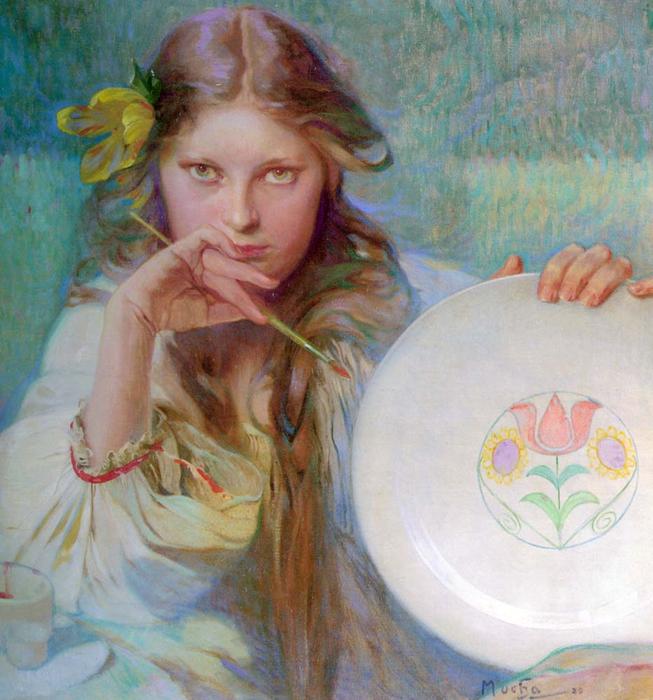
Discover Alphonse Mucha’s "The Artist" – a stunning Art Nouveau portrait of feminine beauty & grace. Explore flowing lines, pastel hues & symbolic details in this captivating masterpiece.

Alphonse Mucha (1860-1939): De meester van Art Nouveau! Bekend om zijn iconische posters, prachtige vrouwen en het monumentale 'Slavische Epopee'. Een legendarische Tsjechische kunstenaar.

Handgemaakte olieverfreproductie

Met de hand geschilderd in olieverf op canvas in uw gewenste maat en lijst, op bestelling gemaakt door onze kunstenaars. (Bestel print Bestel printKoop afbeelding Koop afbeelding)

P118B $10
P118H $10
P118W $10
P438Z $10
P508JH $12
P508YH $12
P805H $10
P805Z $10
P919BZ $10
P919G $10
P919XJ $10
P959ZH $10
P968JZ $12
W106C $8
W218G $10
W218JH $8
W218Y $10
W307PJ $10
W316G $10
W316PJ $8
W316Y $10
W398PJ $8
W4111J $10
W500HY $15
W500JH $15
W692G $12
W849H $8
W940BG $15
W953PJ $8

Standard
custom
CM
INCH

Kies uit onze vooraf ingestelde maten die overeenkomen met de originele verhoudingen van het kunstwerk.

breedte
hoogte

U kunt uw eigen afmetingen invoeren om in een specifieke lijst of ruimte te passen. Als de door u gekozen maat niet overeenkomt met de verhoudingen van het originele beeld, zullen we het kunstwerk bijsnijden of het schilderij uitbreiden met extra handgeschilderde elementen. Een digitale mockup wordt ter goedkeuring naar u verzonden voordat de productie begint.
Houd er rekening mee dat de preview op het scherm niet de werkelijke uitsnede of uitbreiding weergeeft. Alleen de mockup toont de uiteindelijke compositie nauwkeurig.
Hoewel aangepaste afmetingen mogelijk zijn, raden we aan een maat uit de vooraf gedefinieerde lijst te selecteren om de originele verhoudingen te behouden.

Voorbeelden van aanpassingen: Vervang het gezicht met een eigen foto; Voeg een huisdier toe (bijv. vervang de kat door een hond); Verwerk een verborgen boodschap in de achtergrond; Wijzig het landschap of andere elementen in de achtergrond.
Na de bestelling zal het team van WahooArt.com per e-mail contact opnemen met de klant voor instructies en een mockup-voorbeeld sturen.

Wereldwijde levering () binnen 3 tot 4 weken in plaats van de standaard 5 weken. (26 augustus). Zonder concessies aan de kwaliteit.

why_choose_icon
Gratis wereldwijde expressverzending
why_choose_icon
Hoogwaardig linnen canvas
why_choose_icon
Volledige verzendverzekering
why_choose_icon
Garantie op terugbetaling van invoerrechten
why_choose_icon
Garantie op exacte kleurweergave
why_choose_icon
Retourbeleid van 60 dagen (alleen bij defecten)
why_choose_icon
100% Geld-terug-garantie
why_choose_icon
Korting bij meerdere afnames

Totaalprijs

$ 272

reproduction

The Artist

Druktechniek

Afmetingen reproductie

-

Eindtotaal

$ 272

Snelle feiten

  • Movement: Art Nouveau
  • Subject: Young woman portrait
  • Influences:
    • Renoir
    • Moreau
  • Notable elements: Floral, curvilinear
  • Artist: Alphonse Mucha
  • Medium: Oil on Canvas

Kunstquiz

Er is slechts één goed antwoord op elke vraag.

Vraag 1:
What artistic movement is most closely associated with ‘The Artist’?
Vraag 2:
The background of ‘The Artist’ primarily utilizes which colors to create a specific atmosphere?
Vraag 3:
What technique is suggested by the description of ‘The Artist’s’ textures – ‘smooth, blended, delicate brushstrokes’?
Vraag 4:
The composition of ‘The Artist’ is characterized by a shallow depth of field. What effect does this primarily create?
Vraag 5:
Which artist is explicitly mentioned as a key influence on Alphonse Mucha’s style in the provided information?

Beschrijving kunstwerk

A Portrait of Contemplation: The Artist by Alphonse Mucha

“The Artist,” a captivating portrait rendered in the heart of the Art Nouveau movement, offers a glimpse into a world of delicate beauty and profound introspection. Painted by the masterful Alphonse Mucha during his peak creative period, this piece transcends mere representation; it’s an embodiment of the era's fascination with idealized femininity, natural forms, and a yearning for harmony between art and life. The young woman before us isn’t simply depicted; she is imbued with a quiet dignity and thoughtful gaze that invites the viewer to share in her silent contemplation.

The Artist by Alphonse Mucha

The Art Nouveau Aesthetic: A Symphony of Line and Color

Mucha’s signature style is immediately apparent – a deliberate rejection of the rigid formality of academic art in favor of organic forms, flowing lines, and an emphasis on decorative elements. The composition is centered around the subject, drawing immediate attention to her face and gesture, while the background dissolves into a hazy dreamscape of soft blues and greens. Notice how the curvilinear lines dominate – they aren’t merely aesthetic choices; they represent a conscious effort to capture movement and fluidity, echoing the natural world and reflecting the Art Nouveau's core belief in beauty as an inherent quality of existence. The use of pastel tones—lavender, rose, and pale green—creates a sense of serenity and ethereal grace, further enhancing the piece’s dreamlike atmosphere.

Technique and Materials: Oil on Canvas – A Delicate Touch

The artwork is executed in oil paint on canvas, a technique that allows for remarkable subtlety and blending. The smooth textures suggest a deliberate brushstroke, carefully layered to create depth and dimension. Observe the way light plays across her face—the diffused lighting contributes to the overall softness of the image, while subtle shadows enhance the three-dimensionality of the subject. Mucha’s mastery lies in his ability to manipulate color and texture to evoke emotion and atmosphere. The choice of oil paint was crucial for achieving the desired level of detail and luminosity, a hallmark of Mucha's distinctive style.

Symbolism and Context: A Reflection of an Era

“The Artist” is deeply rooted in the cultural context of late 19th-century Europe. Mucha’s work frequently featured idealized women – symbols of innocence, beauty, and feminine virtues—reflecting a broader societal fascination with these themes. The floral motif, particularly the plate adorned with blossoms, adds another layer of symbolism, representing fertility, growth, and the connection between humanity and nature. Furthermore, the piece aligns perfectly with Mucha’s broader artistic vision, which sought to elevate decorative arts to the level of fine art, challenging traditional notions of artistic merit. The work is a testament to his influence on the Art Nouveau movement, shaping its visual language for decades to come.

Collecting and Appreciating: A Timeless Masterpiece

Reproductions of “The Artist” offer an exceptional opportunity to bring a touch of Mucha’s genius into your home or office. Whether you are an art collector, interior designer, or simply someone who appreciates beauty, this piece is sure to captivate and inspire. Its timeless appeal lies in its masterful composition, exquisite technique, and profound symbolism – qualities that have ensured its place as one of the most iconic works of the Art Nouveau era.


Biografie van de kunstenaar

Early Life and Artistic Beginnings

Alphonse Maria Mucha, geboren in 1860 in Ivanačice, een klein stadje in de zuidelijke Moravië (het huidige deel van Tsjechië), was al vroeg duidelijk dat hij een artistieke ziel bezat. Zijn talent voor tekenen ontdekte hij als kind, en hoewel zijn familie niet over de middelen beschikte om hem een formele opleiding te bieden, bleef hij tekenen met zijn linkerhand – een ongebruikelijke keuze die zijn unieke stijl zou bepalen. Deze vroege discipline en passie vormden de basis voor zijn latere successen. Zijn jeugd was gekleurd door de wisselvallige politieke omstandigheden van het Oostenrijk-Hongaarse rijk, waarin hij opgroeide, wat een diepe invloed had op zijn artistieke expressie.

Na zijn schooljaren in Brno, besloot Mucha naar Praag te verhuizen, waar hij werkte als decoratieve kunstenaar voor theaters en tijdschriften. Deze vroege ervaringen leerden hem de waarde van commercieel succes en de eisen van de markt, maar tegelijkertijd bleef hij zijn eigen artistieke visie ontwikkelen.

De Opkomst van Art Nouveau en de Sarah Bernhardt Samenwerking

In 1887 verhuisde Mucha naar het hart van de kunstwereld: Parijs. Daar vond hij een omgeving die perfect paste bij zijn creatieve energie en waar hij zich verder ontwikkelde in de Académie Julian en Académie Colarossi. Het was hier dat hij, door een toevallige ontmoeting, zijn carrière echt kon lanceren. In 1894 creëerde hij een affiche voor het toneelstuk Gismonda van Victorien Sardou, met de legendarische actrice Sarah Bernhardt in de hoofdrol. Deze affiche was een onmiddellijk succes en markeerde de geboorte van zijn kenmerkende ‘Mucha Style’ – een stijl gekenmerkt door vloeiende lijnen, organische vormen, en een gevoel van beweging.

Bernhardt was zo onder de indruk van het resultaat dat ze met Mucha een contract sloot voor zes jaar. Dit leidde tot een reeks posters, illustraties en ontwerpen voor juwelen, tapijten en decoraties – allemaal in zijn stijl. De affiche voor Gismonda werd een sensatie en bracht Mucha plotselinge internationale bekendheid.

De Slavische Epopee: Een Monumentaal Werk

Na de succesvolle periode met Sarah Bernhardt, keerde Mucha in 1910 terug naar zijn geboorteland, Tsjechië. Daar begon hij aan een van zijn meest ambitieuze projecten: de Slavische Epopee (Slovanská epopej). Dit monumentale werk bestond uit twintig grote symbolistische schilderijen die de geschiedenis van alle Slavische volkeren ter wereld weergeven. Het was een persoonlijke missie voor Mucha, die gewijd was aan het herdenken en versterken van de culturele identiteit van zijn eigen land.

Hij kreeg hierbij steun van de Amerikaanse filantroop Charles Richard Crane, die aanzienlijke financiële middelen bood. De Slavische Epopee werd een symbool van de Tsjechische nationalisten en werd in 1928 aan de stad Praag geschonken. Het werk werd later in het Clementinum tentoongesteld, maar bleef lange tijd verborgen tijdens de communistische periode.

Stijl en Invloeden

Mucha’s stijl was uniek en herkenbaar. Hij combineerde elementen van Art Nouveau met symbolistische thema's en een sterke focus op schoonheid en idealisatie. Zijn werken kenmerken zich door de weergave van prachtige, jonge vrouwen in vloeiende gewaden, vaak omringd door bloemen en andere natuurlijke motieven. Deze afbeeldingen werden vaak vergezeld door halo’s achter de vrouwenhoofden, wat een spirituele dimensie toevoegt aan zijn kunst.

Hij werd beïnvloed door kunstenaars als Pierre-Auguste Renoir en Gustave Moreau, maar ontwikkelde ook zijn eigen, onderscheidende stijl. Zijn werk is te zien in musea over de hele wereld, waaronder het Muchamuseum in Praag, waar een uitgebreide collectie van zijn werken te bewonderen is.

Overlijden en Erfgoed

Alphonse Mucha stierf op 14 juli 1939 in Praag. Zijn nalatenschap leeft voort door zijn iconische posters, schilderijen en ontwerpen. Hij wordt beschouwd als een van de belangrijkste vertegenwoordigers van Art Nouveau en heeft een blijvende invloed gehad op de kunstwereld en het ontwerp.

Alphonse Mucha

Alphonse Mucha

1860 - 1939 , Tsjechische Republiek

Belangrijkste feiten

  • Artistic Movement Or Style: Art Nouveau
  • Artists Or Movements Influenced By This Artist: ['Prokopcová']
  • Artists Who Influenced This Artist:
    • Renoir
    • Moreau
  • Date Of Birth: 15 juli 1860
  • Date Of Death: 14 juli 1939
  • Full Name: Alphonse Maria Mucha
  • Nationality: Tsjechisch
  • Notable Artworks:
    • Slavische Opstand
    • Salon des Cent
    • De Zusters van Tespio
    • La Ribambelle des Gobelins
    • Jonge Boeren die Blauwsteen Breken
  • Place Of Birth: Brno, Tsjechië