GRATIS KUNSTADVIES

x
Print kopen Print kopenKoop afbeelding in hoge resolutie Koop afbeelding in hoge resolutie VerstuurVerstuur
DetailsDetails Toevoegen aan favorieten Toevoegen aan favorieten DownloadDownload Vergelijkbare werkenVergelijkbare werken RöntgenfotoRöntgenfoto DiavoorstellingDiavoorstelling

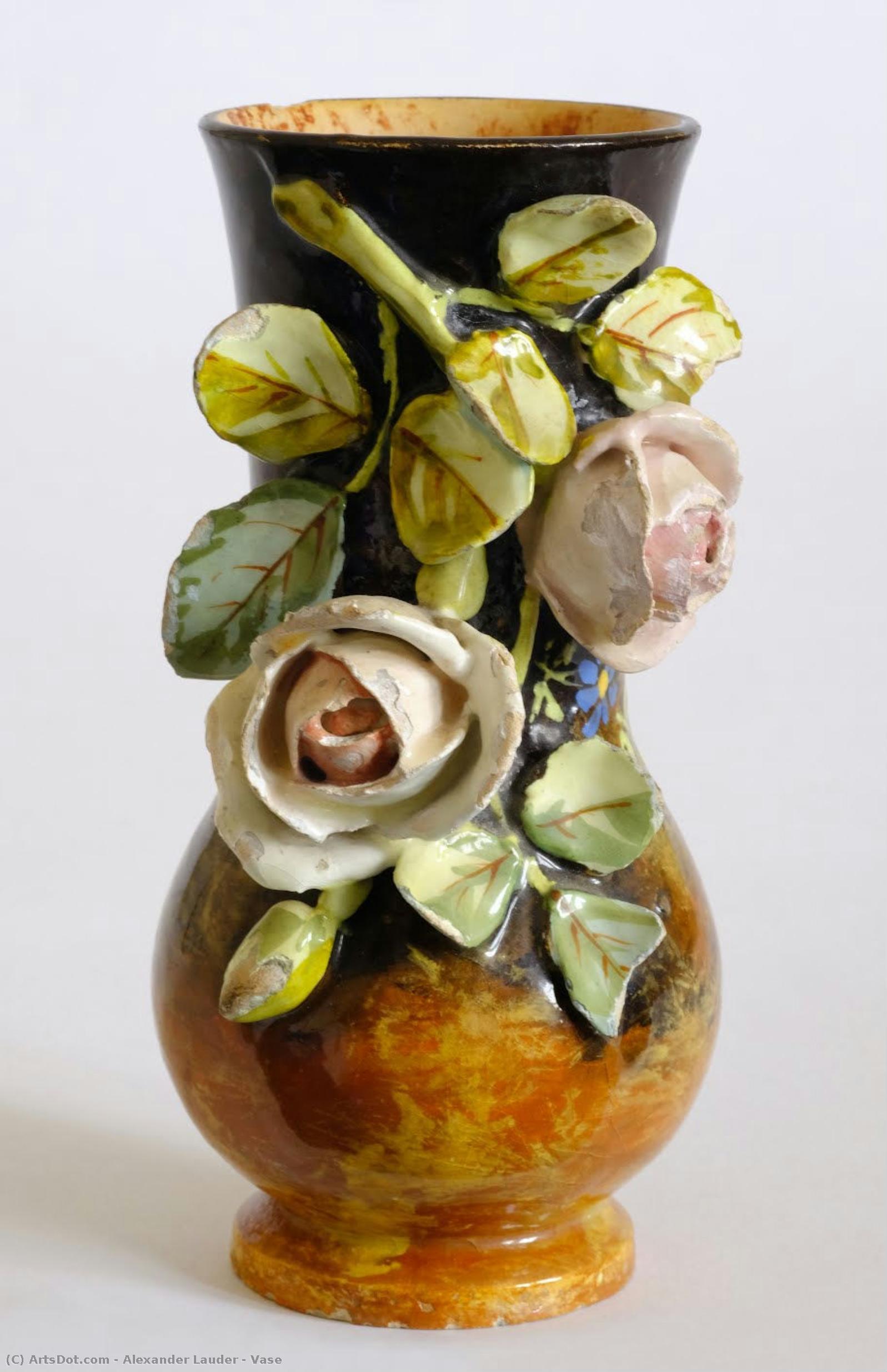
Vase

Discover Alexander Lauder (1870-1943), a Scottish agricultural chemist & ceramic artist. Admire his charming ‘Vase’ and explore British art from the early 20th century.

Handgemaakte olieverfreproductie

Met de hand geschilderd in olieverf op canvas in uw gewenste maat en lijst, op bestelling gemaakt door onze kunstenaars.

Standard
custom
CM
INCH

Kies uit onze vooraf ingestelde maten die overeenkomen met de originele verhoudingen van het kunstwerk.

breedte
hoogte

U kunt uw eigen afmetingen invoeren om in een specifieke lijst of ruimte te passen. Als de door u gekozen maat niet overeenkomt met de verhoudingen van het originele beeld, zullen we het kunstwerk bijsnijden of het schilderij uitbreiden met extra handgeschilderde elementen. Een digitale mockup wordt ter goedkeuring naar u verzonden voordat de productie begint.
Houd er rekening mee dat de preview op het scherm niet de werkelijke uitsnede of uitbreiding weergeeft. Alleen de mockup toont de uiteindelijke compositie nauwkeurig.
Hoewel aangepaste afmetingen mogelijk zijn, raden we aan een maat uit de vooraf gedefinieerde lijst te selecteren om de originele verhoudingen te behouden.

Voorbeelden van aanpassingen: Vervang het gezicht met een eigen foto; Voeg een huisdier toe (bijv. vervang de kat door een hond); Verwerk een verborgen boodschap in de achtergrond; Wijzig het landschap of andere elementen in de achtergrond.
Na de bestelling zal het team van WahooArt.com per e-mail contact opnemen voor instructies en een mockup-voorbeeld sturen.

Wereldwijde levering () binnen 3/4 weken in plaats van de standaard 5 weken. (3 juli). Geen concessies aan de kwaliteit.

why_choose_icon
Gratis wereldwijde expressverzending
why_choose_icon
Hoogwaardig linnen canvas
why_choose_icon
Volledige verzendverzekering
why_choose_icon
Garantie op terugbetaling van invoerrechten
why_choose_icon
Garantie op exacte kleurweergave
why_choose_icon
60 dagen retourbeleid (alleen bij defecten)
why_choose_icon
100% Geld-terug-garantie
why_choose_icon
Korting bij meerdere afnames

Totaalprijs

-

reproduction

Vase

Techniek reproductie

Afmetingen reproductie

-

Eindtotaal

-


Biografie van de kunstenaar

A Life Bridging Science and Serenity: The Art of Alexander Lauder

Alexander Lauder (1870-1943) presents a fascinating paradox – a dedicated agricultural chemist who found profound artistic expression in the delicate world of ceramic painting. Born in Greenock, Scotland, his life was initially defined by rigorous scientific pursuit, yet he cultivated a parallel passion that blossomed into a charming and distinctive body of work. Lauder’s story isn't one of abandoning science for art, but rather of seamlessly integrating observation, precision, and an appreciation for the natural world honed through his professional life into his creative endeavors.

Lauder received his early education at the Andersonian College in Glasgow under the tutelage of Professor William Dittmar, a figure known for his work in analytical chemistry. He continued his studies at the University of Edinburgh, laying a solid foundation in scientific principles. His career path led him through academic positions – beginning as an assistant lecturer at University College Bangor in Wales before returning to Edinburgh, where he lectured in Agricultural Chemistry and also shared his expertise at the East of Scotland College of Agriculture. It was during this period, residing at 13 George Square, that Lauder began to explore his artistic inclinations more fully.

From Laboratory to Landscape: The Development of an Artistic Voice

While deeply immersed in the world of chemistry, Lauder’s artistic journey wasn't a sudden shift but a gradual unfolding. His scientific background profoundly influenced his approach to painting. He possessed an acute eye for detail and a methodical understanding of materials – qualities that translated beautifully into his ceramic work. The precision required in chemical analysis likely fostered a similar attention to nuance when mixing pigments and applying brushstrokes. It’s tempting to speculate whether his research into agricultural processes sparked a deeper appreciation for the organic forms and subtle colors found in nature, which became central themes in his art.

Lauder's work is characterized by its gentle realism and idyllic scenes. He didn’t strive for grand statements or dramatic compositions; instead, he focused on capturing quiet moments of beauty – a duck peacefully foraging, the delicate curve of a flower petal, the soft glow of light on water. His paintings often feature charming depictions of domestic animals, particularly ducks, rendered with a warmth and affection that resonates deeply with viewers. These weren’t merely representations; they were imbued with a sense of tranquility and harmony.

Fellowship and Recognition: Acknowledging Lauder's Contributions

Lauder’s dedication to his field was formally recognized in 1905 when he obtained a Doctor of Science (DSc) degree from the University of Edinburgh. Further testament to his standing within the scientific community came in 1910 with his election as a Fellow of the Royal Society of Edinburgh. His proposers – Sir James Johnston Dobbie, Alexander Crum Brown, Sir James Walker, and Arthur Pillans Laurie – were all prominent figures in their respective fields, signifying the respect he commanded among his peers. He further served the society as its Secretary from 1923 to 1928.

However, it is through his art that Lauder perhaps leaves the most enduring legacy. While not widely known during his lifetime, his ceramic paintings have gained appreciation in recent years for their unique charm and understated beauty. His work offers a glimpse into a world where scientific rigor and artistic sensitivity coexist harmoniously.

A Lasting Impression: The Significance of Lauder's Art

Alexander Lauder’s art represents a delightful intersection of disciplines. He wasn’t simply an agricultural chemist who dabbled in painting; he was an artist whose scientific background informed his unique vision and approach. His paintings, particularly those featuring ducks, evoke a sense of peacefulness and nostalgia, offering a respite from the complexities of modern life.

His work stands as a testament to the power of observation, the beauty of simplicity, and the enduring appeal of the natural world. While his scientific publications contributed to the advancement of agricultural chemistry, it is through his ceramic paintings that Lauder’s spirit continues to captivate and inspire – a gentle reminder that art and science can coexist beautifully, enriching our understanding and appreciation of both.

alexander lauder

alexander lauder

1870 - 1943 , United Kingdom

Belangrijkste feiten

  • Artistic Movement Or Style: Ceramic art
  • Date Of Birth: 1870
  • Date Of Death: 1943
  • Full Name: Alexander Lauder
  • Nationality: Scottish
  • Notable Artworks:
    • Vase
    • Wall Pocket
  • Place Of Birth: Greenock, UK