Koop een digitale afbeelding in hoge resolutie met verbeterde kwaliteit, die veel superieur is aan de online voorvertoning.
Elk bestand wordt met uiterste precisie voorbereid door onze interne specialisten, met behulp van geavanceerde tools en deskundige handmatige retouche. Wij garanderen dat elke afbeelding een uitzonderlijke helderheid, nauwkeurige kleurweergave en verfijnde details bezit.
Het uiteindelijke bestand wordt binnen 72 uur per e-mail geleverd, geoptimaliseerd voor direct gebruik in professionele, redactionele en printomgevingen. Dit is dezelfde kwaliteit waarop vooraanstaande designstudio's, uitgevers en galerieën vertrouwen.
Download een bestand met hoge resolutie voor persoonlijke weergave, afdrukken en creatieve projecten. ( Schakel over naar print
Bestel handgeschilderde reproductie)
Wanneer u kiest voor WahooArt.com, ontvangt u niet alleen een afbeelding – u krijgt een professioneel verbeterd digitaal kunstwerk, met precisie vervaardigd en voorzien van een tevredenheidsgarantie. Dit is alles wat automatisch bij uw bestelling is inbegrepen:
Uw hoogwaardige digitale afbeeldingsbestand wordt binnen 72 uur na bestelling naar u gemaild – klaar voor direct gebruik.
Uw kunstwerk wordt professioneel geoptimaliseerd met behulp van geavanceerde AI-tools en handmatige bewerkingen, waardoor maximale details, helderheid en kleurnauwkeurigheid worden gegarandeerd.
Je bestand per ongeluk verwijderd of kwijtgeraakt? Geen zorgen – we sturen het u op elk gewenst moment gratis opnieuw toe.
Geniet direct van uw kunstwerk zonder invoerrechten, belastingen of verzendkosten – digitale downloads zijn altijd belastingvrij.
Met behulp van professionele hulpmiddelen en kleurbeheer zorgen wij ervoor dat uw digitale afbeelding de originele kleuren zo nauwkeurig mogelijk weergeeft.
Als u niet tevreden bent met uw digitale afbeelding, passen wij deze aan of storten wij 100% terug binnen 100 dagen - zonder vragen te stellen.
Niet tevreden? Ontvang een volledige terugbetaling binnen 100 dagen na ontvangst van uw digitale bestand - zonder vragen te stellen.
Koop 3 afbeeldingen, bespaar 10% - Koop 5, bespaar 15% - Koop 10+, bespaar 20%. Ideaal voor creatieve projecten, galerieën en bureaus.
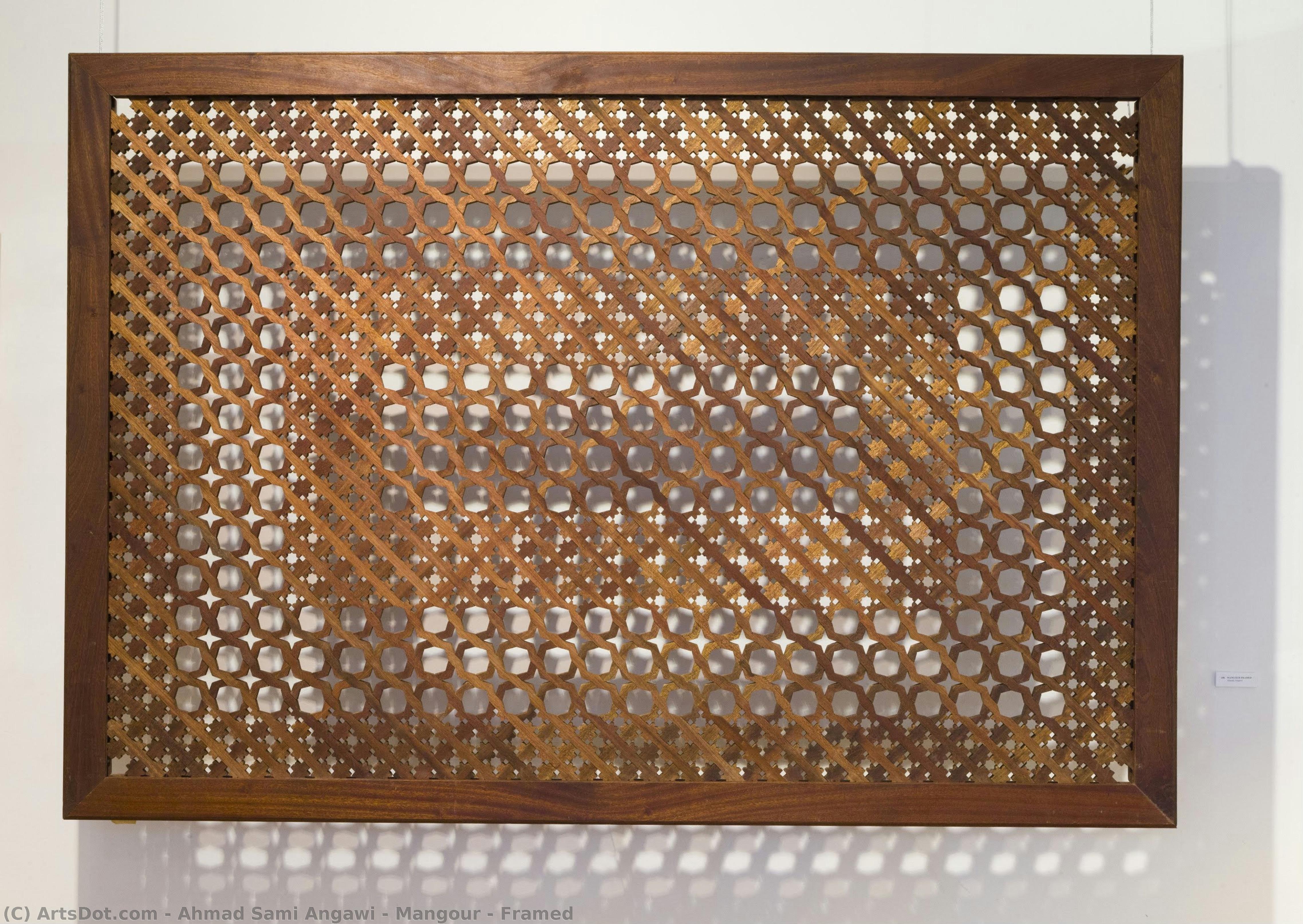
In the heart of Jeddah, where the ancient whispers of the Hejaz region meet the contemporary pulse of Saudi Arabia, lies an architectural soul captured in wood and geometry. Mangour - Framed is not merely a visual composition; it is a profound meditation on the concept of duality. Inspired by the traditional mangour screens that have long graced the historic windows of Jeddah, this work by Ahmad Sami Angawi serves as a bridge between the structural legacies of the past and the minimalist elegance of modern design. The piece invites the viewer into a rhythmic dialogue between what is hidden and what is revealed, creating an atmosphere where light and shadow perform a silent, eternal dance.
The artwork draws its strength from the intricate lattice patterns that define Hejazi architecture. These screens were historically engineered with a brilliant functional intelligence: to temper the harsh desert sun, to allow for cooling breezes, and to provide privacy without isolation. In this framed reproduction, Angawi translates these architectural principles into a captivating visual texture. The composition is a sophisticated arrangement of circular motifs and geometric intersections that create a sense of depth and movement. As light hits the surface, the interplay of the dark wooden lattice against the patterned background evokes the sensation of sunlight filtering through a window at midday, casting complex, mesmerizing shadows that change with the viewer's perspective.
The technique employed in this piece reflects Angawi’s unique multidisciplinary background, blending his training in industrial design from the Pratt Institute with a deep reverence for traditional arts. The precision of the geometric shapes suggests a mathematical harmony, yet there is an organic warmth to the execution that prevents the work from feeling cold or purely clinical. Each circle and void within the lattice acts as a vessel for light, embodying the philosophical notion of duality—the balance between heat and cool, concealment and exposure, presence and absence. This tension makes the artwork an emotionally resonant piece, offering a sense of tranquility and structural stability.
For the discerning collector or interior designer, Mangour - Framed offers unparalleled versatility. Its neutral yet textured palette allows it to serve as a sophisticated focal point in a variety of high-end settings. In a contemporary minimalist room, it provides much-needed organic texture and cultural depth; in a more classical, opulent space, it acts as a subtle nod to historical craftsmanship. This reproduction is more than a decorative element; it is an invitation to experience the architectural poetry of Saudi Arabia, bringing the timeless elegance of Jeddah’s heritage into the modern home through a lens of sophisticated, contemporary art.
In the heart of Jeddah, where the ancient rhythms of the Hejaz region meet the pulse of modern Saudi Arabia, the work of Ahmad Sami Angawi emerges as a profound meditation on equilibrium. Born in 1981, Angawi has cultivated a creative practice that does not merely observe tradition but breathes new life into it through a sophisticated dialogue between the past and the present. His artistic journey is defined by a rare duality; he possesses the technical precision of an industrial designer and the soulful reverence of a master of traditional arts. This unique intellectual foundation, forged at the Pratt Institute in New York and refined at The Prince's School of Traditional Arts in London, allows him to navigate the complexities of contemporary aesthetics while remaining deeply anchored in his cultural roots.
Angawi’s work is profoundly shaped by the concept of Al-Mizan, or balance. This Islamic principle serves as both a spiritual compass and a structural blueprint for his compositions. To Angawi, balance is not a static state but a dynamic pursuit of harmony between light and shadow, geometry and organic form, and heritage and innovation. His explorations are heavily influenced by the colorful diversity of the Hejaz region and his Moroccan lineage, drawing inspiration from the intricate architectural details that define Western Saudi Arabia. Through his eyes, the historical patterns of his ancestors are transformed into a living language capable of speaking to a global, modern audience.
The breadth of Angawi’s multidisciplinary practice is nothing short of extraordinary, spanning sculptural installations, textiles, and graphic design. He approaches each medium as an opportunity to investigate the human condition and our relationship with the environment. One of his most celebrated achievements lies in his reimagining of Mangour—the traditional wooden lattice screens used in Hejazi architecture to regulate light and airflow. In his hands, these screens transcend their functional origins to become mesmerizing works of art. By manipulating intricate geometric patterns and vibrant color palettes, Angativ creates immersive environments where the interplay of sunlight and shadow evokes a sense of timelessness.
His commitment to the preservation of artisanal skills is further evidenced by his entrepreneurial spirit. Through platforms such as Design Studio Shai and Zawiya 97, Angawi has created vital spaces for collaborative creativity. These initiatives are dedicated to the concept of a "living tradition," ensuring that ancient techniques are not relegated to museums but are instead integrated into contemporary design projects. His work with the Albukhary Foundation Gallery of Islamic World stands as a testament to this mission, showcasing how traditional motifs can be scaled into monumental installations that transform architectural spaces into profound cultural experiences.
Ultimately, the significance of Ahmad Sami Angawi lies in his ability to bridge disparate worlds. His art serves as a vital link between:
As he continues to push the boundaries of his practice, Angawi remains a pivotal figure in the Saudi art landscape, reminding us that true innovation is most powerful when it honors the foundations upon which it is built.

1981 - , Saudi Arabia