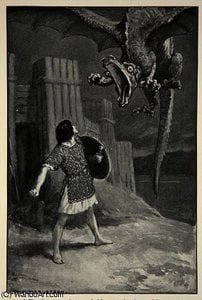
A Life Dedicated to Aesthetic Beauty: William Henry Margetson
William Henry Margetson, born in Camberwell, Surrey, in December 1861, was a painter whose career unfolded across the shifting tides of Victorian and early 20th-century British art. He wasn’t a revolutionary figure shattering conventions, but rather a dedicated craftsman who beautifully captured an era's ideals of feminine beauty and spiritual yearning. His journey began with formal training at Dulwich College, followed by studies at the prestigious Royal College of Art and the Royal Academy Schools – a path typical for aspiring artists of his time, yet one he navigated with distinct talent and sensitivity. Margetson first exhibited at the Royal Academy in 1885, marking the beginning of a consistent presence in London’s art scene over the following decades, showcasing work not only at the RA but also at the Royal Society of British Artists, the Royal Institute of Oil Painters, and the Grosvenor Gallery. This early success was cemented by winning the Armitage Medal for his studies at the Academy, a testament to his foundational skills.From Victorian Academicism to Post-Impressionist Whispers
Initially, Margetson’s style firmly rooted itself in the academic tradition of Victorian painting. He excelled in portraiture, and it was through these depictions of women that he first garnered recognition. However, what distinguished him wasn't merely technical proficiency but a focus on capturing an *aesthetic* ideal – his subjects were often portrayed with modern hairstyles and fashionable hats, reflecting contemporary society while simultaneously embodying timeless grace. As the 19th century waned, Margetson’s artistic sensibilities began to evolve. He didn’t abandon realism entirely, but he allowed himself to be influenced by the burgeoning Post-Impressionist movement and the Pre-Raphaelites, particularly Lawrence Alma-Tadema. This shift manifested in a looser brushstroke, a more nuanced use of color, and an increasing interest in symbolic imagery. While never fully embracing radical experimentation, Margetson skillfully integrated these new influences into his existing style, creating works that bridged tradition and modernity.The Zenith of His Career: ‘The Sea Hath Its Pearls’
‘The Sea Hath its Pearls’, exhibited at the Royal Academy in 1897, stands as Margetson's most celebrated achievement. Now residing in the Art Gallery of New South Wales, Australia, this classically decorative painting encapsulates his artistic maturity. The work is a masterful blend of Victorian elegance and symbolic depth, depicting a scene imbued with romanticism and subtle allegory. It’s not simply a beautiful image; it invites contemplation on themes of beauty, loss, and the hidden treasures within life's depths. This success wasn’t an isolated incident. Margetson also ventured into religious and allegorical subjects, demonstrating his versatility and intellectual curiosity. His ability to imbue these works with emotional resonance further solidified his reputation as a painter capable of more than just superficial beauty.Beyond the Canvas: Illustration and Personal Life
Margetson’s talents extended beyond oil and watercolor painting; he also worked as an illustrator, contributing to various publications. This foray into illustration likely honed his skills in narrative composition and attention to detail – qualities evident in his paintings. His personal life was equally enriching. He married Helen Hatton, a fellow artist whom he met during a collaborative illustration project. They established a home first in London before relocating to the picturesque villages of Blewbury and Wallingford, Oxfordshire, where they continued their artistic pursuits. Margetson’s dedication to his craft remained unwavering throughout his life, culminating in a prolific career that spanned several decades. He passed away in Wallingford in 1940 at the age of 78, leaving behind a legacy of beautiful paintings and evocative illustrations.A Lasting Impression: Historical Significance
While not a household name today, William Henry Margetson occupies an important niche within British art history. He represents a transitional figure – one who skillfully navigated the changing aesthetic landscape of his time. His work provides valuable insight into Victorian ideals of beauty, the influence of emerging artistic movements, and the enduring appeal of classical themes. The portrait of Alfred Tennyson he painted now held in the National Portrait Gallery is another testament to his skill and recognition within the art world. Margetson’s paintings continue to captivate viewers with their delicate beauty, emotional depth, and technical mastery, ensuring that his legacy as a dedicated artist endures.Klausimai ir atsakymai
Kur galiu pamatyti William Henry Margetson kūrybos spalvų profilį?
William Henry Margetson Paletės genomas – tai puslapis, kuriame pateikiamas kūrybos efortų spalvų profilis.
Kuriame istoriniame laikotarpyje kūrė William Henry Margetson?
William Henry Margetson kūrė 19th Century laikotarpiu. Šis laikotarpis leidžia įvertinti kūrybinę veiklą istoriniame kontekste.
Kur galiu pamatyti visus William Henry Margetson kūrybos darbus?
Visi ši ši internetinė svetainė esantys William Henry Margetson kūriniai galima peržiūrėti puslapyje Visi kūriniai.