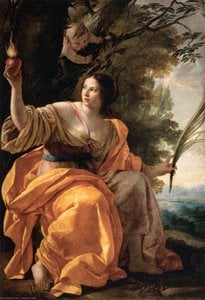
Simonas Vouetas, 1590 – 1649

Simonas Vouetas: 100 garsiausi paveikslai

Venus and Adonis (1642) yra garsiausias Simonas Vouetas paveikslas, esantis J. Paul Getty muziejus kolekcijoje Los Andželis mieste. The Muses of Urania and Calliope (1634) ir Annunciation (1640) yra kitos dvi labiausiai žinomos pasaulyje kūrybosios darbai. Iš 166 Simonas Vouetas darbų mūsų kataloge – štai 100 dažniausiai analizuojami kolekcionerių bei lankytojų muziejų, su informacija apie metus, muziejų bei kiekvieno kūrinio istoriją.

Rangos vieta nulegiama pagal mūsų populiarumumo balas, kurį sudaro kiekvieno kūrinio paieškos, apsilankėjimai ir užsakėjimai. Atnaujinta spalis 2026. Kiekvieną šio puslapio šedevrą galite užsisakyti kaip muziejoriaus kokybės rankų darbo alievinę reprodukciją arba aukščiausios kokybės meninį spausdiną jūsų pasirinktu dydžiu.

Simonas Vouetas portretas
Simonas Vouetas · 1590 – 1649
Gedė · mirė
1590 – 1649, Paryžius
Judėjimas
Baroque
Darbai mūsų kataloge
166
Labiausiai žinomi
Venus and Adonis (1642)
Daugiausia darbų yra
Liuvro muziejus

Top 10: žymiausi Simonas Vouetas tapiai

Venus and Adonis (1642) aut. Simonas Vouetas
1

Venus and Adonis

1642 · Acrylic On Canvas · J. Paul Getty muziejus, Los Andželis

Simon Vouet’s “Venus and Adonis,” painted in 1642, is a striking example of French Baroque art, showcasing the artist’s mastery of color, composition, and his assimilation of Italian artistic trends. This evocative scene depicts the poignant moment from Ovid's *Metamorphoses* where the mortal Adonis, captivated by hunting, rejects Venus’s advances, foreshadowing his tragic demise. The painting isn't merely a depiction of mythology; it's an exploration of love, desire, and mortality…

The Muses of Urania and Calliope (1634) aut. Simonas Vouetas
2

The Muses of Urania and Calliope

1634 · Acrylic On Canvas · National Gallery of Art, Vašingtonas

Simon Vouet’s “The Muses Urania and Calliope”: A Symphony of Baroque Grace Simon Vouet (1590-1649) stands as a pivotal figure in the artistic landscape of 17th-century France, marking the decisive transition from Mannerism to the opulent grandeur of the Baroque style. His legacy resides not merely in his prolific output but also in his unwavering dedication to mastering Italian influences—a pursuit that fundamentally reshaped French painting and cemented Vouet’s place…

Annunciation (1640) aut. Simonas Vouetas
3

Annunciation

1640 · Oil On Canvas · Galleria degli Uffizi, Florencija

Simon Vouet's "Annunciation," painted in 1640, is more than just a religious depiction; it’s a masterful orchestration of light, shadow, and human emotion. This captivating work transports the viewer to an intimate interior space, where the momentous announcement of Mary’s divine conception unfolds with breathtaking drama. The painting immediately draws the eye to the kneeling figure of the Virgin Mary, bathed in a warm, golden glow emanating from the right…

The Fortuneteller (detail) (1617) aut. Simonas Vouetas
4

The Fortuneteller (detail)

1617 · Oil On Canvas · Galleria Nazionale d’Arte Antica, Roma

In the heart of 1617, amidst the vibrant and transformative atmosphere of Roman artistic circles, Simon Vouet captured a moment of profound human connection in his masterpiece, The Fortuneteller. This work, particularly when viewed in its intimate details, serves as much more than a mere portrait; it is an emblem of the burgeoning Baroque style that was beginning to reshape the visual landscape of Europe. The scene unfolds with a…

Sleeping Venus (1630) aut. Simonas Vouetas
5

Sleeping Venus

1630 · Acrylic On Canvas · Szépművészeti Múzeum, Budapeštas

Simon Vouet's "Sleeping Venus," painted around 1630, is not merely a depiction of a reclining nude; it’s an exquisite distillation of Renaissance ideals and the burgeoning Baroque aesthetic. This captivating work transcends simple portraiture, offering instead a profound meditation on beauty, repose, and the delicate balance between earthly pleasure and spiritual contemplation. The painting immediately draws the viewer into a world of hushed tranquility, inviting us to share in the…

Allegory of Virtue (1634) aut. Simonas Vouetas
6

Allegory of Virtue

1634 · Acrylic On Canvas · Liuvro muziejus, Paryžius

Simon Vouet’s “Allegory of Virtue,” completed around 1634, stands as a testament to the burgeoning Baroque aesthetic infiltrating French artistic circles during Louis XIII's reign. More than just a portrait—though it undeniably depicts a woman radiating grace and authority—the painting delves into profound philosophical concepts rooted in humanist ideals prevalent at the time.

The Entombment (1638) aut. Simonas Vouetas
7

The Entombment

1638 · Oil On Canvas · Fitzwilliam College, Cambridge

Simon Vouet's "The Entombment," painted in 1635–1638, is not merely a depiction of a biblical scene; it’s an exquisitely rendered meditation on grief, faith, and the profound dignity of sacrifice. This monumental work, currently residing within the collection of the Fitzwilliam Museum in Cambridge, transcends its subject matter to become a powerful testament to the Baroque era's ability to evoke intense emotion through masterful technique and carefully considered symbolism. Vouet,…

Angels with Attributes of the Passion: Angel Holding the Vessel and Towel for washing the hands of Pontius Pilate (1624) aut. Simonas Vouetas
8

Angels with Attributes of the Passion: Angel Holding the Vessel and Towel for washing the hands of Pontius Pilate

1624 · Oil · Minneapolis Institute of Art, Minneapolis

A single celestial figure emerges from a deep, near-black void, commanding the space with an intimate and monumental presence. This angel, caught in a moment of profound spiritual devotion, gazes upward with eyes full of soulful contemplation or sorrow. The light descends from the upper left, carving the figure out of the darkness and casting soft, tender shadows across a face etched with emotion. Every detail feels immediate, from the…

Saint John (1623) aut. Simonas Vouetas
9

Saint John

1623 · Oil On Canvas · Philadelphia Museum of Art, Filadelfija

A young man turns his face toward a light that remains unseen. His eyes, wide and searching, catch a glimmer that pulls his gaze upward, away from the dark, murky depths of the background. Thick, dark curls frame a pale face, creating a sharp contrast against the heavy shadows that swallow the space around him. He is caught in a moment of sudden, quiet realization. The light does not merely…

Virgin and Child, with an Angel (1642) aut. Simonas Vouetas
10

Virgin and Child, with an Angel

1642 · Oil On Panel · Philadelphia Museum of Art, Filadelfija

The light falls softly upon the skin of the Virgin Mary, catching the curve of her cheek and the small, smooth hands of the Christ Child. They sit within a triangular arrangement that anchors the composition, surrounded by the deep shadows of a dense woodland. An angel leans into this intimate circle, its robes glowing with warm yellows and golds that contrast against the heavy, dark trees behind them. At…

Likę Simonas Vouetas reitingo vietos, nuo 11 iki 100

Madonna with Child (1625) aut. Simonas Vouetas
#11

Madonna with Child

1625 · Ermitažas

The room falls away into a deep, near-black shadow, leaving only two figures bathed in a soft, directional light. From the upper left, a gentle glow spills across…

Užsisakyti reprodukciją →
Heavenly Charity (1640) aut. Simonas Vouetas
#14

Heavenly Charity

1640 · Liuvro muziejus

A Beacon of Baroque Virtue: Simon Vouet’s Heavenly Charity Simon Vouet's "Heavenly Charity," completed around 1640, stands as a cornerstone of French Baroque painting—a testament to Louis XIII’s…

Atneškite į savo namus →
Allegory (1640) aut. Simonas Vouetas
#15

Allegory

1640 · Musei Capitolini

Simon Vouet executed Allegory during his residency in Rome, a period spanning from 1614 to 1627. The work was commissioned by Marcello Sacchetti, a 17th-century Italian merchant and…

Užsisakyti reprodukciją →
Sacrifice of Isaac (1642) aut. Simonas Vouetas
#17

Sacrifice of Isaac

1642 · Milwaukee Art Museum

The painting titled Sacrifice of Isaac is a work of religious art. It is attributed to the French artist Simon Vouet (1590-1649) and Pierre Patel, the Elder (1605-1676).…

Atneškite į savo namus →
The Muse Clio (1640) aut. Simonas Vouetas
#22

The Muse Clio

1640 · Staatliche Kunsthalle Karlsruhe

The Muse Clio is an oil on canvas painting by the artist Simon Vouet. Created about 1640, this work depicts the mythological figure Clio, who is recognized as…

Užsisakyti reprodukciją →
Vanitas (1621) aut. Simonas Vouetas
#24

Vanitas

1621 · Nacionalinis muziejus Varšuvoje

In Vanitas, Simon Vouet centers the composition on a tight, intimate encounter between two figures. A young woman and an older man emerge from a deep, near-black background…

Atneškite į savo namus →
Toilet of Venus (1628) aut. Simonas Vouetas
#64

Toilet of Venus

1628 · Cincinnati Art Museum

To gaze upon Simon Vouet’s Toilet of Venus is to step directly into a moment suspended in opulent leisure—a scene dripping with the sensuality and refined drama characteristic…

Užsisakyti rankinio kopijos tapybą →
Self-Portrait (1615) aut. Simonas Vouetas
#65

Self-Portrait

1615 · Musée Réattu

To stand before this self-portrait is to encounter not merely paint on canvas, but a direct conduit to the vibrant, ambitious spirit of early 17th-century Paris. Painted around…

Atneškite į savo namus →
The Rape of Europa (1640) aut. Simonas Vouetas
#67

The Rape of Europa

1640 · Thyssen-Bornemisza muziejus

To gaze upon Simon Vouet's depiction of The Rape of Europa is to step directly into the charged, dramatic heart of the Baroque era. This canvas is not…

Užsisakyti reprodukciją →
St Catherine (1614) aut. Simonas Vouetas
#69

St Catherine

1614 · Quirinale Palace

To stand before Simon Vouet's depiction of St Catherine is to step directly into the vibrant, emotionally charged atmosphere of early seventeenth-century Paris. This portrait captures more than…

Atneškite į savo namus →
Virgin and Child aut. Simonas Vouetas
#76

Virgin and Child

Musée des Beaux-Arts de Lyon

Simon Vouet’s “The Virgin and Child (of the Column),” completed around 1640, stands as a cornerstone of French Baroque painting—a testament to artistic ambition and masterful execution that…

Atneškite į savo namus →
The Holy Family (1630) aut. Simonas Vouetas
#79

The Holy Family

1630 · Kunsthalle Bremen

In the heart of the seventeenth century, as the rigid structures of Mannerism began to dissolve under the weight of a new, more visceral era, Simon Vouet emerged…

Užsisakyti reprodukciją →
Madonna and Child (1633) aut. Simonas Vouetas
#80

Madonna and Child

1633 · National Gallery of Art

In the intimate embrace of Simon Vouet’s Madonna and Child, we are invited into a moment of profound, quiet tenderness that transcends the centuries. Painted in 1633, this…

Atneškite į savo namus →
LA MISE AU TOMBEAU aut. Simonas Vouetas
#81

LA MISE AU TOMBEAU

Liuvro muziejus

LA MISE AU TOMBEAU is a work by Simon Vouet, created between 1640 and 1642. This painting captures a moment of profound stillness. It depicts the iconographic type…

Užsisakyti reprodukciją →
Allegory of Peace (1627) aut. Simonas Vouetas
#82

Allegory of Peace

1627 · Galleria Nazionale d’Arte Antica

Completed in 1627, Allegory of Peace by Simon Vouet offers a profound look into the intellectual fervor and humanist aspirations of the seventeenth century. This work emerged during…

Atneškite į savo namus →
Allegory of Wealth (1630) aut. Simonas Vouetas
#83

Allegory of Wealth

1630 · Liuvro muziejus

Simon Vouet's 1630 *Allegory of Wealth* is not merely a painting; it’s an immersive experience, a meticulously crafted tableau that speaks volumes about the values and aspirations of…

Atneškite į savo namus →
The Fortune Teller (1618) aut. Simonas Vouetas
#87

The Fortune Teller

1618 · Kanados Nacionalinė galerija

The Fortune Teller, painted in 1618 by the masterful Simon Vouet, offers a captivating glimpse into the social and artistic currents of early 17th-century France. This portrait, measuring…

Užsisakyti rankinio kopijos tapybą →
Caritas Romana aut. Simonas Vouetas
#92

Caritas Romana

Nacionalinis muziejus Varšuvoje

In Caritas Romana, Simon Vouet presents a quiet, emotionally charged encounter between two figures. The composition centers on a woman cradling an older, bearded man, creating an intimate…

Užsisakyti rankinio kopijos tapybą →
St Jerome and the Angel (1622) aut. Simonas Vouetas
#93

St Jerome and the Angel

1622 · National Gallery of Art

Simon Vouet’s “St. Jerome and the Angel,” painted in 1622, is more than just a depiction of a biblical scene; it's a carefully constructed meditation on divine guidance,…

Užsisakyti reprodukciją →
The Fortune Teller (1617) aut. Simonas Vouetas
#94

The Fortune Teller

1617 · Galleria Nazionale d’Arte Antica

Simon Vouet's "The Fortune Teller," painted in 1617, isn’t merely a portrait; it’s a carefully constructed tableau brimming with intrigue and a palpable sense of the mystical. Housed…

Užsisakyti reprodukciją →

Simonas Vouetas tapų skirstymas pagal laikotarpius

Daugiausiai temų, kurių vaizdė Simonas Vouetas

Keturi populiariausi temų motyvai tarp šių šedevrų, su geriausiais kiekvieno pavyzdžiais.

Kur galima pamatyti Simonas Vouetas paveikslus

8 muziejai, kuriuose saugoma daugiausia šioje pusėje esamų paveikslų.

Muzejaus Miestas Simonas Vouetas darbai Šiojo sąrašo paveikslai
Liuvro muziejus, ParyžiusLiuvro muziejus Paryžius 20 Allegory of Virtue, Heavenly Charity, POLYMNIE, MUSE DE L'ELOQUENCE
Szépművészeti Múzeum, BudapeštasSzépművészeti Múzeum Budapeštas 5 Sleeping Venus, Parnassus or Apollo and the Muses, Parnassus or Apollo and the Muses (detail)
National Gallery of Art, VašingtonasNational Gallery of Art Vašingtonas 4 The Muses of Urania and Calliope, The Muses Urania and Calliope, Madonna and Child
Galleria Nazionale d’Arte Antica, RomaGalleria Nazionale d’Arte Antica Roma 4 The Fortuneteller (detail), Allegory of Peace, The Fortune Teller
Nacionalinis muziejus Varšuvoje, VaršuvaNacionalinis muziejus Varšuvoje Varšuva 4 Vanitas, Caritas Romana
Los Angelos apygardos meno muziejus, Los AnželesasLos Angelos apygardos meno muziejus Los Anželesas 3 Model for Altarpiece in St. Peter's, Model for Altarpiece in St. Peter's
Minneapolis Institute of Art, MinneapolisMinneapolis Institute of Art Minneapolis 2 Angels with Attributes of the Passion: Angel Holding the Vessel and Towel for washing the hands of Pontius Pilate, Angels with Attributes of the Passion, the Superscription from the Cross
Philadelphia Museum of Art, FiladelfijaPhiladelphia Museum of Art Filadelfija 2 Saint John, Virgin and Child, with an Angel

Simonas Vouetas per dešimtmečius: po šedevrį kiekvienam laikotarpiui

  1. 1610s
    The Fortuneteller (detail) (1617) aut. Simonas Vouetas
    4 iš 100

    The Fortuneteller (detail)

    Amžius 20 – 29 · Galleria Nazionale d’Arte Antica

    In the heart of 1617, amidst the vibrant and transformative atmosphere of Roman artistic circles, Simon Vouet captured a moment of profound human connection in his masterpiece, The…

  2. 1620s
  3. 1630s
    The Muses of Urania and Calliope (1634) aut. Simonas Vouetas
    #2 iš 100

    The Muses of Urania and Calliope

    Amžius 40 – 49 · National Gallery of Art

    Simon Vouet’s “The Muses Urania and Calliope”: A Symphony of Baroque Grace Simon Vouet (1590-1649) stands as a pivotal figure in the artistic landscape of 17th-century France, marking…

  4. 1640s
    Venus and Adonis (1642) aut. Simonas Vouetas
    1 iš 100

    Venus and Adonis

    Amžius 50 – 59 · J. Paul Getty muziejus

    Simon Vouet’s “Venus and Adonis,” painted in 1642, is a striking example of French Baroque art, showcasing the artist’s mastery of color, composition, and his assimilation of Italian…

Simonas Vouetas tapų dažniausiai užduodami klausimai

Kuri Simonas Vouetas tapioja yra pati garsiausia?Rodyti atsakymą

Venus and Adonis (1642), J. Paul Getty muziejus, Los Andželis. Toliau yra The Muses of Urania and Calliope (1634) ir Annunciation (1640).

Kuriuo amžiaus atσταση Simonas Vouetas nupiešė kūrinį Venus and Adonis?Rodyti atsakymą

52 metų amžiaus: Venus and Adonis sukurta 1642 m. ir Simonas Vouetas gimė 1590.

Kuriose yra 10 garsiausių Simonas Vouetas paveikslų?Rodyti atsakymą

Venus and Adonis, The Muses of Urania and Calliope, Annunciation, The Fortuneteller (detail), Sleeping Venus, Allegory of Virtue, The Entombment, Angels with Attributes of the Passion: Angel Holding the Vessel and Towel for washing the hands of Pontius Pilate, Saint John ir Virgin and Child, with an Angel. Viršuje esančioje reitingo lentelėje nurodyta kiekvieno kūrinio metis ir muziejus.

Kiek Simonas Vouetas paveikių yra?Rodyti atsakymą

Mūsų kataloge yra 166 Simonas Vouetas darbų, datuojamų nuo 1614 iki 1645.

Kur galima pamatyti garsiausius Simonas Vouetas paveikslus?Rodyti atsakymą

Dauguma jų yra Liuvro muziejus (Paryžius), Szépművészeti Múzeum (Budapeštas) ir National Gallery of Art (Vašingtonas). Viršuje esančiame lange muziejai išvardyti po vieni.

Kuriame laikotarpyje Simonas Vouetas tapė savo žymiausius kūrinius?Rodyti atsakymą

1620s laikotarpyje: 31 iš 100 šioje pusėje esančių darbų sukurtos tada, iš jų – Angels with Attributes of the Passion: Angel Holding the Vessel and Towel for washing the hands of Pontius Pilate.

Koks yra pirmasis ir paskutinis garsus Simonas Vouetas tapiojimas?Rodyti atsakymą

Pirmasis šioje pusėje yra Lovers (1614), paskutinis – Allegory of Prudence (1645).

Kokia temas vaizdavo Simonas Vouetas?Rodyti atsakymą

Woman (15), Renaissance (12) ir Mythology (9), iš 100 šioje pusėje esančių darbų.

Ko buvo paveistas Simonas Vouetas kūpinys ir kokiais mediais?Rodyti atsakymą

Oil On Canvas: 40 iš 100 šioje pusėje esančių darbų.

Kelią meno kierlinę priklauso kūryba Simonas Vouetas?Rodyti atsakymą

Baroque, kaip rodo šio puslapio paveikslai.

Kurių Simonas Vouetas paveikių turi Liuvro muziejus?Rodyti atsakymą

Allegory of Virtue, Heavenly Charity ir POLYMNIE, MUSE DE L'ELOQUENCE yra vieni iš 12 šioje puslapyje esamų darbų, kuriuos saugo Liuvro muziejus, Paryžius.

Kur galima įsigyti Simonas Vouetas reprodukciją?Rodyti atsakymą

Taip. Kiekvieną šioje pusėje esantį paveikslą galite užsakyti kaip muziejoriaus kokybės rankų darbų alievinę kopiją arba aukščiausios kokybės spausdinį pasirinktu jūsų pageidaujamu dydžiu tiesiai iš paties paveikslą puslapio.

Simonas Vouetas: biografija

Simon Vouet: Mano pavojė prancūziškam baroko dailės kūrimui

  • Gimimas: 1590 m. sausio 9 d., Paryžiui, Fransiya
  • Mirtis: 1649 m. június 30 d., Paryžiui, Fransiya

Simon Vouet buvo kritiškai svarbus žmogus prancūziškos dailės paeitajojame iš Manierizmo į Baroką stilių. Gimęs menininkų šeimoje – jo tėvis Laurent buvo dailininkas, o brolis Aubin taip pat mėgė meną – Vouet gavo ankstyvą mokymą, kuris padėjo pagrindą jo ateičiai sėkmei. Jo negrandsonis, Ludovico Dorigny, tęsė šeimos meninį palikimą.

Ankstesnis gyvenimas ir italijos įtakos (1608–1627)

  • Ankstesnė portretų dailė: Vouet pradėjo savo karjerą kaip portretininkas, parodamas ankstyvą talantą.
  • Kelionė į Angliją (1608 m.): Vaiku, vyruodaryje amžiaus 14 metų, jis iškelia į Angliją, kad pildytų užsakymą portretą, parodamas savo augančią reputaciją.
  • Otomano imperija ir Venecija: 1611 m. Vouet prisijungė prie Barono de Sancy kompanijos, kuris buvo prancūziškas ambasadorius Otomanų imperijoje, dar kartą portretų darbams. Ši kelionė nuvedė jį per Konstantinopolį, o vėliau – į Veneciją 1612 m.
  • Roma (1614–1627 m.): Jo laikotys Roma paversti akybę. Jis išliko ten trylukus metus, įmerkęsias į gyvą menininkų sceną augančiojo Baroko laikrodutės.

Per Italijos kelionę Vouet įsimokė įvairių įtakų. Jis studijavo dramatiškas šviesos technikų, kurias pionierius buvo Caravaggio, priėmė italinių Manierizmo elementus ir didikškai analizavo spalvų paletas bei di sotto in su (išsišvytinta perspektiva), kurią naudojo Paolo Veronese. Jis taip pat įkvėpėsi iš Carracci, Guercino, Lanfranco ir Guido Reni darbų, sintezuojant šiuos įvairius stilius į unikalią meninę viziją.

Vouet unikaliojo stiliaus vystymasis

  • Pasakymas į Accademia di San Luca (1624 m.): Jo sėkmė Roma kulminoja jo pasakymu į prestižinę Accademia di San Luca, kas buvo patvirtinimas jo gebėjimo ir paženklės Italijos menininkų pasaulyje.
  • Įtakų sintezas: Vouet stilius buvo pažymėtas savo galimybėse absorbuoti ir destiliuoti įvairias menines įtakas. Jis neįkrepė tik kopijavimą; jis integruoja šiuos elementus į koherentinę ir išskirtinai italines Baroko estetiką.
  • Baroko pristatymas į Franciją: Grįžęs į Franciją 1627 m., Vouet žymiai vaidino pradinant itališką Baroką stilių prancūziškoje dailėje, ištai įtakojus šalies meninį kraštovaizdį.

Pagrindios pasiekimai ir palikimas

  • Premier Peintre du Roi: Vouet buvo vienas iš Premier peintre du Roi (Karaliaus pirmasis dailininkas) – pavadinimas, turintis didelę prestižą ir įtaką.
  • Gausūs dirbtuvėliai: Jis palaikė didelį ir aktyvų dirbtuvę, apmokydamas daugelį menininkų, kurie išformuos ateinančią kartą prancūziškus dailininkus.
  • Žymūs mokiniškai: Among jo įtakystyviausių mokiniai buvo Charles Le Brun (kuris vėliau organizavo visą dekoratyvinę dailę Versailles), Valentin de Boulogne, Charles Alphonse du Fresnoy, Pierre Mignard, Eustache Le Sueur ir Claude Mellan.
  • Įtaka prancūziškoje menininkystėje: Vouet įtakos ne apribojo tik savo darbais; jo mokiniai nešė jo stilių ir technikų visoje Francijoje, įkariajądamdami išskirtinai Baroko dailės mokyklą. Jo įtaka ypač matžiama dideliuose dekoratyvimuose schemose, užsakytose nuo Louis XIV.

Istorinė reikšmė

Simon Vouet palikimas pagrįstas jo kritiškai svarbiu vaidmeniu kaip tilto tarp italinės ir prancūziškos menininkystės. Jis sėkriausiai importavo itališko Baroko dinamiškumą ir didingumą, paverdamas jį stiliu, kuris atžvilgiuose rezonavo su prancūziškos dvorkio ir aristokatijos skoniais. Jo įtaka yra neapribojama 17 amčiuje prancūziškojo dailės vystymosi, o jo įnašos darbuose vis dar yra pripažįstamos menininkų istorikams.

Visi 166 Simonas Vouetas darbai →