

Veržė Quentin Massys šlovę tapyba An Old Woman ('The Ugly Duchess') (1513). The Moneylender and his Wife (1514) ir Portrait of Erasmus of Rotterdam (1517) seka juos kolekcionerių bei muziejų lankytojų širdyse. Iš 147 Quentin Massys kūrinių mūsų kataloge, šios 100 yra labiausiai gerbiamos – kiekvienas jų pateikiamas su datos, muziejaus ir išskirtinės ypatybės aprašymu.
Rangos vieta nulegiama pagal mūsų populiarumumo balas, kurį sudaro kiekvieno kūrinio paieškos, apsilankėjimai ir užsakėjimai. Atnaujinta spalis 2026. Kiekvieną šio puslapio šedevrą galite užsisakyti kaip muziejoriaus kokybės rankų darbo alievinę reprodukciją arba aukščiausios kokybės meninį spausdiną jūsų pasirinktu dydžiu.

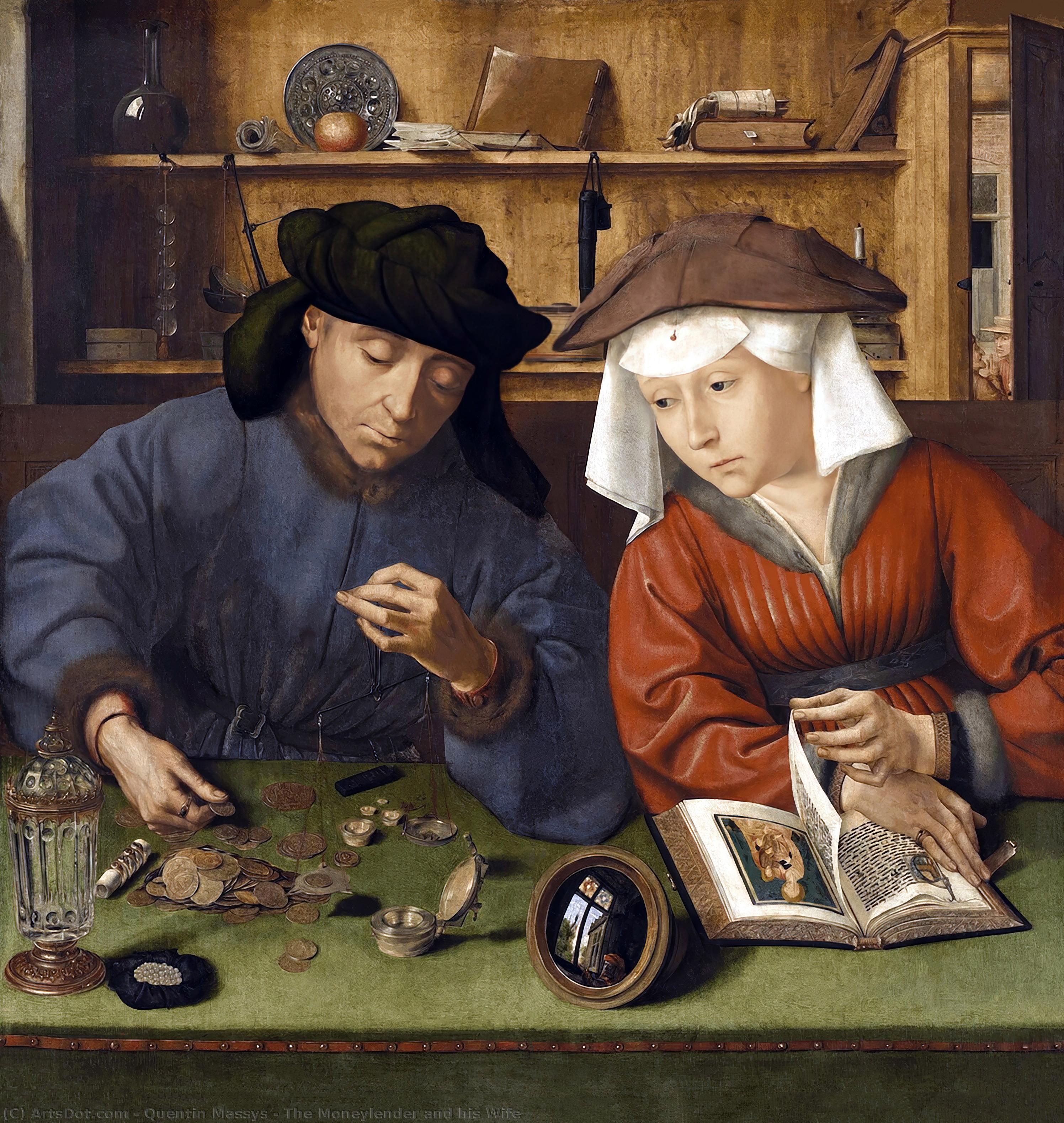
In the quiet intimacy of Quentin Massys’s 1514 masterpiece, The Moneylender and his Wife, we are invited to step across the threshold of time and into a world of profound domesticity and silent narrative. This oil on panel work, currently preserved in the hallowed halls of the Musée du Sobornik in the Louvre, serves as a breathtaking exemplar of the Antwerp School’s mastery. At first glance, the scene presents a…

To stand before this portrait is to step directly into the vibrant intellectual currents of the early sixteenth century. Quentin Massys has captured not merely a likeness, but an entire state of being—the profound concentration of a Renaissance mind at work. The subject, Erasmus of Rotterdam, radiates the quiet authority of scholarship. Dressed in the somber black attire typical of learned men of his era, he is seated amidst the…

Quentin Massys’s *The Moneylender and His Wife*, painted in 1514, stands as a pivotal work within the burgeoning Antwerp School—a movement that decisively reshaped Northern European painting during the High Renaissance. More than just a portrait of a wealthy merchant family, it embodies a complex interplay of observation, satire, and humanist ideals, reflecting the anxieties and aspirations of its time.

In the quiet, hallowed atmosphere of the Staatliche Museen Berlin, there exists a window into the spiritual heart of the sixteenth century. Quentin Massys’ “The Virgin Enthroned,” completed around 1525, is far more than a mere religious portrait; it is a profound meditation on grace and the intersection of the earthly and the divine. As a cornerstone of the Antwerp School, this masterpiece captures a pivotal moment in art history…

The portrait presents a frontal, bust-length view of Christ, positioned centrally against a dark, undifferentiated background. The subject's face is illuminated by a soft, diffused light that defines the contours of the nose, the jawline, and the orbital sockets. A golden halo, composed of fine, radiating lines, emanates from behind the head, creating a sharp contrast with the deep tones of the backdrop. The hair is rendered in long, wavy…

The painting is a portrait of an elderly woman, depicted from just above the waist up. She is presented with striking and exaggerated facial features, including a large head, a prominent nose with nostrils that flare upward, and a face covered in deep wrinkles and pocked textures. Her neck appears long and thin, and she possesses a prominent wart on her right cheek. The subject wears a substantial, elaborately embroidered…

Step closer to the panel and observe the sheer honesty of the skin. There is no attempt here to soften the features or hide the ravages of time. We see a face marked by deep wrinkles, pocked textures, and a prominent wart on the right cheek. The nose is short, with nostrils that flare upward, while the lips remain thin and pinched. It is a heavy, visceral depiction of humanity.…

To gaze upon this exquisite detail from Quentin Massys’s 1514 masterpiece, The Moneylender and His Wife, is to be invited across the threshold of a meticulously preserved moment in time. It is not merely a fragment of paint on panel; it is a concentrated jewel box of Northern Renaissance life, rich with unspoken narratives and dazzling technical mastery. The scene, captured from the legendary work housed at the Musée du…

To gaze upon this detail from Quentin Massys's The Moneylender and his Wife is to be invited across the threshold of a meticulously preserved moment in time. It is not merely a fragment of paint on panel; it is a concentrated jewel box of Northern Renaissance life, rich with unspoken narratives and dazzling technical mastery. The scene, captured from the masterpiece housed in the Musée du Louvre, draws the eye…

To gaze upon this depiction of The Adoration of the Magi is to step directly into a moment suspended in time—a tableau vivant brimming with piety, wonder, and…
Užsisakyti reprodukciją →
The St Anne Altarpiece (detail) is a fragment of a larger narrative painted by Quinten Metsys. This specific section emerged from a work created in 1507. It captures…
Užsisakyti rankinio kopijos tapybą →
In the quiet, contemplative corner of the St Anne Altarpiece, specifically its left wing, we encounter a moment of profound spiritual intimacy that has captivated viewers for over…
Užsisakyti rankinio kopijos tapybą →
To gaze upon this exquisite detail from Quentin Massys's 1514 masterpiece, The Moneylender and his Wife, is to be invited across the threshold of a meticulously preserved moment…
Atneškite į savo namus →
In the quiet, hallowed halls of the Musées Royaux des Beaux-Arts in Brussels, there exists a window into the spiritual heart of the Northern Renaissance. Quentin Massys’ St…
Užsisakyti rankinio kopijos tapybą →
Quentin Massys’s “St Anne Altarpiece (central panel),” completed in 1509, is more than just a religious painting; it's a meticulously crafted microcosm of late medieval and early Renaissance…
Užsisakyti reprodukciją →
To stand before a work like the Diptych - Christ and the Virgin is to step directly into the luminous, deeply spiritual atmosphere of the early sixteenth century…
Užsisakyti reprodukciją →
A solitary figure kneels within a landscape of muted earth. The saint, Mary Magdalene, is caught in a moment of profound penance, her body bowed in a quiet,…
Atneškite į savo namus →
The figure of Saint John the Baptist emerges from a shallow, arched niche, appearing less like a painted subject and more like a relief carved from aged parchment.…
Užsisakyti reprodukciją →
To stand before this devotional portrait of Christ is to encounter a moment suspended in time—a profound intersection of divine majesty and human intimacy. Painted around 1529 by…
Užsisakyti rankinio kopijos tapybą →
The Deathbed of Saint Anne, also known as St Anne on her death bed or La mort de Saint Anne, is a painting by Quinten Metsys. This specific…
Užsisakyti reprodukciją →
A single figure kneels amidst the raw textures of a rocky landscape. The skin of Saint Mary of Egypt is pale against the deep greens and ochre shadows…
Užsisakyti reprodukciją →
In this 1496 portrait, we find ourselves in the presence of Jacob Obrecht, a man whose life was defined by the precision of musical notation and the solemnity…
Atneškite į savo namus →
The oil painting titled A Bagpiper was executed by the artist Quinten Metsys in 1513. This work emerged from the sixteenth-century Low Countries, a landscape of shifting borders…
Užsisakyti reprodukciją →
The face emerges from a deep, black void. It is a close-up view, focusing on the head and upper torso of Christ. A soft light falls from the…
Užsisakyti reprodukciją →
To gaze upon this depiction of the Madonna and Child is to step directly into the hushed reverence of the High Renaissance. It is more than just a…
Užsisakyti reprodukciją →
In the quiet intimacy of Quentin Massys’ Virgin with the Child, we are invited into a moment of profound, silent devotion. This exquisite work serves as a window…
Užsisakyti rankinio kopijos tapybą →
The air in the room feels heavy with a stillness that only a sacred moment can command. Mary sits in a quiet, domestic interior, her presence filling the…
Atneškite į savo namus →
In this large-scale Northern Renaissance oil painting on panel, Quinten Metsys presents a moment of profound spiritual tension. Created about 1509, The Refusal of the Offering of Joachim…
Užsisakyti rankinio kopijos tapybą →
A young boy occupies the center of a crowded, architectural space, positioned on a small raised platform. This central figure, Jesus, engages with a circle of learned men…
Užsisakyti reprodukciją →
The Portrait of a man is a quiet encounter with a single presence, rendered in oil on panel. Created by the artist Quinten Metsys, this work captures a…
Atneškite į savo namus →
The oil painting titled Saint John and the Women at the Tomb of Christ was executed by the artist Quinten Metsys. This work, also attributed to Quentin Matsys,…
Užsisakyti reprodukciją →
In Virgin and Child, Quinten Metsys presents a moment of religious iconography centered on the relationship between the Virgin Mary and the Christ Child. The figures are rendered…
Užsisakyti rankinio kopijos tapybą →
The oil painting presents a vertical composition with a rounded top, centering on the intimate proximity of a woman and an infant. The Madonna is draped in a…
Atneškite į savo namus →
To gaze upon this portrait of Pieter Gillis is to step directly into the intellectual atmosphere of the early sixteenth century. The air seems thick with the scent…
Užsisakyti reprodukciją →
In this 1501 work, Quinten Metsys organizes the Lamentation of Christ through a tight, pyramidal arrangement that directs all visual attention toward the center. The composition focuses on…
Užsisakyti reprodukciją →
A bearded man, identified as Saint Jerome, is captured in a moment of quiet contemplation. He is positioned in a medium close-up, his upper torso and head slightly…
Užsisakyti rankinio kopijos tapybą →
In this intimate oil on panel, we find ourselves drawn into a private moment of prayer. The subject, likely the Virgin Mary, is presented in a close-up bust…
Atneškite į savo namus →
This work, titled Saint John, was executed by the Flemish painter Quinten Metsys in 1511. It is a religious composition that presents a quiet, immediate encounter with the…
Užsisakyti reprodukciją →
A single face emerges from a dark, indistinct void. The woman’s eyes are cast downward, heavy with a quiet melancholy that pulls the viewer into her private grief.…
Užsisakyti rankinio kopijos tapybą →
The artwork titled Head of a Mourning Woman was executed by the artist Quinten Metsys. This portrait, created about 1500, presents a single female figure in a close-up…
Atneškite į savo namus →
In "Man of Sorrows" by Quinten Metsys, the viewer is met with a tight, centered close-up that demands an immediate, intimate confrontation. The composition focuses strictly on the…
Užsisakyti rankinio kopijos tapybą →
Virgin and Child Enthroned is a religious work by the artist Quinten Metsys. Created about 1490, the panel captures a moment of quietude between the Virgin Mary and…
Užsisakyti reprodukciją →
Salome is given the head of John the Baptist is a work by Quinten Metsys, executed in 1511. This painting forms the left interior wing of the St…
Užsisakyti reprodukciją →
The oil painting titled 'The Seven Sorrows of the Virgin' presents a central Pietà scene where the Virgin Mary cradles the lifeless body of Jesus Christ across her…
Atneškite į savo namus →


The portrait known as Salvator Mundi (Christ Blessing) emerges from the brush of Quinten Metsys, a figure who stands at the heart of the Northern Renaissance. This work,…
Užsisakyti rankinio kopijos tapybą →
In Dead Christ, Quinten Metsys presents the head and upper torso of Christ following the crucifixion. The oil painting captures a moment of profound stillness. The subject rests…
Užsisakyti rankinio kopijos tapybą →
The composition is structured with the primary figures positioned in the foreground on the left and center. The Virgin Mary, the Christ Child, and Saint Joseph occupy this…
Užsisakyti rankinio kopijos tapybą →
To look upon this portrait is to encounter the very essence of the Renaissance mind. We find Desiderius Erasmus seated in a moment of profound concentration, his gaze…
Užsisakyti rankinio kopijos tapybą →
In this intimate portrait, we find ourselves drawn into a private, sacred space. The Virgin Mary cradles the Christ Child, their connection rendered with a profound sense of…
Užsisakyti rankinio kopijos tapybą →

We are looking at the Portrait of an old woman, a work by Quinten Metsys. This piece, dated about 1510, presents us with the likeness of an elderly…
Užsisakyti reprodukciją →
A middle-aged man gazes toward the right, his expression marked by a quiet gravity. This bust-length portrait captures a figure of dignity, rendered with the meticulous precision characteristic…
Atneškite į savo namus →
The body of Christ lies horizontal, a pale anchor in a sea of dark, heavy fabrics. He is the center of a quiet storm. Around him, the mourners…
Atneškite į savo namus →
A somber, monochrome encounter with an elderly man, this oil on panel work captures a moment of profound stillness. The subject is positioned slightly off-center, his gaze directed…
Užsisakyti rankinio kopijos tapybą →
The central panel of this 1507 triptych holds a quiet, architectural stillness. Within a shallow, stage-like space defined by classical arches and columns, the Holy Family gathers. Saint…
Atneškite į savo namus →
The purchase agreement is a highly detailed and expressive oil painting from the Northern Renaissance period, dating to 1510. The composition features a tight, crowded close-up focusing on…
Atneškite į savo namus →
A serene landscape unfolds behind the seated Virgin Mary and the Christ Child, stretching toward a distant horizon of rolling hills and faint architecture. The composition centers on…
Užsisakyti reprodukciją →
In the oil portrait titled Portrait of a Humanist by Quinten Metsys, the subject is presented in a circular tondo format. This composition provides a bust-length view of…
Atneškite į savo namus →


In this oil on panel painting, an elderly man, identified as Saint Jerome, sits within a narrow, wooden study. The figure is positioned in a close-up, intimate portrait,…
Atneškite į savo namus →


In "Christ carrying the cross" by Quinten Metsys, we encounter a scene of profound physical and spiritual suffering. The composition is dense and crowded, pulling the viewer into…
Užsisakyti rankinio kopijos tapybą →
This Northern Renaissance oil painting, dating to 1505, presents a somber and reverent depiction of the Crucifixion of Jesus Christ. The composition is structured around a central vertical…
Atneškite į savo namus →
Madonna and Child is a religious oil on panel painting by Quinten Metsys. The work focuses on the figures of the Virgin Mary and Jesus Christ, presented through…
Užsisakyti reprodukciją →
To stand before this portrait is to step directly into the intellectual atmosphere of the early sixteenth century. Quentin Massys, master of the Antwerp Renaissance, has captured not…
Užsisakyti rankinio kopijos tapybą →
The portrait titled Man with Glasses is a work by the Flemish painter Quinten Metsys. This painting emerged from the artist's brush around 1520. It captures a singular…
Užsisakyti rankinio kopijos tapybą →
The oil painting titled Anne and Joachim Present Their Goods to the Temple was executed by the artist Quinten Metsys. This work dates to 1509. It belongs to…
Užsisakyti reprodukciją →
This religious art piece, titled Mary Magdalene, was executed by the artist Quinten Metsys. The work is an oil on oak panel that depicts the figure of Mary…
Užsisakyti rankinio kopijos tapybą →
The painting presents two distinct figures, John the Baptist and St Agnes, positioned within separate frames that divide the vertical space. On the left, John the Baptist is…
Atneškite į savo namus →
The focus of this oil on panel detail is the figure of Christ, rendered with a focus on the physical textures of hair, skin, and fabric. He possesses…
Atneškite į savo namus →
To stand before this depiction of The Crucifixion is to be enveloped in an atmosphere thick with solemnity and profound human emotion. This painting captures the ultimate sacrifice,…
Užsisakyti reprodukciją →
The image before you is not merely a depiction of Christ; it’s an invitation into the heart of human reaction, a meticulously rendered tableau of judgment and sorrow.…
Užsisakyti rankinio kopijos tapybą →
The air in the scene feels heavy, thick with the tension of a moment that refuses to pass. Jesus stands at the center of a swirling storm of…
Užsisakyti reprodukciją →
In this 1529 oil on panel, we find ourselves in a moment of profound, silent intimacy. The Virgin Mary is depicted with a serene grace, her presence defined…
Užsisakyti rankinio kopijos tapybą →

Large central panel of an altarpiece made, by the most qualified Antwerp paintingworkshop, for the then newly founded church of the Madre de Deus Monastery inLisbon (1509). The…
Užsisakyti reprodukciją →


Keturi populiariausi temų motyvai tarp šių šedevrų, su geriausiais kiekvieno pavyzdžiais.
8 muziejai, kuriuose saugoma daugiausia šioje pusėje esamų paveikslų.
| Muzejaus | Miestas | Quentin Massys darbai | Šiojo sąrašo paveikslai |
|---|---|---|---|
 Gemäldegalerie |
Berlynas | 8 | Head of a Mourning Woman, Head of a Mourning Woman, The purchase agreement |
 Antverpio karališkasis gražiųjų menų muziejus |
Antverpys | 7 | Christ as Salvator Mundi, Saint John the Baptist, Saint John |
 Bavarijos valstybinės paveikslų kolekcijos |
Miunchas | 7 | Mary with Child (Copy after a lost original), Man of Sorrows, Rem Altar: Saint Roch with the Angel (Reverse: Saint Anne Selbdritt) |
 Liaudies senovės meno nacionalinis muziejus |
Lisbona | 6 | Jesus Among the Doctors, Saint John and the Women at the Tomb of Christ, Presentation at the Temple |
 Belgijos Karališkųjų dailės muziejų kompleksas |
Briuselis | 6 | The Deathbed of Saint Anne, The Refusal of the Offering of Joachim, The Seven Sorrows of the Virgin |
 Musées Royaux des Beaux-Arts |
Brišelis | 6 | St Anne Altarpiece (detail), St Anne Altarpiece (left wing), St Anne Altarpiece |
 Liuvro muziejus |
Paryžius | 5 | The Moneylender and his Wife, The Moneylender and his Wife (detail), The Moneylender and his Wife (detail) |
 Koninklijk Museum voor Schone Kunsten |
Antverpė | 7 | St John Altarpiece (detail), St John Altarpiece (right wing), St John Altarpiece (left wing) |
In this 1496 portrait, we find ourselves in the presence of Jacob Obrecht, a man whose life was defined by the precision of musical notation and the solemnity…

The portrait presents a frontal, bust-length view of Christ, positioned centrally against a dark, undifferentiated background. The subject's face is illuminated by a soft, diffused light that defines…


In the quiet, hallowed atmosphere of the Staatliche Museen Berlin, there exists a window into the spiritual heart of the sixteenth century. Quentin Massys’ “The Virgin Enthroned,” completed…
To gaze upon this depiction of the Madonna and Child is to step directly into the hushed reverence of the High Renaissance. It is more than just a…
An Old Woman ('The Ugly Duchess') (1513). Toliau eina The Moneylender and his Wife (1514) ir Portrait of Erasmus of Rotterdam (1517).
47 metų amžiaus: An Old Woman ('The Ugly Duchess') sukurta 1513 m. ir Quentin Massys gimė 1466.
An Old Woman ('The Ugly Duchess'), The Moneylender and his Wife, Portrait of Erasmus of Rotterdam, The Moneylender and his Wife, The Virgin Enthroned, Christ as Salvator Mundi, The Ugly Duchess, A Grotesque Old Woman (also known as The Ugly Duchess), The Moneylender and his Wife (detail) ir The Moneylender and his Wife (detail). Viršuje esančioje reitingo lentelėje nurodyta kiekvieno kūrinio metis ir muziejus.
Mūsų kataloge yra 147 Quentin Massys darbų, datuojamų nuo 1490 iki 1530.
Dauguma jų yra Gemäldegalerie (Berlynas), Antverpio karališkasis gražiųjų menų muziejus (Antverpys) ir Bavarijos valstybinės paveikslų kolekcijos (Miunchas). Viršuje esančiame lange muziejai išvardyti po vieni.
1510s laikotarpyje: 38 iš 100 šioje pusėje esančių darbų sukurtos tada, iš jų – An Old Woman ('The Ugly Duchess').
Pirmasis šioje pusėje yra Madonna and Child (1490), paskutinis – Madonna and Child (1530).
Woman (26), Man (24) ir Child (13), iš 100 šioje pusėje esančių darbų.
Oil On Panel: 46 iš 100 šioje pusėje esančių darbų.
Northern renaissance, kaip rodo šio puslapio paveikslai.
Head of a Mourning Woman, Head of a Mourning Woman ir The purchase agreement yra vieni iš 7 šioje puslapyje esamų darbų, kuriuos saugo Gemäldegalerie, Berlynas.
Taip. Kiekvieną šioje pusėje esantį paveikslą galite užsakyti kaip muziejoriaus kokybės rankų darbų alievinę kopiją arba aukščiausios kokybės spausdinį pasirinktu jūsų pageidaujamu dydžiu tiesiai iš paties paveikslą puslapio.
Gyvybingame, augančiame XVI amžiaus Žemutųjų kraštų peizaže nedaug vardų skamba tokia įtvirtintų svarbių prasmių kaip Kvintinas Masisas. Dažnai vadinamas Antverpeno mokyklos pionieriu, Masisas buvo tapydas, sujungęs tiltu itin kruopščią, dvovedinę ankstyvosios nyderlandų tradicijos religinę atsidavimą ir sparčiai plaudantį Šiaurinės Renesanso humanistinį mokslo pradinįs etapas. Gimęs apie 1466 metus Liūvene, Belgijoje, jo ankstyvasis gyvenimas išlieka legendų ir istorinių fragmentų audinys. Dailos istorijoje plačiai šnabždis, kad prieš įgijęs meistriškę laikyti šiuos dailininką mokė kaip kalvį – ši detalė suteikia gilią, taktilį svorį jo vėlesniam tekstūros ir medžiagų valdymui. Šis metalo apdirbimo patirtis tikriausiai įsidiegė jame ypatingą pagarbą fiziniam pasauliui, leidžiančią jam neįtikėtinu tikslumu atvaizduoti šilko blizgį, monetos šaltą spindulį ir nusidėvėjusią žmonių odą.
Perėjant iš akademinės Liūveno atmosferos į triukšmingą Antverpeno prekybos centrą apie 1490 metus, Masisas pradėjo į savo flamandų meno audinį įaust savo išskirtinę liniją. Jo ankstyvasis mokymasis, galbūt Dirką Boutsą vadovaujant, susietė jį su tokių meistrų kilme kaip Hansas Memlingas ir Rogierius van der Weydenas. Nuo šių pirmtakų jis paveldėjo atsidavimą tikrovės siekiui – siekiui rasti tiesą vaizduotyje. Tačiau Masisas buvo toli lygiu nuo paprasto imitatoriaus. Laikydamas ekskizišką detalumą, būdingą jo protėviams, jis į savo kūrybą įnešė naują, augantį vitalitetą ir polinkį tyrinėti sudėtingą žmogaus būseną tiek per religinę solemnybę, tiek per aštrią socialinę komentarą.
Masiso genialumas slypi jo nuostabioje gebėjime naviguoti tarp dviejų panašiai nesuderinamų pasaulių: šventybės ir pasaulietiškumo. Viena pusė – jo religinės kompozicijos, tarnaujančios kaip gilios meditacijos apie tikėjimą. Tokiuose darbuose kaip Kristus kryžium su aukojais, jis įamžina žiaurią, emocinę kryžiausmirties prigimtį, naudojdamas Aukštosios Renesanso jautrumą pristatyti sceną, kuri yra tiek jaudinanti, tiek techniškai nepriekaištinga. Jo gebėjimas Dievo paveikslą parodyti per žmogaus kančios prizmę leido jo religiniams motyvams rezonuoti su visceraliniu artimu, padarydamas dviesetį jautriai pajusti kiekvienam žiūrėtojui.
Atvirkščiai, Masisas buvo satyros žanro meistras, naudojantis savo štrėbį kaip veidrodį kintantiems savo laikmečio socialiniams moralės standartams. Jis turėjo aštrų žvalgą į žmonijos trūkumus, dažnai kurdamas scenas, kuriose realizmas susilieja su subtiliu, įkyriu sarkazmu. Šis duoralumas ysto itin aiškiai jo portretuose ir žanrinėje tapyboje, kur jis galėjo per švilpsnį pereiti nuo ramių Švč. Mergelės su Kūdikiu grožio prie sudėtingesnių, moraliai daugiasluoksnių šiuolaikinio gyvenimo vaizduotų scenų. Jo kūryba dažnai tyrinėja贪 greed (贪婪), tuštybės ir materialaus turto bei dvasinio grynumo įtampą, padarydant jį tikru būsimųjų didžiųjų žanrinės tapybos meistrų priešėdami.
Kvintino Masiso istorinės reikšmės neįvertinti galima; jis buvo Antverpeno meninės revoliucijos katalizatorius. Įvedamas naujų motyvų ir technikų, tačiau išliekantis tvirtai įsikibęs savo tėvynės turtingų tradicijų, jis sukūrė tapybos mokyklos pagrindą, kuri dominavo Flandrijos krašte visą XVI amžių. Jo įtampą galima atsekti per visą Šiaurės Europos meno evoliuciją, nes jis atvėrė kelią labiau išraišk링am, stebėjimais grįstamam stiliui, kuris priėmė modernizuojamosios pasaulio sudėtingumą.
Šiandien mes prisimename Masisą ne tik kaip meistrą, bet ir kaip istorijų pasakotoją, įamžinįs tos eratos sielą. Jo palikimas išliksta per neblėstančią jo vaizduotės galią:


