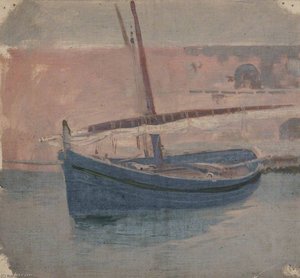
John Fraser, 1838 – 1898

John Fraser tapiai: 60 garsiausių kūrinių reitingas

Žymiausias John Fraser tapas yra 'Defender' in the Atlantic (1910), esantis Torre Abbey Historic House And Gardens, Torquay. Kartu su Low Tide, Whitstable Harbour, Kent (1885) ir Chain Pier, Brighton, East Sussex (1883) tai sudaro tris visai visus pažįstančius darbus. Mūsų kataloge yra 60 darbų autoriaus John Fraser; žemiau pateiktos 60 daugiausia visame pasaulyje žiūrimų kūrinių, kiekvieno iš jų – su metai, muziejumi, kuriame jis saugomas, ir paaiškintu, kodėl jis svarbus.

Rangos vieta nulegiama pagal mūsų populiarumumo balas, kurį sudaro kiekvieno kūrinio paieškos, apsilankėjimai ir užsakėjimai. Atnaujinta spalis 2026. Kiekvieną šio puslapio šedevrą galite užsisakyti kaip muziejoriaus kokybės rankų darbo alievinę reprodukciją arba aukščiausios kokybės meninį spausdiną jūsų pasirinktu dydžiu.

John Fraser portretas
John Fraser · 1838 – 1898
Gedė · mirė
1838 – 1898
Judėjimas
Impressionism
Darbai mūsų kataloge
60
Labiausiai žinomi
'Defender' in the Atlantic (1910)
Daugiausia darbų yra
National Maritime Museum

10 garsiausių John Fraser paveikslų

'Defender' in the Atlantic (1910) aut. John Fraser
1

'Defender' in the Atlantic

1910 · Oil On Canvas · Torre Abbey Historic House And Gardens, Torquay

A large sailboat with three sails occupies the center of a vast, blue expanse. The vessel floats amidst the open ocean, isolated from any visible land or human presence. The composition focuses entirely on the boat, which remains the singular point of interest against the surrounding waters. The scene is characterized by a sense of stillness and calm, capturing a moment of quietude on the Atlantic.

John Fraser, paveikslai nuo 11 iki 60

Kvadratas į Kvadratą II (2002) aut. John Fraser
#14

Kvadratas į Kvadratą II

2002 · McNay Art Museum

Štai „Kvadratas kvadratuose II“ – Johanas Frazeras „Kvadratas kvadratuose II“ yra įdomus kūrinys iš Kanados XIX amžiaus kraštovaizdžio meistro Johano Fražero arsenalo. Šis 2002 metų darbą sukūrė amerikietiškių…

Užsisakyti reprodukciją →

John Fraser tapų skirstymas pagal laikotarpius

Daugiausiai temų, kurių vaizdė John Fraser

Keturi populiariausi temų motyvai tarp šių šedevrų, su geriausiais kiekvieno pavyzdžiais.

Kur galima pamatyti John Fraser paveikslus

5 muziejai, kuriuose saugoma daugiausia šioje pusėje esamų paveikslų.

Muzejaus Miestas John Fraser darbai Šiojo sąrašo paveikslai
National Maritime Museum, LondonasNational Maritime Museum Londonas 24 A Large Sloop Yacht and a Barge, A Zeppelin Raid, 8 October 1915, A Lifeboat, c.1920
Torre Abbey Historic House And Gardens, TorquayTorre Abbey Historic House And Gardens Torquay 1 'Defender' in the Atlantic
Walker Art Gallery, LiverpulisWalker Art Gallery Liverpulis 1 On the Moray Firth
McNay Art Museum, San AntonioMcNay Art Museum San Antonio 1 Kvadratas į Kvadratą II
Royal College of Music Museum, LondonRoyal College of Music Museum London 1 Costume design for Miss Bentson in Lakme by Delibes

en most garsiausi John Fraser paveikslai, metais po metų

John Fraser dirbo tik 5 metus, nuo 1881 iki 1885. Štai ši trumpa karjera metais, per pačias garsiausias jo paveikslus.

  1. 1881
  2. 1883
  3. 1885
  4. 1885

Klausimai apie John Fraser paveikslus

Koks yra garsiausias John Fraser tapas?Rodyti atsakymą

'Defender' in the Atlantic (1910), Torre Abbey Historic House And Gardens, Torquay. Toliau yra Low Tide, Whitstable Harbour, Kent (1885) ir Chain Pier, Brighton, East Sussex (1883).

Kokie yra 10 geriausių John Fraser paveikslų?Rodyti atsakymą

'Defender' in the Atlantic, Low Tide, Whitstable Harbour, Kent, Chain Pier, Brighton, East Sussex, Low Tide, Whitstable Harbour, Kent, On the Moray Firth, Hulks off Portsmouth, From the Leas, A Large Sloop Yacht and a Barge, A Large Sloop Yacht and a Barge ir A Lifeboat. Viršuje esančioje reitingo lentelėje nurodyta kiekvieno kūrinio metis ir muziejus.

Kiek paveikslų sukūrė John Fraser?Rodyti atsakymą

Mūsų kataloge yra 60 John Fraser darbų, datuojamų nuo 1881 iki 1885.

Kur yra garsiausi John Fraser paveikslai?Rodyti atsakymą

Dauguma jų yra National Maritime Museum (Londonas), Torre Abbey Historic House And Gardens (Torquay) ir Walker Art Gallery (Liverpulis). Viršuje esančiame lange muziejai išvardyti po vieni.

Kada John Fraser namai dažniausiai tapė savo garsiausiais šedevrais?Rodyti atsakymą

1885 laikotarpyje: 2 iš 60 šioje pusėje esančių darbų sukurtos tada, iš jų – Low Tide, Whitstable Harbour, Kent.

Kokie yra pirmieji ir paskutiniai garsūs John Fraser paveikslai?Rodyti atsakymą

Pirmasis šioje pusėje yra On the Moray Firth (1881), paskutinis – Low Tide, Whitstable Harbour, Kent (1885).

Ką dažniausiai tapė John Fraser?Rodyti atsakymą

Ocean (3), Tranquility (3) ir Water (2), iš 60 šioje pusėje esančių darbų.

Kelią meno kryptį priklauso John Fraser?Rodyti atsakymą

Impressionism ir Realism, kaip rodo šio puslapio paveikslai.

Kurius John Fraser paveikslus galėčiau pamatyti National Maritime Museum?Rodyti atsakymą

A Large Sloop Yacht and a Barge, A Zeppelin Raid, 8 October 1915 ir A Lifeboat, c.1920 yra vieni iš 24 šioje puslapyje esamų darbų, kuriuos saugo National Maritime Museum, Londonas.

Ar galiu įsigyti John Fraser paveikslą-reprodukciją?Rodyti atsakymą

Taip. Kiekvieną šioje pusėje esantį paveikslą galite užsakyti kaip muziejoriaus kokybės rankų darbų alievinę kopiją arba aukščiausios kokybės spausdinį pasirinktu jūsų pageidaujamu dydžiu tiesiai iš paties paveikslą puslapio.

Apie John Fraser

A Life Between Light and Paper

John Arthur Fraser began his days in London, England, born on January 9th, 1838. His father, a tailor from Portsoy, Scotland, carried the political weight of the Chartist movement into their home, while his maternal grandparents had settled in Stanstead, Lower Canada, years earlier. By the time Fraser reached his twenties, he moved to Montreal, finding work as a decorative painter. It was here, in 1860, that his path crossed with William Notman. He joined Notman’s firm not merely as an artist, but as a specialist in color printing. His hands worked on the edges of photography, tinting portraits and adding watercolor washes to photographic paper to create depth and life.

This period in Montreal shaped his eye for detail. Working within the art department of a major photographic studio required a disciplined way of seeing. He learned to translate the flat reality of a negative into something with atmosphere. Alongside assistants like Henry Sandham, he helped produce cartes-de-visite and cabinet photographs that carried his subtle touches of color. His work was often about what could be added to a captured moment—a soft sky or a textured landscape behind a seated subject.

The Expansion Westward

As the Canadian Pacific Railway pushed its tracks toward the mountains, Fraser found himself documenting the changing terrain. He took on commissions that placed him in the heart of the wilderness, from Banff to Jasper National Park. These were not mere sketches; they were records of a landscape being opened to the world. His paintings of the Rockies, such as Fishing Camp, the Rockies, captured the heavy presence of mountains like Mt. Carroll. He used a precise brush to note the way light hit a granite face or how shadows pooled in a mountain pass.

His style grew from these observations. While his roots were in the meticulous realism required for photographic tinting, he began to use color with a lightness that suggested the influence of Impressionism. He focused on the clarity of the air and the specific hues of the Canadian woods and waterways. His landscapes often moved between the heavy textures of oil on canvas and the translucent layers of watercolor, always seeking to capture the actual light of the Eastern Townships or the New Hampshire forests.

Institutional Roots and Later Years

Fraser’s presence was felt in the very structures of the Canadian art community. He did not just paint; he helped build the organizations that supported others. His name is tied to several foundational groups:

  • Royal Canadian Academy of Arts: He was a charter member.
  • Society of Canadian Artists: He was also a charter member.
  • Ontario Society of Artists: He served as a founder and held the position of vice-president from 1872 to 1874.

In 1868, he moved to Toronto, eventually opening the firm Notman and Fraser. This business venture combined his entrepreneurial spirit with his technical skill. Even as he moved through cities like Boston and New York, his subjects remained tied to the North American landscape. He died in New York City on January 1st, 1898, leaving behind a body of work that documented the physical and cultural expansion of a young nation through the lens of both the brush and the camera.

Visi 60 John Fraser darbai →