John Atkinson Grimshaw, 1836 – 1893

100 garsiausių John Atkinson Grimshaw paveikių

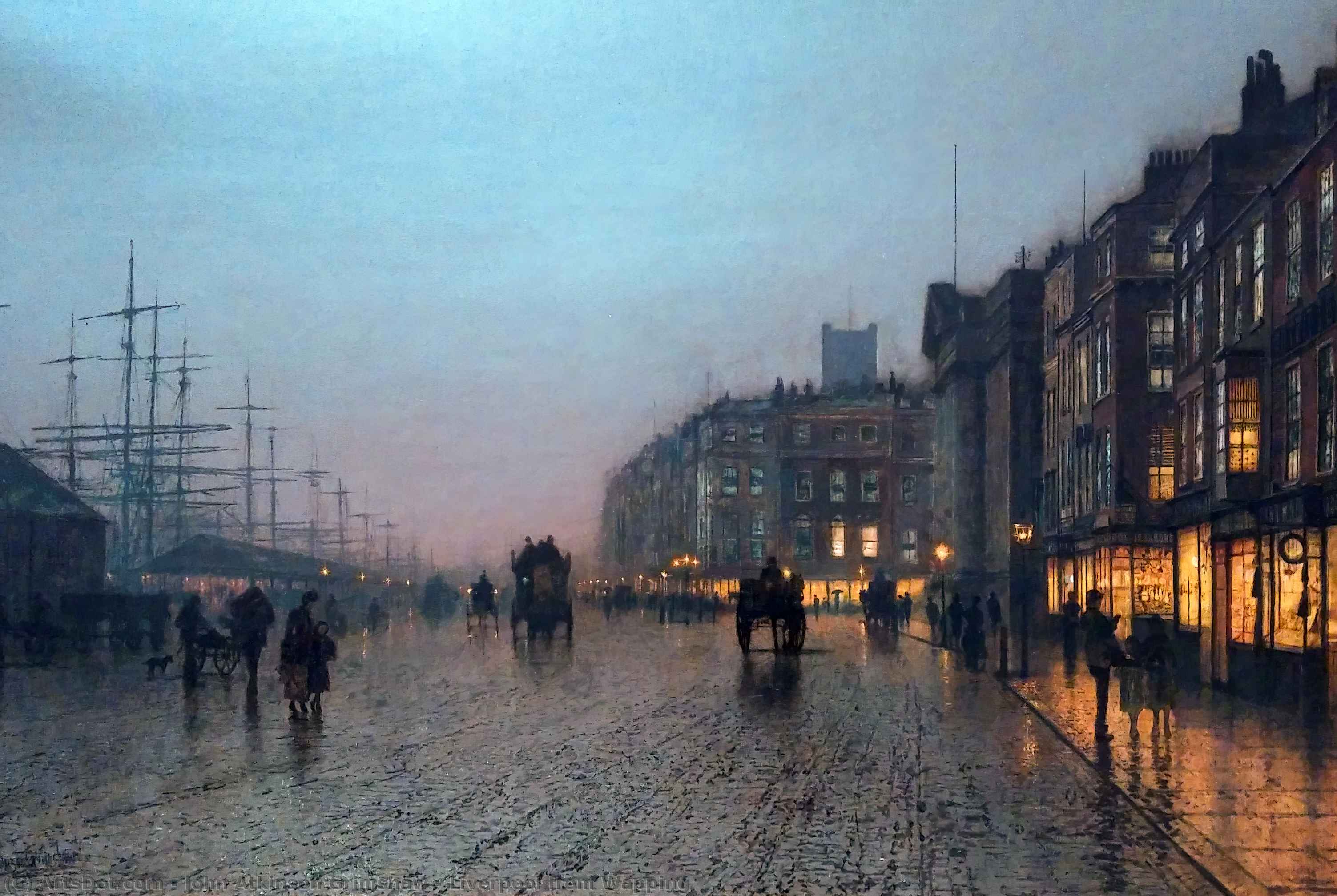
Veržė John Atkinson Grimshaw šlovę tapyba Liverpulis nuo Vapingo (1875); ji eksponuojama Philadelphia Museum of Art, Filadelfija. Endymion į Latmų kalną (1879) ir Canny Glasgow (1887) seka juos kolekcionerių bei muziejų lankytojų širdyse. Iš 260 John Atkinson Grimshaw kūrinių mūsų kataloge, šios 100 yra labiausiai gerbiamos – kiekvienas jų pateikiamas su datos, muziejaus ir išskirtinės ypatybės aprašymu.

Rangos vieta nulegiama pagal mūsų populiarumumo balas, kurį sudaro kiekvieno kūrinio paieškos, apsilankėjimai ir užsakėjimai. Atnaujinta spalis 2026. Kiekvieną šio puslapio šedevrą galite užsisakyti kaip muziejoriaus kokybės rankų darbo alievinę reprodukciją arba aukščiausios kokybės meninį spausdiną jūsų pasirinktu dydžiu.

John Atkinson Grimshaw portretas
John Atkinson Grimshaw · 1836 – 1893
Gedė · mirė
1836 – 1893, Lidsas
Judėjimas
Romanticism
Darbai mūsų kataloge
260
Labiausiai žinomi
Liverpulis nuo Vapingo (1875)
Daugiausia darbų yra
Yale Center for British Art

John Atkinson Grimshaw: dešimties šedevrai

Liverpulis nuo Vapingo (1875) aut. John Atkinson Grimshaw
1

Liverpulis nuo Vapingo

1875 · Aliejus ant drobės · Philadelphia Museum of Art, Filadelfija

Liverpulis iš Vappingo: Viktorijos Epochos Atmosferos Simfonija John Atkinson Grimshaw drobė „Liverpulis iš Vappingo“ (1875 m.) – tai ne tik miesto vaizdas, bet ir subtili emocijų bei atmosferos studija. Šis kūrinys kviečia pasinerti į XIX amžiaus Anglijos gyvenimą, pajusti tada vyravusią nuotaiką ir energiją. Grimshaw meistriškai perteikia Viktorijos epochos dvasią, kurios atspaudai randami kiekviename paveikslo elemente – nuo gatvės perspektyvos iki apšviestų langų šviesos atspindžių. Kompozicija paremta stipria centrine perspektyva,…

Endymion į Latmų kalną (1879) aut. John Atkinson Grimshaw
2

Endymion į Latmų kalną

1879 · Aliejus ant drobės

Ž шаг into į sapnių ir fantazijos pasaulį su „Endymionu Latmos kalne“ – užburėjančiu kūrynu, sukurtu 1879 metais. Šis peikiantis darbas kviečia žiūrovus tyrinėti jo turtingą detalį, derinant fantazijos ir surrealizmo elementus, kad sukurtų ramią bei kitokią, žemės nepanikančią atmosferą.

Canny Glasgow (1887) aut. John Atkinson Grimshaw
3

Canny Glasgow

1887 · Aliejus ant drobės · Thyssen-Bornemisza muziejus, Madridas

„Canny Glasgow“ – Grimšio Nuotaikos Saulėlydžio Uostas Šis įspūdingas darbas, kurį sukūrė John Atkinson Grimshaw 1887 metais, – ne tik vaizdas; tai nuotykis į vieno iš Didžiosios Britanijos svarbiausių laikų – Vitorijos – uostą. Grimšio ranka sukuria sceną, kurioje oras šalta ir drėgna, o saulės spinduliai jau nusileidžia jūroje, spalindami vandens paviršių ir gatves. Tai ne tik miesto vaizdas; tai emocijos atspaudas – vienatvės, galvossukimo ir paslaptingumo jausmas, įvykęs per…

London, Pall Mall, and Saint James Street (1880) aut. John Atkinson Grimshaw
4

London, Pall Mall, and Saint James Street

1880 · Oil On Canvas

Created in 1880, London, Pall Mall, and Saint James Street by John Atkinson Grimshaw captures a nocturnal urban landscape in oil on canvas. The scene portrays a bustling London street at night, populated by numerous individuals scattered throughout the cityscape. Pedestrians move along the sidewalks and cross the thoroughfare, contributing to the lively atmosphere of the city after dark.

Reflections on the Thames, Westminster (1880) aut. John Atkinson Grimshaw
6

Reflections on the Thames, Westminster

1880 · Oil On Canvas

In the quietude of 1880, John Atkinson Grimshaw captures a nocturnal moment along the banks of the Thames. Reflections on the Thames, Westminster presents a view from the Embankment, where the city of London stretches out under a heavy, dark sky. The river flows through the center of the scene, acting as a mirror for the scattered lights that define the urban landscape. It is a world of deep shadows…

An Idyll of Old Chelsea (1893) aut. John Atkinson Grimshaw
7

An Idyll of Old Chelsea

1893 · Oil

In this 1893 work, we find ourselves standing on a damp street in London's bohemian quarter. The scene is set in the evening, looking westwards along Lordship Place toward the tower of Chelsea Old Church. There is a certain stillness here, a moment of solitude captured as the light begins to fade. A man walks alone along the wet pavement, his figure a quiet presence amidst the architecture of the…

Lovers in a wood (1873) aut. John Atkinson Grimshaw
8

Lovers in a wood

1873 · Oil

Lovers in a Wood is an oil painting that depicts a serene woodland path. The scene features two figures, presumably lovers, strolling along a trail. They are surrounded by trees with intertwining branches that create a sense of depth and texture. The composition includes additional figures, such as one person standing near the left edge and another person positioned closer to the right side of the image.

Tree Shadows on the Park Wall, Roundhay Park, Leeds aut. John Atkinson Grimshaw
9

Tree Shadows on the Park Wall, Roundhay Park, Leeds

Oil

The air feels heavy with the scent of damp earth and lush greenery as a man and a woman wander along a narrow, winding path. They move through a dense, scenic forest where the trees rise tall and thick, their branches interlacing to create a canopy of deep shadows and filtered light. This is a moment of profound stillness, a pause in time where the only sound is the soft…

Lights in the Harbour, Scarborough (1879) aut. John Atkinson Grimshaw
10

Lights in the Harbour, Scarborough

1879 · Oil

There is a specific stillness that settles over a harbor once the day's industry has retreated. In this 1879 work, we find ourselves observing the Scarborough coast during those liminal hours when the moonlight begins to claim the landscape. The scene is composed of several vessels adrift upon calm, dark waters, their forms silhouetted against a sky heavy with clouds. A large boat rests toward the right, while smaller vessels…

Daugiau šedevrų: John Atkinson Grimshaw, nuo 11 iki 100

Briggate, Leeds (1891) aut. John Atkinson Grimshaw
#13

Briggate, Leeds

1891

Briggate, Leeds is a work by John Atkinson Grimshaw, executed in 1891. The artist, who was born in Leeds, United Kingdom, in 1836, captured this urban scene during…

Atneškite į savo namus →
Saint Cecilia (1862) aut. John Atkinson Grimshaw
#17

Saint Cecilia

1862

A young woman with long, flowing hair occupies the center of this 1862 composition, her hands cradling a harp. She is captured in a moment of song, directed…

Užsisakyti reprodukciją →
Leeds Bridge (1880) aut. John Atkinson Grimshaw
#18

Leeds Bridge

1880

is an oil painting on canvas by the British artist John Atkinson Grimshaw. Executed in 1880, this cityscape captures a view of the River Aire in Leeds, West…

Užsisakyti reprodukciją →
Moonlight (1882) aut. John Atkinson Grimshaw
#19

Moonlight

1882

Moonlight is an oil painting on panel by the artist John Atkinson Grimshaw. Created in 1882 within the United Kingdom, this work belongs to the Romanticism art movement.…

Atneškite į savo namus →
Humber Docks, Hull (1884) aut. John Atkinson Grimshaw
#24

Humber Docks, Hull

1884

In the evocative masterpiece Humber Docks, Hull, painted in 1884, John Atkinson Grimshaw invites the viewer into a world where the boundaries between reality and dream dissolve. This…

Užsisakyti reprodukciją →
Park Row, Leeds (1882) aut. John Atkinson Grimshaw
#30

Park Row, Leeds

1882

“Park Row, Leeds,” painted in 1882 by John Atkinson Grimshaw, is more than just a depiction of a city street; it's a meticulously crafted mood, a poignant meditation…

Atneškite į savo namus →
Iris (1886) aut. John Atkinson Grimshaw
#40

Iris

1886

The painting Iris by John Atkinson Grimshaw is a mesmerizing depiction of a fairy in a forest, created in 1886. This oil on canvas masterpiece is currently housed…

Užsisakyti reprodukciją →
Whitby (1878) aut. John Atkinson Grimshaw
#41

Whitby

1878 · Yale Center for British Art

The painting Whitby is a work by the artist John Atkinson Grimshaw. He was born in Leeds, United Kingdom, in 1836. This specific piece dates to 1878. It…

Užsisakyti rankinio kopijos tapybą →
Gloucester Docks (1890) aut. John Atkinson Grimshaw
#59

Gloucester Docks

1890 · Museum of Gloucester

In the quietude of the late nineteenth century, few artists possessed the ability to capture the ephemeral soul of the English landscape as profoundly as John Atkinson Grimshaw.…

Užsisakyti reprodukciją →
The lotus gatherers (1874) aut. John Atkinson Grimshaw
#86

The lotus gatherers

1874

The painting The Lotus Gatherers is a captivating work of art created by the renowned British artist John Atkinson Grimshaw in 1874. This beautiful piece is a quintessential…

Atneškite į savo namus →

John Atkinson Grimshaw tapų skirstymas pagal laikotarpius

Daugiausiai temų, kurių vaizdė John Atkinson Grimshaw

Keturi populiariausi temų motyvai tarp šių šedevrų, su geriausiais kiekvieno pavyzdžiais.

Kur galima pamatyti John Atkinson Grimshaw paveikslus

8 muziejai, kuriuose saugoma daugiausia šioje pusėje esamų paveikslų.

Muzejaus Miestas John Atkinson Grimshaw darbai Šiojo sąrašo paveikslai
Yale Center for British Art, New HavenYale Center for British Art New Haven 4 Whitby, Whitby Harbor, Evening Glow
Thyssen-Bornemisza muziejus, MadridasThyssen-Bornemisza muziejus Madridas 3 Canny Glasgow, A Moonlit Evening
Walker Art Gallery, LiverpulisWalker Art Gallery Liverpulis 4 The Custom House, Liverpool, Looking North
Museum of Gloucester, GloucesterMuseum of Gloucester Gloucester 2 Gloucester Docks
Leeds Art Gallery, LeidasLeeds Art Gallery Leidas 2 Reflections on the Thames
Philadelphia Museum of Art, FiladelfijaPhiladelphia Museum of Art Filadelfija 1 Liverpulis nuo Vapingo
The Ashmolean Museum of Art And Archaeology, OksfordasThe Ashmolean Museum of Art And Archaeology Oksfordas 1 View of Southwark Bridge at Night
Yale University Art Gallery, Niū HevenasYale University Art Gallery Niū Hevenas 1 Windermere

John Atkinson Grimshaw, dešimtmetė po dešimtmetės: pagrindinis kiekvieno laikotarpio kūrinys

  1. 1860s
    Saint Cecilia (1862) aut. John Atkinson Grimshaw
    #17 iš 100

    Saint Cecilia

    Amžius 24 – 33

    A young woman with long, flowing hair occupies the center of this 1862 composition, her hands cradling a harp. She is captured in a moment of song, directed…

  2. 1870s
    Liverpulis nuo Vapingo (1875) aut. John Atkinson Grimshaw
    #1 iš 100

    Liverpulis nuo Vapingo

    Amžius 34 – 43 · Philadelphia Museum of Art

    Liverpulis iš Vappingo: Viktorijos Epochos Atmosferos Simfonija John Atkinson Grimshaw drobė „Liverpulis iš Vappingo“ (1875 m.) – tai ne tik miesto vaizdas, bet ir subtili emocijų bei atmosferos…

  3. 1880s
    Canny Glasgow (1887) aut. John Atkinson Grimshaw
    #3 iš 100

    Canny Glasgow

    Amžius 44 – 53 · Thyssen-Bornemisza muziejus

    „Canny Glasgow“ – Grimšio Nuotaikos Saulėlydžio Uostas Šis įspūdingas darbas, kurį sukūrė John Atkinson Grimshaw 1887 metais, – ne tik vaizdas; tai nuotykis į vieno iš Didžiosios Britanijos…

  4. 1890s

John Atkinson Grimshaw šedevrai: klausimai ir atsakymai

Kuriu paveiksluku John Atkinson Grimshaw yra labiausiai žinomas?Rodyti atsakymą

Liverpulis nuo Vapingo (1875), Philadelphia Museum of Art, Filadelfija. Toliau yra Endymion į Latmų kalną (1879) ir Canny Glasgow (1887).

Kiek metų buvo John Atkinson Grimshaw, kai tapė šį kūrinį Liverpulis nuo Vapingo?Rodyti atsakymą

39 metų amžiaus: Liverpulis nuo Vapingo sukurta 1875 m. ir John Atkinson Grimshaw gimė 1836.

Kokie yra 10 didžiausių paveikslavų John Atkinson Grimshaw?Rodyti atsakymą

Liverpulis nuo Vapingo, Endymion į Latmų kalną, Canny Glasgow, London, Pall Mall, and Saint James Street, The Custom House, Liverpool, Looking North, Reflections on the Thames, Westminster, An Idyll of Old Chelsea, Lovers in a wood, Tree Shadows on the Park Wall, Roundhay Park, Leeds ir Lights in the Harbour, Scarborough. Viršuje esančioje reitingo lentelėje nurodyta kiekvieno kūrinio metis ir muziejus.

Kiek darbų namdė John Atkinson Grimshaw?Rodyti atsakymą

Mūsų kataloge yra 260 John Atkinson Grimshaw darbų, datuojamų nuo 1861 iki 1893.

In kuriuose muzeumuose galėčiau pamatyti John Atkinson Grimshaw šedevralius?Rodyti atsakymą

Dauguma jų yra Yale Center for British Art (New Haven), Thyssen-Bornemisza muziejus (Madridas) ir Walker Art Gallery (Liverpulis). Viršuje esančiame lange muziejai išvardyti po vieni.

Kada John Atkinson Grimshaw nupiešė šiuos šedevrus?Rodyti atsakymą

1870s laikotarpyje: 34 iš 100 šioje pusėje esančių darbų sukurtos tada, iš jų – Liverpulis nuo Vapingo.

Kokie yra pirmasis ir paskutinis garsieji John Atkinson Grimshaw paveikslai?Rodyti atsakymą

Pirmasis šioje pusėje yra Newlay Wood, Horsforth, Leeds (1861), paskutinis – An Idyll of Old Chelsea (1893).

Kokie buvo John Atkinson Grimshaw mėgstamiausi temų objektai?Rodyti atsakymą

Buildings (11), People (10) ir Night (10), iš 100 šioje pusėje esančių darbų.

Kurią techniką John Atkinson Grimshaw mėgavosi?Rodyti atsakymą

Oil: 12 iš 100 šioje pusėje esančių darbų.

Kokio meno kierlioje priklauso John Atkinson Grimshaw?Rodyti atsakymą

Romanticism, kaip rodo šio puslapio paveikslai.

Kuriuose Yale Center for British Art eksponuojami John Atkinson Grimshaw šedevrai?Rodyti atsakymą

Whitby, Whitby Harbor ir Evening Glow yra vieni iš 3 šioje puslapyje esamų darbų, kuriuos saugo Yale Center for British Art, New Haven.

Ar galiu įsigyti John Atkinson Grimshaw šedevro reprodukciją?Rodyti atsakymą

Taip. Kiekvieną šioje pusėje esantį paveikslą galite užsakyti kaip muziejoriaus kokybės rankų darbų alievinę kopiją arba aukščiausios kokybės spausdinį pasirinktu jūsų pageidaujamu dydžiu tiesiai iš paties paveikslą puslapio.

John Atkinson Grimshaw gyvenimas

The Life of John Atkinson Grimshaw

John Atkinson Grimshaw entered the world on 6 September 1836, born into a back-to-back house on Park Street in Leeds. He was the eldest of six children born to Mary and David Grimshaw. His upbringing was shaped by a strict Baptist household, where his parents provided a religious foundation for the family. Life in Leeds was industrious, and his early years were defined by the steady, predictable rhythms of a working-class northern city.

He did not follow the path of formal art education. Instead, he was a self-taught artist who relied on his own observations and a natural sense of light. Before he found his way into painting, he worked as a clerk for the Great Northern Railway. In 1856, he married his cousin, Frances Theodosia Hubbard. This period of his life was marked by the quiet tension between the stability of his clerical job and the pull of his creative interests.

His path was not an easy one. He eventually left his position at the railway to pursue his art, a decision that caused concern for his family. Despite the lack of professional training, he developed a way of seeing the world that would eventually define his reputation. He moved between Leeds and Scarborough as his life changed, eventually finding a home at Knostrop Old Hall.

Early Life and Family Background

Born in West Yorkshire, England, John Atkinson Grimshaw grew up in a household shaped by steady, practical labor. His father, David, spent his working life in service to the community, serving as a policeman and working for Pickfords. This was a life of routine and duty, far removed from the quiet, moonlit scenes that would later define his name. The family lived in a back-to-back house on Park Street in Leeds, a setting that provided a grounded beginning for a boy who would eventually seek to capture the shifting light of the night.

Life moved quickly for him. He left school at the age of sixteen, entering the workforce as a clerk for the Great Northern Railway. It was a stable, predictable existence, yet his interests were already pulling him toward something else. In 1856, he married his cousin, Frances Theodosia Hubbard, known to many as Fanny. Their union marked a significant chapter in his personal life as he navigated the responsibilities of adulthood while his true inclinations began to take root.

Career Transition and Early Success

Life in Leeds was steady but predictable for a young man working as a clerk for the Great Northern Railway. It was a stable existence, yet the pull of a different calling proved too strong to ignore. At the age of twenty-four, Grimshaw made the difficult choice to leave his office job behind. He walked away from the security of his clerical position to devote himself entirely to the life of a painter, a decision that likely caused much concern for his family.

His entry into the professional art world began in 1862. Under the patronage of the Leeds Philosophical and Literary Society, he held his first exhibitions. These early works were quite different from the moonlit cityscapes that would later define his name. Instead, he focused on the quiet, small details of the natural world. He spent his time painting modest still lifes, capturing the delicate forms of birds, fruit, and blossoms.

These early years were a period of finding his footing. He was a self-taught artist, building his skills through observation rather than formal training. While his initial subjects were simple, they provided the foundation for the technical precision he would later apply to much larger, more complex scenes. He was establishing himself, one small, carefully rendered object at a time.

Technique and Artistic Style

Grimshaw’s approach to the canvas was a careful balance of precision and atmosphere. He was particularly drawn to the way light behaves in the dark, focusing his efforts on nocturnal scenes of urban landscapes. To achieve a level of accuracy that felt almost photographic, he famously employed a camera obscura. By using a projector or lens to cast scenes onto his canvas, he could capture the exact perspective and intricate details of a street or a dockyard. This method allowed him to map out the complex interplay of light and shadow with a clarity that many of his contemporaries found striking.

His method for handling color was equally deliberate. He often used a scumbling technique, a process where he would drag yellow paint over a dark underpainting. This created a soft, diffused glow that mimicked the appearance of gaslight or moonlight hitting a damp surface. This technique was essential for his ability to render the specific textures of his subjects, from the wet cobblestones of a city lane to the misty air of a harbor. His work relied on this meticulous attention to detail to build a sense of mood without relying on heavy-handed strokes.

The Mastery of Nocturnal Landscapes

Grimshaw found his true calling in the quiet hours of the night. He became so associated with these dark, moonlit scenes that he was often called the "inventor of nocturnes." While many painters of his era focused on the bright clarity of daylight, he turned his attention to the shifting shadows of the evening. He had a particular knack for portraying urban scenes bathed in moonlight, finding a sense of stillness in the way light hit the streets of a city after dark.

There was a physical presence to his nightscapes. He did not simply paint a dark sky; he captured the very moisture in the air, making the mist and dampness feel tangible to anyone looking at his canvas. In his maritime works, he often rendered the spiky outlines of ships' masts rearing up against a darkening sky. This attention to the atmosphere allowed him to move beyond simple representation, capturing the heavy, humid feeling of a harbor at twilight or the cool, damp air of a coastal town.

Key Works and Notable Paintings

Grimshaw’s ability to capture the quiet pulse of a city is perhaps most visible in Liverpool from Wapping, completed in 1875. This work looks out over the industrial energy of the port, using a blend of realism and impressionistic brushwork to show the constant motion of the docks. He managed to paint not just the physical structures of the buildings, but the very atmosphere of the water and the bustling activity of the era. It is a scene that feels lived-in and heavy with the damp air of the Mersey.

His interest in the way light interacts with interior spaces led to works like Dulce Domum, painted in 1885. In this piece, he invites a sense of quiet intimacy, drawing the viewer into a richly decorated room where light and shadow define the mood. He was equally skilled at capturing the transition of light in the open air. On Hampstead Hill is often regarded as one of his finest works, specifically for how it handles the shifting light as twilight fades into night. He had a way of making the passing of time feel visible on the canvas.

In 1887, he produced Canny Glasgow, a painting that finds a certain serenity within the shadows of a maritime street. The work focuses on the interplay between the dark, overcast sky and the warm, amber glow of gas lamps reflecting off wet cobblestones. It captures a specific, quiet moment of solitude in a busy urban setting. His later years also saw him experimenting with different subjects, including scenes of fairies and more varied landscapes.

Later Years and Death

By 1870, Grimshaw had moved his life and work to Knostrop Old Hall. This move marked a significant chapter in his later years, as he established himself within this rambling, baronial setting. While his career had seen much success, the final years of his life were marked by personal hardship. He faced financial struggles around 1880, a period that added a layer of difficulty to his existence as a professional artist.

The end came in October 1893. He died at Knostrop Old Hall from cancer, which was recorded at the time as an abscess. His passing left a void for his family, who were left to manage the affairs of his estate. To provide for them, his house and his studio were sold. He was laid to rest in Woodhouse Cemetery in Leeds.

Legacy and Historical Influence

The impact of his work was felt even by those who considered themselves masters of the night. One prominent painter once admitted that he believed himself the inventor of nocturnes until he encountered the moonlit scenes produced by this Leeds-born artist. This recognition speaks to a skill in capturing the specific, fleeting quality of light that few others could replicate. His ability to render the damp, dark atmosphere of a city street or the quiet of a harbor has led many to consider him one of the most accomplished nightscape artists of all time.

While his fame fluctuated after his death, a significant revival of interest occurred during the latter half of the twentieth century. This resurgence brought his quiet, moody landscapes back into the public eye, allowing a new generation to appreciate his technical precision. His approach to light and shadow influenced later artists who sought to move beyond mere physical representation to capture a specific mood or emotion within a scene.

His influence remains visible in the way artists handle the interplay between artificial light and natural moonlight. By using tools like the camera obscura to achieve such sharp focus, he helped bridge the gap between traditional painting and the emerging photographic eye. His work continues to offer a window into the textures of the Victorian era, from the wet cobblestones of a London lane to the silhouetted masts of ships in a dockyard.

Where to See His Works Today

Finding his paintings in person allows for a closer look at the way he handled light on wet cobblestones and the subtle textures of a moonlit sky. Many of his works remain in the care of significant institutions across the United Kingdom and abroad. In Liverpool, the Walker Art Gallery holds several pieces, including his depiction of the docks. His presence in the art world is also felt in the United States, where the Philadelphia Museum of Art keeps one of his works.

For those traveling through Europe, his influence can be found in Madrid at the Thyssen-Bornemisza Museum. His ability to capture the atmosphere of a city at night is also preserved at the Ashmolean Museum of Art and Archaeology in Oxford. These collections ensure that his specific way of seeing the world remains accessible to those who wish to study his technique and the quiet moods he sought to record.

Visi 260 John Atkinson Grimshaw darbai →