Jacques Bellange, 1575 – 1616

17 garsiausių Jacques Bellange paveikių

Veržė Jacques Bellange šlovę tapyba The Three Marys at the Tomb (1620); ji eksponuojama British Museum, Londonas. Amazon on horseback (1606) ir Annunciation of Mary seka juos kolekcionerių bei muziejų lankytojų širdyse. Iš 17 Jacques Bellange kūrinių mūsų kataloge, šios 17 yra labiausiai gerbiamos – kiekvienas jų pateikiamas su datos, muziejaus ir išskirtinės ypatybės aprašymu.

Rangos vieta nulegiama pagal mūsų populiarumumo balas, kurį sudaro kiekvieno kūrinio paieškos, apsilankėjimai ir užsakėjimai. Atnaujinta spalis 2026. Kiekvieną šio puslapio šedevrą galite užsisakyti kaip muziejoriaus kokybės rankų darbo alievinę reprodukciją arba aukščiausios kokybės meninį spausdiną jūsų pasirinktu dydžiu.

Jacques Bellange portretas
Jacques Bellange · 1575 – 1616
Gedė · mirė
1575 – 1616, Bassigny
Judėjimas
Northern mannerism
Darbai mūsų kataloge
17
Labiausiai žinomi
The Three Marys at the Tomb (1620)
Daugiausia darbų yra
British Museum

Jacques Bellange: dešimties šedevrai

The Three Marys at the Tomb (1620) aut. Jacques Bellange
1

The Three Marys at the Tomb

1620 · Engraving · British Museum, Londonas

Jacques Bellange’s “The Three Marys at the Tomb,” painted around 1620, is not merely a depiction of a biblical scene; it's a profound meditation on grief, faith, and the mysteries surrounding Christ’s death and resurrection. This arresting engraving, now housed within the walls of the Art Institute of Chicago, offers a rare glimpse into the intensely personal style of a Northern Mannerist artist largely obscured by history – Jacques Bellange…

Hand-painted oil reproduction from $306 26 × 39 cm
Amazon on horseback (1606) aut. Jacques Bellange
2

Amazon on horseback

1606 · Etching · Château de Chantilly, Chantilly

In the delicate yet commanding lines of Jacques Bellange’s Amazon on horseback, we encounter a window into the enigmatic world of Northern Mannerism. Created in 1606, this evocative work transcends mere illustration, offering instead a dramatic tableau of power and myth. The subject—a woman clad in regal, flowing attire—perches atop her steed with an air of sovereign authority. As she grips her sword, the viewer is immediately drawn into a…

Hand-painted oil reproduction from $181 28 × 36 cm

Daugiau šedevrų: Jacques Bellange, nuo 11 iki 17

Gentleman in ancient costume (1606) aut. Jacques Bellange
#13

Gentleman in ancient costume

1606 · Château de Chantilly

A Vision of Noble Resolve: Exploring Jacques Bellange’s “Gentleman in Ancient Costume” Jacques Bellange, a luminary of Northern Mannerism—a movement that wrestled with profound psychological complexities and celebrated…

Atneškite į savo namus from $181 →

Jacques Bellange tapų skirstymas pagal laikotarpius

Daugiausiai temų, kurių vaizdė Jacques Bellange

Keturi populiariausi temų motyvai tarp šių šedevrų, su geriausiais kiekvieno pavyzdžiais.

Kur galima pamatyti Jacques Bellange paveikslus

5 muziejai, kuriuose saugoma daugiausia šioje pusėje esamų paveikslų.

Muzejaus Miestas Jacques Bellange darbai Šiojo sąrašo paveikslai
British Museum, LondonasBritish Museum Londonas 2 The Three Marys at the Tomb, The Annunciation
Château de Chantilly, ChantillyChâteau de Chantilly Chantilly 2 Amazon on horseback, Gentleman in ancient costume
Staatliche Kunsthalle Karlsruhe, KarlsruheStaatliche Kunsthalle Karlsruhe Karlsruhe 2 Annunciation of Mary, Angel of the Annunciation
Royal Library, WindsorRoyal Library Windsor 1 Hurdy-Gurdy Player
Ermitažas, Šv. PeterburgasErmitažas Šv. Peterburgas 1 Lamentation

Jacques Bellange, metai po metų: lemiami tapybiniai darbai

Dešimtis metų tapybos, nuo 1606 iki 1615, buvo viskas, ko reikia Jacques Bellange: štai jo šedevrai, metopas po meto.

  1. 1606
    Amazon on horseback (1606) aut. Jacques Bellange
    #2 iš 17

    Amazon on horseback

    Amžius 31 · Château de Chantilly

    In the delicate yet commanding lines of Jacques Bellange’s Amazon on horseback, we encounter a window into the enigmatic world of Northern Mannerism. Created in 1606, this evocative…

  2. 1606
    Gentleman in ancient costume (1606) aut. Jacques Bellange
    Vieta 13 iš 17

    Gentleman in ancient costume

    Amžius 31 · Château de Chantilly

    A Vision of Noble Resolve: Exploring Jacques Bellange’s “Gentleman in Ancient Costume” Jacques Bellange, a luminary of Northern Mannerism—a movement that wrestled with profound psychological complexities and celebrated…

  3. 1615
    Lamentation (1615) aut. Jacques Bellange
    17 iš 17

    Lamentation

    Amžius 40 · Ermitažas

    Jacques Bellange’s “Lamentation,” painted in 1615, is not merely a depiction of grief; it's a profound exploration of sorrow rendered with the arresting intensity characteristic of Northern Mannerism.…

Jacques Bellange šedevrai: klausimai ir atsakymai

Kuriu paveiksluku Jacques Bellange yra labiausiai žinomas?Rodyti atsakymą

The Three Marys at the Tomb (1620), British Museum, Londonas. Toliau yra Amazon on horseback (1606) ir Annunciation of Mary.

Kokie yra 10 didžiausių paveikslavų Jacques Bellange?Rodyti atsakymą

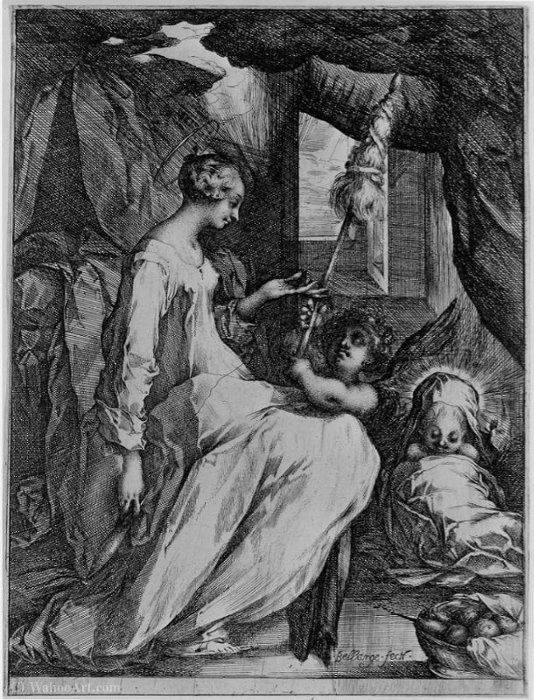
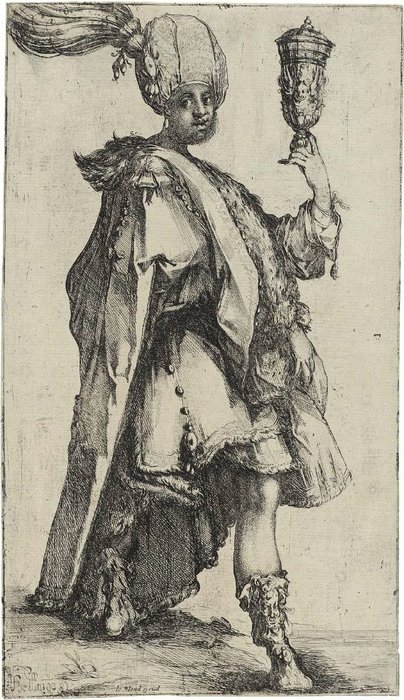
The Three Marys at the Tomb, Amazon on horseback, Annunciation of Mary, Angel of the Annunciation, Gardener with basket, a sequence of four teachers, The Virgin with a Spindle, he Virgin and Child with the Magdalen and Saint Anne, Military figures outside a city, Balthasar ir Melchior, seen from behind, wearing a mantle trimmed with fur and a hat adorned with feathers. Viršuje esančioje reitingo lentelėje nurodyta kiekvieno kūrinio metis ir muziejus.

Kiek darbų namdė Jacques Bellange?Rodyti atsakymą

Mūsų kataloge yra 17 Jacques Bellange darbų, datuojamų nuo 1606 iki 1615.

In kuriuose muzeumuose galėčiau pamatyti Jacques Bellange šedevralius?Rodyti atsakymą

Dauguma jų yra British Museum (Londonas), Château de Chantilly (Chantilly) ir Staatliche Kunsthalle Karlsruhe (Karlsruhe). Viršuje esančiame lange muziejai išvardyti po vieni.

Kada Jacques Bellange nupiešė šiuos šedevrus?Rodyti atsakymą

1606 laikotarpyje: 2 iš 17 šioje pusėje esančių darbų sukurtos tada, iš jų – Amazon on horseback.

Kokie yra pirmasis ir paskutinis garsieji Jacques Bellange paveikslai?Rodyti atsakymą

Pirmasis šioje pusėje yra Amazon on horseback (1606), paskutinis – Lamentation (1615).

Kokie buvo Jacques Bellange mėgstamiausi temų objektai?Rodyti atsakymą

Mourning (2), Virgin (2) ir Portrait (2), iš 17 šioje pusėje esančių darbų.

Kurią techniką Jacques Bellange mėgavosi?Rodyti atsakymą

Engraving: 2 iš 17 šioje pusėje esančių darbų.

Kokio meno kierlioje priklauso Jacques Bellange?Rodyti atsakymą

Northern mannerism, kaip rodo šio puslapio paveikslai.

Kuriuose British Museum eksponuojami Jacques Bellange šedevrai?Rodyti atsakymą

The Three Marys at the Tomb ir The Annunciation yra vieni iš 2 šioje puslapyje esamų darbų, kuriuos saugo British Museum, Londonas.

Ar galiu įsigyti Jacques Bellange šedevro reprodukciją?Rodyti atsakymą

Taip. Kiekvieną šioje pusėje esantį paveikslą galite užsakyti kaip muziejoriaus kokybės rankų darbų alievinę kopiją arba aukščiausios kokybės spausdinį pasirinktu jūsų pageidaujamu dydžiu tiesiai iš paties paveikslą puslapio.

Jacques Bellange gyvenimas

A Shadowy Master of the Northern Mannerist Spirit

Jacques Bellange remains one of the most enigmatic and captivating figures in the history of European printmaking. A master of the Northern Mannerist style, his life was lived in the twilight of the late Renaissance, a period defined by elongated forms, theatrical tension, and an almost feverish psychological intensity. Though much of his personal biography remains shrouded in the mists of the early 17th century, his artistic legacy is vibrantly clear through the intricate lines of his etchings. Born around 1575 in the Bâse-les-Vosges region of France, Bellange emerged from a landscape of shifting borders and intense religious fervor, eventually finding his creative home within the sophisticated courtly circles of Nancy.

The traces of his early life are as delicate and elusive as his etchings. While historical records regarding his family origins are sparse, scholars often point to his rapid ascent within the Duchy of Lorraine as evidence of a significant, perhaps even noble, connection. There is much speculation that he may have been the illegitimate son of a high-ranking patron, a theory supported by the prestigious title of "knight" attributed to him and his seamless integration into the court of the Dukes of Lorraine. By 1595, he was already established in La Mothe, honing a craft that would soon transform the medium of printmaking into a vehicle for profound emotional expression.

The Elegance of the Lorraine Court

Bellange’s career reached its zenith under the patronage of Henri II and Philippe III, the Dukes of Lorraine. This period of courtly stability provided him with the luxury of time and resources, allowing him to refine a technique that was uniquely his own. Unlike many of his contemporaries who focused on the clarity of the High Renaissance, Bellange embraced the complexities of Mannerism. His work is characterized by a restless energy, where figures seem to twist and writhe with an almost supernatural grace. In the halls of Nancy, he developed a visual language that blended the sacred with the profane, creating works that were as much about the human psyche as they were about religious devotion.

His mastery of the etching needle allowed him to manipulate light and shadow with unprecedented drama. Through the meticulous use of hatching and cross-hatching, he could conjure textures ranging from the heavy folds of ancient drapery to the weathered skin of a street performer. This technical prowess is perhaps most evident in his ability to imbue even the simplest subject with a sense of profound mystery. Whether depicting a noble figure or a common musician, Bellange’s hand is unmistakable, leaving behind a trail of silvery, luminous lines that seem to vibrate with life.

A Legacy Etched in Light and Shadow

The true significance of Jacques Bellange lies in his ability to capture the ephemeral. His oeuvre serves as a window into a world of intense spiritual struggle and theatrical beauty. Some of his most enduring works demonstrate this range:

  • The Three Marys at the Tomb: A striking example of his religious gravity, where dramatic figures and intricate details converge to create a moment of profound biblical tension.
  • Hurdy-Gurdy Player: A masterpiece of character study, showcasing his ability to use complex linework to capture the hunched, weary essence of a street musician, imbuing a common subject with deep psychological depth.
  • Gentleman in Ancient Costume: An exploration of the Mannerist obsession with historical fantasy and stylized elegance, featuring a warrior adorned in attire that evokes a sense of mythic grandeur.

Though his life was cut short in 1616, Bellange’s influence endured far beyond the borders of Lorraine. His rediscovery in the 20th century brought a renewed appreciation for the expressive potential of the etched line and the enduring power of the Mannerist aesthetic. Today, he is celebrated not merely as a court artist, but as a pioneer who pushed the boundaries of printmaking, leaving an indelible mark on the history of Western art through his hauntingly beautiful, shadow-drenched visions.