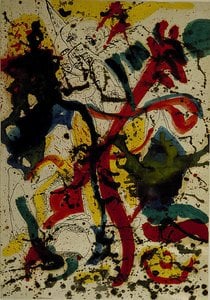
Jackson Pollock, 1912 – 1956

Jackson Pollock: The 100 Most Famous Paintings

Rudens ritmas. Numeris 30, 1950 is the most famous painting by Jackson Pollock. Numeris 1, 1949 (1950) and Susitikimas are the next two works the world knows best. From the 186 works of Jackson Pollock in our catalogue, here are the 100 that collectors and museum visitors look at most, with the year, the museum and the story of each.

Rangos vieta nulegiama pagal mūsų populiarumumo balas, kurį sudaro kiekvieno kūrinio paieškos, apsilankėjimai ir užsakėjimai. Atnaujinta spalis 2026. Every masterpiece on this page can be ordered as a museum-quality, hand-painted oil reproduction or a fine art print, at the size you choose.

Jackson Pollock portretas
Jackson Pollock · 1912 – 1956
Gedė · mirė
1912 – 1956, Kodis
Judėjimas
Abstract expressionism
Darbai mūsų kataloge
186
Labiausiai žinomi
Rudens ritmas. Numeris 30, 1950
Daugiausia darbų yra
MOMA - Moderniosios menų muziejus

Top 10: Jackson Pollock's best-known paintings

Rudens ritmas. Numeris 30, 1950 aut. Jackson Pollock
1

Rudens ritmas. Numeris 30, 1950

Aliejus ant drobės

Rudens Ritmas. Numeris 30, 1950 – Absoliučios Ekspresijos Monumentalumas Šis monumentalus kūrinys, pavadintas „Rudens Ritmas. Numeris 30, 1950“, yra Jackson Pollocko neeilinio įnašų į abstrakčiąją ekspresiją simbolis. Tai ne tik paveikslas – tai imli patirtis, vizualus energijos, gestų ir menininko giliai asmeniško sąmoningo kūrybos proceso įrašas. 1950 metų liepos ir rugsėjo mėnesiais sukurtas Pollocko studijoje Springs, Niujorke, šis darbas atspindi jo garsiausią „lašavimo“ periodą (1947–1950), revoliucionavusį meno pasaulį. Pollock'as atsisakė…

Numeris 1, 1949 (1950) aut. Jackson Pollock
2

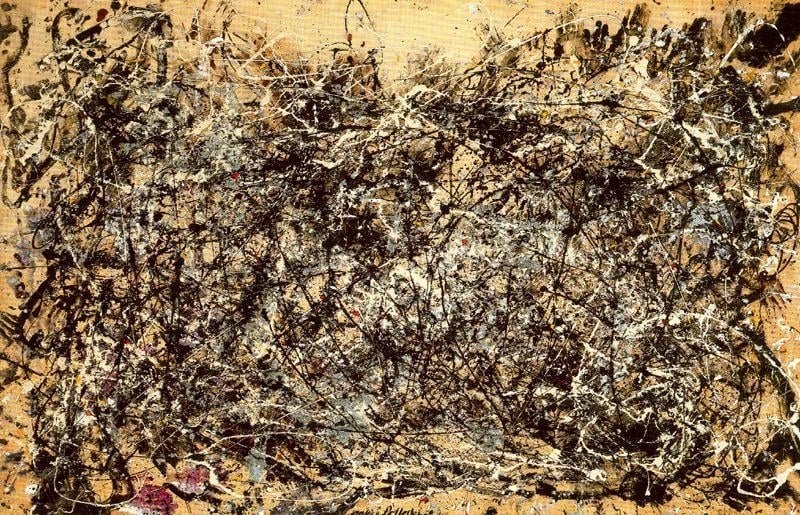
Numeris 1, 1949

1950 · Aliejus ant drobės · Privati kolekcija, New York City

"Numeris 1, 1949": Abstraktaus ekspresionizmo monumentali išraiška Šis įspūdingas kūrinys, sukurtas 1950 metais, yra puikus Abstraktaus ekspresionizmo atstovas ir pavyzdinis Džeko Poloko (Jackson Pollock) „lašinimo“ technikos iliustracija. Užimantis net 240 x 120 cm plotą, jis ne tik dominuoja savo dydžiu, bet ir spinduliuoja nepaprasta energija bei sudėtinga paviršiaus tekstūra. "Numeris 1, 1949" – tai ne tiesiog paveikslas; tai dinamiškas veiksmo įrašas, atspindintis menininko emocinį ir fizinį įsitraukimą į kūrybos procesą.…

Susitikimas aut. Jackson Pollock
3

Susitikimas

Aliejus ant drobės

Džeksono Poloko Susitikimas nėra tiesiog paveikslas; tai viscera įžaliuojanti patirtis – monumentali abstrakčios ekspresijos galios liudija ir lemiama po karo Amerikos meno kūrinys. Sukurtas svarbiu istoriniu metu, šis darbas įkūnija inovaciją, iššūkį tradiciniams vaizdinimo suvokimams ir kviečia žiūrėtoją į dinamišką spalvų bei energijos pasaulį.

Skaičius 1A aut. Jackson Pollock
4

Skaičius 1A

Aliejus ant drobės

Abstraktinio ekspresionizmo esmė Džeksono Poloko „Number 1A“ yra gryno abstrakto ekspresionizmo pavyzdys – judėjimo, kuris midi XX amžiuje peržengė amerikietės meno ribas. Šis įtraukiantis kūrinys įkūnija tą žaizdingą energiją ir spontaniškumą, dėl kurių Polokas tapo legendiniu, todėl jis yra nepakeičiamas bet kokio šiuolaikinio meno kolekcionieriaus ar modernaus interjero elementas. Chaosio ir kontrolės šokis Šis paveikslas로 pasižymi abstrakčia kompozicija, kurioje dominuoja chaotiški, energingi traukės bei tankiai susipynę linijos ir tekstūros. Inovatyvi…

Balto Šviesos (1954) aut. Jackson Pollock
5

Balto Šviesos

1954 · Aliejus ant drobės · MOMA - Moderniosios menų muziejus, Niujorkas

„White Light“, sukurtas 1954 metais Pauliumi Polku, yra ne tik paveikslo pavadinimas, bet ir įvykio apibūdinimas. Tai akirbė atvirų emocijų, energijos ir spontaniškumo ištrynytas vaizdas, kuriame susiduriama su abstrakčios ekspresionistinės meno srovės esme. Polko darbas – tai ne tik paveikslo fragmentas, bet ir įspūdis, kurį jis padarė įvairioms aplinkoms, įkvėpdamas gilumo refleksijų ir skatindamas pokalbį.

One. Number 31, 1950 aut. Jackson Pollock
6

One. Number 31, 1950

Painting

In the pantheon of modern art, few works command the room with such raw, unbridled intensity as Paul Jackson Pollock’s “One: Number 31, 1950.” To stand before this canvas is to witness a moment of pure, unfiltered creation captured in time. As a cornerstone of the Abstract Expressionist movement, this painting transcends the boundaries of traditional composition, offering instead a dense, rhythmic web of energy that seems to pulse with…

Number 5 (1948) aut. Jackson Pollock
7

Number 5

1948 · Oil On Canvas

A Universe Unfurled: Decoding Jackson Pollock’s No. 5, 1948 Jackson Pollock’s *No. 5, 1948* isn't simply a painting; it is an event frozen in time – a visual record of energy, gesture, and the very act of creation. This monumental work stands as perhaps the most iconic example of Abstract Expressionism, captivating viewers for decades with its complex layering and seemingly chaotic beauty. It’s a piece that demands attention, sparking…

Mural (1943) aut. Jackson Pollock
8

Mural

1943 · Acrylic On Canvas

Jackson Pollock's "Mural," completed in 1943, isn't merely a painting; it’s an immersive experience, a visceral embodiment of the burgeoning abstract expressionist movement. Commissioned by Peggy Guggenheim as a centerpiece for her Manhattan townhouse, this monumental work – measuring a commanding 247 x 605 cm – immediately announces Pollock’s arrival as a revolutionary force in the art world. The sheer scale invites contemplation, drawing the viewer into a swirling vortex…

Number 5 (1948) aut. Jackson Pollock
9

Number 5

1948 · Oil On Canvas

Jackson Pollock’s *No. 5*, created in 1948, stands as an emblem of Abstract Expressionism—a movement that irrevocably altered the landscape of modern art. More than just a painting; it's a visceral embodiment of emotion, intellect, and revolutionary technique, captivating viewers with its mesmerizing complexity and enduring legacy. This monumental canvas, measuring eight by four feet on fiberboard, transcends mere visual representation, inviting contemplation about the very nature of artistic expression…

Alchemy (1947) aut. Jackson Pollock
10

Alchemy

1947 · Acrylic On Canvas

A Dance of Chaos and Transformation: Exploring Jackson Pollock’s Alchemy The Genesis of Spontaneity Decoding the Drip Technique Historical Resonance and Symbolic Weight A Legacy of Innovation Jackson Pollock’s *Alchemy*, a monumental work from 1947, isn't merely a painting; it’s an immersive experience, a visceral embodiment of the burgeoning Abstract Expressionist movement. Created during a pivotal moment in American art history, this piece captures the raw energy and revolutionary spirit…

The rest of the Jackson Pollock ranking, 11 to 100

Number 6 (1949) aut. Jackson Pollock
#12

Number 6

1949

Number 6 stands as a pivotal work within Jackson Pollock's oeuvre and the broader movement of Abstract Expressionism. Emerging in post-World War II America, this style rejected traditional…

Commission a hand-painted copy →
Number 23, 1951 aut. Jackson Pollock
#13

Number 23, 1951

Chrysler Museum of Art

Paul Jackson Pollock's "Number 23, 1951" isn’t merely a painting; it’s an immersion. Created during a pivotal period of his artistic evolution – the “black pourings” – this…

Bring it home →
Number 1 (1948) aut. Jackson Pollock
#14

Number 1

1948 · MOMA - Moderniosios menų muziejus

Jackson Pollock's "Number 1, 1948," housed within the hallowed halls of the Museum of Modern Art in New York, isn’t merely a painting; it’s an immersion. It’s a…

Bring it home →
There Were Seven in Eight (1945) aut. Jackson Pollock
#15

There Were Seven in Eight

1945 · MOMA - Moderniosios menų muziejus

A Descent Into Chaotic Beauty The canvas of Jackson Pollock’s 1945 masterpiece, "There Were Seven in Eight," serves as a visceral gateway into the turbulent heart of Abstract…

Bring it home →
Saint aut. Jackson Pollock
#16

Saint

Jackson Pollock is widely regarded as one of the most influential artists of the 20th century, and his painting Saint is a quintessential example of his unique style.…

Order a reproduction →
The She Wolf (1943) aut. Jackson Pollock
#17

The She Wolf

1943

Jackson Pollock's “The She Wolf,” completed in 1943, is more than just an abstract canvas; it’s a visceral plunge into the heart of early Abstract Expressionism and a…

Bring it home →
Composition with Pouring II (1943) aut. Jackson Pollock
#18

Composition with Pouring II

1943

Created in 1943, "Composition with Pouring II" stands as a pivotal work in Jackson Pollock's career and the broader development of Abstract Expressionism. While often considered an early…

Bring it home →
Blue poles (Number 11) (1952) aut. Jackson Pollock
#19

Blue poles (Number 11)

1952

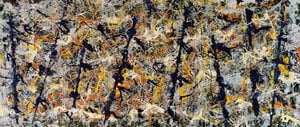
Jackson Pollock’s “Blue Poles (Number 11),” completed in 1952, isn’t merely a painting; it’s an explosion of controlled chaos, a visceral embodiment of the abstract expressionist movement. Measuring…

Commission a hand-painted copy →
Yellow Islands aut. Jackson Pollock
#21

Yellow Islands

A Symphony of Chaos: Exploring Jackson Pollock’s ‘Yellow Islands’ Jackson Pollock's ‘Yellow Islands’, painted in 1952, stands as a pivotal work within the Abstract Expressionist movement – a…

Bring it home →
The Flame (1938) aut. Jackson Pollock
#23

The Flame

1938

The painting The Flame consists of oil on fiberboard, measuring 51 x 76 cm. The surface features a central motif of an incandescent blaze that moves through an…

Commission a hand-painted copy →
Portrait and a Dream aut. Jackson Pollock
#24

Portrait and a Dream

Jackson Pollock’s Portrait and a Dream (1953) isn’t merely a painting; it’s an immersion into the very heart of Abstract Expressionism, a visceral embodiment of the artist’s process…

Order a reproduction →
Number 3 (1948) aut. Jackson Pollock
#25

Number 3

1948

Jackson Pollock: A Revolutionary in Abstract Expressionism Jackson Pollock (1912-1956) stands as a monumental figure within the abstract expressionist movement, forever altering the trajectory of modern art. His…

Commission a hand-painted copy →
Ocean Greyness aut. Jackson Pollock
#26

Ocean Greyness

Ocean Greyness is an oil painting created by Jackson Pollock in 1953. This work measures 229 x 146.7 cm and is currently held in the Solomon R. Guggenheim…

Bring it home →
Lucifer (1947) aut. Jackson Pollock
#28

Lucifer

1947

Jackson Pollock’s “Lucifer,” painted in 1947, isn’t merely a painting; it’s an immersion. Measuring a substantial 268 x 104 cm, this work embodies the raw energy and profound…

Commission a hand-painted copy →
Woman aut. Jackson Pollock
#29

Woman

Jackson Pollock's “Woman,” completed in 1945 and currently residing within the hallowed halls of the Museum of Modern Art in New York City, isn’t merely a painting; it’s…

Commission a hand-painted copy →
Untitled (Naked Man) aut. Jackson Pollock
#30

Untitled (Naked Man)

A Figure Forged in Turmoil: Exploring Pollock’s ‘Untitled (Naked Man)’ This powerful painting by Jackson Pollock plunges the viewer into a vortex of emotion and raw energy. Depicting…

Order a reproduction →
Lavender Mist_Number 1 aut. Jackson Pollock
#31

Lavender Mist_Number 1

Jackson Pollock’s “Lavender Mist_Number 1” isn't merely a painting; it’s an immersion, a visceral experience captured on canvas. This seminal work from the late 1940s embodies the revolutionary…

Order a reproduction →
Birth aut. Jackson Pollock
#32

Birth

A Tempestuous Birth: Decoding Pollock’s Abstract Vision Jackson Pollock's *Birth* (1948-51) is a pivotal work within his mature “drip” period and a cornerstone of Abstract Expressionism. More than…

Bring it home →
Blue (Moby Dick) aut. Jackson Pollock
#33

Blue (Moby Dick)

Jackson Pollock's “Blue (Moby Dick),” painted in 1943, isn’t merely a canvas splashed with color; it’s an immersive experience, a visual embodiment of the anxieties and primal forces…

Bring it home →
The key (1946) aut. Jackson Pollock
#34

The key

1946 · Art Institute of Chicago

A Dance Across Canvas: Exploring Jackson Pollock’s ‘The Key’ Subject Matter & Composition The artwork depicts a group of individuals engaged in various postures—seated on chairs, standing upright,…

Commission a hand-painted copy →
Untitled II aut. Jackson Pollock
#35

Untitled II

To stand before an Untitled II by Paul Jackson Pollock is not merely to observe paint on canvas; it is to witness an event. It is a raw,…

Order a reproduction →
Cathedral aut. Jackson Pollock
#36

Cathedral

Introduction to Jackson Pollock and Abstract Expressionism Paul Jackson Pollock, known professionally as Jackson Pollock, was an American painter and a major figure in the abstract expressionist movement.…

Bring it home →
Number 27, 1950 aut. Jackson Pollock
#38

Number 27, 1950

Jackson Pollock’s ‘Number 27, 1950’: A Symphony of Controlled Chaos Number 27, 1950 is a landmark achievement in the history of Abstract Expressionism, embodying the movement's radical departure…

Commission a hand-painted copy →
Circumcision January (1946) aut. Jackson Pollock
#40

Circumcision January

1946

Jackson Pollock, a titan of 20th-century art, remains synonymous with abstract expressionism. His painting, Circumcision January, exemplifies his groundbreaking approach and continues to captivate viewers with its dynamic…

Bring it home →
Sheet of Studies (1941) aut. Jackson Pollock
#41

Sheet of Studies

1941

A Window into Pollock’s Subconscious: “Sheet of Studies” (1941) This intensely energetic work on paper, created in 1941, offers a fascinating glimpse into the formative period of Jackson…

Bring it home →
Number 12, 1949 aut. Jackson Pollock
#42

Number 12, 1949

A Universe Within: Decoding Jackson Pollock’s “Number 12, 1949” Jackson Pollock's "Number 12, 1949" isn't simply a painting; it’s an event frozen in time – a visual record…

Order a reproduction →
War aut. Jackson Pollock
#43

War

War: A Descent into Chaos – Jackson Pollock’s Post-Traumatic Masterpiece Jackson Pollock's *War*, painted in 1947, isn’t merely a canvas splashed with color; it’s a visceral embodiment of…

Bring it home →
Marrón y plata aut. Jackson Pollock
#44

Marrón y plata

A Symphony of Shadow and Silver: Exploring Jackson Pollock’s “Marrón y plata” Jackson Pollock's "Marrón y plata" ("Brown and Silver") stands as a pivotal work within his celebrated…

Bring it home →
Number 10 (1949) aut. Jackson Pollock
#46

Number 10

1949

A Tempestuous Vision: Exploring Jackson Pollock’s ‘Number 10’ Number 10, created in 1949, stands as a monumental example of Jackson Pollock's revolutionary drip painting technique and the apex…

Commission a hand-painted copy →
Untitled 28 aut. Jackson Pollock
#47

Untitled 28

A Visceral Encounter: Decoding Jackson Pollock’s “Untitled 28” This intensely compelling work by Jackson Pollock, known simply as “Untitled 28,” offers a raw and unsettling glimpse into the…

Order a reproduction →
Number 25 (1950) aut. Jackson Pollock
#48

Number 25

1950

To stand before Number 25 is to confront pure, unmediated action. This canvas does not merely depict an image; it records an event—a moment of intense physical and…

Untitled (1939) aut. Jackson Pollock
#49

Untitled

1939 · Art Institute of Chicago

The canvas known as Untitled emerges from 1939, a moment when Jackson Pollock begins to navigate the turbulent currents of his own creative impulses. This abstract expressionist work…

Commission a hand-painted copy →
Untitled 6 aut. Jackson Pollock
#50

Untitled 6

A Tempest of Emotion: Exploring Jackson Pollock’s Untitled 6 This captivating work by Jackson Pollock plunges viewers into a dynamic world of abstract expressionism. *Untitled 6* is not…

Order a reproduction →
Full Fathom Five aut. Jackson Pollock
#51

Full Fathom Five

In the annals of American art history, few works capture the raw, unbridled energy of a movement quite like Paul Jackson Pollock’s Full Fathom Five. Painted in 1947,…

Bring it home →
Figures in a Landscape (1937) aut. Jackson Pollock
#52

Figures in a Landscape

1937

To encounter Jackson Pollock’s "Figures in a Landscape" is to step into a realm where the boundaries between reality and the subconscious begin to dissolve. Created in 1937,…

Bring it home →
Cut out aut. Jackson Pollock
#54

Cut out

Jackson Pollock, born on January 28, 1912, was an American painter who played a significant role in the abstract expressionist movement. He is renowned for his unique style…

Commission a hand-painted copy →
Masked Image aut. Jackson Pollock
#55

Masked Image

The canvas breathes with a restless energy, presenting a singular, stylized visage that seems to emerge from a thicket of overlapping shapes. This is not a portrait in…

Order a reproduction →
Untitled aut. Jackson Pollock
#56

Untitled

A Glimpse into Pollock’s Preparatory Process: An Early Study in Motion This captivating work on paper offers a rare look into Jackson Pollock's artistic development *before* his iconic…

Order a reproduction →
Portrait of H.M aut. Jackson Pollock
#57

Portrait of H.M

Paul Jackson Pollock's “Portrait of H.M.”, a work shrouded in mystery and brimming with raw energy, isn’t merely a painting; it’s an immersive experience. Created during a turbulent…

Commission a hand-painted copy →
Summertime: Number 9A (1948) aut. Jackson Pollock
#58

Summertime: Number 9A

1948 · Tate Modern

Jackson Pollock’s “Summertime: Number 9A,” painted in 1948, isn't merely a canvas splashed with color; it’s an immersive experience, a visceral representation of the artist’s state of mind…

Order a reproduction →
Untitled (1941) aut. Jackson Pollock
#59

Untitled

1941

A Moment Suspended: Exploring Jackson Pollock’s 1941 Untitled Work This striking work by Jackson Pollock, created in 1941, offers a fascinating glimpse into the artist's formative years –…

Order a reproduction →
Untitled (Silkscreen I) aut. Jackson Pollock
#60

Untitled (Silkscreen I)

In the realm of Abstract Expressionism, few works capture the raw, unbridled tension of human struggle as poignantly as Paul Jackson Pollock’s “Untitled (Silkscreen I).” This striking black…

Bring it home →
Grayed Rainbow aut. Jackson Pollock
#61

Grayed Rainbow

Art Institute of Chicago

Jackson Pollock was a revolutionary figure in the abstract expressionist movement, reshaping artistic perception and challenging conventional notions of painting. His groundbreaking drip technique—characterized by pouring and splattering…

Commission a hand-painted copy →
The Water Bull (1946) aut. Jackson Pollock
#62

The Water Bull

1946 · Stedelijk Museum

Subject and Composition This captivating abstract masterpiece immerses viewers in a whirlwind of vibrant colors and dynamic forms. While its subject remains open to interpretation, the energetic interplay…

Bring it home →
Totem Lesson 2 (1945) aut. Jackson Pollock
#63

Totem Lesson 2

1945

Totem Lesson 2: An Exploration of Abstract Expressionism’s Chaotic Harmony Paul Jackson Pollock's "Totem Lesson 2," painted in 1945, stands as a cornerstone of Abstract Expressionism—a movement that…

Bring it home →
Figure aut. Jackson Pollock
#64

Figure

Jackson Pollock, a name synonymous with Abstract Expressionism and the revolutionary ‘drip’ technique, also harbored a period of intensely focused figuration that often goes unacknowledged. The work simply…

Bring it home →
Untitled 9 aut. Jackson Pollock
#65

Untitled 9

A Tempest of Emotion: Decoding Jackson Pollock’s “Untitled 9” This intensely evocative work by Jackson Pollock, designated “Untitled 9,” plunges the viewer into a swirling vortex of color…

Commission a hand-painted copy →
Stenographic Figure (1942) aut. Jackson Pollock
#66

Stenographic Figure

1942

Jackson Pollock's 'Stenographic Figure,' painted in 1942, isn’t merely a depiction of a horse and rider; it’s a visceral embodiment of the anxieties and burgeoning freedom defining Abstract…

Order a reproduction →
Number 3 (1949) aut. Jackson Pollock
#67

Number 3

1949

A Revolution in Paint: Exploring Jackson Pollock’s ‘Number 3’ Jackson Pollock's 'Number 3', created in 1949, stands as a monumental achievement within the Abstract Expressionist movement. Measuring 157…

Bring it home →
Untitled 8 aut. Jackson Pollock
#68

Untitled 8

The air feels heavy with the restless energy of Jackson Pollock as he confronts the vastness of "Untitled 8." This monumental painting emerges from a period of profound…

Order a reproduction →
Number 8 aut. Jackson Pollock
#69

Number 8

Jackson Pollock's "Number 8," created in 1949, stands as a pivotal work within the Abstract Expressionist movement. This piece exemplifies Pollock’s revolutionary “drip technique,” where paint was poured…

Bring it home →
Head aut. Jackson Pollock
#70

Head

A Visceral Exploration of the Human Condition Jackson Pollock’s *Head*, a work shrouded in some mystery due to its lack of definitive dating and detailed documentation, presents a…

Commission a hand-painted copy →
Circle (1941) aut. Jackson Pollock
#72

Circle

1941

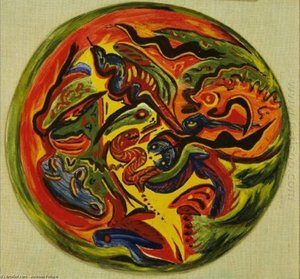
Jackson Pollock’s Circle: A Dance of Color and Chaos Jackson Pollock's “Circle,” painted in 1941, isn’t merely a depiction of a circle; it’s an embodiment of the burgeoning…

Order a reproduction →
Untitled 23 aut. Jackson Pollock
#73

Untitled 23

A Chaotic Symphony in Black and White: Deconstructing Pollock’s “Untitled 23” Jackson Pollock's "Untitled 23" isn’t merely an ink drawing; it’s a visceral exploration of energy, anxiety, and…

Commission a hand-painted copy →
Easter and the Totem (1953) aut. Jackson Pollock
#74

Easter and the Totem

1953

Unveiling Jackson Pollock’s “Easter and the Totem” A Masterpiece of Abstract Expressionism: Jackson Pollock's 1953 painting, Easter and the Totem, stands as a pivotal work within the Abstract…

Bring it home →
Untitled (Composition with Pouring I) aut. Jackson Pollock
#75

Untitled (Composition with Pouring I)

A Revolution in Paint: Exploring Jackson Pollock’s “Untitled (Composition with Pouring I)” This captivating work embodies the raw energy and groundbreaking innovation that defined Jackson Pollock's contribution to…

Bring it home →
Untitled 13 aut. Jackson Pollock
#76

Untitled 13

In the pantheon of twentieth-century art, few names command as much visceral respect and intrigue as Jackson Pollock. His work Untitled 13 serves as a profound testament to…

Order a reproduction →
Male and Female (1942) aut. Jackson Pollock
#78

Male and Female

1942

Jackson Pollock: A Pioneer of Abstract Expressionism Jackson Pollock (1912–1956) stands as one of the most transformative figures in 20th-century art, irrevocably altering perceptions of painting and establishing…

Commission a hand-painted copy →
Miners aut. Jackson Pollock
#79

Miners

Paul Jackson Pollock: A Pioneer of Abstract Expressionism Paul Jackson Pollock (1912-1956) stands as one of the most influential figures in 20th-century art, irrevocably shaping the trajectory of…

Bring it home →
GREETINGS aut. Jackson Pollock
#80

GREETINGS

Paul Jackson Pollock's “Greetings” stands as a testament to the radical spirit of Abstract Expressionism, encapsulating the movement’s core tenets within a deceptively simple composition. This artwork, created…

Bring it home →
Troubled Queen aut. Jackson Pollock
#81

Troubled Queen

A Realm of Inner Turmoil: Exploring Jackson Pollock’s Abstract Vision This captivating work by Jackson Pollock invites viewers into a dynamic world of color and form, embodying the…

Commission a hand-painted copy →
Number 23 (1948) aut. Jackson Pollock
#82

Number 23

1948

Jackson Pollock’s “Number 23,” completed in 1948, stands as an undeniable cornerstone of Abstract Expressionism—a movement that fundamentally challenged artistic conventions and prioritized emotional expression over representational accuracy.…

Bring it home →
Untitled (Silkcreen no. VI) aut. Jackson Pollock
#83

Untitled (Silkcreen no. VI)

A Dance of Chaos and Connection: Exploring Jackson Pollock’s “Untitled (Silkcreen no. VI)” Paul Jackson Pollock's "Untitled (Silkcreen no. VI)" stands as an emblem of Abstract Expressionism, a…

Order a reproduction →
Untitled 27 aut. Jackson Pollock
#84

Untitled 27

Jackson Pollock's “Untitled 27,” a monumental drip painting from 1950, stands as an emblem of Abstract Expressionism—a movement that irrevocably altered the course of twentieth-century art. More than…

Order a reproduction →
Silver and Black I aut. Jackson Pollock
#85

Silver and Black I

A Symphony of Chaos: Exploring Jackson Pollock’s “Silver and Black I” “Silver and Black I” is a powerful example of Jackson Pollock's revolutionary contribution to Abstract Expressionism, created…

Commission a hand-painted copy →
Untitled 4 aut. Jackson Pollock
#86

Untitled 4

In the realm of Abstract Expressionism, few works capture the raw, unbridled energy of the human psyche quite like Paul Jackson Pollock’s Untitled 4. This mesmerizing monochrome composition…

Bring it home →
Shimmering Substance (1946) aut. Jackson Pollock
#87

Shimmering Substance

1946

Shimmering Substance: A Dance of Chaos and Control Jackson Pollock’s “Shimmering Substance,” completed in 1946, stands as a cornerstone of Abstract Expressionism—a movement that irrevocably altered the landscape…

Order a reproduction →
Composition aut. Jackson Pollock
#88

Composition

Jackson Pollock executed the painting titled Composition in 1949. This work emerged during a period when the artist was developing a specific approach to the canvas, moving away…

Order a reproduction →
Gothic aut. Jackson Pollock
#89

Gothic

The canvas known as Gothic emerges from the creative mind of Paul Jackson Pollock. Created in 1944, this work exists within the permanent collection of The Museum of…

Order a reproduction →
Untitled (Cut-out) aut. Jackson Pollock
#91

Untitled (Cut-out)

In the pantheon of Abstract Expressionism, few works capture the raw, visceral energy of the mid-century avant-garde quite like Paul Jackson Pollock’s "Untitled (Cut-out)." Created in 1954, a…

Bring it home →
Going West (1935) aut. Jackson Pollock
#92

Going West

1935

Jackson Pollock's "Going West," painted in 1935, isn’t merely a depiction of a winter landscape; it’s a deeply personal narrative woven into the fabric of American pioneering spirit.…

Order a reproduction →
Number 2 (1951) aut. Jackson Pollock
#93

Number 2

1951

A Symphony of Chaos and Color: Decoding Jackson Pollock’s “Number 2” Jackson Pollock's "Number 2," completed in 1951, stands as a cornerstone of Abstract Expressionism—a movement that irrevocably…

Commission a hand-painted copy →
Number 3, 1950 aut. Jackson Pollock
#94

Number 3, 1950

A Universe of Color: Exploring Jackson Pollock’s Number 3, 1950 Jackson Pollock's *Number 3, 1950* is arguably one of the most iconic and significant works of Abstract Expressionism.…

Bring it home →
Untitled 1 aut. Jackson Pollock
#95

Untitled 1

Paul Jackson Pollock (1912-1956), a titan of Abstract Expressionism, remains one of the most enigmatic figures in twentieth-century art. His monumental canvases—like “Untitled 1”—are not merely splashes of…

Commission a hand-painted copy →
Echo aut. Jackson Pollock
#96

Echo

Jackson Pollock’s “Echo,” Number 25, 1951, stands as a testament to the fervor of Abstract Expressionism—a movement that sought to liberate art from representational constraints and delve into…

Order a reproduction →
Composition with Woman aut. Jackson Pollock
#97

Composition with Woman

A Vortex of Emotion: Decoding Jackson Pollock’s Abstract Expressionism This captivating painting embodies the raw energy and emotional intensity that define Jackson Pollock's revolutionary contribution to 20th-century art.…

Commission a hand-painted copy →
Untitled (1941) aut. Jackson Pollock
#98

Untitled

1941

Jackson Pollock's "Untitled," painted in 1941, stands as a cornerstone of Abstract Expressionism—a movement that fundamentally challenged artistic conventions and prioritized spontaneous gesture over meticulous representation. This monumental…

Order a reproduction →
Orange Head aut. Jackson Pollock
#99

Orange Head

Introduction to Abstract Expressionism Abstract Expressionism is a genre of art that emerged in the mid-20th century, characterized by intense subjectivity and rough handling of materials. This movement…

Bring it home →
Untitled (13) (1943) aut. Jackson Pollock
#100

Untitled (13)

1943

Jackson Pollock: A Pioneer of Abstract Expressionism Jackson Pollock (1912-1956) stands as one of the most influential figures in 20th-century art, irrevocably altering the landscape of painting and…

Bring it home →

Jackson Pollock's paintings by period

The subjects Jackson Pollock painted most

The four subjects that return most often among these masterpieces, with the finest example of each.

Where to see Jackson Pollock's paintings

6 muziejai, kuriuose saugoma daugiausia šioje pusėje esamų paveikslų.

Muzejaus Miestas Jackson Pollock darbai Šiojo sąrašo paveikslai
MOMA - Moderniosios menų muziejus, NiujorkasMOMA - Moderniosios menų muziejus Niujorkas 4 Balto Šviesos, Number 1, There Were Seven in Eight
Art Institute of Chicago, ČikagosArt Institute of Chicago Čikagos 3 The key, Untitled, Grayed Rainbow
Privati kolekcija, New York CityPrivati kolekcija New York City 1 Numeris 1, 1949
Chrysler Museum of Art, NorfolkasChrysler Museum of Art Norfolkas 1 Number 23, 1951
Tate Modern, LondrasTate Modern Londras 1 Summertime: Number 9A
Stedelijk Museum, AmsterdamasStedelijk Museum Amsterdamas 1 The Water Bull

Jackson Pollock through the decades: one masterpiece for each

  1. 1930s
    The Flame (1938) aut. Jackson Pollock
    No. 23 of 100

    The Flame

    Amžius 18 – 27

    The painting The Flame consists of oil on fiberboard, measuring 51 x 76 cm. The surface features a central motif of an incandescent blaze that moves through an…

  2. 1940s
    Number 5 (1948) aut. Jackson Pollock
    No. 7 of 100

    Number 5

    Amžius 28 – 37

    A Universe Unfurled: Decoding Jackson Pollock’s No. 5, 1948 Jackson Pollock’s *No. 5, 1948* isn't simply a painting; it is an event frozen in time – a visual…

  3. 1950s
    Numeris 1, 1949 (1950) aut. Jackson Pollock
    No. 2 of 100

    Numeris 1, 1949

    Amžius 38 – 44 · Privati kolekcija

    "Numeris 1, 1949": Abstraktaus ekspresionizmo monumentali išraiška Šis įspūdingas kūrinys, sukurtas 1950 metais, yra puikus Abstraktaus ekspresionizmo atstovas ir pavyzdinis Džeko Poloko (Jackson Pollock) „lašinimo“ technikos iliustracija. Užimantis…

Jackson Pollock's paintings: frequently asked questions

What is the most famous Jackson Pollock painting?Show the answer

Rudens ritmas. Numeris 30, 1950. Next come Numeris 1, 1949 (1950) and Susitikimas.

Which are the 10 most famous Jackson Pollock paintings?Show the answer

Rudens ritmas. Numeris 30, 1950, Numeris 1, 1949, Susitikimas, Skaičius 1A, Balto Šviesos, One. Number 31, 1950, Number 5, Mural, Number 5 ir Alchemy. The ranking above gives the year and the museum of each.

How many paintings by Jackson Pollock are there?Show the answer

Our catalogue lists 186 works by Jackson Pollock, dated from 1935 to 1954.

Where can I see the most famous Jackson Pollock paintings?Show the answer

Most of them are in MOMA - Moderniosios menų muziejus (Niujorkas), Art Institute of Chicago (Čikagos) ir Privati kolekcija (New York City). The table above lists the museums one by one.

In which period did Jackson Pollock paint the best-known works?Show the answer

In 1940s: 29 of the 100 works on this page date from then, among them Number 5.

What is the earliest famous Jackson Pollock painting, and the latest?Show the answer

The earliest on this page is Going West (1935), the latest Balto Šviesos (1954).

What subjects did Jackson Pollock paint?Show the answer

Drip painting (40), Color field (33) ir Chaos (26), among the 100 works on this page.

What did Jackson Pollock paint on, and with what?Show the answer

Acrylic On Canvas: 39 of the 100 works on this page.

Which movement does Jackson Pollock's art belong to?Show the answer

Abstract expressionism, as the paintings on this page show.

What Jackson Pollock paintings does the MOMA - Moderniosios menų muziejus hold?Show the answer

Balto Šviesos, Number 1 ir There Were Seven in Eight are among the 3 works on this page held by the MOMA - Moderniosios menų muziejus, Niujorkas.

Where can I buy a Jackson Pollock reproduction?Show the answer

Yes. Every painting on this page can be ordered as a museum-quality, hand-painted oil reproduction or a fine art print, in the size you choose, from the painting's own page.

Jackson Pollock: biography

Varlyvas gyvenimas ir inovacijų sėklos

Paul Jacksonas Pollockas, gimęs 1912 m. Kode, Vajingoje, nuo pat pradžių buvo neramios sielos žmogus. Jo ankstyvoji vaikystė lydėjo nuolatiniai persikelojimai, nes jo tėvas dirbo žemės tyrinėjimu visose plačiose Amerikos Vakarų kraštlandžiuose. Šis klajančias gyvenimo būdas į įjaudintą Pollocką įsidieginė gilią ryšį su gamta ir susidavimą su įvairiomis kultūromis, ypač per pažįstamąs su amerikų indėnų meną tolumoje vykstančių tyrimų metu – šie įspūdžiai vėliau subtiliai persmelgs jų meninę viziją. Nors jis niekada tiesiogiai neimitochs indėnų stilių, ši ankstyvųjų patyčių grynoji energija ir dvasinis rezonansas neabejotinai paliko savo žymą.

Oficialus Pollocko meninis mokymasis prasidėjo Los Angelese, „Manual Arts High School“, o vėliau tęsis Niujorko „Art Students League“ mokykloje po Thomas Hart Bento mokytojo. Bentonas, iškilęs regionalizmo judėjimo veikėjas, pabrėžė ritminę kompozicą ir naratyvines temas, į šaknus įsišaknijusias amerikietiškoje gyvenimo būdo dalatyje. Nors Pollockas iš pradžių priimavo šias pamokas, jo prigimtinis polinkis linko į daugiau abstrakčios tyrimų. Jis taip pat buvo giliai paveiktas Meksikos muralistų, tokių kaip José Clemente Orozco, kurio galingi socialinės kovos vaizdiniai jį stipriai sujaudino. Šie ankstyvieji įtakos padėjo pagrindą, tačiau būtent pradedančiojo surrealizmo pasaulis tiktik tikrai atvėrė Pollocko meninį potencialą.

Veiksmo tapybos gimimas ir revoliucinė technika

30-metmetis dešimtmečiai parodė Pollocko eksperimentus su įvairiomis technikomis, ieškant alternatyvų tradicinei teptuko darbui. Jis pradėjo pilti dažus, tyrinėdamas jų skystumą ir nuspėjamumą. Tačiau būtent apie 1947 metus jo meninė trajektorija patyrė radikalų transformaciją. Visai atsisakęs derlio, Pollockas plėstė paveikslus tiesiai ant grindų, pradėdamas tai, kas vėliau tapo žinoma kaip jo „lašalinė technika“. Tuomet jis pradėjo lašinti, purškiam ir mėtyti dažus ant drobės iš viršaus, sureguodamas dinamišką šokį tarp autoriaus, medžiagos ir paviršiaus.

Tai nebuvo tik dažų teprimimas; tai buvo pats kūrimo proceso įžatymas. Pollocko drobės tapo fizinės išraiškos arena, įtraukiančia jo gestų ir emocijų skubumą. Rezultatuojantys paveikslai pasižymi „visapusiška“ kompozicija – pagrindinio akcento trūkumu, kuris kviečia žiūrėją tyrinėti visą paviršį kaip vieningą energijos lauką. Sudėtingi linijų ir spalvų tinklai susipynė, sukurdami vizualinį sudėtingumą, kuris yra kartu ir užburiantis, ir iššūkių teikiantis. Jis naudojo neįprastus įrankius – lazelius, peilius, net špritsintuvus – manipuliuodamas dažais nuspėjamais būdais, dar labiau pabrėždamas savo proceso spontaniškumą.

Šis inovatyvus požiūris išaukštino Pollocką į centrinę figūrą augančiame Abstraktiojo ekspresionizmo judėjime, iškilusiame po Antrojo pasaulinio karo Niujorke. Abstraktusis ekspresionizmą prioriteto spontaniškas gestas, didelis mastas ir nerepersentyvūs vaizdiniai, atspindėdami platesnį kultūją poslinkį nuo tradicinių meninių konvencijų. Jo santykiai su fellow menininke Lee Krasner taip pat buvo esminiai; ji suteikė neprieklausomą emocinę paramą ir aktyviai skatino jo meninį vystymąsi, atpažindama jo darbo revoliucinę prigimtį.

Ikoniški darbai ir ilgalaikis palikimas

Šečios garsiausi meniniai darbai – tokie kaip Number 1, 1950 (Lavender Mist), One: Number 31, 1950, Blue Poles: Number 11, 1952 ir Convergence – yra jo revoliucinės technikos įrodymai. Šie paveikslai nėra tiesiog vaizdai; jie yra performanso įrašai, prisigaudinti autoriaus fizinio buvimo ir emocinio intensyvumo. Dinamiška energija, išsisaišninanti iš šių drobų, yra jautrama, įtraukianti žiūrovus į grynos abstrakcijos pasaulį.

Jo stilius peržengia gryną estetinį suvokimą; tai procesas, svarbesnis už rezultatą. Pollockas siekė įdiegti savo veiksmų ir emocijų skubumą ant drobės, atsisakydamas tradicinių kompozicijos ir vaizdinimo samprotų. Jis gilino įsiurptį į Jungo psichologiją, tyrinėdamas archetipus ir priešvaizdę savo mene, siekdamas pasiekti universalius simbolius ir pirmykines energijas.

Polloko įtaka menui yra neįvertinčiam. Jis fundamentaliai pakeitė tai, kaip menininkai žiūri į tapybą, išlaisvinęs nuo derlio metodų ir priimant labiau performatyvų požiūrį. Jo darbas padėjo užtvirtinti Niujorko vietą kaip pasaulinį šiuolaikinio meno centrą, nukreipiant dėmesį nuo Europos dominavimo. Jo įtaka matoma daugybėje vėlesnių menininkų darbuose, įskaitant tuos, kurie siejo su spalvų laukų tapyba ir vėlesniais abstrakčiojo ekspresionizmo formomis.

Nors iš pradžių susidūrė su mišriomis kritikos nuomonėmis – kai kurie kritikai jo darbą vadino chaotišku ar nepakankamai meistrišku – Pollocko reputacija augo nuolat po jo ankstyvos mirties 1956 metais, būdos 44 metų. Šiandien jis visame pasaulyje pripažįstamas kaip vienas svarbiausių ir įtakingiausių XX amžiaus menininkų, vizionierius, kuris drąsiai iššūkė konvencijas ir peržengė meninės išraiškos ribas. Jo inovatyvios technikos ir išraištingas stilius ir toliau įkvepia bei provokuoja, užtikrindami jo neblėstantį palikimą būsimoms kartoms.

Visi 186 Jackson Pollock darbai →