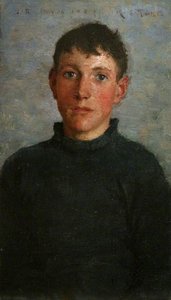
Henris Skotas Tukė, 1858 – 1929

Henris Skotas Tukė tapiai: 100 garsiausių kūrinių reitingas

Žymiausias Henris Skotas Tukė tapas yra The Critics (1927). Kartu su Morning splendour (1921) ir Summer Dreams (sketch) tai sudaro tris visai visus pažįstančius darbus. Mūsų kataloge yra 204 darbų autoriaus Henris Skotas Tukė; žemiau pateiktos 100 daugiausia visame pasaulyje žiūrimų kūrinių, kiekvieno iš jų – su metai, muziejumi, kuriame jis saugomas, ir paaiškintu, kodėl jis svarbus.

Rangos vieta nulegiama pagal mūsų populiarumumo balas, kurį sudaro kiekvieno kūrinio paieškos, apsilankėjimai ir užsakėjimai. Atnaujinta spalis 2026. Kiekvieną šio puslapio šedevrą galite užsisakyti kaip muziejoriaus kokybės rankų darbo alievinę reprodukciją arba aukščiausios kokybės meninį spausdiną jūsų pasirinktu dydžiu.

Henris Skotas Tukė portretas
Henris Skotas Tukė · 1858 – 1929
Gedė · mirė
1858 – 1929, Jorkas
Judėjimas
Impressionism
Darbai mūsų kataloge
204
Labiausiai žinomi
The Critics (1927)
Daugiausia darbų yra
Royal Cornwall Polytechnic Society

10 garsiausių Henris Skotas Tukė paveikslų

The Critics (1927) aut. Henris Skotas Tukė
1

The Critics

1927 · Oil

In this 1927 work, we find ourselves on the shores of Falmouth, caught in a quiet, luminous afternoon. The scene is one of profound stillness, where the heat of the sun seems to settle heavily upon the sand. Two young men recline on the beach, their backs to us, anchored by the sheer weight of their relaxation. They gaze toward the horizon, lost in a shared moment of repose. From…

Hand-painted oil reproduction from $181 35 × 29 cm
Morning splendour (1921) aut. Henris Skotas Tukė
2

Morning splendour

1921 · Oil On Canvas

“Morning Splendour,” painted in 1921 by the esteemed English artist Henry Scott Tuke, is a captivating depiction of youthful exuberance and seaside tranquility. This artwork transports viewers to a sun-drenched coastal scene where figures engage in leisurely activities – swimming, rowing, and simply enjoying the warmth of the morning light. More than just a picturesque view, "Morning Splendour" embodies Tuke's signature style and offers a window into early 20th-century British…

Hand-painted oil reproduction from $306 37 × 27 cm
Summer Dreams (sketch) aut. Henris Skotas Tukė
3

Summer Dreams (sketch)

Oil On Panel

Summer Dreams (sketch) is an oil on panel work by Henry Scott Tuke. This piece is categorized as a sketch, capturing a specific moment of repose. The artist, Henry Scott Tuke, was a British painter known for his figurative works and his ability to render the human form within natural settings.

Hand-painted oil reproduction from $181 37 × 27 cm
Nude Boy on Rocks (1907) aut. Henris Skotas Tukė
4

Nude Boy on Rocks

1907 · Oil On Canvas

Nude Boy on Rocks is an oil on canvas painting created by Henry Scott Tuke in 1907. The work depicts a single nude boy positioned upon rocks situated within a body of water. The subject is seated in a natural setting, appearing to look toward something located off-camera. This posture leaves the figure exposed to the elements of the coastal environment.

Hand-painted oil reproduction from $181 25 × 40 cm
Green and Gold (1920) aut. Henris Skotas Tukė
5

Green and Gold

1920 · Oil On Canvas

In the gentle embrace of Henry Scott Tuke’s 1920 masterpiece, "Green and Gold," the viewer is invited to step away from the frantic pace of modern life and into a realm of profound stillness. The painting presents a scene of quiet contemplation, centered around a solitary figure seated upon rugged rocks at the water's edge. With his back turned toward us, the man becomes an avatar for the viewer’s own…

Hand-painted oil reproduction from $181 39 × 26 cm
Reefing the Mainsail (sketch) (1903) aut. Henris Skotas Tukė
6

Reefing the Mainsail (sketch)

1903 · Oil

The sea is never still, and here, the water churns in restless, muted blues and browns. A small fishing boat tosses upon the waves, caught in a moment of heavy labor under a thick, overcast sky. Onboard, a fisherman and a young boy move with the rhythmic necessity of those who live by the tides. They are focused on the task at hand, perhaps repairing equipment or securing the vessel…

Hand-painted oil reproduction from $206 37 × 27 cm
Under the Western Sun (1917) aut. Henris Skotas Tukė
7

Under the Western Sun

1917 · Oil

Under the Western Sun is a painting by Henry Scott Tuke, created in 1917. The work captures a quiet moment on a beach near the ocean, where the light of the early 20th century settles upon the shore. Two naked men occupy the scene, their forms grounded by the salt and the sand. One man stands while holding a towel, while the other is seated nearby. They exist in a…

Hand-painted oil reproduction from $181 27 × 37 cm
Nude Boy (1881) aut. Henris Skotas Tukė
8

Nude Boy

1881 · Oil

Henry Scott Tuke produced Nude Boy in 1881. This work emerged during a period when the artist was traveling through Italy, a journey that followed his formal training at the Slade School of Art in London. The piece reflects the early development of his technical approach to the human form and natural light.

Hand-painted oil reproduction from $181 26 × 38 cm
Dinner Time Ambrose Rouffignac in the Sail Loft (1883) aut. Henris Skotas Tukė
9

Dinner Time Ambrose Rouffignac in the Sail Loft

1883 · Oil · Penlee House, Penzance

The oil painting titled Dinner Time Ambrose Rouffignac in the Sail Loft was created by the artist Henry Scott Tuke. This work dates to 1883. The subject of the piece is a young boy positioned within a maritime setting. He is dressed in a blue sweater and brown pants, seated upon a wooden bench. The boy holds a small object in his hands while looking toward the viewer.

Hand-painted oil reproduction from $181 40 × 25 cm
A Holiday (1914) aut. Henris Skotas Tukė
10

A Holiday

1914 · Watercolor

Created in 1914, A Holiday is a watercolour by Henry Scott Tuke. This work captures a sense of serenity within a seaside setting, focusing on the quietude of the coast. Through his delicate application of the medium, Tuke explores the subtle nuances of light and the natural environment.

Hand-painted oil reproduction from $181 23 × 43 cm

Henris Skotas Tukė, paveikslai nuo 11 iki 100

Henris Skotas Tukė tapų skirstymas pagal laikotarpius

Daugiausiai temų, kurių vaizdė Henris Skotas Tukė

Keturi populiariausi temų motyvai tarp šių šedevrų, su geriausiais kiekvieno pavyzdžiais.

Kur galima pamatyti Henris Skotas Tukė paveikslus

8 muziejai, kuriuose saugoma daugiausia šioje pusėje esamų paveikslų.

Muzejaus Miestas Henris Skotas Tukė darbai Šiojo sąrašo paveikslai
Royal Cornwall Polytechnic Society, FalmouthRoyal Cornwall Polytechnic Society Falmouth 4 Hermes at The Pool (sketch), Jack Rolling
Karališkoji meno akademija, LondonasKarališkoji meno akademija Londonas 2 A Bathing Group
Penlee House, PenzancePenlee House Penzance 1 Dinner Time Ambrose Rouffignac in the Sail Loft
National Portrait Gallery, LondrasNational Portrait Gallery Londras 1 Lord Ronald Sutherland Gower
Yale Center for British Art, New HavenYale Center for British Art New Haven 1 Portrait of a Young Man with Open Collar
Bavarijos valstybinės paveikslų kolekcijos, MiunchasBavarijos valstybinės paveikslų kolekcijos Miunchas 1 Sailors playing cards
Leeds Art Gallery, LeidasLeeds Art Gallery Leidas 1 The bathers
Dublin City Gallery The Hugh Lane, DublinasDublin City Gallery The Hugh Lane Dublinas 1 The sun worshipper (In the morning sun)

enusičiausio Henris Skotas Tukė tapiojo dešimtmetės tapiojas

  1. 1870s
  2. 1880s
    Nude Boy (1881) aut. Henris Skotas Tukė
    8 iš 100

    Nude Boy

    Amžius 22 – 31

    Henry Scott Tuke produced Nude Boy in 1881. This work emerged during a period when the artist was traveling through Italy, a journey that followed his formal training…

  3. 1890s
    In Tow (1893) aut. Henris Skotas Tukė
    14 iš 100

    In Tow

    Amžius 32 – 41

    We are looking at In Tow, a work from 1893 by Henry Scott Tuke. This piece captures a specific moment of maritime activity, rendered with the artist's characteristic…

  4. 1900s
    Nude Boy on Rocks (1907) aut. Henris Skotas Tukė
    Vieta 4 iš 100

    Nude Boy on Rocks

    Amžius 42 – 51

    Nude Boy on Rocks is an oil on canvas painting created by Henry Scott Tuke in 1907. The work depicts a single nude boy positioned upon rocks situated…

  5. 1910s
    Under the Western Sun (1917) aut. Henris Skotas Tukė
    7 iš 100

    Under the Western Sun

    Amžius 52 – 61

    Under the Western Sun is a painting by Henry Scott Tuke, created in 1917. The work captures a quiet moment on a beach near the ocean, where the…

  6. 1920s
    The Critics (1927) aut. Henris Skotas Tukė
    #1 iš 100

    The Critics

    Amžius 62 – 71

    In this 1927 work, we find ourselves on the shores of Falmouth, caught in a quiet, luminous afternoon. The scene is one of profound stillness, where the heat…

Klausimai apie Henris Skotas Tukė paveikslus

Koks yra garsiausias Henris Skotas Tukė tapas?Rodyti atsakymą

The Critics (1927). Toliau eina Morning splendour (1921) ir Summer Dreams (sketch).

Kiek metų buvo Henris Skotas Tukė, kai buvo nupieštas The Critics?Rodyti atsakymą

69 metų amžiaus: The Critics sukurta 1927 m. ir Henris Skotas Tukė gimė 1858.

Kokie yra 10 geriausių Henris Skotas Tukė paveikslų?Rodyti atsakymą

The Critics, Morning splendour, Summer Dreams (sketch), Nude Boy on Rocks, Green and Gold, Reefing the Mainsail (sketch), Under the Western Sun, Nude Boy, Dinner Time Ambrose Rouffignac in the Sail Loft ir A Holiday. Viršuje esančioje reitingo lentelėje nurodyta kiekvieno kūrinio metis ir muziejus.

Kiek paveikslų sukūrė Henris Skotas Tukė?Rodyti atsakymą

Mūsų kataloge yra 204 Henris Skotas Tukė darbų, datuojamų nuo 1877 iki 1927.

Kur yra garsiausi Henris Skotas Tukė paveikslai?Rodyti atsakymą

Dauguma jų yra Royal Cornwall Polytechnic Society (Falmouth), Karališkoji meno akademija (Londonas) ir Penlee House (Penzance). Viršuje esančiame lange muziejai išvardyti po vieni.

Kada Henris Skotas Tukė namai dažniausiai tapė savo garsiausiais šedevrais?Rodyti atsakymą

1880s laikotarpyje: 33 iš 100 šioje pusėje esančių darbų sukurtos tada, iš jų – Nude Boy.

Kokie yra pirmieji ir paskutiniai garsūs Henris Skotas Tukė paveikslai?Rodyti atsakymą

Pirmasis šioje pusėje yra Portrait of a Youth (1877), paskutinis – The Critics (1927).

Ką dažniausiai tapė Henris Skotas Tukė?Rodyti atsakymą

Water (9), Ocean (8) ir Man (8), iš 100 šioje pusėje esančių darbų.

Kurią techniką Henris Skotas Tukė naudojo dažniausiai?Rodyti atsakymą

Oil On Canvas: 9 iš 100 šioje pusėje esančių darbų.

Kelią meno kryptį priklauso Henris Skotas Tukė?Rodyti atsakymą

Impressionism, kaip rodo šio puslapio paveikslai.

Kurius Henris Skotas Tukė paveikslus galėčiau pamatyti Royal Cornwall Polytechnic Society?Rodyti atsakymą

Hermes at The Pool (sketch) ir Jack Rolling yra vieni iš 2 šioje puslapyje esamų darbų, kuriuos saugo Royal Cornwall Polytechnic Society, Falmouth.

Ar galiu įsigyti Henris Skotas Tukė paveikslą-reprodukciją?Rodyti atsakymą

Taip. Kiekvieną šioje pusėje esantį paveikslą galite užsakyti kaip muziejoriaus kokybės rankų darbų alievinę kopiją arba aukščiausios kokybės spausdinį pasirinktu jūsų pageidaujamu dydžiu tiesiai iš paties paveikslą puslapio.

Apie Henris Skotas Tukė

Early Life, Family and Training

Henry Scott Tuke was born on June 12, 1858, in Lawrence Street, York. He grew up within a prominent Quaker family. His father, Daniel Hack Tuke, worked as a medical doctor with a specialty in psychiatry. From a young age, Henry Scott Tuke was encouraged to pick up a brush and explore drawing and painting. These early inclinations shaped his path long before he reached formal training.

In 1874, the move to London brought him to the Slade School of Art. He studied there under the guidance of Alphonse Legros and Sir Edward Poynter. His time at the Slade was marked by a steady development of his technical skills. By 1877, he had won a scholarship. This achievement allowed him to continue his training at the Slade and eventually travel to Italy in 1880.

Artistic Development in Paris and Italy

After his initial training in London, Tuke moved toward the continent, traveling to Italy between 1880 and 1881. This period of study provided a foundation before he arrived in Paris in 1881. He remained in the French capital until 1883, a time when the atmosphere of the city began to shape his approach to light and outdoor painting. During these years, he studied under the French history painter Jean-Paul Laurens.

While living in Paris, Tuke encountered Jules Bastien-Lepage. It was this meeting that encouraged him to take his easel outside and practice en plein air. This shift toward painting directly from nature changed how he observed the world. He also crossed paths with the American painter John Singer Sargent during his time in the city. These encounters and the lessons learned in the studios of Paris helped refine his technique and his understanding of how light interacts with its subject.

Life and Work in Newlyn and Falmouth

After his time in France, Tuke moved toward the Cornish coast to join the Newlyn School. This group of artists preferred the directness of plein air painting, seeking to capture the atmosphere of the coast as it happened. By 1885, he had settled in the fishing port of Falmouth. The light and the local customs of the village became the backdrop for his daily life. He even purchased a fishing boat and converted it into a studio, a space where he could work away from the traditional constraints of a land-based room.

The sea was a constant presence in his life. In Falmouth, he was introduced to the habit of nude sea bathing, a practice he maintained well into his old age. This connection to the water and the physical reality of the coast shaped his surroundings. He lived among the fishermen and the salt air, finding a sense of place in the rugged landscape of Cornwall.

Technique and Artistic Style

Tuke’s hand moved with a specific kind of dual purpose. He blended the loose, light-seeking brushwork of Impressionism with the disciplined, structured foundations of academic technique. This approach allowed him to capture the way sunlight hits skin or water without losing the solid form of his subjects. He was a figurative painter who understood the weight of the human body, yet he often sought to dissolve that weight into the atmosphere of the outdoors. His time in Paris taught him the value of painting en plein air, a habit that defined his later years in Cornwall.

His eye was not limited to the canvas. As a photographer, he possessed a keen understanding of light and composition that informed his paintings. This technical precision extended to his maritime work. He was an established maritime artist, capable of rendering the specific textures of sailing ships and the movement of the sea. Whether he was focusing on the anatomy of a young man or the rigging of a vessel, his work remained grounded in a direct observation of the physical world.

The way he handled color often mirrored the shifting conditions of the coast. He looked for the truth in natural light, often working in the open air to catch the specific clarity of a summer afternoon. This focus on light and the human form became his primary way of seeing.

Key Works and Subject Matter

Tuke’s gaze often settled on the human form in its most natural state. He spent much of his time painting nude boys and young men, frequently placing them within the rugged, unhurried landscapes of the coast. These figures are rarely posed for a formal portrait; instead, they are seen swimming or fishing, sometimes alone and sometimes in small groups. Many of these subjects appear on boats or along the shoreline, their skin catching the light of the open air.

His work often captures a sense of quiet activity. You might find a young man mid-swim or a group of sailors resting near the water. The focus remains on the interaction between the body and the elements—the salt, the sun, and the sea. One of his most recognized paintings, August Blue (about 1893–94), shows this preoccupation with light and the youthful form in a way that defined much of his output.

Where to See the Works Today

To find his paintings, one often looks to the major institutions in London. The Tate Gallery holds several of his pieces, while the National Portrait Gallery contains his portraits. These collections offer a way to see how he captured the light on skin and the movement of the sea through his specific lens.

In Cornwall, his presence is felt through local collections that reflect his connection to the coast. Penlee House in Penzance holds works that speak to his time in the region. You can also find his art within the Royal Cornwall Polytechnic Society in Falmouth. These locations keep his studies of the human form and maritime life close to the environments that inspired them.