Čobunsaj Eiši, 1756 – 1829

Čobunsaj Eiši tapiai: 69 garsiausių kūrinių reitingas

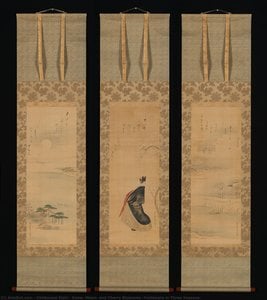
Žymiausias Čobunsaj Eiši tapas yra Snow, Moon, and Cherry Blossoms (Yoshiwara in Three Seasons) (801), esantis Metropolitano meno muziejus, Niujorkas. Kartu su Three Gods of Good Fortune Visit the Yoshiwara; or “Scenes of Pleasure at the Height of Spring” (801) ir The Salt Maidens, Murasame with Yukihira's Hat (1790) tai sudaro tris visai visus pažįstančius darbus. Mūsų kataloge yra 69 darbų autoriaus Čobunsaj Eiši; žemiau pateiktos 69 daugiausia visame pasaulyje žiūrimų kūrinių, kiekvieno iš jų – su metai, muziejumi, kuriame jis saugomas, ir paaiškintu, kodėl jis svarbus.

Rangos vieta nulegiama pagal mūsų populiarumumo balas, kurį sudaro kiekvieno kūrinio paieškos, apsilankėjimai ir užsakėjimai. Atnaujinta spalis 2026. Kiekvieną šio puslapio šedevrą galite užsisakyti kaip muziejoriaus kokybės rankų darbo alievinę reprodukciją arba aukščiausios kokybės meninį spausdiną jūsų pasirinktu dydžiu.

Čobunsaj Eiši portretas
Čobunsaj Eiši · 1756 – 1829
Gedė · mirė
1756 – 1829, Tokio
Judėjimas
Ukiyo-e
Darbai mūsų kataloge
69
Labiausiai žinomi
Snow, Moon, and Cherry Blossoms (Yoshiwara in Three Seasons) (801)
Daugiausia darbų yra
Metropolitano meno muziejus

10 garsiausių Čobunsaj Eiši paveikslų

Snow, Moon, and Cherry Blossoms (Yoshiwara in Three Seasons) (801) aut. Čobunsaj Eiši
1

Snow, Moon, and Cherry Blossoms (Yoshiwara in Three Seasons)

801 · Woodblock Print · Metropolitano meno muziejus, Niujorkas

Introduction Chōbunsai Eishi was a prominent Japanese artist of the Ukiyo-e school, which flourished during the Edo period (1603-1868). He is best known for his portraits of beautiful women and his innovative use of color. The Painting: Snow, Moon, and Cherry Blossoms "Snow, Moon, and Cherry Blossoms" is a masterpiece by Chōbunsai Eishi, which exemplifies his unique style and technique. The painting depicts a woman in traditional Japanese attire, standing…

Three Gods of Good Fortune Visit the Yoshiwara; or “Scenes of Pleasure at the Height of Spring” (801) aut. Čobunsaj Eiši
2

Three Gods of Good Fortune Visit the Yoshiwara; or “Scenes of Pleasure at the Height of Spring”

801 · Silk · Metropolitano meno muziejus, Niujorkas

Introduction to Chōbunsai Eishi and Ukiyo-e Art Movement Chōbunsai Eishi was an artist of samurai descent who also created prints, illustrating several handscrolls showing patrons traveling to the pleasure quarters of Yoshiwara. The Ukiyo-e art movement, which flourished from the 17th through 19th centuries in Japan, produced woodblock prints and paintings depicting various subjects such as female beauties, kabuki actors, sumo wrestlers, scenes from history and folk tales, travel scenes…

Čobunsaj Eiši, paveikslai nuo 11 iki 69

Daugiausiai temų, kurių vaizdė Čobunsaj Eiši

Keturi populiariausi temų motyvai tarp šių šedevrų, su geriausiais kiekvieno pavyzdžiais.

Kur galima pamatyti Čobunsaj Eiši paveikslus

7 muziejai, kuriuose saugoma daugiausia šioje pusėje esamų paveikslų.

Muzejaus Miestas Čobunsaj Eiši darbai Šiojo sąrašo paveikslai
Metropolitano meno muziejus, NiujorkasMetropolitano meno muziejus Niujorkas 5 Snow, Moon, and Cherry Blossoms (Yoshiwara in Three Seasons), Three Gods of Good Fortune Visit the Yoshiwara; or “Scenes of Pleasure at the Height of Spring”, Courtesan with a Letter in Her Mouth
Minneapolis Institute of Art, MinneapolisMinneapolis Institute of Art Minneapolis 5 Moonlight [left of the pair Beauties in Spring], Rain [right of the pair Beauties in Spring], Prostitute at a Parade
Art Institute of Chicago, ČikagosArt Institute of Chicago Čikagos 4 The Salt Maidens, Murasame with Yukihira's Hat, The Salt Maidens, Matsukaze with Yukihira's Coat, Beauty Replacing Her Hairpin
Cleveland Museum of Art, KlevlandasCleveland Museum of Art Klevlandas 1 Beauty in a Boat on Sumida River
Mičiganio universiteto meno muziejus, Ann ArborMičiganio universiteto meno muziejus Ann Arbor 1 Beauty under Cherry Blossoms
Cincinnati Art Museum, SinciatiatiCincinnati Art Museum Sinciatiati 1 Hanging Scroll: Woman in a Dark Kimono
Fukuda Art Museum, KyotoFukuda Art Museum Kyoto 1 Beautiful Woman Enjoying Firefly Catching

enusičiausio Čobunsaj Eiši tapiojo dešimtmetės tapiojas

  1. 1790s
  2. 1800s
  3. 1810s
  4. 1820s

Klausimai apie Čobunsaj Eiši paveikslus

Koks yra garsiausias Čobunsaj Eiši tapas?Rodyti atsakymą

Snow, Moon, and Cherry Blossoms (Yoshiwara in Three Seasons) (801), Metropolitano meno muziejus, Niujorkas. Toliau yra Three Gods of Good Fortune Visit the Yoshiwara; or “Scenes of Pleasure at the Height of Spring” (801) ir The Salt Maidens, Murasame with Yukihira's Hat (1790).

Kokie yra 10 geriausių Čobunsaj Eiši paveikslų?Rodyti atsakymą

Snow, Moon, and Cherry Blossoms (Yoshiwara in Three Seasons), Three Gods of Good Fortune Visit the Yoshiwara; or “Scenes of Pleasure at the Height of Spring”, The Salt Maidens, Murasame with Yukihira's Hat, The Salt Maidens, Matsukaze with Yukihira's Coat, Mounted Archer and Courtesan with Bow, Beauty Replacing Her Hairpin, Moonlight [left of the pair Beauties in Spring], Rain [right of the pair Beauties in Spring], Beauty in a Boat on Sumida River ir A Courtesan Reading a Letter. Viršuje esančioje reitingo lentelėje nurodyta kiekvieno kūrinio metis ir muziejus.

Kiek paveikslų sukūrė Čobunsaj Eiši?Rodyti atsakymą

Mūsų kataloge yra 69 Čobunsaj Eiši darbų, datuojamų nuo 1790 iki 1822.

Kur yra garsiausi Čobunsaj Eiši paveikslai?Rodyti atsakymą

Dauguma jų yra Metropolitano meno muziejus (Niujorkas), Minneapolis Institute of Art (Minneapolis) ir Art Institute of Chicago (Čikagos). Viršuje esančiame lange muziejai išvardyti po vieni.

Kada Čobunsaj Eiši namai dažniausiai tapė savo garsiausiais šedevrais?Rodyti atsakymą

1790s laikotarpyje: 6 iš 69 šioje pusėje esančių darbų sukurtos tada, iš jų – The Salt Maidens, Murasame with Yukihira's Hat.

Kokie yra pirmieji ir paskutiniai garsūs Čobunsaj Eiši paveikslai?Rodyti atsakymą

Pirmasis šioje pusėje yra The Salt Maidens, Murasame with Yukihira's Hat (1790), paskutinis – A Courtesan Reading a Letter (1822).

Ką dažniausiai tapė Čobunsaj Eiši?Rodyti atsakymą

Girls (5), Portraits (5) ir Cherry blossoms (4), iš 69 šioje pusėje esančių darbų.

Kelią meno kryptį priklauso Čobunsaj Eiši?Rodyti atsakymą

Ukiyo-e, kaip rodo šio puslapio paveikslai.

Kurius Čobunsaj Eiši paveikslus galėčiau pamatyti Metropolitano meno muziejus?Rodyti atsakymą

Snow, Moon, and Cherry Blossoms (Yoshiwara in Three Seasons), Three Gods of Good Fortune Visit the Yoshiwara; or “Scenes of Pleasure at the Height of Spring” ir Courtesan with a Letter in Her Mouth yra vieni iš 5 šioje puslapyje esamų darbų, kuriuos saugo Metropolitano meno muziejus, Niujorkas.

Ar galiu įsigyti Čobunsaj Eiši paveikslą-reprodukciją?Rodyti atsakymą

Taip. Kiekvieną šioje pusėje esantį paveikslą galite užsakyti kaip muziejoriaus kokybės rankų darbų alievinę kopiją arba aukščiausios kokybės spausdinį pasirinktu jūsų pageidaujamu dydžiu tiesiai iš paties paveikslą puslapio.

Apie Čobunsaj Eiši

Chobunsai Eishi: The Poet of Beauty

Chobunsai Eishi (1756-1829), also known as Hosoda Tokitomi, stands as a pivotal figure in the vibrant world of Edo-period Japanese art. Born into a distinguished samurai family within the prestigious Fujiwara clan – a lineage tracing back to influential roles within the shogunate – Eishi’s life was one of privilege and ultimately, artistic liberation. His early years were marked by service within the Tokugawa court, a position he relinquished in 1789 to dedicate himself fully to his passion: capturing the exquisite beauty of women and the evocative narratives of classic literature. Eishi's legacy rests primarily on his masterful *bijin-ga* – portraits of beautiful women – but his work also encompasses scenes drawn from celebrated tales like “The Tale of Genji,” demonstrating a profound understanding of both artistic technique and cultural storytelling.

Early Life and Artistic Foundations

Eishi’s origins were steeped in tradition and influence. His grandfather, Hosoda Tokitoshi, had served as Treasury Minister to the shogunate, providing his family with a secure position within the imperial system. This background instilled in Eishi a sense of decorum and an appreciation for refined aesthetics. While the exact circumstances surrounding his artistic awakening remain somewhat shrouded in mystery, it’s believed he received early instruction from Kanō Michinobu, a prominent master of the Kanō school of painting – renowned for its meticulous detail and stylized depictions of nature and religious subjects. The influence of this training is evident in Eishi's initial works, which shared some stylistic similarities with the Kanō tradition. However, Eishi quickly forged his own distinctive path, establishing himself as a leading figure within the *ukiyo-e* genre, known for its woodblock prints capturing fleeting moments of beauty and everyday life. The name “Eishi,” bestowed upon him – whether by Shogun Ieharu or through tradition – marked a significant step in his artistic journey, signifying his recognition as a skilled artist.

A Rivalry of Styles: Kiyonaga and Utamaro

Eishi’s rise to prominence coincided with the flourishing careers of two other masters of *bijin-ga*: Kitagawa Kiyonaga and Utamaro Nishimura. Initially, Eishi found himself in direct competition with Kiyonaga, whose bold compositions and dramatic use of color set a high standard for portraiture. However, Eishi’s unique approach – characterized by an emphasis on elegance, subtlety, and a nuanced portrayal of female beauty – gradually established him as a distinct voice within the field. He skillfully captured not just physical appearance but also the inner lives and emotions of his subjects, creating portraits that resonated with viewers long after they were created. While Kiyonaga favored grand scale and theatrical presentation, Eishi excelled at conveying intimacy and grace, often depicting women in quiet moments of contemplation or delicate activities. This subtle difference in style ultimately cemented Eishi’s place alongside Utamaro as one of the most celebrated *bijin-ga* artists of his time.

Technique and Subject Matter

Eishi's technical prowess was remarkable, particularly for a period when woodblock printing was still evolving. He mastered the art of color layering – *nishiki-e*, utilizing multiple colors to create rich, luminous effects. His prints often featured subdued tones, reflecting contemporary regulations that discouraged ostentatious displays of wealth and extravagance. However, Eishi’s skill lay not just in his technical execution but also in his ability to imbue his subjects with a sense of life and personality. He frequently depicted women engaged in literary pursuits, such as reading or writing poetry – drawing inspiration from classic tales like “The Tale of Genji.” These scenes offered glimpses into the lives of women during the Edo period, revealing their intellectual interests and social roles. Notably, Eishi’s later works became increasingly characterized by elongated figures, with heads disproportionately small—a stylistic choice that emphasized elegance and refinement.

Legacy and Influence

Following 1801, Eishi abandoned print design to dedicate himself entirely to painting, a decision that solidified his reputation as a master of the brush. He was granted the honorary title *Jibukyō* (治部卿), recognizing his exceptional talent and contributions to the arts. His final years were marked by quiet contemplation and artistic refinement. Eishi’s work continues to captivate audiences today, admired for its exquisite beauty, subtle emotional depth, and masterful technical execution. His influence can be seen in subsequent generations of *ukiyo-e* artists, who drew inspiration from his elegant style and innovative approach to portraiture. Chobunsai Eishi remains a testament to the power of artistic vision and the enduring appeal of capturing the beauty of human experience through art. His prints are held in major museums worldwide, ensuring that his legacy will continue to inspire and delight for centuries to come.

Visi 69 Čobunsaj Eiši darbai →