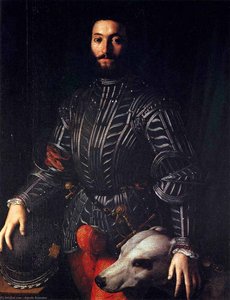
Bronzinas, 1503 – 1572

Bronzinas tapiai: 100 garsiausių kūrinių reitingas

Žymiausias Bronzinas tapas yra Venera, Kupidas ir laikas (Ėrotikos alegorija) (1540), esantis National Gallery, Londonas. Kartu su Portrait of Eleonora da Toledo (1555) ir Venus, Cupido and Satyr tai sudaro tris visai visus pažįstančius darbus. Mūsų kataloge yra 189 darbų autoriaus Bronzinas; žemiau pateiktos 100 daugiausia visame pasaulyje žiūrimų kūrinių, kiekvieno iš jų – su metai, muziejumi, kuriame jis saugomas, ir paaiškintu, kodėl jis svarbus.

Rangos vieta nulegiama pagal mūsų populiarumumo balas, kurį sudaro kiekvieno kūrinio paieškos, apsilankėjimai ir užsakėjimai. Atnaujinta spalis 2026. Kiekvieną šio puslapio šedevrą galite užsisakyti kaip muziejoriaus kokybės rankų darbo alievinę reprodukciją arba aukščiausios kokybės meninį spausdiną jūsų pasirinktu dydžiu.

Bronzinas portretas
Bronzinas · 1503 – 1572
Gedė · mirė
1503 – 1572, Florencija
Judėjimas
Manierizmas
Darbai mūsų kataloge
189
Labiausiai žinomi
Venera, Kupidas ir laikas (Ėrotikos alegorija) (1540)
Daugiausia darbų yra
Galleria degli Uffizi

10 garsiausių Bronzinas paveikslų

Venera, Kupidas ir laikas (Ėrotikos alegorija) (1540) aut. Bronzinas
1

Venera, Kupidas ir laikas (Ėrotikos alegorija)

1540 · Aliejus ant drobės · National Gallery, Londonas

Agnolo Bronzino drobė „Venera, Kūpičas ir Laikas“ (Allegory of Lust) – tai neatsiejamas XVI amžiaus manierizmo stilius, kuriame susijungia mitologinis pasakojimas su inovatyvia menine technika. Šis išskirtinis kūrinys kviečia žiūrovą pasinerti į turtingą simbolizmą, sodrią spalvų paletę ir dinamišką kompoziciją, todėl jis tampa nesenstančiu priekuriu bet kuriai meno kolekcijai ar stilingam interjerui.

Portrait of Eleonora da Toledo (1555) aut. Bronzinas
2

Portrait of Eleonora da Toledo

1555 · Oil On Panel

To gaze upon Agnolo Bronzino's Portrait of Eleonora da Toledo is to step directly into the rarefied atmosphere of High Renaissance Florence. This painting, executed in 1555, transcends a mere likeness; it is a carefully constructed monument to status, power, and exquisite refinement. The subject, Eleonora da Toledo, radiates an almost palpable aura of aristocratic dignity. Bronzino captures her not just as a woman, but as a symbol of Medici…

Venus, Cupido and Satyr aut. Bronzinas
3

Venus, Cupido and Satyr

Oil

A pale, reclining figure occupies the center of the frame, her skin possessing the cool, polished sheen of marble. This is Venus, the goddess of love, draped in a way that emphasizes the tension between soft flesh and the hard edges of the composition. Beside her, Cupid clings to her form, a small, fleshy presence that embodies the sudden, sharp sting of passion. Their limbs are elongated, stretching toward one…

Portrait of Andrea Doria as Neptune (1550) aut. Bronzinas
4

Portrait of Andrea Doria as Neptune

1550 · Oil On Canvas · Pinacoteca di Brera, Milanas

In the grand theater of the Italian Mannerist period, few images command the eye with such authoritative grace as Agnolo Bronzino’s Portrait of Andrea Doria as Neptune. This is not merely a portrait of a man, but a profound exercise in political allegory and divine projection. The subject, the legendary Genoese admiral Andrea Doria, is stripped of the heavy silks and velvet doublets typical of sixteenth-century aristocratic portraiture. Instead, Bronzino…

St. John the Baptist (1542) aut. Bronzinas
5

St. John the Baptist

1542 · Oil On Panel · J. Paul Getty muziejus, Los Andželis

The figure of St. John the Baptist emerges from the shadows, rendered with a muscular intensity by the Florentine master Bronzino. This depiction captures the patron saint of Florence in a moment of profound spiritual tension. Created about 1542 - 1545, the work possesses a striking verticality that speaks to its original purpose. It does not exist in isolation but remains a fragment of a larger sacred narrative, having once…

Deposition (1565) aut. Bronzinas
6

Deposition

1565 · Oil On Canvas · Galleria dell'Accademia di Firenze, Florencija

“Deposition,” painted in 1565 by the Florentine master Agnolo Bronzino, is not merely a religious scene; it's a meticulously crafted tableau of restrained emotion and profound psychological depth. Commissioned for the Observant Monastery in Cosmopoli, this work transcends simple narrative to become a meditation on grief, loss, and the delicate balance between earthly sorrow and divine grace. Bronzino, renowned for his “reserved elegance,” achieved this through an almost unnervingly controlled…

Portrait of a Young Man (1555) aut. Bronzinas
7

Portrait of a Young Man

1555 · Oil On Canvas · Nelson-Atkins Museum of Art, Kansas City

To gaze upon this portrait is to step directly into the rarefied atmosphere of mid-sixteenth-century Florence, a world governed by the subtle power plays and exquisite tastes of the Medici court. Agnolo Bronzino, the master chronicler of such elite circles, captured not merely a likeness, but an entire social stratum. The sitter, though anonymous to us today, embodies the controlled elegance expected of those who moved within the gilded cage…

Cosimo de Medici in Armour (1545) aut. Bronzinas
8

Cosimo de Medici in Armour

1545 · Oil On Panel · Thyssen-Bornemisza muziejus, Madridas

The gaze of the Grand Duke of Tuscany, Cosimo I de' Medici, meets the viewer through the work titled Cosimo de Medici in Armour. Created by the Florentine artist Bronzino, this portrait captures the ruler in a moment of poised authority. The image emerges from the mid-16th century, dated about 1545, and presents a commanding presence through its structured composition. It exists as a significant version of the painting held…

Portrait of Cosimo I de' Medici as Orpheus (1537) aut. Bronzinas
9

Portrait of Cosimo I de' Medici as Orpheus

1537 · Oil On Panel · Philadelphia Museum of Art, Filadelfija

In this portrait, we encounter Cosimo I de' Medici, not merely as a ruler, but as the mythological musician Orpheus. He is positioned in a three-quarter view from behind, turning his gaze back toward us with a sense of psychological alertness. His body, rendered with a polished, marble-like texture, possesses an idealized beauty that speaks to the High Mannerist style. A single splash of crimson red drapery provides a sharp…

Portrait of Eleonora of Toledo and Her Son, Francesco de'Medici (1549) aut. Bronzinas
10

Portrait of Eleonora of Toledo and Her Son, Francesco de'Medici

1549 · Oil On Panel · Cincinnati Art Museum, Sinciatiati

In this vertical half-length portrait, we encounter the Duchess of Florence, Eleonora of Toledo, and her son, Francesco de' Medici. The composition is defined by a controlled, almost sculptural stillness. Eleonora stands slightly behind the young boy, her hand resting upon his shoulder in a gesture that is both protective and formal. There is a certain aristocratic detachment in their expressions, a cool composure that characterizes the Florentine Mannerist style.…

Bronzinas, paveikslai nuo 11 iki 100

Eleonora di Toledo (1560) aut. Bronzinas
#12

Eleonora di Toledo

1560 · National Gallery of Art

A woman stands in a red dress, her hand resting upon her hip with a quiet, unyielding confidence. The fabric of her gown is a heavy, structured thing,…

Atneškite į savo namus →
Venus cupid time aut. Bronzinas
#13

Venus cupid time

National Gallery

The painting depicts a bedroom setting centered on two naked figures, Venus and Cupid. One woman lies down while another stands over her; they are holding hands and…

Atneškite į savo namus →
Pierantonio Bandini (1555) aut. Bronzinas
#14

Pierantonio Bandini

1555 · Kanados Nacionalinė galerija

Agnolo Bronzino’s “Portrait of Pierantonio Bandini,” painted circa 1550-1555, is not merely a likeness; it's an exquisitely crafted distillation of Renaissance ideals – a study in dignified composure…

Užsisakyti rankinio kopijos tapybą →
Holy Family (1540) aut. Bronzinas
#16

Holy Family

1540 · Galleria degli Uffizi

Agnolo Bronzino's "Holy Family," painted around 1540, isn’t merely a depiction of a biblical scene; it’s a carefully constructed tableau of serenity and profound familial love. Emerging from…

Užsisakyti rankinio kopijos tapybą →
Eleonora di Toledo (1543) aut. Bronzinas
#17

Eleonora di Toledo

1543 · Narodinis galerija

In the quiet corridors of the Národní Galerie in Prague, there exists a window into the opulent heart of the sixteenth century. Agnolo Bronzino’s Eleonora di Toledo is…

Užsisakyti reprodukciją →
Ugolino Martelli (1535) aut. Bronzinas
#20

Ugolino Martelli

1535

To stand before Agnolo Bronzino's Ugolino Martelli is to encounter the very essence of High Renaissance self-possession. Painted in 1535, this portrait transcends a mere likeness; it is…

Atneškite į savo namus →
Pope Leo X (1555) aut. Bronzinas
#22

Pope Leo X

1555 · Galleria degli Uffizi

To gaze upon this portrait of Pope Leo X is to encounter a moment suspended in the opulent grandeur of the Italian Renaissance. Agnolo Bronzino, master chronicler of…

Atneškite į savo namus →
Saint Sebastian (1533) aut. Bronzinas
#23

Saint Sebastian

1533 · Salvador Dalí muziejus

To stand before Agnolo Bronzino's depiction of Saint Sebastian is to encounter an embodiment of refined restraint—a hallmark of the High Renaissance transitioning into the sophisticated drama of…

Užsisakyti rankinio kopijos tapybą →
Venus, Cupid and Jealousy (1550) aut. Bronzinas
#24

Venus, Cupid and Jealousy

1550 · Szépművészeti Múzeum

The world of Renaissance Florence was a crucible of artistic innovation, yet within its vibrant heart resided a figure renowned for his profound restraint – Agnolo di Cosimo,…

Atneškite į savo namus →
Venus, Cupid and Time (detail) (1540) aut. Bronzinas
#26

Venus, Cupid and Time (detail)

1540 · National Gallery

Agnolo Bronzino's "Venus, Cupid, and Time," painted in 1540, isn’t merely a depiction of mythological figures; it’s an exquisitely crafted allegory—a visual poem brimming with ambiguity and profound…

Atneškite į savo namus →
Don Garcia de' Medici (1550) aut. Bronzinas
#27

Don Garcia de' Medici

1550 · Museo del Prado

To gaze upon Agnolo Bronzino’s portrait, Don Garcia de' Medici, is to encounter an exquisite moment suspended in the amber glow of the Italian Renaissance. This depiction of…

Atneškite į savo namus →
Miracle of the Brazen Serpent (1542) aut. Bronzinas
#30

Miracle of the Brazen Serpent

1542 · Palazzo Vecchio

In the heart of Florence’s Palazzo Vecchio, tucked within the sacred stillness of the Cappella di Eleonora, resides one of the most arresting spectacles of the Mannerist era:…

Portrait of a Young Man (1540) aut. Bronzinas
#32

Portrait of a Young Man

1540 · Metropolitano meno muziejus

Agnolo Bronzino's “Portrait of a Young Man,” painted circa 1540, stands as an emblem of Florentine Mannerism—a stylistic movement that prioritized elegance and restraint over the exuberant naturalism…

Užsisakyti reprodukciją →
Martyrdom of St Lawrence (1569) aut. Bronzinas
#33

Martyrdom of St Lawrence

1569 · San Lorenzo

Agnolo Bronzino’s “Martyrdom of St. Lawrence,” painted in 1569, isn't merely a depiction of a historical event; it’s a profound meditation on faith, suffering, and the enduring spirit…

Portrait of Cosimo I de' Medici (1545) aut. Bronzinas
#40

Portrait of Cosimo I de' Medici

1545 · Galleria degli Uffizi

A Portrait of Regal Dignity: Agnolo Bronzino’s Emblematic Representation of Cosimo I Agnolo di Cosimo, universally recognized as Bronzino, stands as a cornerstone of Mannerist art—a movement that…

Atneškite į savo namus →
Costanza da Sommaia (1540) aut. Bronzinas
#41

Costanza da Sommaia

1540 · Detroito meno institutas

A young woman emerges from a deep, blue shadow, her presence defined by a stillness that feels almost sculptural. She is turned in a three-quarter view, her skin…

Užsisakyti reprodukciją →
Crossing of the Red Sea (1542) aut. Bronzinas
#42

Crossing of the Red Sea

1542 · Palazzo Vecchio

The fresco titled Crossing of the Red Sea was executed by the Florentine artist Agnolo Bronzino. This work, completed around 1542, utilizes the fresco technique to depict a…

Portrait of a Lady in Red (detail) (1530) aut. Bronzinas
#44

Portrait of a Lady in Red (detail)

1530 · Städelsche Kunstinstitut Und Städtische Galerie

The year is 1530, and Florence pulses with the vibrant energy of the High Renaissance. Amidst this flourishing artistic landscape emerges Agnolo Bronzino – not merely a painter,…

Atneškite į savo namus →
Portrait of a boy (1540) aut. Bronzinas
#45

Portrait of a boy

1540 · Bode Museum

This painting, titled Portrait of a boy, is a work by the Florentine artist Bronzino. It belongs to the genre of portraiture, capturing a singular youthful figure with…

Atneškite į savo namus →
Don Giovanni de’Medici (1551) aut. Bronzinas
#49

Don Giovanni de’Medici

1551 · Toledo meno muziejus

This portrait of Don Giovanni de’Medici offers a quiet glimpse into the lineage of the Medici family. Executed by the Florentine master Bronzino, the work captures a young…

Atneškite į savo namus →
View of the Chapel of Eleonora da Toledo (1440) aut. Bronzinas
#64

View of the Chapel of Eleonora da Toledo

1440 · Palazzo Vecchio

The painting presents a view of a chapel featuring a fresco that depicts the life of Christ. Within this sacred setting, the scene is populated by numerous figures,…

Moses strikes water from the wall rocks (1544) aut. Bronzinas
#75

Moses strikes water from the wall rocks

1544

The air feels heavy with anticipation as Moses raises his staff against the rugged, unyielding face of the rock. In this mid-sixteenth century fresco, a sudden, life-giving force…

Altarpiece (1540) aut. Bronzinas
#76

Altarpiece

1540 · Palazzo Vecchio

The year is 1540, and Florence pulses with the ambition of the Medici court. Within the private chapel of Eleonora di Toledo, Duchess of Florence, a masterpiece emerges…

Atneškite į savo namus →
Venus, Cupid and Envy (1548) aut. Bronzinas
#78

Venus, Cupid and Envy

1548 · Szépművészeti Múzeum

Painted in 1548 by the Florentine master Agnolo Bronzino, *Venus, Cupid and Envy* is a captivating embodiment of Mannerist aesthetics – a style characterized by its deliberate artifice,…

Užsisakyti reprodukciją →
untitled (4490) (1532) aut. Bronzinas
#82

untitled (4490)

1532

In the quiet, commanding presence of Agnolo Bronzino’s "untitled (4490)", we are transported back to the height of the Italian Renaissance, a period where portraiture served as both…

Užsisakyti reprodukciją →
The Holy Family (1545) aut. Bronzinas
#83

The Holy Family

1545

The Holy Family by Agnolo Bronzino is a renowned oil painting that showcases the artist's skill in capturing dramatic scenes with incredible detail. Created in 1545, this tempera…

Atneškite į savo namus →
Lucrezia Panciatichi (1540) aut. Bronzinas
#85

Lucrezia Panciatichi

1540

In the grand tapestry of the Italian Renaissance, few portraits capture the poised sophistication of the Mannerist era as exquisitely as Agnolo Bronzino’s Lucrezia Panciatichi. Painted around 1540,…

Užsisakyti reprodukciją →

Bronzinas tapų skirstymas pagal laikotarpius

Daugiausiai temų, kurių vaizdė Bronzinas

Keturi populiariausi temų motyvai tarp šių šedevrų, su geriausiais kiekvieno pavyzdžiais.

Kur galima pamatyti Bronzinas paveikslus

8 muziejai, kuriuose saugoma daugiausia šioje pusėje esamų paveikslų.

Muzejaus Miestas Bronzinas darbai Šiojo sąrašo paveikslai
Galleria degli Uffizi, FlorencijaGalleria degli Uffizi Florencija 18 Holy Family, Portrait of Lucrezia Panciatichi, Pope Leo X
Palazzo Vecchio, FlorencijaPalazzo Vecchio Florencija 11 Miracle of the Brazen Serpent, The Miracle of the Spring, Gathering of the Manna
Szépművészeti Múzeum, BudapeštasSzépművészeti Múzeum Budapeštas 8 Venus, Cupid and Jealousy, Adoration of the Shepherds, Venus, Cupid and Envy
National Gallery, LondonasNational Gallery Londonas 5 Venera, Kupidas ir laikas (Ėrotikos alegorija), Venus cupid time, Venus, Cupid and Time (detail)
National Gallery of Art, VašingtonasNational Gallery of Art Vašingtonas 4 Eleonora di Toledo, Portrait of Eleanora di Toledo, A Young Woman and Her Little Boy
Detroito meno institutas, DetroitasDetroito meno institutas Detroitas 2 Costanza da Sommaia, Madonna and Child with Saint John the Baptist
Walters Art Museum, BaltimoreWalters Art Museum Baltimore 2 The Feast Given by Joseph for His Brothers, Portrait of a Baby Boy
Royal Collection, LondonasRoyal Collection Londonas 2 Portrait of a Lady in Green, Portrait of a Lady in Green

enusičiausio Bronzinas tapiojo dešimtmetės tapiojas

  1. 1520s
    Virgin and Child with the Young Saint John the Baptist (1528) aut. Bronzinas
    #55 iš 100

    Virgin and Child with the Young Saint John the Baptist

    Amžius 17 – 26 · Art Institute of Chicago

    In this Mannerist oil painting, three figures occupy a vertical, tightly cropped arrangement against a dark, near-black background. The Virgin Mary is positioned centrally, her form defined by…

  2. 1530s
    Portrait of Cosimo I de' Medici as Orpheus (1537) aut. Bronzinas
    Vieta 9 iš 100

    Portrait of Cosimo I de' Medici as Orpheus

    Amžius 27 – 36 · Philadelphia Museum of Art

    In this portrait, we encounter Cosimo I de' Medici, not merely as a ruler, but as the mythological musician Orpheus. He is positioned in a three-quarter view from…

  3. 1540s
    Venera, Kupidas ir laikas (Ėrotikos alegorija) (1540) aut. Bronzinas
    #1 iš 100

    Venera, Kupidas ir laikas (Ėrotikos alegorija)

    Amžius 37 – 46 · National Gallery

    Agnolo Bronzino drobė „Venera, Kūpičas ir Laikas“ (Allegory of Lust) – tai neatsiejamas XVI amžiaus manierizmo stilius, kuriame susijungia mitologinis pasakojimas su inovatyvia menine technika. Šis išskirtinis kūrinys…

  4. 1550s
    Portrait of Eleonora da Toledo (1555) aut. Bronzinas
    2 iš 100

    Portrait of Eleonora da Toledo

    Amžius 47 – 56

    To gaze upon Agnolo Bronzino's Portrait of Eleonora da Toledo is to step directly into the rarefied atmosphere of High Renaissance Florence. This painting, executed in 1555, transcends…

  5. 1560s
    Deposition (1565) aut. Bronzinas
    #6 iš 100

    Deposition

    Amžius 57 – 66 · Galleria dell'Accademia di Firenze

    “Deposition,” painted in 1565 by the Florentine master Agnolo Bronzino, is not merely a religious scene; it's a meticulously crafted tableau of restrained emotion and profound psychological depth.…

Klausimai apie Bronzinas paveikslus

Koks yra garsiausias Bronzinas tapas?Rodyti atsakymą

Venera, Kupidas ir laikas (Ėrotikos alegorija) (1540), National Gallery, Londonas. Toliau yra Portrait of Eleonora da Toledo (1555) ir Venus, Cupido and Satyr.

Kiek metų buvo Bronzinas, kai buvo nupieštas Venera, Kupidas ir laikas (Ėrotikos alegorija)?Rodyti atsakymą

37 metų amžiaus: Venera, Kupidas ir laikas (Ėrotikos alegorija) sukurta 1540 m. ir Bronzinas gimė 1503.

Kokie yra 10 geriausių Bronzinas paveikslų?Rodyti atsakymą

Venera, Kupidas ir laikas (Ėrotikos alegorija), Portrait of Eleonora da Toledo, Venus, Cupido and Satyr, Portrait of Andrea Doria as Neptune, St. John the Baptist, Deposition, Portrait of a Young Man, Cosimo de Medici in Armour, Portrait of Cosimo I de' Medici as Orpheus ir Portrait of Eleonora of Toledo and Her Son, Francesco de'Medici. Viršuje esančioje reitingo lentelėje nurodyta kiekvieno kūrinio metis ir muziejus.

Kiek paveikslų sukūrė Bronzinas?Rodyti atsakymą

Mūsų kataloge yra 189 Bronzinas darbų, datuojamų nuo 1525 iki 1569.

Kur yra garsiausi Bronzinas paveikslai?Rodyti atsakymą

Dauguma jų yra Galleria degli Uffizi (Florencija), Palazzo Vecchio (Florencija) ir Szépművészeti Múzeum (Budapeštas). Viršuje esančiame lange muziejai išvardyti po vieni.

Kada Bronzinas namai dažniausiai tapė savo garsiausiais šedevrais?Rodyti atsakymą

1540s laikotarpyje: 36 iš 100 šioje pusėje esančių darbų sukurtos tada, iš jų – Venera, Kupidas ir laikas (Ėrotikos alegorija).

Kokie yra pirmieji ir paskutiniai garsūs Bronzinas paveikslai?Rodyti atsakymą

Pirmasis šioje pusėje yra St Matthew (1525), paskutinis – Martyrdom of St Lawrence (1569).

Ką dažniausiai tapė Bronzinas?Rodyti atsakymą

Renaissance (34), Portrait (16) ir Woman (11), iš 100 šioje pusėje esančių darbų.

Kurią techniką Bronzinas naudojo dažniausiai?Rodyti atsakymą

Oil On Panel: 25 iš 100 šioje pusėje esančių darbų.

Kelią meno kryptį priklauso Bronzinas?Rodyti atsakymą

Manierizmas, kaip rodo šio puslapio paveikslai.

Kurius Bronzinas paveikslus galėčiau pamatyti Galleria degli Uffizi?Rodyti atsakymą

Holy Family, Portrait of Lucrezia Panciatichi ir Pope Leo X yra vieni iš 8 šioje puslapyje esamų darbų, kuriuos saugo Galleria degli Uffizi, Florencija.

Ar galiu įsigyti Bronzinas paveikslą-reprodukciją?Rodyti atsakymą

Taip. Kiekvieną šioje pusėje esantį paveikslą galite užsakyti kaip muziejoriaus kokybės rankų darbų alievinę kopiją arba aukščiausios kokybės spausdinį pasirinktu jūsų pageidaujamu dydžiu tiesiai iš paties paveikslą puslapio.

Apie Bronzinas

Ankstyvieji Metai ir Formavimasis

Agnolo di Cosimo, istorijoje žinomas kaip Bronzino, pasirodė gyvybingame Renesanso Florencijos meno peizaže 1503 metais – laikotarpiu, jau kupiname genijų. Gimęs mėsininko sūnus, jo kelias ryškiai skyrėsi nuo šeimos tradicijos, vedamas įgimto talento, kuris pavertė jį vienu iš geičiausių portretistų ir manierizmo atstovu. Ankstyvieji mokymai prasidėjo su Raffaellino del Garbo, tačiau būtent Jacopo da Pontormo globoje Bronzino artistinė savimonė tikrai įgijo formą. Pasisavinęs Pontormo novatorišką stilių, jis galiausiai sukūrė savo unikalų balsą – pasižymintį vėsia susikaupimu ir rafinuotu detalumu, ryškiai atskiriančiu jį nuo mokytojo dažnai emociškai įkrauto darbo. Šis ankstyvas laikotarpis taip pat buvo paveiktas studijų su Andrea del Sarto, supažindinusio jį su Mikelandželio ir Leonardo da Vinci palikimu – pagrindinių įtakų, kurios subtiliai persiskverbė į jo brandų stilių. Jaunas Bronzino greitai parodė gebėjimą užfiksuoti ne tik fizinį panašumą, bet ir tam tikrą psichologinį gilumą net ankstyviausiuose darbuose.

Pakilimas Mediciejų Dvare

Bronzino karjera dramatiškai pakilo turėdamas Cosimo I de’ Medici, Toskanos hercogo globą. Šis santykis, įtvirtintas po to, kai Bronzino prisidėjo prie prabangaus dekoravimo, švenčiant Cosimo vestuves su Eleonora di Toledo 1539 metais, sutvirtino jo poziciją kaip oficialaus dvaro dailininko didžiąją gyvenimo dalį. Tai buvo vaidmuo, kurį jis atliko nuosekliai ir įspūdingai. Portretai, išėję iš šio laikotarpio, nėra tik panašumai; tai kruopščiai sukonstruoti teiginiai apie valdžią, statusą ir dinastinius ambicijas. Cosimo ir Eleonora patys tapo dažnais objektais, įamžinti paveiksluose, spinduliuojančiuose aristokratišku atsiskyrimu ir poliruota elegancija. Šie darbai nebuvo skirti tik fiziniam panašumui užfiksuoti, bet Mediciejų autoriteto simbolių sukūrimui. Bronzino meistriškumas apėmė portretinę tapybą; jam buvo patikėta dekoruoti koplyčią, dedikuotą Eleonorai, projektas, trukęs du dešimtmečius ir demonstravo jo universalumą kaip freskų dailininko. Kruopštumas ir rafinuota technika, akivaizdūs šiuose darbuose, įtvirtino Bronzino kaip pirmaujančio Florencijos dvaro atstovo, formavusio valdžios vizualinę kalbą ištisoms kartoms.

Manieristinio Rafinavimo Menas

Bronzino artistinis stilius yra esmingai manierizmas – judėjimas, klestėjęs Italijoje XVI amžiaus viduryje kaip reakcija į Aukštojo Renesanso pabrėžimą natūralizmą ir harmoningą pusiausvyrą. Jis priėmė prailgintas formas, stilizuotas pozas ir dažnai vėsų, atsiskyrusi emociją. Jo figūros retai užfiksuojamos spontaniškos veikos akimirkomis; vietoj to, jos atrodo kruopščiai sukurtos, beveik skulptūriškos savo nejudrumu. Venusas, Kupidonas, Kvailystė ir Laikas (apie 1544–45), galbūt jo garsiausias alegorinis darbas, pavyzdžiuoja šį požiūrį. Paveikslas yra sudėtinga simbolikos gobelenas, kviečiantis įvairias interpretacijas, tuo pačiu išlaikant enigmatišką atsiskyrimo aurą. Jo portretai garsėja dėmesiu detalėms – audinių tekstūromis, papuošalų spindesiu, subtiliais išraiškos niuansais – viskas perteikiama beveik emaliuojančiu tikslumu. Šis atsidavimas paviršiaus rafinuotumui ir intelektiniam sudėtingumui skiria Bronzino darbą nuo jo bendraamžių darbo. Jam nerūpėjo tiesiog atkurti realybę; jis siekė ją pakelti per meninę išmonę ir stilistinį valdymą.

Palikimas ir Tvarus Poveikis

Be gausios produkcijos kaip dailininko, Bronzino vaidino svarbų vaidmenį Florencijos meno bendruomenėje. 1563 metais jis buvo vienas iš įkūrėjų Accademia delle Arti del Disegno, institucijos, skirtoje meno studijoms skatinti ir meninei puikumei ugdyti. Jo įtaka apėmė Florenciją; jis turėjo didelį poveikį dvaro portretams visoje Europoje ištisoms kartoms. Vėsus elegancija ir rafinuota technika, kurią jis gynė, tapo aristokratiškos reprezentacijos pavyzdžiu. Nors jo stilius šiek tiek išėjo iš mados laikotarpiais, kurie pirmenybę teikė emocingesniems ar natūralesniems požiūriams, Bronzino darbai pastaraisiais dešimtmečiais sulaukė naujo įvertinimo. Mokslininkai dabar pripažįsta intelektinį gilumą ir stilistinę inovaciją, esančią jo mene. Jis mirė Florencijoje 1572 metais, palikęs palikimą kaip vienas svarbiausių manierizmo tapytojų – atsiskyrusi elegancijos meistras, kurio portretai ir toliau žavi ir intriguoja žiūrovus šimtmečius. Jo gebėjimas užfiksuoti ne tik panašumą, bet ir valdžios bei statuso esmę užtikrina jo nesibaigiantį vaidmenį meno istorijoje.
  • Gimė: Florencija, Italija, 1503
  • Mirė: Florencija, Italija, 1572
  • Pagrindinis Judėjimas: Manierizmas
  • Žymiausi Darbai: *Venusas, Kupidonas, Kvailystė ir Laikas*, Cosimo I de’ Medici ir Eleonoros di Toledo portretai

Visi 189 Bronzinas darbai →