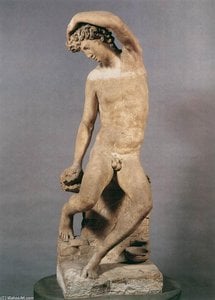
Benvenutas Čelinis, 1500 – 1571

Benvenutas Čelinis tapiai: 80 garsiausių kūrinių reitingas

Žymiausias Benvenutas Čelinis tapas yra Druskos indas (1540), esantis Kunsthistorisches Museum, Viena. Kartu su Jupiter (1545) ir Crucifix (detail) (1562) tai sudaro tris visai visus pažįstančius darbus. Mūsų kataloge yra 80 darbų autoriaus Benvenutas Čelinis; žemiau pateiktos 80 daugiausia visame pasaulyje žiūrimų kūrinių, kiekvieno iš jų – su metai, muziejumi, kuriame jis saugomas, ir paaiškintu, kodėl jis svarbus.

Rangos vieta nulegiama pagal mūsų populiarumumo balas, kurį sudaro kiekvieno kūrinio paieškos, apsilankėjimai ir užsakėjimai. Atnaujinta spalis 2026. Kiekvieną šio puslapio šedevrą galite užsisakyti kaip muziejoriaus kokybės rankų darbo alievinę reprodukciją arba aukščiausios kokybės meninį spausdiną jūsų pasirinktu dydžiu.

Benvenutas Čelinis portretas
Benvenutas Čelinis · 1500 – 1571
Gedė · mirė
1500 – 1571, Florencija
Judėjimas
Manierizmas
Darbai mūsų kataloge
80
Labiausiai žinomi
Druskos indas (1540)
Daugiausia darbų yra
Museo Nazionale del Bargello

10 garsiausių Benvenutas Čelinis paveikslų

Druskos indas (1540) aut. Benvenutas Čelinis
1

Druskos indas

1540 · Auksas · Kunsthistorisches Museum, Viena

Auksinė „Saliera“, pagaminta iš suvalioto aukso, buvo sukuriama Benvenuto Cellinio Prancūzijos karaliaus Francauso I nuo 1540 iki 1543 metų. Per jo ketvirtąjį potaikį šis vertingas kūrinys pasiekė arkiduką Ferdinandą II. Ši druskamedė yra ne tik prabangos simbolis, bet ir gili Žemės bei jūros sąveikos alegorija. Dešinėje pusėje matome vyką su tridentu ir laivą, simbolizuojančius vandenį, o kairėje – moterį, reprezentuojančią Žemę. Pats pagrindas vaizduoja vėjus, paros laiko žymes bei žmonių…

Jupiter (1545) aut. Benvenutas Čelinis
2

Jupiter

1545 · Bronze · Museo Nazionale del Bargello, Firenka

To stand before this magnificent depiction of Jupiter is to confront raw, untamed power rendered in the enduring majesty of bronze. This sculpture does not merely represent a god; it embodies the very force of nature—the thunderous authority that commands the skies. The figure dominates the space with an undeniable gravitas, his musculature meticulously articulated as if carved by the passing winds themselves. Observe the dynamic tension captured in his…

Crucifix (detail) (1562) aut. Benvenutas Čelinis
3

Crucifix (detail)

1562 · Marble · San Lorenzo klasztoras, Escorial

Benvenuto Cellini’s 1562 marble sculpture, “Crucifix (detail),” is not merely a depiction of Christ’s suffering; it’s an immersive experience. Within the dimly lit confines of El Escorial, this intimate piece draws you into a world of profound emotion and technical mastery – a testament to Cellini's genius as both goldsmith and sculptor. The sculpture immediately commands attention with its stark realism and the palpable sense of agony radiating from the…

Morion for Francesco I de' Medici (1570) aut. Benvenutas Čelinis
4

Morion for Francesco I de' Medici

1570 · Metalwork · Staatliche Kunstsammlungen, Drezdenas

In the grand tapestry of the Italian Renaissance, few objects capture the intersection of martial prestige and artistic virtuosity as profoundly as the Morion for Francesco I de' Medici. Created in 1570 by the legendary polymath Benvenuto Cellini, this is far more than a mere piece of protective headgear; it is a sculptural triumph rendered in metal. As a quintessential example of Mannerism, the Morion rejects the tranquil equilibrium of…

Danae and her Son Perseus (1545) aut. Benvenutas Čelinis
5

Danae and her Son Perseus

1545 · Bronze · Museo Nazionale del Bargello, Firenka

The bronze sculpture Danae and her Son Perseus by Benvenuto Cellini captures a moment of divine intersection. Created between 1545 and 1553 for Cosimo I de' Medici, the work depicts the mythological event where Zeus visits Danae in the form of golden rain. This Renaissance Mannerist piece resides within the Museo Nazionale del Bargello in Florence, Italy.

Nymph of Fontainebleau (1542) aut. Benvenutas Čelinis
6

Nymph of Fontainebleau

1542 · Bronze · Liuvro muziejus, Paryžius

To stand before the Nymph of Fontainebleau is to step directly into the languid, sun-dappled world of the Italian Renaissance. This magnificent bronze sculpture by Benvenuto Cellini does more than merely depict a figure; it captures an ephemeral moment—a breath held between slumber and awakening. The central subject, the reclining nymph, embodies a timeless confluence of nature’s grace and mythological mystery. Her pose is one of exquisite repose, her body…

Perseus (1540) aut. Benvenutas Čelinis
7

Perseus

1540 · Bronze · Museo Nazionale del Bargello, Firenka

In the heart of Florence’s Piazza della Signoria, amidst the architectural grandeur of the Loggia dei Lanzi, stands a masterpiece that captures the very essence of Mannerist tension and heroic triumph. Benvenuto Cellini’s Perseus is not merely a sculpture; it is a dramatic performance frozen in bronze. Created between 1545 and 1554, this monumental work depicts the legendary hero Perseus at the climactic moment of his mythic journey. He stands…

Bust of Cosimo I (detail) (1546) aut. Benvenutas Čelinis
8

Bust of Cosimo I (detail)

1546 · Bronze · Museo Nazionale del Bargello, Firenka

In the heart of the Italian Renaissance, where the pursuit of beauty met the raw ambition of political power, Benvenuto Cellini forged a masterpiece that transcends mere portraiture. The Bust of Cosimo I is not simply a likeness of the Grand Duke of Tuscany; it is a profound meditation on authority, captured in the enduring medium of bronze. To gaze upon this work is to step into the vibrant, often…

Bust of Bindo Altoviti (1549) aut. Benvenutas Čelinis
9

Bust of Bindo Altoviti

Benvenuto Cellini's “Bust of Bindo Altoviti,” crafted in 1549, isn’t merely a sculpted likeness; it’s a meticulously constructed window into the heart of Renaissance Florence. This bronze masterpiece, now residing within the Isabella Stewart Gardner Museum in Boston, transcends simple portraiture to become a profound meditation on wealth, power, and the very essence of human representation. The subject, Bindo Altoviti, a prominent Florentine banker and astute political player, is rendered…

Perseus (1540) aut. Benvenutas Čelinis
10

Perseus

1540 · Bronze · Museo Nazionale del Bargello, Firenka

In the heart of Florence, amidst the architectural grandeur of the Loggia dei Lanzi, stands a masterpiece that captures the very essence of human struggle and divine victory. Benvenuto Cellini’s Perseus is not merely a sculpture; it is a breathtaking moment frozen in bronze, a dramatic climax of Greek mythology brought to life through the virtuosity of the Mannerist style. As the light dances across its aged patina, the figure…

Benvenutas Čelinis, paveikslai nuo 11 iki 80

Crucifix (1562) aut. Benvenutas Čelinis
#11

Crucifix

1562 · San Lorenzo klasztoras

Benvenuto Cellini's 1562 bronze sculpture, “Crucifix,” stands as a profoundly moving testament to the Renaissance spirit—a collision of technical mastery, religious fervor, and deeply personal emotion. More than…

Nymph of Fontainebleau (detail) (1542) aut. Benvenutas Čelinis
#12

Nymph of Fontainebleau (detail)

1542 · Liuvro muziejus

To encounter a detail of Benvenuto Cellini’s Nymph of Fontainebleau is to step directly into the languid, sun-dappled world of the High Renaissance. This exquisite bronze sculpture, cast…

Minerva (1545) aut. Benvenutas Čelinis
#13

Minerva

1545 · Museo Nazionale del Bargello

Benvenuto Cellini's "Minerva," crafted in 1545 during the twilight of the High Renaissance, isn't merely a bronze sculpture; it’s a meticulously constructed embodiment of Roman virtue and strategic…

Mercury (1545) aut. Benvenutas Čelinis
#14

Mercury

1545 · Museo Nazionale del Bargello

In the quiet presence of this bronze, one senses the shifting tides of the sixteenth century. Completed in 1545, Benvenuto Cellini’s Mercury marks a departure from the balanced…

Nymph of Fontainebleau (detail) (1542) aut. Benvenutas Čelinis
#15

Nymph of Fontainebleau (detail)

1542 · Liuvro muziejus

The bronze surface holds a quiet tension, as if the figure might stir at any moment. In this close view, we find ourselves pressed against the smooth, cool…

Perseus (15) (1545) aut. Benvenutas Čelinis
#16

Perseus (15)

1545 · Loggia dei Lanzi

To stand before Benvenuto Cellini's monumental bronze, Perseus with the Head of Medusa, is to be arrested by a moment of sublime, violent apotheosis. This sculpture does not…

Salt Cellar (1540) aut. Benvenutas Čelinis
#17

Salt Cellar

1540 · Kunsthistorisches Museum

To behold Benvenuto Cellini’s Saliera is to step into the opulent heart of the Italian Renaissance, where the boundaries between functional object and profound sculpture dissolve entirely. This…

Salt Cellar (detail) (1540) aut. Benvenutas Čelinis
#18

Salt Cellar (detail)

1540 · Kunsthistorisches Museum

In the hallowed halls of the Kunsthistorisches Museum in Vienna, there exists a treasure that transcends the boundaries of mere functional objecthood to become a profound meditation on…

Ganymede (1548) aut. Benvenutas Čelinis
#19

Ganymede

1548 · Museo Nazionale del Bargello

To stand before Benvenuto Cellini's bronze depiction of Ganymede is to encounter a moment suspended between divine beauty and youthful vulnerability. This masterful sculpture, executed in the vibrant…

Salt Cellar (detail) (1540) aut. Benvenutas Čelinis
#20

Salt Cellar (detail)

1540 · Kunsthistorisches Museum

In the grand tapestry of the Italian Renaissance, few objects capture the audacious spirit of Mannerism as vibrantly as Benvenuto Cellini’s Salt Cellar. Created around 1543 for the…

Bust of Cosimo I (detail) (1546) aut. Benvenutas Čelinis
#21

Bust of Cosimo I (detail)

1546 · Museo Nazionale del Bargello

To gaze upon this detail from Benvenuto Cellini's Bust of Cosimo I is to encounter not merely a portrait, but a monumental declaration of power and Renaissance ambition.…

Juno (1540) aut. Benvenutas Čelinis
#22

Juno

1540 · Liuvro muziejus

To stand before Benvenuto Cellini's depiction of Juno is to encounter a moment suspended in the golden haze of the Renaissance. This work, executed around 1540, transcends mere…

Atneškite į savo namus →
Salt Cellar (1540) aut. Benvenutas Čelinis
#23

Salt Cellar

1540 · Kunsthistorisches Museum

Benvenuto Cellini's Salt Cellar, a shimmering testament to the heights of Renaissance goldsmithing, isn’t merely a container for salt; it’s a miniature cosmos, a meticulously crafted allegory brimming…

Perseus (1545) aut. Benvenutas Čelinis
#24

Perseus

1545 · Loggia dei Lanzi

In the heart of Florence’s sun-drenched Loggia dei Lanzi, where the shadows of history dance against classical stone, stands one of the most arresting spectacles of the Mannerist…

Medallion with Leda and the Swan (1520) aut. Benvenutas Čelinis
#25

Medallion with Leda and the Swan

1520 · Museo Nazionale del Bargello

In the delicate, shimmering expanse of Benvenuto Cellini’s Medallion with Leda and the Swan, we find a moment suspended in the amber of the Italian Renaissance. Created around…

Cope pin (front and back) (1520) aut. Benvenutas Čelinis
#26

Cope pin (front and back)

1520 · British Museum

Benvenuto Cellini's "Cope Pin (Front and Back)," crafted in 1520 for Pope Clement VII, transcends the boundaries of a mere decorative object. It’s a potent emblem of Renaissance…

Perseus (1545) aut. Benvenutas Čelinis
#27

Perseus

1545 · Loggia dei Lanzi

In the heart of Florence, within the sun-drenched, open-air majesty of the Loggia dei Lanzi, stands a masterpiece that captures the very essence of human struggle and divine…

Salt Cellar (8) (1540) aut. Benvenutas Čelinis
#28

Salt Cellar (8)

1540 · Kunsthistorisches Museum

Benvenuto Cellini's “Salt Cellar” (Saliera), completed in 1543 for King Francis I of France, isn’t merely a container for seasoning; it’s a shimmering embodiment of the Renaissance spirit—a…

Salt Cellar (detail) (16) (1540) aut. Benvenutas Čelinis
#29

Salt Cellar (detail) (16)

1540 · Kunsthistorisches Museum

The Kunsthistorisches Museum in Vienna holds within its walls not merely a container for salt, but a miniature drama sculpted in gold and enamel—Benvenuto Cellini’s celebrated “Salt Cellar,”…

Atneškite į savo namus →
Apollo and Hyacinth (detail) (1540) aut. Benvenutas Čelinis
#30

Apollo and Hyacinth (detail)

1540 · Museo Nazionale del Bargello

Benvenuto Cellini’s “Apollo and Hyacinth,” a meticulously rendered marble sculpture from the 1540s, isn’t merely a depiction of a tragic myth; it’s a profound meditation on loss, divine…

Perseus (detail) (12) (1545) aut. Benvenutas Čelinis
#31

Perseus (detail) (12)

1545 · Loggia dei Lanzi

Benvenuto Cellini's “Perseus (detail) (12)” isn’t merely a depiction of the legendary hero; it’s a visceral embodiment of Renaissance ambition, technical prowess, and a profound engagement with classical…

Perseus (detail) (1545) aut. Benvenutas Čelinis
#32

Perseus (detail)

1545 · Loggia dei Lanzi

In the sun-drenched, open-air majesty of Florence’s Loggia dei Lanzi, a breathtaking moment remains frozen in bronze. Benvenuto Cellini’s Perseus with the Head of Medusa is far more…

Perseus (detail) (1545) aut. Benvenutas Čelinis
#33

Perseus (detail)

1545 · Loggia dei Lanzi

The bronze sculpture of Perseus holding aloft the severed head of Medusa, attributed to Benvenuto Cellini and crafted in 1545, stands as a monumental achievement within the Italian…

Shield (1572) aut. Benvenutas Čelinis
#34

Shield

1572 · Liuvro muziejus

Benvenuto Cellini’s “Shield,” completed in 1572, stands as a captivating emblem of the High Renaissance's waning influence and the burgeoning Mannerist style. Currently residing within the Louvre Museum’s…

Perseus (1540) aut. Benvenutas Čelinis
#35

Perseus

1540 · Museo Nazionale del Bargello

The bronze sculpture titled Perseus was created by the artist Benvenuto Cellini. This work depicts the mythological figure Perseus holding the severed head of the Gorgon Medusa. The…

Seal of Cardinal Ippolito d'Este (1540) aut. Benvenutas Čelinis
#36

Seal of Cardinal Ippolito d'Este

1540 · Musée des Beaux-Arts de Lyon

Commissioned in 1540 by Cardinal Ippolito d'Este, this relief sculpture embodies the stylistic shifts of the Florentine Renaissance. Moving away from the balanced ideals of the High Renaissance,…

Cope pin (profile) (1520) aut. Benvenutas Čelinis
#37

Cope pin (profile)

1520 · British Museum

The drawing titled Cope pin (profile) was executed by the goldsmith and sculptor Benvenuto Cellini. Created around 1520, the work represents a detailed design for a liturgical accessory.…

Atneškite į savo namus →
Gunpowder case (1570) aut. Benvenutas Čelinis
#38

Gunpowder case

1570 · Royal Armouries

In the grand tapestry of the Italian Renaissance, few names resonate with as much dramatic flair and technical virtuosity as Benvenuto Cellini. His Gunpowder Case, crafted around 1570,…

Portrait Bust of Cosimo I de aut. Benvenutas Čelinis
#39

Portrait Bust of Cosimo I de

Legion of Honor

In the heart of the Italian Renaissance, where the shadows of political intrigue met the brilliance of humanistic discovery, Benvenuto Cellini breathed life into metal. His Portrait Bust…

Shield for Francesco I de' Medici (detail) (11) (1570) aut. Benvenutas Čelinis
#40

Shield for Francesco I de' Medici (detail) (11)

1570 · Staatliche Kunstsammlungen

To gaze upon the Shield for Francesco I de' Medici is to step directly into the heart of the Italian Renaissance, where metalwork transcends utility to become high…

Shield for Francesco I de' Medici (detail) (1570) aut. Benvenutas Čelinis
#44

Shield for Francesco I de' Medici (detail)

1570 · Staatliche Kunstsammlungen

To behold the detail of Benvenuto Cellini’s Shield for Francesco I de' Medici is to step directly into the shimmering heart of the late Renaissance. Crafted around 1570,…

Ganymede (8) (1548) aut. Benvenutas Čelinis
#45

Ganymede (8)

1548 · Museo Nazionale del Bargello

The bronze surface catches the light in a way that mimics the warmth of skin. In this 1548 sculpture, a youth stands caught in a sudden, muscular tension.…

Project for a seal (1563) aut. Benvenutas Čelinis
#46

Project for a seal

1563 · British Museum

In the heart of the sixteenth century, amidst the vibrant intellectual ferment of Florence, Benvenuto Cellini breathed life into a vision that would serve as a cornerstone for…

Atneškite į savo namus →
Shield for Francesco I de' Medici (1570) aut. Benvenutas Čelinis
#47

Shield for Francesco I de' Medici

1570 · Staatliche Kunstsammlungen

To behold Benvenuto Cellini’s Shield for Francesco I de' Medici is to step directly into the shimmering heart of the High Renaissance. Crafted around 1570, this extraordinary metalwork…

Bust of Cosimo I (1546) aut. Benvenutas Čelinis
#48

Bust of Cosimo I

1546 · Museo Nazionale del Bargello

Benvenuto Cellini’s “Bust of Cosimo I” is more than just a sculpted likeness; it's a meticulously crafted embodiment of power, ambition, and the very spirit of the Florentine…

Medal of Alessandro de' Medici (1530) aut. Benvenutas Čelinis
#49

Medal of Alessandro de' Medici

1530 · Museo Nazionale del Bargello

Benvenuto Cellini’s “Medal of Alessandro de’ Medici,” a small yet profoundly resonant bronze piece from 1530, isn’t merely a commemorative coin; it’s a meticulously crafted microcosm of Renaissance…

Atneškite į savo namus →
The Rescue of Andromeda (detail) (1550) aut. Benvenutas Čelinis
#50

The Rescue of Andromeda (detail)

1550 · Museo Nazionale del Bargello

Benvenuto Cellini’s “The Rescue of Andromeda” is more than just a bronze sculpture; it's a vibrant tableau of myth, heroism, and the burgeoning spirit of Mannerism that defined…

'Giulio' of Alessandro de' Medici (1530) aut. Benvenutas Čelinis
#51

'Giulio' of Alessandro de' Medici

1530 · Museo Nazionale del Bargello

A Glimpse Into Renaissance Power: Examining Cellini’s ‘Giulio’ of Alessandro de' Medici Coin The coin before us—a diminutive yet powerfully resonant testament to the Florentine Renaissance—represents more than…

Francis I, King of France (1537) aut. Benvenutas Čelinis
#53

Francis I, King of France

1537 · Fitzwilliam College

In the delicate interplay of light and shadow upon a polished bronze surface, one encounters more than just a portrait; one meets the very essence of Renaissance sovereignty.…

Medal of Clement VII (obverse) (1534) aut. Benvenutas Čelinis
#54

Medal of Clement VII (obverse)

1534 · Museo Nazionale del Bargello

In the delicate, shimmering expanse of a mere four centimeters, Benvenuto Cellini managed to capture the weight of an entire era. The Medal of Clement VII is not…

Shield for Francesco I de' Medici (detail) (1570) aut. Benvenutas Čelinis
#58

Shield for Francesco I de' Medici (detail)

1570 · Staatliche Kunstsammlungen

The Shield for Francesco I de' Medici (detail), created around 1570, stands as a mesmerizing testament to the extraordinary skill of Benvenuto Cellini. This intricately crafted metalwork piece…

Bust of Cosimo I (detail) (1546) aut. Benvenutas Čelinis
#59

Bust of Cosimo I (detail)

1546 · Museo Nazionale del Bargello

The bronze figure of Cosimo I de' Medici, ruler of Florence and Tuscany, stands as more than just a portrait; it is a meticulously crafted embodiment of Renaissance…

Atneškite į savo namus →
Shield for Francesco I de' Medici (detail) (10) (1570) aut. Benvenutas Čelinis
#60

Shield for Francesco I de' Medici (detail) (10)

1570 · Staatliche Kunstsammlungen

In the heart of the late Renaissance, where the boundaries between craftsmanship and fine art dissolved into pure brilliance, Benvenuto Cellini forged a legacy that transcends mere metalwork.…

Salt Cellar (detail) (1540) aut. Benvenutas Čelinis
#61

Salt Cellar (detail)

1540 · Kunsthistorisches Museum

The Salt Cellar of Francis I, crafted by the Florentine master Benvenuto Cellini between 1540 and 1543, is more than just a container for salt and pepper; it's…

Atneškite į savo namus →
Apollo and Hyacinth (1540) aut. Benvenutas Čelinis
#62

Apollo and Hyacinth

1540 · Museo Nazionale del Bargello

In the hallowed halls of the Galleria Nazionale di Palazzo Barberini in Rome, there exists a profound meditation on loss and divine grace captured in stone. Benvenuto Cellini’s…

Study for a seal (1560) aut. Benvenutas Čelinis
#64

Study for a seal

1560 · Liuvro muziejus

The world of 16th-century Florence pulsed with artistic fervor, a crucible where innovation and tradition intertwined to forge masterpieces that continue to captivate us centuries later. Among the…

Atneškite į savo namus →
The Rescue of Andromeda (detail) (1550) aut. Benvenutas Čelinis
#66

The Rescue of Andromeda (detail)

1550 · Museo Nazionale del Bargello

Benvenuto Cellini's "The Rescue of Andromeda" – specifically this exquisite detail depicting the confrontation between Perseus and Medusa – is more than just a bronze sculpture; it’s a…

Helmet (1570) aut. Benvenutas Čelinis
#67

Helmet

1570 · Liuvro muziejus

Benvenuto Cellini’s “Helmet,” created around 1570, stands as a testament to the zenith of Renaissance artistry and the flamboyant spirit of Mannerism. More than just armor—though exquisitely crafted—it…

Užsisakyti reprodukciją →
Perseus (13) (1540) aut. Benvenutas Čelinis
#68

Perseus (13)

1540 · Museo Nazionale del Bargello

Benvenuto Cellini's bronze sculpture of Perseus with the Head of Medusa, completed around 1545-1554 for Duke Cosimo I de’ Medici in Florence, is far more than a mere…

Užsisakyti reprodukciją →
The Rescue of Andromeda (1550) aut. Benvenutas Čelinis
#69

The Rescue of Andromeda

1550 · Museo Nazionale del Bargello

Benvenuto Cellini's "The Rescue of Andromeda," completed around 1550, is more than just a bronze sculpture; it’s a vibrant distillation of Renaissance mythology, a testament to the artist’s…

Ganymede (1540) aut. Benvenutas Čelinis
#71

Ganymede

1540 · Museo Nazionale del Bargello

Benvenuto Cellini’s sculpture of Ganymede stands as a testament to the artistic fervor of the Mannerist period, capturing a moment of profound beauty and spiritual contemplation. Executed in…

Medal of François I (1540) aut. Benvenutas Čelinis
#72

Medal of François I

1540 · Museo Nazionale del Bargello

Benvenuto Cellini’s *Medal of François I*, created in 1543 for the French King, stands as a pinnacle of Renaissance sculpture and embodies the stylistic fervor of Mannerism. More…

Narcissus (1540) aut. Benvenutas Čelinis
#73

Narcissus

1540 · Museo Nazionale del Bargello

Narcissus by CELLINI, Benvenuto Benvenuto Cellini’s “Narcissus” stands as a testament to Renaissance artistry—a sculpture embodying both meticulous craftsmanship and profound contemplation. Created in 1540 during Cellini's prolific…

Atneškite į savo namus →
Sakuki Greyhound aut. Benvenutas Čelinis
#79

Sakuki Greyhound

Museo Nazionale del Bargello

In the quiet halls of the Museo Nazionale del Bargello in Florence, there exists a small yet profound masterpiece that commands attention through its sheer vitality. Benvenuto Cellini’s…

Satyr aut. Benvenutas Čelinis
#80

Satyr

National Gallery of Art

Benvenuto Cellini’s “Satyr” stands as a captivating testament to the dynamism and sensual allure that defined the Mannerist period in Italian art. Completed around 1545, this bronze sculpture…

Atneškite į savo namus →

Benvenutas Čelinis tapų skirstymas pagal laikotarpius

Daugiausiai temų, kurių vaizdė Benvenutas Čelinis

Keturi populiariausi temų motyvai tarp šių šedevrų, su geriausiais kiekvieno pavyzdžiais.

Kur galima pamatyti Benvenutas Čelinis paveikslus

8 muziejai, kuriuose saugoma daugiausia šioje pusėje esamų paveikslų.

Muzejaus Miestas Benvenutas Čelinis darbai Šiojo sąrašo paveikslai
Museo Nazionale del Bargello, FirenkaMuseo Nazionale del Bargello Firenka 30 Jupiter, Danae and her Son Perseus, Perseus
Kunsthistorisches Museum, VienaKunsthistorisches Museum Viena 10 Druskos indas, Salt Cellar, Salt Cellar (detail)
Liuvro muziejus, ParyžiusLiuvro muziejus Paryžius 7 Nymph of Fontainebleau, Nymph of Fontainebleau (detail), Nymph of Fontainebleau (detail)
Loggia dei Lanzi, FlorencijaLoggia dei Lanzi Florencija 7 Perseus (15), Perseus, Perseus
Staatliche Kunstsammlungen, DrezdenasStaatliche Kunstsammlungen Drezdenas 6 Morion for Francesco I de' Medici, Shield for Francesco I de' Medici (detail) (11), Shield for Francesco I de' Medici (detail)
Museo Glauco Lombardi, ParmaMuseo Glauco Lombardi Parma 5 Gold and amethyst parure donated by Maria Luigia to one of her palace ladies, Detail of the gold and amethyst parure donated by Maria Luigia to one of her palace ladies, Gold and amethyst parure donated by Maria Luigia to one of her palace ladies
British Museum, LondonasBritish Museum Londonas 3 Cope pin (front and back), Cope pin (profile), Project for a seal
San Lorenzo klasztoras, EscorialSan Lorenzo klasztoras Escorial 2 Crucifix (detail), Crucifix

enusičiausio Benvenutas Čelinis tapiojo dešimtmetės tapiojas

  1. 1520s
    Medallion with Leda and the Swan (1520) aut. Benvenutas Čelinis
    Vieta 25 iš 80

    Medallion with Leda and the Swan

    Amžius 20 – 29 · Museo Nazionale del Bargello

    In the delicate, shimmering expanse of Benvenuto Cellini’s Medallion with Leda and the Swan, we find a moment suspended in the amber of the Italian Renaissance. Created around…

  2. 1530s
  3. 1540s
    Druskos indas (1540) aut. Benvenutas Čelinis
    Vieta 1 iš 80

    Druskos indas

    Amžius 40 – 49 · Kunsthistorisches Museum

    Auksinė „Saliera“, pagaminta iš suvalioto aukso, buvo sukuriama Benvenuto Cellinio Prancūzijos karaliaus Francauso I nuo 1540 iki 1543 metų. Per jo ketvirtąjį potaikį šis vertingas kūrinys pasiekė arkiduką…

  4. 1550s
    The Rescue of Andromeda (detail) (1550) aut. Benvenutas Čelinis
    50 iš 80

    The Rescue of Andromeda (detail)

    Amžius 50 – 59 · Museo Nazionale del Bargello

    Benvenuto Cellini’s “The Rescue of Andromeda” is more than just a bronze sculpture; it's a vibrant tableau of myth, heroism, and the burgeoning spirit of Mannerism that defined…

  5. 1560s
    Crucifix (detail) (1562) aut. Benvenutas Čelinis
    #3 iš 80

    Crucifix (detail)

    Amžius 60 – 69 · San Lorenzo klasztoras

    Benvenuto Cellini’s 1562 marble sculpture, “Crucifix (detail),” is not merely a depiction of Christ’s suffering; it’s an immersive experience. Within the dimly lit confines of El Escorial, this…

  6. 1570s
    Morion for Francesco I de' Medici (1570) aut. Benvenutas Čelinis
    4 iš 80

    Morion for Francesco I de' Medici

    Amžius 70 – 71 · Staatliche Kunstsammlungen

    In the grand tapestry of the Italian Renaissance, few objects capture the intersection of martial prestige and artistic virtuosity as profoundly as the Morion for Francesco I de'…

Klausimai apie Benvenutas Čelinis paveikslus

Koks yra garsiausias Benvenutas Čelinis tapas?Rodyti atsakymą

Druskos indas (1540), Kunsthistorisches Museum, Viena. Toliau yra Jupiter (1545) ir Crucifix (detail) (1562).

Kiek metų buvo Benvenutas Čelinis, kai buvo nupieštas Druskos indas?Rodyti atsakymą

40 metų amžiaus: Druskos indas sukurta 1540 m. ir Benvenutas Čelinis gimė 1500.

Kokie yra 10 geriausių Benvenutas Čelinis paveikslų?Rodyti atsakymą

Druskos indas, Jupiter, Crucifix (detail), Morion for Francesco I de' Medici, Danae and her Son Perseus, Nymph of Fontainebleau, Perseus, Bust of Cosimo I (detail), Bust of Bindo Altoviti ir Perseus. Viršuje esančioje reitingo lentelėje nurodyta kiekvieno kūrinio metis ir muziejus.

Kiek paveikslų sukūrė Benvenutas Čelinis?Rodyti atsakymą

Mūsų kataloge yra 80 Benvenutas Čelinis darbų, datuojamų nuo 1520 iki 1570.

Kur yra garsiausi Benvenutas Čelinis paveikslai?Rodyti atsakymą

Dauguma jų yra Museo Nazionale del Bargello (Firenka), Kunsthistorisches Museum (Viena) ir Liuvro muziejus (Paryžius). Viršuje esančiame lange muziejai išvardyti po vieni.

Kada Benvenutas Čelinis namai dažniausiai tapė savo garsiausiais šedevrais?Rodyti atsakymą

1540s laikotarpyje: 42 iš 80 šioje pusėje esančių darbų sukurtos tada, iš jų – Druskos indas.

Kokie yra pirmieji ir paskutiniai garsūs Benvenutas Čelinis paveikslai?Rodyti atsakymą

Pirmasis šioje pusėje yra Medallion with Leda and the Swan (1520), paskutinis – Morion for Francesco I de' Medici (1570).

Ką dažniausiai tapė Benvenutas Čelinis?Rodyti atsakymą

Renaissance (37), Mythology (34) ir Cellini (25), iš 80 šioje pusėje esančių darbų.

Kurią techniką Benvenutas Čelinis naudojo dažniausiai?Rodyti atsakymą

Bronze: 30 iš 80 šioje pusėje esančių darbų.

Kelią meno kryptį priklauso Benvenutas Čelinis?Rodyti atsakymą

Manierizmas, kaip rodo šio puslapio paveikslai.

Kurius Benvenutas Čelinis paveikslus galėčiau pamatyti Museo Nazionale del Bargello?Rodyti atsakymą

Jupiter, Danae and her Son Perseus ir Perseus yra vieni iš 30 šioje puslapyje esamų darbų, kuriuos saugo Museo Nazionale del Bargello, Firenka.

Ar galiu įsigyti Benvenutas Čelinis paveikslą-reprodukciją?Rodyti atsakymą

Taip. Kiekvieną šioje pusėje esantį paveikslą galite užsakyti kaip muziejoriaus kokybės rankų darbų alievinę kopiją arba aukščiausios kokybės spausdinį pasirinktu jūsų pageidaujamu dydžiu tiesiai iš paties paveikslą puslapio.

Apie Benvenutas Čelinis

Benvenuto Cellini: Renesanso Polimatas

Benvenuto Cellini (1500-1571) – tai iškili italų Renesanso asmenybė, garsėjusi ne tik kaip talentingas auksakalys ir skulptorius, bet ir kaip sumanus karys, muzikantas bei rašytojas. Jo daugiaprasmiškumas ir ryškus charakteris puikiai atsispindi jo autobiografijoje, laikomoje reikšmingu literatūros kūriniu kartu su jo meniniais pasiekimais. Cellini įkūnija manierizmo dvasią – epochą, sekusią Aukštajam Renesansui ir pasižymėjusią dramatiškumu bei stilistiniu sudėtingumu.

Ankstyvieji Metai Ir Meninis Ugdymas

Gimęs Florencijoje šeimoje, kurioje muzika užėmė svarbią vietą – jo tėvas buvo muzikantas ir instrumentų gamintojas – Cellini iš pradžių demonstravo talentus muzikos srityje. Tačiau būdamas penkiolikos metų jis aštriai pasirinko auksakalybės kelią, įtikindamas nenorų tėvą priimti jį pas Antonio di Sandro (žinomą kaip Marcone) mokytis. Tai buvo jo formalios meninės karjeros pradžia. Ankstyvieji metai nebuvo be incidentų; šešiolikos metų jis pateko į konfliktinę situaciją su draugais, dėl ko buvo ištremtas iš Florencijos ir kurį laiką dirbo Sienoje pas auksakalį Fracastoro.

Pagrindiniai Kūriniai Ir Stilius

Cellini meninis stilius pasižymi dinamizmu, realizmu ir dėmesiu detalėms. Jis semiasi įkvėpimo iš klasikinės antikybės bei Mikelandželo stiprių figūrų, tačiau savo kūriniuose įneša savitą manierizmo pojūtį – prailgintas formas, padidintus pozas ir teatrališkumą. Jo darbai atspindi Renesanso žmogaus idealą – polimatą, kuris siekia tobulybės visose srityse.

  • Druskos indas: Šis išskirtinis sidabro šedevras, užsakyta Prancūzijos karaliaus Pranciškaus I-ojo, laikomas vienu žymiausių jo darbų. Jame puikiai atsispindi sudėtingos detalės ir dinamiškos figūros, dabar saugomos Kunsthistorisches muziejuje Vienoje.
  • Persejas su Medūzos galva: Bronzinė skulptūra, vaizduojanti Perseją triumfuojančiai laikantį nukirstą Medūzos galvą, yra puikus pavyzdys Cellini meistriškumo formos ir dramatiškos kompozicijos srityje. Tai liudija jo gebėjimą perteikti judesį ir emocijas metaluose.
  • Auksas medalis su Leda ir gulbė: Sukurtas Gonfaloniere Gabriello Cesarino, šis medalis demonstruoja Cellini gebėjimą derinti klasikinę mitologiją su puikiu meistriškumu.

Gyvenimas Už Meno Ribų: Kareivis, Muzikantas Ir Autobiografijos Autorius

Cellini gyvenimas neapsiribojo dirbtuvėmis. Jis tarnavo kariuomenėje apgulimų metu, teigdamas, jog vaidino lemiamą vaidmenį ginant Romą nuo imperijos pajėgų. Taip pat jis buvo talentingas muzikantas, grojo kornetą ir fleitą popiežiaus dvare. Tačiau būtent jo autobiografija jį išskiria iš kitų.

  • Benvenuto Cellini Gyvenimas: Ši atviras ir dažnai savimi pasigyręs pasakojimas suteikia vertingų įžvalgų apie Renesanso meną, kultūrą ir visuomenę. Tai įtraukiantis naratyvas, kupinas anekdotų apie globėjus, konkurentus ir asmeninius nuotykius, siūlantis unikalų požiūrį į tą epochą.

Jo autobiografija nėra tik įvykių aprašymas; tai kruopščiai sukonstruotas savęs portretas, skirtas parodyti jo talentus ir pateisinti veiksmus. Nors kartais ji gali būti nepatikima dėl paties Cellini nusistatymo, ji išlieka esminiu pirminiu šaltiniu Renesanso gyvenimo supratimui.

Paveldo Ir Istorinė Reikšmė

Benvenuto Cellini mirė Florencijoje 1571 metais, palikęs paveldą kaip vienas svarbiausių manierizmo menininkų. Jo techninis įgūdis, meninė inovacija ir įtraukianti autobiografija tebeturi įtakos menininkams ir meno entuziastams visame pasaulyje. Jis reprezentuoja esencinį Renesanso idealą – polimatą, apdovanotą daugybe disciplinų, skatinamą ambicijų ir nebijo išreikšti savo individualumo. Jo darbai yra švenčiami dėl grožio, meistriškumo ir dramatiškos galios, įtvirtindami jo vietą Vakarų meno istorijoje.

Visi 80 Benvenutas Čelinis darbai →