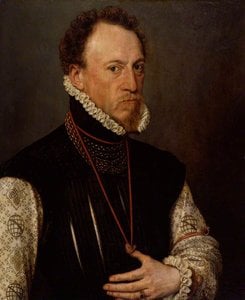
Antonis Mor, 1519 – 1575

Antonis Mor: The 75 Most Famous Paintings

Cardinal Granvelle's Dwarf (1560) is the most famous painting by Antonis Mor, held by the Liuvro muziejus in Paryžius. Portrait of Mary, Queen of England (1554) and Queen Mary Tudor of England (1554) are the next two works the world knows best. From the 75 works of Antonis Mor in our catalogue, here are the 75 that collectors and museum visitors look at most, with the year, the museum and the story of each.

Rangos vieta nulegiama pagal mūsų populiarumumo balas, kurį sudaro kiekvieno kūrinio paieškos, apsilankėjimai ir užsakėjimai. Atnaujinta spalis 2026. Every masterpiece on this page can be ordered as a museum-quality, hand-painted oil reproduction or a fine art print, at the size you choose.

Antonis Mor portretas
Antonis Mor · 1519 – 1575
Gedė · mirė
1519 – 1575, Utrechtas
Judėjimas
Northern renaissance
Darbai mūsų kataloge
75
Labiausiai žinomi
Cardinal Granvelle's Dwarf (1560)
Daugiausia darbų yra
Museo del Prado

Top 10: Antonis Mor's best-known paintings

Cardinal Granvelle's Dwarf (1560) aut. Antonis Mor
1

Cardinal Granvelle's Dwarf

1560 · Oil On Panel · Liuvro muziejus, Paryžius

To stand before Anthonis Mor Van Dashorst’s Cardinal Granvelle's Dwarf is to step directly into the opulent, richly textured world of the sixteenth-century Dutch aristocracy. This oil on panel painting, executed in 1560, transcends a mere portrait; it is a meticulously crafted tableau vivant, whispering tales of power, lineage, and social standing. The subject—a young boy with dwarfism, adorned in clothing of breathtaking extravagance—is presented not just as an individual,…

Portrait of Mary, Queen of England (1554) aut. Antonis Mor
2

Portrait of Mary, Queen of England

1554 · Oil On Panel · Szépművészeti Múzeum, Budapeštas

Anthonis Mor van Dashorst captured the likeness of Mary Tudor in 1554, a period defined by the shifting religious and political tides of the Northern Renaissance. The subject sits with a stern, direct gaze that meets the viewer without hesitation. Her red hair is framed by a structured, ruffled collar, a detail rendered with meticulous precision. Through the use of chiaroscuro, Mor employs a controlled interplay of light and shadow…

Queen Mary Tudor of England (1554) aut. Antonis Mor
3

Queen Mary Tudor of England

1554 · Oil On Panel · Museo del Prado, Madridas

The portrait of Queen Mary Tudor of England, executed by Antonis Mor in 1554, captures a sovereign at a threshold of history. She sits as the sole surviving child of Henry VIII and Catherine of Aragon, a figure of singular lineage. The oil on panel preserves her likeness during a season of profound political and religious shifts. Her presence is fixed, a quiet anchor amidst the changing tides of the…

Portrait of William of Orange (1555) aut. Antonis Mor
4

Portrait of William of Orange

1555 · Oil On Panel · Valstybiniai muziejai Kaselyje, Kassel

To stand before this portrait of William of Orange is to encounter not merely a likeness, but an embodiment of nascent authority. Rendered in the meticulous vein of the Northern Renaissance, the work captures the sitter in a moment of profound stillness, yet one charged with palpable resolve. The composition immediately draws the eye into the three-quarter view, presenting a figure encased in elaborate armor against a background so deep…

Joanna of Austria (1560) aut. Antonis Mor
5

Joanna of Austria

1560 · Oil On Canvas · Museo del Prado, Madridas

Antonis Mor's Joanna of Austria presents a formal likeness of the princess, who was the daughter of Emperor Charles V and sister to King Philip II of Spain. The subject commissioned this portrait personally, seeking a representation that reflected her specific station and history. In 1552, she married the Portuguese Prince John Manuel, a union that defined her political and personal landscape during the mid-sixteenth century.

Portrait of a lady (1557) aut. Antonis Mor
7

Portrait of a lady

1557 · Oil On Canvas · Nacionalinė Viktorijos galerija, Melburnas

A single light source from the upper left carves the subject out of a dark, indeterminate void. She is a presence of quietude, a three-quarter length figure caught in a moment of poised introspection. The darkness behind her pushes her forward, making the pale skin of her forehead and cheek feel immediate, almost tactile. Her expression is calm, a mask of high social status that hides the pulse of the…

Catherine of Hapsburg, the Wife of King John III of Portugal (1552) aut. Antonis Mor
8

Catherine of Hapsburg, the Wife of King John III of Portugal

1552 · Oil On Panel · Museo del Prado, Madridas

The gaze of Catherine of Hapsburg, the Wife of King John III of Portugal, meets the viewer from within this formal portrait. Painted by Antonis Mor, the work captures the presence of Catherine of Austria in a moment of quiet, regal composure. She occupies the space with a heavy, dignified stillness that speaks to her high station and the weight of her lineage.

Margaret Duchess of Parma / Mary of Portugal Wife of Alessandro Farnesse (1565) aut. Antonis Mor
10

Margaret Duchess of Parma / Mary of Portugal Wife of Alessandro Farnesse

1565 · Oil On Panel · Museo del Prado, Madridas

Two women exist in a state of perpetual prayer, suspended within the dark, velvet silence of a Renaissance interior. Margaret, Duchess of Parma, and Mary of Portugal appear as twin pillars of piety, their profiles or three-quarter views turned toward an unseen divine presence. The air around them feels heavy, thick with the solemnity of their task. They do not look at the viewer; instead, their gazes drift downward or…

The rest of the Antonis Mor ranking, 11 to 75

Portrait of a man (1550) aut. Antonis Mor
#11

Portrait of a man

1550 · Kunsthistorisches Museum

The gaze of the sitter in Portrait of a man meets us from across the centuries, a silent encounter captured by the hand of Antonis Mor. This work,…

Bring it home →
Philip II (1555) aut. Antonis Mor
#12

Philip II

1555 · Museo del Prado

The air in the room seems to thicken around the figure of Philip II. He sits in a three-quarter view, his gaze meeting the viewer with a steady,…

Order a reproduction →
Portrait of a Seated Woman (1565) aut. Antonis Mor
#13

Portrait of a Seated Woman

1565 · Art Institute of Chicago

The artwork titled Portrait of a Seated Woman was executed by the Netherlandish painter Antonis Mor. This oil on panel work dates to about 1565. The subject is…

Order a reproduction →
Margaret, Duchess of Parma (1562) aut. Antonis Mor
#14

Margaret, Duchess of Parma

1562 · Staatliche Museen zu Berlin

In this portrait, we encounter Margaret, Duchess of Parma, captured in a moment of quiet, aristocratic composure. The subject is presented in a close-up view, her face and…

Order a reproduction →
Lady with the Jewel (1552) aut. Antonis Mor
#17

Lady with the Jewel

1552 · Museo del Prado

A single woman occupies the center of this 1552 portrait, her presence defined by a quiet, aristocratic poise. She is positioned in a three-quarter length pose, her body…

Order a reproduction →
Emperor Maximilian II (1550) aut. Antonis Mor
#18

Emperor Maximilian II

1550 · Museo del Prado

In this vertical, three-quarter length portrait from 1550, Emperor Maximilian II is presented against a dark, near-black background. The subject stands slightly off-center, positioned with a calm and…

Order a reproduction →
Lady with Gold Chains (1560) aut. Antonis Mor
#22

Lady with Gold Chains

1560 · Museo del Prado

In this three-quarter length portrait from circa 1560, we encounter a woman who commands the space through a profound, self-possessed stillness. She is positioned slightly off-center, emerging from…

Commission a hand-painted copy →
Portrait of a Lady (1538) aut. Antonis Mor
#23

Portrait of a Lady

1538 · Museo del Prado

The artwork titled Portrait of a Lady is an oil on canvas painting by the artist Antonis Mor. This portrait depicts a noblewoman, presented in a three-quarter length…

Order a reproduction →
Portrait of a Man (1561) aut. Antonis Mor
#65

Portrait of a Man

1561 · Mauritshuis

Anthonis Mor van Dashorst came from Utrecht and specialised in portraits. He received commissions from various members of the Habsburg court, for which he travelled extensively in Europe.…

Bring it home →
Portrait of a Gentleman (1569) aut. Antonis Mor
#66

Portrait of a Gentleman

1569 · National Gallery of Art

Shown from the thighs up against a dark background, a man with light skin, wearing a black satin jerkin with puffed breeches, stands with his hand on the…

Order a reproduction →

The subjects Antonis Mor painted most

The four subjects that return most often among these masterpieces, with the finest example of each.

Where to see Antonis Mor's paintings

8 muziejai, kuriuose saugoma daugiausia šioje pusėje esamų paveikslų.

Muzejaus Miestas Antonis Mor darbai Šiojo sąrašo paveikslai
Museo del Prado, MadridasMuseo del Prado Madridas 13 Queen Mary Tudor of England, Joanna of Austria, Jane Dormer, Duchess of Feria (?)
Rijksmuseum, AmsterdamasRijksmuseum Amsterdamas 5 Portrait of Philippe de Montmorency, Count of Horne, Admiral of the Netherlands, Member of the Council of State, Anthonis Mor (copy after), 1540 - 1650, Sir Thomas Gresham, Anne Fernel, the Wife of Sir Thomas Gresham
Szépművészeti Múzeum, BudapeštasSzépművészeti Múzeum Budapeštas 3 Portrait of Mary, Queen of England, Knight of the Spanish St James Order, Portrait of the Philip II, King of Spain
Kunsthistorisches Museum, VienaKunsthistorisches Museum Viena 3 Portrait of Anton Perrenot de Granvelle, Portrait of a man, Anne of Austria, Queen of Spain
Mauritshuis, HagaMauritshuis Haga 3 Steven van Herwijck, Portrait of a Goldsmith, Portrait of a Man
Gemäldegalerie Alte Meister im Schloss Wilhelmshöhe, KaselioGemäldegalerie Alte Meister im Schloss Wilhelmshöhe Kaselio 2 Portrait of a young prince, Portrait of Jean Lecocq (1559)
Gemäldegalerie, BerlynasGemäldegalerie Berlynas 2 The Utrecht canons Cornelius van Horn and Anthonis Taets van Ameronghen, The Corpse of Christ
Hispanic Society Museum - Library, NiujorkasHispanic Society Museum - Library Niujorkas 2 Fernando Álvarez de Toledo, Third Duke of Alba, Portrait of a Man

Antonis Mor through the decades: one masterpiece for each

  1. 1530s
    Portrait of a Lady (1538) aut. Antonis Mor
    #23 of 75

    Portrait of a Lady

    Amžius 11 – 20 · Museo del Prado

    The artwork titled Portrait of a Lady is an oil on canvas painting by the artist Antonis Mor. This portrait depicts a noblewoman, presented in a three-quarter length…

  2. 1540s
    Portrait of Anton Perrenot de Granvelle (1549) aut. Antonis Mor
    Rank 9 / 75

    Portrait of Anton Perrenot de Granvelle

    Amžius 21 – 30 · Kunsthistorisches Museum

    This portrait of Anton Perrenot de Granvelle, also known as Antoine Perrenot, called Granvelle, was executed by the Dutch Renaissance painter Antonis Mor. Painted in 1549, the work…

  3. 1550s
    Portrait of Mary, Queen of England (1554) aut. Antonis Mor
    Rank 2 / 75

    Portrait of Mary, Queen of England

    Amžius 31 – 40 · Szépművészeti Múzeum

    Anthonis Mor van Dashorst captured the likeness of Mary Tudor in 1554, a period defined by the shifting religious and political tides of the Northern Renaissance. The subject…

  4. 1560s
    Cardinal Granvelle's Dwarf (1560) aut. Antonis Mor
    No. 1 of 75

    Cardinal Granvelle's Dwarf

    Amžius 41 – 50 · Liuvro muziejus

    To stand before Anthonis Mor Van Dashorst’s Cardinal Granvelle's Dwarf is to step directly into the opulent, richly textured world of the sixteenth-century Dutch aristocracy. This oil on…

  5. 1570s

Antonis Mor's paintings: frequently asked questions

What is the most famous Antonis Mor painting?Show the answer

Cardinal Granvelle's Dwarf (1560), Liuvro muziejus, Paryžius. Next come Portrait of Mary, Queen of England (1554) and Queen Mary Tudor of England (1554).

At what age did Antonis Mor paint Cardinal Granvelle's Dwarf?Show the answer

41 years old: Cardinal Granvelle's Dwarf dates from 1560 and Antonis Mor was born in 1519.

Which are the 10 most famous Antonis Mor paintings?Show the answer

Cardinal Granvelle's Dwarf, Portrait of Mary, Queen of England, Queen Mary Tudor of England, Portrait of William of Orange, Joanna of Austria, Jane Dormer, Duchess of Feria (?), Portrait of a lady, Catherine of Hapsburg, the Wife of King John III of Portugal, Portrait of Anton Perrenot de Granvelle ir Margaret Duchess of Parma / Mary of Portugal Wife of Alessandro Farnesse. The ranking above gives the year and the museum of each.

How many paintings by Antonis Mor are there?Show the answer

Our catalogue lists 75 works by Antonis Mor, dated from 1538 to 1574.

Where can I see the most famous Antonis Mor paintings?Show the answer

Most of them are in Museo del Prado (Madridas), Rijksmuseum (Amsterdamas) ir Szépművészeti Múzeum (Budapeštas). The table above lists the museums one by one.

In which period did Antonis Mor paint the best-known works?Show the answer

In 1550s: 30 of the 75 works on this page date from then, among them Portrait of Mary, Queen of England.

What is the earliest famous Antonis Mor painting, and the latest?Show the answer

The earliest on this page is Portrait of a Lady (1538), the latest Portrait of Hubert Goltzius (1574).

What subjects did Antonis Mor paint?Show the answer

Woman (14), Black dress (10) ir Portrait (8), among the 75 works on this page.

What did Antonis Mor paint on, and with what?Show the answer

Oil On Canvas: 14 of the 75 works on this page.

Which movement does Antonis Mor's art belong to?Show the answer

Northern renaissance ir Renaissance, as the paintings on this page show.

What Antonis Mor paintings does the Museo del Prado hold?Show the answer

Queen Mary Tudor of England, Joanna of Austria ir Jane Dormer, Duchess of Feria (?) are among the 13 works on this page held by the Museo del Prado, Madridas.

Where can I buy a Antonis Mor reproduction?Show the answer

Yes. Every painting on this page can be ordered as a museum-quality, hand-painted oil reproduction or a fine art print, in the size you choose, from the painting's own page.

Antonis Mor: biography

Antonis Mor: Karališkos Digniteto Kūrybos Meistras

Antonis Mor van Dashorst (1517–1577) yra nederlandų renesanso portretavimo stulpas, įkūnijantis itin tikslų realizmą ir simbolinę galybę, būdingą jo laikotarpiui. Gedęs Utrechte, Niderlanduose, jis iškrito iš meninei tradicijų prisiglaudusios šeimos – jo tėvas buvo skulptorius, taip užvedamas meninės reprezentacijos liniją. Nors biografiniai faktai apie jį yra gana skaposni, Mor talpa ir neykliama atsidavimas fiksavimui savo subiectų esmę pasako daug. Jis greitai sukaupė šlovę dėl gebėjimo portretuoti bajorų su nepakeičiamu tikslumu, taip užsiturindamas užsakymus iš įtakingiausių figūrų visoje Europoje.

Priklausomai nuo to, kaip žiūrėtume į jo formavimosi metus, mažai žinoma apie jų tikslų pradžią, tačiau žinoma, kad Antonis Mor studijavo Antverpijuje, mokydasis iš Pieterio Bruegelio Didžiojo. Čia jis įsisavino meistrišką Bruegelio žmogaus prigimties ir kraštovarios stebėjimą – šis įtampas vėliau persisakė Antoniui Morui jo pačios meninei vizijai. Antverpio laikotarpis tapo esminiu jo meninės brandos etapu. Dirbdamas kartu su tokiais menininkais kaip Quentinas Massysas ir Hendrikas Golse, jis pasinertė į gyvybingą Flamandų Respublikos meninę aplinką. Ši patirtis suteikė jam išskirtinį perspektyvos ir chiaroscuro – technikos, kuria jis meistriškai valdė dramatišką šviesos ir šešėlio žaismą, kad apšviestų savo portretus.

Marios Tudor valdžia: Šiaurės Renesanso portretavimo šedevras

Mor šlovė stebinamai išaugo pabaigus jo portretui Mares Tudor, Anglijos karalienės (1554 m.). Šis monumentalus płynas yra meno meistriškumo kulminacija. Atliktas su neįtikėtinu dėmesio detalėms, jis perteikia Mares karališką pošdęį ir vidinę ramybę – tai yra įrodymas apie Moro gebėjimą perteikti psichologinį niuansą kartu su fiziniu panašumu. Kompozicija yra itin subalansuota, naudojama piramidinė struktūra ir subtilūs audinio raukai, kad pabrėžtume Mares statusą ir orumą. Be to, chiaroscuro naudojimas sukuria užburia šviesos ir tamsos žaismą, išskaičiaviančią Mares veidą ir suteikiančią solemnios didybės aurą. Šis portretas užtvirtino Moro reputaciją kaip vieno iš svarbiausių savo laikotarpio portretistų ir išlieka garsiuoju Šiaurės Renesanso meno pavyzdžiu.

Mor labai naudojosi karališku globos vaidmeniu, gaudamas užsakymus iš monarchų visoje Europoje – įskaitant Ispanijos karalių Filipą II. Šie užduotys leido jam ieškoti ambiccingų projektų ir tobulinti savo meninę stilių, taip stiprinant jo palikimą kaip karališkosios sureikštės menininko. Be Mares Tudor portretų, Mor vykdė daugybę užsakymų, vaizduodamas išskirtinius valstybinius vyrų, diplomatų ir aristokratų. Jo išskirtinis stilius – pasižymintis tikslumu, meistrišką perspektyva ir išraišką suteikiančiu chiaroscuro – tapo nedarciniai atpažįstamas. Jis nuolat prioritetą teikė ne tik fiziniam išvaizdai, bet ir charakteriui bei emocijoms, pakeliant savo portretus virš paprasto panašumo į gilias apie žmogaus orumą išvadas.

Įtampa ir palikimas

Mor įtampa išsipletė gerokai už jo samtvorių ribų. Jo kruopštus požiūris į portretavimą nustatė precedentą būsimoms menininkų kartoms, įkvėpdamas juos siekti didesnio tikslumo ir psichologinio gylio. Jis gynė Renesanso laikui būdingas humanizmo idėjas, atspindėdamas neišnykdantį tikėjimą meno galimybe apšviesti žmogaus patirtį. Šiandien Anthonis Mor van Dashorst paveikslai toliau užburia auditorijas visame pasaulyje, tarnuodami kaip amžini priminimai apie meninę išmintį, pasiektą Niderlandų Aukso amžiaus – laikotarpio, apibūdinamo inovacijomis, ambicijomis ir giliu grožio vertinimu.

Visi 75 Antonis Mor darbai →