Thomas Clater: A Gentle Observer of Everyday Life
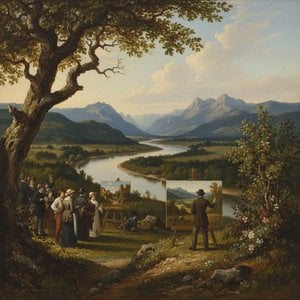
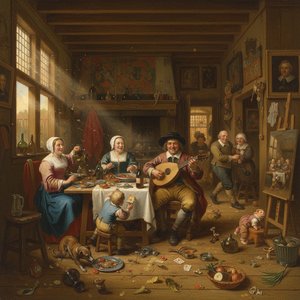
Thomas Clater (1789–1867) was an English painter whose distinctive genre scenes captured the quiet dignity and subtle humor of rural England during the Regency era. Unlike his contemporaries who often tackled grand historical narratives or mythological subjects, Clater focused on portraying ordinary individuals engaged in commonplace activities—farmers tending their fields, families gathered around hearth fires, children playing outdoors—subjects that resonated deeply with Victorian sensibilities. His artistic vision was profoundly shaped by the Dutch Masters of the seventeenth century, particularly Rembrandt and Vermeer, whose masterful use of light and shadow established a precedent for psychological realism within portraiture and landscape painting alike.- Early Life & Training: Born in East Retford, Nottinghamshire, Clater descended from a family of farriers—skilled blacksmiths specializing in horseshoeing—a profession that instilled in him an appreciation for craftsmanship and meticulous detail. Although biographical information about his formative years remains scarce, he received artistic training under the tutelage of John Opie, a celebrated Romantic painter known for his depictions of rural life and emotive landscapes.
- Royal Academy Years & Artistic Style: Clater’s breakthrough came with his admission to the Royal Academy in 1820, where he swiftly established himself as a prolific contributor. His canvases consistently exhibited a remarkable sensitivity to tonal nuances—a technique honed by studying Rembrandt's chiaroscuro—allowing him to convey profound emotional depth within seemingly simple compositions. Clater’s palette favored muted earth tones and subtle gradations of color, reflecting his belief that “truth” resided not in flamboyant spectacle but in the quiet observation of human experience.
- Notable Works & Exhibitions: Among Clater's most celebrated paintings are "The Proposal," a tender portrayal of a young couple exchanging vows; “War News,” depicting a poignant scene of soldiers returning from battle; and “Christmas in the Country,” capturing the warmth and conviviality of a festive family gathering. These works gained recognition at prestigious exhibitions across Britain, including the British Institution and the Walker Gallery, cementing Clater’s reputation as one of the foremost artists documenting Victorian domestic life.
- Influence & Legacy: Clater's artistic approach—characterized by psychological realism and understated elegance—influenced subsequent generations of painters who sought to emulate his mastery of tonal harmony and expressive subtlety. His canvases continue to inspire admiration for their ability to convey profound human emotion without resorting to melodrama, reminding viewers of the enduring power of art to illuminate the beauty and complexity of everyday existence.
- Later Life & Death: Clater remained active as an artist until his death in 1867. Following his widow’s remarriage, he faced financial difficulties, prompting the Royal Academy to suspend its patronage—a circumstance that tragically curtailed his artistic endeavors. Nevertheless, Thomas Clater's legacy persists through his enduring paintings and their contribution to Victorian art history.