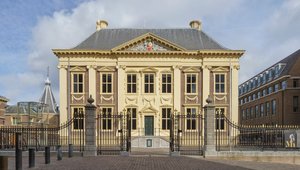
Pieter Codde, 1599 – 1678

74 garsiausių Pieter Codde paveikių

Veržė Pieter Codde šlovę tapyba Double Portrait of a Married Couple (1634); ji eksponuojama Mauritshuis Royal Picture Gallery, Haga. Venus Mourning over Adonis (1650) ir Family Group (1642) seka juos kolekcionerių bei muziejų lankytojų širdyse. Iš 82 Pieter Codde kūrinių mūsų kataloge, šios 74 yra labiausiai gerbiamos – kiekvienas jų pateikiamas su datos, muziejaus ir išskirtinės ypatybės aprašymu.

Rangos vieta nulegiama pagal mūsų populiarumumo balas, kurį sudaro kiekvieno kūrinio paieškos, apsilankėjimai ir užsakėjimai. Atnaujinta lapkritis 2026. Kiekvieną šio puslapio šedevrą galite užsisakyti kaip muziejoriaus kokybės rankų darbo alievinę reprodukciją arba aukščiausios kokybės meninį spausdiną jūsų pasirinktu dydžiu.

Pieter Codde portretas
Pieter Codde · 1599 – 1678
Gedė · mirė
1599 – 1678, Amsterdamas
Judėjimas
Dutch golden age
Darbai mūsų kataloge
82
Labiausiai žinomi
Double Portrait of a Married Couple (1634)
Daugiausia darbų yra
Rijksmuseum

Pieter Codde: dešimties šedevrai

Double Portrait of a Married Couple (1634) aut. Pieter Codde
1

Double Portrait of a Married Couple

1634 · Oil On Panel · Mauritshuis Royal Picture Gallery, Haga

Pieter Codde executed the Double Portrait of a Married Couple in 1634. This oil on panel work presents two figures positioned side by side. The subjects are dressed in formal, high-status attire, characterized by ruffled collars and white cravats. They are situated before a doorway, a setting that provides a structured architectural backdrop to the pair.

Ranku tapytos aliejaus reprodukcija nuo $181 28 × 35 cm Pusė kaip originalo $197 35 × 43 cm Užsakyti originalaus dydžio →
Venus Mourning over Adonis (1650) aut. Pieter Codde
2

Venus Mourning over Adonis

1650 · Oil On Panel · Ermitažas, Šv. Peterburgas

In this oil painting on panel, a group of figures is arranged in a dense, pyramidal structure. At the center of the composition, the pale skin of a lifeless male figure, Adonis, is positioned against a dark, shadowed background. Venus leans over his body, her form integrated into the central mass of the mourning group. Surrounding the central pair, several female attendants are depicted in various states of grief. Their…

Ranku tapytos aliejaus reprodukcija nuo $281 31 × 32 cm Pusė kaip originalo $281 32 × 32 cm Užsakyti originalaus dydžio →
Family Group (1642) aut. Pieter Codde
3

Family Group

1642 · Oil On Canvas · Rijksmuseum, Amsterdamas

Family Group (Moore) – A Window Into Domestic Tranquility The sculpture “Family Group” by Henry Moore, created in 1950, stands as a testament to the enduring fascination with familial bonds and the exploration of human form through abstraction. Unlike traditional portraiture, Moore eschewed meticulous detail, opting instead for a simplified representation that prioritizes gesture and emotional resonance—a deliberate departure from the conventions of his time. The piece’s impact transcends mere…

Ranku tapytos aliejaus reprodukcija nuo $281 37 × 27 cm
Departure with Two Soldiers and a Woman (1632) aut. Pieter Codde
4

Departure with Two Soldiers and a Woman

1632 · Oil On Panel · Rijksmuseum Twenthe, Enschede

Departure with Two Soldiers and a Woman is a genre painting executed by the Dutch artist Pieter Codde. Created in 1632, this work belongs to the era of the Dutch Golden Age, a period when the Netherlands saw a significant flourishing of domestic and social scenes. The painting captures a specific, quiet moment of interaction, rendered with the technical precision characteristic of the seventeenth-century tradition.

Ranku tapytos aliejaus reprodukcija nuo $231 36 × 28 cm Pusė kaip originalo $242 42 × 32 cm Užsakyti originalaus dydžio →
A Prisoner Kneels Before an Officer (1624) aut. Pieter Codde
5

A Prisoner Kneels Before an Officer

1624 · Oil On Panel

The tension of a sudden confrontation unfolds in A Prisoner Kneels Before an Officer, a work by the Dutch painter Pieter Codde. This scene captures a moment of high drama, known also by the title Travellers interrogated by an officer. The narrative weight of the piece shifts depending on the language used to describe it, appearing in other records as Verhaftete Reisende vor einem Offizier (Der Überfall).

Ranku tapytos aliejaus reprodukcija nuo $231 34 × 30 cm Pusė kaip originalo $266 55 × 39 cm Užsakyti originalaus dydžio →
Interior with Figures (1630) aut. Pieter Codde
6

Interior with Figures

1630 · Oil · National Gallery of Ireland, Dublin

A man bows deeply toward a group of women, his back turned to the viewer, creating a central axis of movement within a quiet Dutch interior. To the left, three women gather around a table draped in white linen, their postures suggesting a moment of social interaction or perhaps a formal greeting. A woman stands to the right, positioned near the heavy folds of a large, draped four-poster bed. The…

Ranku tapytos aliejaus reprodukcija nuo $256 36 × 28 cm Pusė kaip originalo $266 41 × 32 cm Užsakyti originalaus dydžio →
Company of Music-Makers (1633) aut. Pieter Codde
7

Company of Music-Makers

1633 · Oil · Städel Museum, Frankfurtas

The painting titled Company of Music-Makers is a work by the Dutch artist Pieter Codde. Created about 1633, it captures a specific moment of domestic harmony. The artist, a specialist in genre works, guardroom scenes, and portraits, focuses here on the rhythmic life of a musical gathering.

Ranku tapytos aliejaus reprodukcija nuo $281 35 × 28 cm Pusė kaip originalo $292 41 × 33 cm Užsakyti originalaus dydžio →
Portrait of a Man with a Watch (1630) aut. Pieter Codde
8

Portrait of a Man with a Watch

1630 · Oil · Gemäldegalerie, Berlynas

In this portrait, Portrait of a Man with a Watch by Pieter Codde, we encounter a middle-aged man presented within an oval composition. He is depicted from the chest up, his gaze directed slightly toward the viewer with a focused, steady expression. The subject wears a large, dark, wide-brimmed hat that frames his face, while a black doublet with subtle textures suggests the weight of heavy fabric. A prominent white…

Ranku tapytos aliejaus reprodukcija nuo $181 29 × 35 cm Pusė kaip originalo $249 51 × 63 cm Užsakyti originalaus dydžio →
The Guardroom (1630) aut. Pieter Codde
9

The Guardroom

1630 · Oil On Canvas · Staatliche Kunsthalle Karlsruhe, Karlsruhe

The air in the guardroom hangs thick with the scent of stale ale and damp wood. Shadows cling to the corners of the room, swallowing the back wall and leaving only a sliver of light to dance across the scene. A central wooden table anchors the composition, its surface worn by the weight of heavy mugs and the restless movements of men. One figure lies slumped upon the floor, a…

Ranku tapytos aliejaus reprodukcija nuo $231 38 × 27 cm Pusė kaip originalo $274 59 × 41 cm Užsakyti originalaus dydžio →
Portrait of Joan van Werkhoven ( -1665) (1635) aut. Pieter Codde
10

Portrait of Joan van Werkhoven ( -1665)

1635 · Oil · Centraal Museum, Utrecht

In the Portrait of Joan van Werkhoven ( -1665) by Pieter Codde, a single figure occupies the vertical space, positioned slightly off-center against a dark and atmospheric background. The subject meets the viewer at eye-level, creating an immediate sense of presence. This person is dressed in an elaborate period costume, featuring a wide-brimmed hat and a large, ruffled lace collar that catches the light. A voluminous doublet or cloak adds…

Ranku tapytos aliejaus reprodukcija nuo $181 29 × 35 cm Pusė kaip originalo $201 37 × 45 cm Užsakyti originalaus dydžio →

Daugiau šedevrų: Pieter Codde, nuo 11 iki 74

Conversation Piece (1638) aut. Pieter Codde
#19

Conversation Piece

1638 · Bavarijos valstybinės paveikslų kolekcijos

The scene unfolds within the quiet intimacy of "Conversation Piece," a work that captures a fleeting moment of social connection. This painting is the creation of Pieter Codde,…

Atneškite į savo namus nuo $331 →
musical company (1638) aut. Pieter Codde
#20

musical company

1638 · Bavarijos valstybinės paveikslų kolekcijos

The artwork titled musical company is a work by the Dutch painter Pieter Codde. Created about 1638, this piece belongs to the genre of musical company paintings. Pieter…

Atneškite į savo namus nuo $256 →
Portrait of a Man (1658) aut. Pieter Codde
#21

Portrait of a Man

1658 · Museum of Fine Arts Ghent (MSK)

This 1658 oil painting, titled Portrait of a Man, was executed by the Dutch artist Pieter Codde. It offers a quiet glimpse into the mid-seventeenth century, a period…

Atneškite į savo namus nuo $181 →
Actors' Changing Room (1630) aut. Pieter Codde
#30

Actors' Changing Room

1630 · Staatliche Museen zu Berlin

In the heart of the Dutch Golden Age, amidst the bustling maritime commerce and burgeoning prosperity of Amsterdam, there existed a fascination with the theater—not merely as entertainment,…

Atneškite į savo namus nuo $181 →
The Dancing Lesson (1627) aut. Pieter Codde
#33

The Dancing Lesson

1627 · Liuvro muziejus

In the quiet, sun-drenched interiors of the seventeenth-century Netherlands, moments of domestic grace were often captured with profound reverence. Pieter Jacobsz Codde’s "The Dancing Lesson," painted in 1627,…

Užsisakyti reprodukciją nuo $181 →

Pieter Codde tapų skirstymas pagal laikotarpius

Daugiausiai temų, kurių vaizdė Pieter Codde

Keturi populiariausi temų motyvai tarp šių šedevrų, su geriausiais kiekvieno pavyzdžiais.

Kur galima pamatyti Pieter Codde paveikslus

8 muziejai, kuriuose saugoma daugiausia šioje pusėje esamų paveikslų.

Muzejaus Miestas Pieter Codde darbai Šiojo sąrašo paveikslai
Rijksmuseum, AmsterdamasRijksmuseum Amsterdamas 4 Family Group, Gallant Company, The Meagre Company
Nationalmuseum, StokholmasNationalmuseum Stokholmas 3 A Conversation, Company Making Music, Portrait of a Family
Bavarijos valstybinės paveikslų kolekcijos, MiunchasBavarijos valstybinės paveikslų kolekcijos Miunchas 3 Conversation Piece, musical company, Portrait Of A Child
Mauritshuis Royal Picture Gallery, HagaMauritshuis Royal Picture Gallery Haga 2 Double Portrait of a Married Couple, Merry Company with Masked Dancers
Ermitažas, Šv. PeterburgasErmitažas Šv. Peterburgas 2 Venus Mourning over Adonis, An Artist in Front of the Easel
Museum of Fine Arts Ghent (MSK), GentasMuseum of Fine Arts Ghent (MSK) Gentas 2 Company playing backgammon in an interior, Portrait of a Man
Liuvro muziejus, ParyžiusLiuvro muziejus Paryžius 2 DAME A SA TOILETTE, The Dancing Lesson
National Gallery, LondonasNational Gallery Londonas 2 A Woman holding a Mirror, Portrait of a Man, a Woman and a Boy in a Room

Pieter Codde, dešimtmetė po dešimtmetės: pagrindinis kiekvieno laikotarpio kūrinys

  1. 1620s
    A Prisoner Kneels Before an Officer (1624) aut. Pieter Codde
    #5 iš 74

    A Prisoner Kneels Before an Officer

    Amžius 21 – 30

    The tension of a sudden confrontation unfolds in A Prisoner Kneels Before an Officer, a work by the Dutch painter Pieter Codde. This scene captures a moment of…

  2. 1630s
    Double Portrait of a Married Couple (1634) aut. Pieter Codde
    1 iš 74

    Double Portrait of a Married Couple

    Amžius 31 – 40 · Mauritshuis Royal Picture Gallery

    Pieter Codde executed the Double Portrait of a Married Couple in 1634. This oil on panel work presents two figures positioned side by side. The subjects are dressed…

  3. 1640s
    Family Group (1642) aut. Pieter Codde
    Vieta 3 iš 74

    Family Group

    Amžius 41 – 50 · Rijksmuseum

    Family Group (Moore) – A Window Into Domestic Tranquility The sculpture “Family Group” by Henry Moore, created in 1950, stands as a testament to the enduring fascination with…

  4. 1650s
    Venus Mourning over Adonis (1650) aut. Pieter Codde
    2 iš 74

    Venus Mourning over Adonis

    Amžius 51 – 60 · Ermitažas

    In this oil painting on panel, a group of figures is arranged in a dense, pyramidal structure. At the center of the composition, the pale skin of a…

  5. 1660s
    Portrait of a Family (1661) aut. Pieter Codde
    Vieta 24 iš 74

    Portrait of a Family

    Amžius 61 – 70 · Nationalmuseum

    The Portrait of a Family by Pieter Codde captures a quiet moment of domesticity from the Dutch Golden Age. Painted about 1661, this formal and somber group portrait…

  6. 1670s

Pieter Codde šedevrai: klausimai ir atsakymai

Kuriu paveiksluku Pieter Codde yra labiausiai žinomas?Rodyti atsakymą

Double Portrait of a Married Couple (1634), Mauritshuis Royal Picture Gallery, Haga. Toliau yra Venus Mourning over Adonis (1650) ir Family Group (1642).

Kiek metų buvo Pieter Codde, kai tapė šį kūrinį Double Portrait of a Married Couple?Rodyti atsakymą

35 metų amžiaus: Double Portrait of a Married Couple sukurta 1634 m. ir Pieter Codde gimė 1599.

Kokie yra 10 didžiausių paveikslavų Pieter Codde?Rodyti atsakymą

Double Portrait of a Married Couple, Venus Mourning over Adonis, Family Group, Departure with Two Soldiers and a Woman, A Prisoner Kneels Before an Officer, Interior with Figures, Company of Music-Makers, Portrait of a Man with a Watch, The Guardroom ir Portrait of Joan van Werkhoven ( -1665). Viršuje esančioje reitingo lentelėje nurodyta kiekvieno kūrinio metis ir muziejus.

Kiek darbų namdė Pieter Codde?Rodyti atsakymą

Mūsų kataloge yra 82 Pieter Codde darbų, datuojamų nuo 1624 iki 1670.

In kuriuose muzeumuose galėčiau pamatyti Pieter Codde šedevralius?Rodyti atsakymą

Dauguma jų yra Rijksmuseum (Amsterdamas), Nationalmuseum (Stokholmas) ir Bavarijos valstybinės paveikslų kolekcijos (Miunchas). Viršuje esančiame lange muziejai išvardyti po vieni.

Kada Pieter Codde nupiešė šiuos šedevrus?Rodyti atsakymą

1630s laikotarpyje: 25 iš 74 šioje pusėje esančių darbų sukurtos tada, iš jų – Double Portrait of a Married Couple.

Kokie yra pirmasis ir paskutinis garsieji Pieter Codde paveikslai?Rodyti atsakymą

Pirmasis šioje pusėje yra A Prisoner Kneels Before an Officer (1624), paskutinis – The Judgement of Mida with Apollo and Pan (Ovidius, Metamorphosis II:146-193) (1670).

Kokie buvo Pieter Codde mėgstamiausi temų objektai?Rodyti atsakymą

Man (21), People (19) ir Table (19), iš 74 šioje pusėje esančių darbų.

Kurią techniką Pieter Codde mėgavosi?Rodyti atsakymą

Oil: 23 iš 74 šioje pusėje esančių darbų.

Kokio meno kierlioje priklauso Pieter Codde?Rodyti atsakymą

Dutch golden age ir Baroque, kaip rodo šio puslapio paveikslai.

Kuriuose Rijksmuseum eksponuojami Pieter Codde šedevrai?Rodyti atsakymą

Family Group, Gallant Company ir The Meagre Company yra vieni iš 4 šioje puslapyje esamų darbų, kuriuos saugo Rijksmuseum, Amsterdamas.

Ar galiu įsigyti Pieter Codde šedevro reprodukciją?Rodyti atsakymą

Taip. Kiekvieną šioje pusėje esantį paveikslą galite užsakyti kaip muziejoriaus kokybės rankų darbų alievinę kopiją arba aukščiausios kokybės spausdinį pasirinktu jūsų pageidaujamu dydžiu tiesiai iš paties paveikslą puslapio.

Pieter Codde gyvenimas

The Silvery Light of the Dutch Golden Age

Pieter Jacobsz Codde, a name synonymous with the refined elegance of the seventeenth-century Dutch Golden Age, lived a life as textured and layered as the canvases he produced. Born in Amsterdam in 1599 to a family of modest means—his father serving as a city official responsible for port fees—Codde emerged from an environment steeped in the maritime commerce and burgeoning prosperity of the Netherlands. While historical records regarding his early training remain somewhat enigmatic, whispers of an apprenticeship under the legendary Frans Hals have long circulated among art historians. However, more recent scholarship suggests he may have refined his technical prowess under Barent van Someren or Cornelis van der Voort. Regardless of his specific master, Codde’s development was marked by a profound ability to capture the quiet, often silvery-gray tonalities that would become his aesthetic signature.

His early years were not merely defined by the brush, but also by a literary sensibility that added depth to his visual narratives. In the early decades of the 1600s, Codde was known to engage with the poetic and dramatic arts, appearing in publications such as Hollande Nachtegaelken. This intersection of word and image allowed him to approach genre painting not just as a recorder of reality, but as a storyteller capable of weaving classical and amorous themes into the fabric of everyday life. His move to the fashionable Sint Antoniesbreestraat in Amsterdam placed him at the very heart of the artistic community, surrounded by the vibrant energy of a city defining its cultural identity.

Mastery of the Genre and the Guardroom

As his career matured, Codde became a master of several distinct genres, most notably the guardroom scene, the musical company, and the intimate portrait. His work is celebrated for its meticulous attention to detail and a sophisticated use of chiaroscibility—the dramatic interplay of light and shadow that breathes life into inanimate objects and human subjects alike. In his guardroom paintings, he captured the rugged, often tense atmosphere of military life, yet he infused these scenes with a technical grace that elevated them beyond mere reportage. His ability to render the cold glint of steel, the heavy texture of fabric, and the soft glow of candlelight created an immersive experience for the viewer.

Beyond the martial themes, Codde found immense success in depicting the social harmonies of his era. His musical compositions are particularly evocative, capturing moments of shared leisure and artistic devotion. In works such as Dancing Lesson and The Lute Player, one can sense the rhythmic pulse of the music through his precise brushwork. These paintings often feature a delicate, silvery palette that lends a dreamlike, nostalgic quality to the scenes, making them feel both immediate and timeless. Through these small-scale masterpieces, Codde invited the viewer into the private, harmonious corners of Dutch domesticity, where melody and movement converged.

A Legacy Etched in Light and Shadow

The life of Pieter Codde was not without its shadows, mirroring the darker tones found in his more somber compositions. His personal history was marked by turbulence, including a high-profile legal accusation and a divorce that saw his wife move into the home of the painter Paulus Potter. Yet, even amidst personal upheaval, his professional trajectory remained one of significant achievement. By 1657, he had secured a prestigious residence on the Keizersgracht, a testament to the stability and success his talent had afforded him. His later years were spent in the very heart of Amsterdam's grandeur, continuing to refine the techniques that would influence generations of Dutch painters.

The historical significance of Codde lies in his role as a bridge between the raw naturalism of the early Golden Age and the more refined, polished aesthetics of the mid-seventeenth century. His contributions to the development of genre painting provided a blueprint for how light could be used to sculpt emotion and atmosphere. Today, his works reside in some of the world's most esteemed institutions, including:

Ultimately, Pieter Jacobsz Codde remains a vital figure in the canon of Western art, remembered not just for his technical skill, but for his ability to capture the fleeting, luminous essence of human connection and the quiet dignity of everyday existence.