Peter Ilsted, 1861 – 1933

14 garsiausių Peter Ilsted paveikių

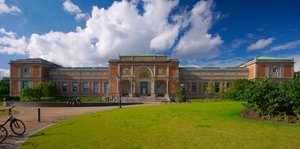
Veržė Peter Ilsted šlovę tapyba A Young Girl Preparing Chantarelles (1892); ji eksponuojama Statens Museum For Kunst, Kopenhaga. A Little Girl Sewing (1900) ir Præsten Gjerløv Christian Krog Schiøler (1904) seka juos kolekcionerių bei muziejų lankytojų širdyse. Iš 15 Peter Ilsted kūrinių mūsų kataloge, šios 14 yra labiausiai gerbiamos – kiekvienas jų pateikiamas su datos, muziejaus ir išskirtinės ypatybės aprašymu.

Rango vieta nulegiama pagal mūsų populiarumumo balas, kurią sudaro kiekvieno kūrinio paieškos, apsilankėjimai ir užsakėjimai. Atnaujinta lapkritis 2026. Kiekvieną šio puslapio šedevrą galite užsisakyti kaip muziejoriaus kokybės rankų darbo alievinę reprodukciją arba aukščiausios kokybės meninį spausdiną jūsų pasirinktu dydžiu.

Peter Ilsted portretas
Peter Ilsted · 1861 – 1933
Gedė · mirė
1861 – 1933, Sakskøbing
Darbai mūsų kataloge
15
Labiausiai žinomi
A Young Girl Preparing Chantarelles (1892)
Daugiausia darbų –
Statens Museum For Kunst

Peter Ilsted: dešimties šedevrai

A Young Girl Preparing Chantarelles (1892) aut. Peter Ilsted
1

A Young Girl Preparing Chantarelles

1892 · Oil · Statens Museum For Kunst, Kopenhaga

In "A Young Girl Preparing Chantarelles" by Peter Ilsted, the scene unfolds through an asymmetrical arrangement that directs the eye across a sparse interior. A young woman is positioned on the left side of the frame, her body turned toward a wooden table on the right. This spatial tension creates a quiet pull toward the center of the room. The perspective is a straight-on, eye-level view, placing the viewer directly…

Ranku tapyta aliejaus reprodukcija nuo $199 28 × 36 cm Pusė kaip originalo $280 52 × 66 cm Užsakyti originalų dydį →
A Little Girl Sewing (1900) aut. Peter Ilsted
2

A Little Girl Sewing

1900 · Oil On Canvas · Ribe Kunstmuseum, Esbjerg

In "A Little Girl Sewing" by Peter Ilsted, a quiet, intimate genre scene unfolds within a still domestic space. Created about 1900, the work captures a young girl lost in the rhythmic, focused task of sewing. She sits positioned to one side, her attention entirely consumed by the needle and thread. This simple, everyday moment feels suspended in time, offering a glimpse into a private world of quiet concentration and…

Ranku tapyta aliejaus reprodukcija nuo $199 30 × 34 cm Pusė kaip originalo $281 55 × 63 cm Užsakyti originalų dydį →
Præsten Gjerløv Christian Krog Schiøler (1904) aut. Peter Ilsted
3

Præsten Gjerløv Christian Krog Schiøler

1904 · Painting · Statens Museum For Kunst, Kopenhaga

In this 1904 portrait, Peter Ilsted captures Præsten Gjerløv Christian Krog Schiøler in a moment of quiet dignity. The subject, an elderly man, meets the viewer's gaze through a formal three-quarter view. He sits with a sense of social standing, his presence filling the frame from the waist up. There is a weight to his expression, a solemnity that suggests a lifetime of wisdom and experience. His white hair and…

Ranku tapyta aliejaus reprodukcija nuo $199 27 × 37 cm Pusė kaip originalo $254 44 × 60 cm Užsakyti originalų dydį →
In the bedroom. (1901) aut. Peter Ilsted
4

In the bedroom.

1901 · Oil

In the bedroom. by Peter Ilsted, painted about 1901, captures a solitary moment of reflection or transition within a quiet, nocturnal space. The composition is vertically oriented, drawing the eye toward a woman sitting on the edge of a bed. She rests beside a lit bedside lamp that acts as the primary source of light in the room. From a slightly low, side angle, the viewer observes this private scene…

Ranku tapyta aliejaus reprodukcija nuo $199 29 × 35 cm Pusė kaip originalo $226 39 × 47 cm Užsakyti originalų dydį →
Ved klaveret (1887) aut. Peter Ilsted
5

Ved klaveret

1887 · Oil On Canvas · Statens Museum For Kunst, Kopenhaga

is an oil on canvas work by the Danish artist Peter Ilsted. Created about 1887, the painting captures a quiet, intimate interior scene. The composition centers on a woman and a young child seated at a dark wooden piano, framed by a large painting on the wall and a heavy dark curtain.

Ranku tapyta aliejaus reprodukcija nuo $199 28 × 35 cm Pusė kaip originalo $209 33 × 40 cm Užsakyti originalų dydį →
A model. (1890) aut. Peter Ilsted
6

A model.

1890 · Oil On Canvas

In "A model." by Peter Ilsted, the viewer enters a dimly lit interior where a single, low light source—perhaps a small lamp or a candle resting on the floor—casts a warm, intense glow upwards. This light pierces the shadows to highlight the soft contours of the woman's back, buttocks, and legs. The subject is a nude female figure seen from behind, seated upon a raised platform or bench. She hunches…

Ranku tapyta aliejaus reprodukcija nuo $199 29 × 35 cm Pusė kaip originalo $224 38 × 46 cm Užsakyti originalų dydį →
Woman reading (1905) aut. Peter Ilsted
8

Woman reading

1905 · Oil

In Woman reading, painted by Peter Ilsted about 1905, the viewer encounters a domestic scene of quiet study. The subject is a woman seated at a desk, captured from behind in a moment of solitary concentration. She is positioned in the foreground, set against a flat, textured wall that emphasizes the stillness of the room. This arrangement creates a sense of intimacy, as if the observer has stumbled upon a…

Ranku tapyta aliejaus reprodukcija nuo $199 29 × 34 cm
Wilhelm the dining room aut. Peter Ilsted
10

Wilhelm the dining room

Painting

The painting titled Wilhelm the dining room is a work by the artist Peter Ilsted. This piece depicts a woman situated within a kitchen setting. She is positioned near a table, with a chair placed immediately beside it. The composition focuses on the domestic arrangement of the room, where a dining table is surrounded by several chairs.

Ranku tapyta aliejaus reprodukcija nuo $199 28 × 36 cm

Daugiau šedevrų: Peter Ilsted, nuo 11 iki 14

Daugiausiai temų, kurių vaizdė Peter Ilsted

Keturi populiariausi temų motyvai tarp šių šedevrų, su geriausiais kiekvieno pavyzdžiais.

Kur galima pamatyti Peter Ilsted paveikslus

2 muziejai, kuriuose saugoma daugiausia šioje pusėje esamų paveikslų.

Muzejaus Miestas Peter Ilsted darbai Šiojo sąrašo paveikslai
Statens Museum For Kunst, KopenhagaStatens Museum For Kunst Kopenhaga 4 A Young Girl Preparing Chantarelles, Præsten Gjerløv Christian Krog Schiøler, Ved klaveret
Ribe Kunstmuseum, EsbjergRibe Kunstmuseum Esbjerg 1 A Little Girl Sewing

Peter Ilsted, dešimtmetė po dešimtmetės: pagrindinis kiekvieno laikotarpio kūrinys

  1. 1880s
    Ved klaveret (1887) aut. Peter Ilsted
    #5 iš 14

    Ved klaveret

    Amžius 19–28 · Statens Museum For Kunst

    is an oil on canvas work by the Danish artist Peter Ilsted. Created about 1887, the painting captures a quiet, intimate interior scene. The composition centers on a…

  2. 1890s
    A Young Girl Preparing Chantarelles (1892) aut. Peter Ilsted
    Vieta 1 iš 14

    A Young Girl Preparing Chantarelles

    Amžius 29–38 · Statens Museum For Kunst

    In "A Young Girl Preparing Chantarelles" by Peter Ilsted, the scene unfolds through an asymmetrical arrangement that directs the eye across a sparse interior. A young woman is…

  3. 1900s
    A Little Girl Sewing (1900) aut. Peter Ilsted
    #2 iš 14

    A Little Girl Sewing

    Amžius 39–48 · Ribe Kunstmuseum

    In "A Little Girl Sewing" by Peter Ilsted, a quiet, intimate genre scene unfolds within a still domestic space. Created about 1900, the work captures a young girl…

Peter Ilsted šedevrai: klausimai ir atsakymai

Kuriu paveiksluku Peter Ilsted yra labiausiai žinomas?Rodyti atsakymą

A Young Girl Preparing Chantarelles (1892), Statens Museum For Kunst, Kopenhaga. Toliau yra A Little Girl Sewing (1900) ir Præsten Gjerløv Christian Krog Schiøler (1904).

Kiek metų buvo Peter Ilsted, kai tapė šį kūrinį A Young Girl Preparing Chantarelles?Rodyti atsakymą

31 metų amžiaus: A Young Girl Preparing Chantarelles sukurta 1892 m. ir Peter Ilsted gimė 1861.

Kokie yra 10 didžiausių paveikslavų Peter Ilsted?Rodyti atsakymą

A Young Girl Preparing Chantarelles, A Little Girl Sewing, Præsten Gjerløv Christian Krog Schiøler, In the bedroom., Ved klaveret, A model., Interior with a samovar. Evening, Woman reading, Image banner051222 ir Wilhelm the dining room. Viršuje esančioje reitingo lentelėje nurodyta kiekvieno kūrinio metis ir muziejus.

Kiek darbų namdė Peter Ilsted?Rodyti atsakymą

Mūsų kataloge yra 15 Peter Ilsted darbų, datuojamų nuo 1887 iki 1905.

In kuriuose muzeumuose galėčiau pamatyti Peter Ilsted šedevralius?Rodyti atsakymą

Dauguma jų yra Statens Museum For Kunst (Kopenhaga) ir Ribe Kunstmuseum (Esbjerg). Viršuje esančiame lange muziejai išvardyti po vieni.

Kada Peter Ilsted nupiešė šiuos šedevrus?Rodyti atsakymą

1900s laikotarpyje: 5 iš 14 šioje pusėje esančių darbų sukurtos tada, iš jų – A Little Girl Sewing.

Kokie yra pirmasis ir paskutinis garsieji Peter Ilsted paveikslai?Rodyti atsakymą

Pirmasis šioje pusėje yra Ved klaveret (1887), paskutinis – Woman reading (1905).

Kokie buvo Peter Ilsted mėgstamiausi temų objektai?Rodyti atsakymą

Woman (7), Interior (5) ir Table (4), iš 14 šioje pusėje esančių darbų.

Kurią techniką Peter Ilsted mėgavosi?Rodyti atsakymą

Oil: 6 iš 14 šioje pusėje esančių darbų.

Kuriuose Statens Museum For Kunst eksponuojami Peter Ilsted šedevrai?Rodyti atsakymą

A Young Girl Preparing Chantarelles, Præsten Gjerløv Christian Krog Schiøler ir Ved klaveret yra vieni iš 4 šioje puslapyje esamų darbų, kuriuos saugo Statens Museum For Kunst, Kopenhaga.

Ar galiu įsigyti Peter Ilsted šedevro reprodukciją?Rodyti atsakymą

Taip. Kiekvieną šioje pusėje esantį paveikslą galite užsakyti kaip muziejoriaus kokybės rankų darbų alievinę kopiją arba aukščiausios kokybės spausdinį pasirinktu jūsų pageidaujamu dydžiu tiesiai iš paties paveikslą puslapio.

Peter Ilsted gyvenimas

Peter Ilsted (1861–1933): The Quietude of Domestic Space

Peter Vilhelm Ilsted was born in Sakskøbing, Denmark, on February 14th, 1861. He descended from a wealthy merchant family—a circumstance that afforded him considerable freedom to pursue his artistic inclinations from an early age. His formative years were marked by attendance at the Royal Danish Academy of Fine Arts in Copenhagen between 1878 and 1883, where he honed his skills under the tutelage of luminaries like Edvard Munch and Kristian Foss. This period instilled within him a profound appreciation for the artistic traditions of Norway and Sweden—influences that would permeate his subsequent oeuvre. Notably, Ilsted’s sister Ida married Vilhelm Hammershøi in 1891, forging an enduring artistic partnership that profoundly shaped their respective styles. Together, they became pivotal figures in establishing what is known as “The Copenhagen Interior School,” a movement characterized by its exploration of domestic interiors bathed in soft, diffused light—a deliberate reaction against the industrializing forces reshaping Denmark at the time. Inspiration drew heavily from Johannes Vermeer and Rembrandt, masters who had championed the depiction of everyday life within confined spaces.
  • Early Influences: Ilsted’s artistic sensibilities were nurtured by exposure to Impressionism and Symbolism, movements that prioritized capturing fleeting moments of emotion and atmosphere rather than striving for photographic realism.
  • Technique: He mastered the mezzotint etching process—a technique he embraced with particular fervor—demonstrating exceptional precision and artistry in transferring tonal gradations onto metal plates. This method allowed him to achieve remarkable subtlety and nuance, mirroring the quiet contemplation inherent in his chosen subjects.

The Copenhagen Interior School: A Synthesis of Tradition and Innovation

Ilsted’s artistic vision—like that of Hammershøi—centered on portraying domestic interiors with an unwavering commitment to capturing a sense of serene stillness. Artists such as Carl Holsøe, who collaborated closely with Ilsted and Hammershøi, shared this aesthetic preoccupation. The interiors depicted by these masters eschewed ostentation and grandeur, instead favoring muted color palettes—primarily browns, greys, and blacks—that evoked the comforting warmth of a home untouched by the anxieties of modernity. They deliberately avoided excessive ornamentation, prioritizing compositional clarity and spatial depth—a stylistic decision rooted in the legacy of seventeenth-century Dutch painters like Rembrandt and Johannes Vermeer. These artists sought to convey not merely visual representation but also an emotional resonance—a feeling of quiet contemplation that invited viewers to immerse themselves in the depicted scene.
  • Light and Shadow: Ilsted’s masterful manipulation of light and shadow—a technique he termed “chiaroscuro”—was central to his artistic practice. He meticulously studied Rembrandt's etchings, absorbing his profound understanding of tonal gradation and its ability to imbue images with psychological depth.
  • Compositional Considerations: Ilsted’s interiors often featured figures positioned strategically—typically seen from behind—creating a sense of mystery and prompting viewers to consider the unspoken thoughts and emotions animating those depicted within. This compositional device echoed Hammershøi's stylistic approach, reflecting a shared desire to convey mood through subtle visual cues.

Mezzotint Prints: A Revolutionary Medium

Ilsted’s dedication to mezzotint etching—a technique rarely practiced in Denmark during his time—represented a bold departure from prevailing artistic conventions. He undertook extensive research into the craft, studying English mezzotints and meticulously replicating their tonal qualities. His prints achieved unparalleled subtlety and nuance thanks to the “à la poupée” method—a painstaking process involving hand-inking different areas of the plate with fabric bundles—which ensured that colors remained isolated from one another during printing. This innovative technique garnered considerable acclaim in Ilsted’s day, establishing him as a pioneer in graphic arts and securing his place among the foremost artists of his era.
  • Notable Prints: Among Ilsted's most celebrated works are depictions of domestic interiors—such as “Lille Rekonvalescent”—which exemplify his signature style—characterized by soft tonal shades and contemplative compositions.
  • Critical Recognition: Ilsted’s prints were lauded by prominent art critics and collectors, including James McNeill Whistler and Duret, who recognized their exceptional artistic merit and groundbreaking technical innovation.

Legacy and Historical Significance

Peter Ilsted's contribution to Danish art—particularly his pioneering role in establishing “The Copenhagen Interior School”—continues to resonate today. His meticulous observation of domestic life—combined with his masterful command of mezzotint etching—established him as a singular voice within the artistic landscape of early twentieth-century Denmark. He stands alongside Vilhelm Hammershøi and Carl Holsøe as one of the most influential figures in shaping Danish visual culture—a testament to his enduring artistic vision and unwavering commitment to exploring themes of tranquility, contemplation, and understated beauty. His work remains a compelling exemplar of how art can capture not merely what is seen but also what is felt—a legacy that ensures Ilsted’s place among the titans of Scandinavian painting.