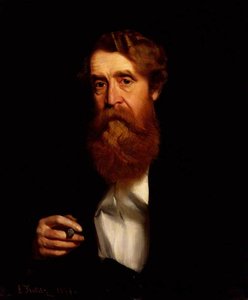
The Luminous Legacy of Louis Kolitz
Born in the quiet atmosphere of Tilsit, Russia, in 1845, Louis Kolitz would eventually become a defining voice in the landscape and genre painting of his era. His journey from the eastern frontiers to the prestigious artistic hubs of Berlin and Düsseldorf represents more than just a geographical migration; it was an intellectual and aesthetic evolution. As a painter who navigated the delicate boundary between Romantic idealism and the burgeoning Impressionist movement, Kolitz possessed a rare ability to capture not just the physical reality of a scene, but its very soul. His work serves as a window into a bygone Europe, where the interplay of light and shadow could transform a simple street corner or a forest clearing into a profound meditation on time and existence.
The foundation of Kolitz’s mastery was laid within the rigorous halls of the Prussian Academy of Arts in Berlin and the renowned Kunstakademie Düsseldorf. Under the guidance of masters such as Oswald Achenbach, Karl Ferdinand Sohn, and Eduard Bendemann, he absorbed the deep traditions of academic precision and historical gravity. Yet, Kolitz was never a mere imitator of tradition. While his early training instilled in him a command over composition and anatomy—essential for his later ventures into portraiture and military art—he found his true calling in the ephemeral. He moved away from the rigid, often somber realism of his contemporaries to embrace a style that celebrated the fleeting: the way twilight softens the edges of a Parisian boulevard or how dappled sunlight dances through the canopy of a German forest.
A Master of Atmosphere and Light
To observe a Kolitz canvas is to witness a deliberate study of atmosphere. He was an artist profoundly moved by the vedute—the detailed, topographical views of cities—yet he approached these subjects with a painterly looseness that defied strict documentation. His fascination with German landscapes, particularly the regions around Hanau and Frankfurt am Main, allowed him to experiment with the subtle nuances of weather and light. Whether depicting the bustling energy of a city street or the quiet dignity of a historical procession, his brushwork remained expressive and fluid. He utilized loose strokes and layered pigments to create an ethereal quality, ensuring that his subjects felt alive with movement and breath.
His versatility was perhaps his greatest strength, allowing him to traverse a wide variety of genres with equal proficiency:
- Landscape Painting: His most celebrated works, where he captured the romanticized beauty of German towns and natural vistas.
- History and Military Art: Drawing from his lived experiences as a volunteer in the Austro-Prussian and Franco-Prussian Wars, he produced powerful, often starkly realistic depictions of conflict.
- Portraiture: A period of intense focus in Düsseldorf where he applied his understanding of light to the human form.
- Urban Vedute: Evocative scenes such as Hohenzollernstrasse, which showcase his ability to translate urban life into impressionistic poetry.
Historical Significance and Lasting Impression
Beyond the aesthetic beauty of his canvases, Louis Kolitz held a position of significant influence within the European art community. His tenure as the Director of the Kunsthochschule Kassel speaks to his respect among his peers and his commitment to the cultivation of future generations of artists. He was also an active participant in the progressive circles of his time, notably as a member of the Malkasten artists' association, which pushed against the stagnant boundaries of traditionalism. This involvement ensured that his work remained connected to the pulse of modern artistic thought, even as he maintained a deep reverence for classical technique.
The passing of Kolitz in Berlin in 1914 marked the end of an era, yet his contribution to the art historical canon remains vibrant. He bridged the gap between the dramatic, emotional weight of Romanticism and the sensory-focused observations of Impressionism. Today, his paintings continue to captivate audiences, offering a nostalgic and exquisitely rendered glimpse into the light, the landscapes, and the enduring spirit of the 19th century.